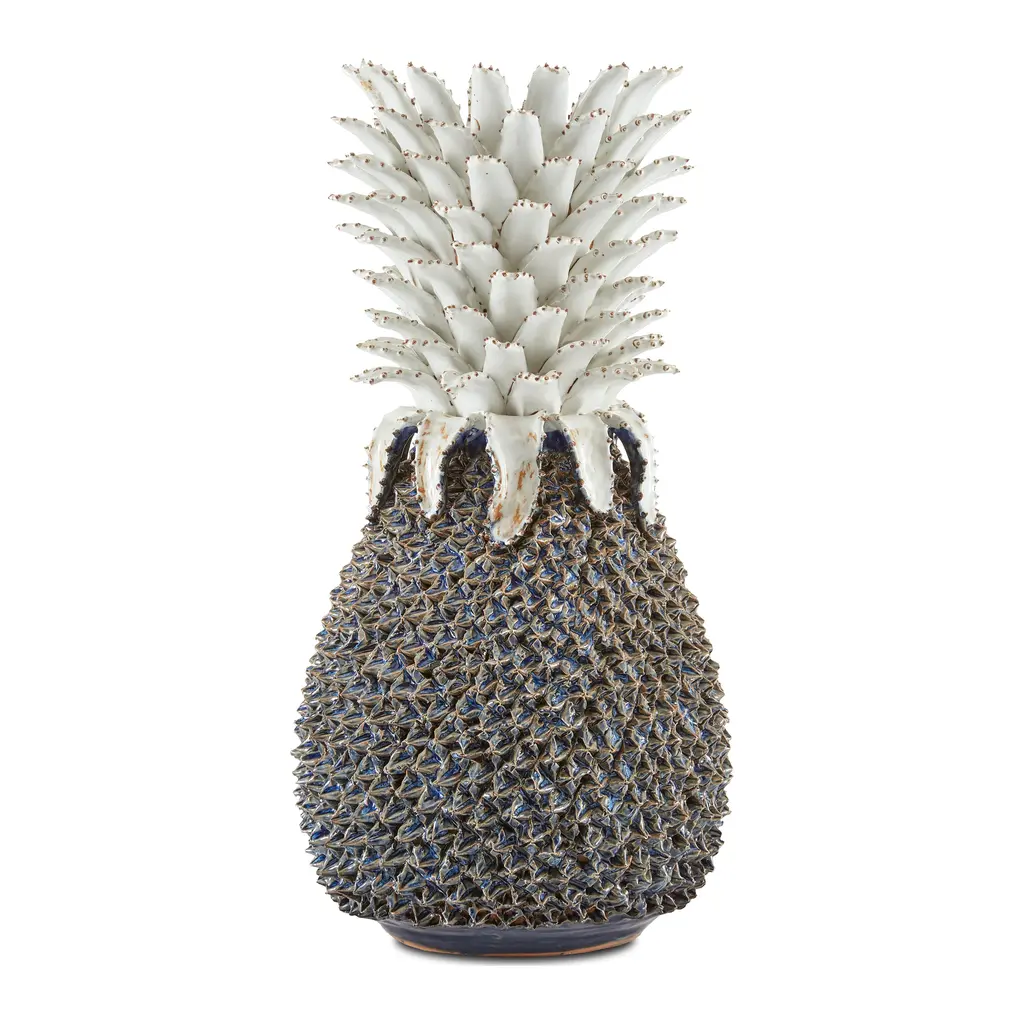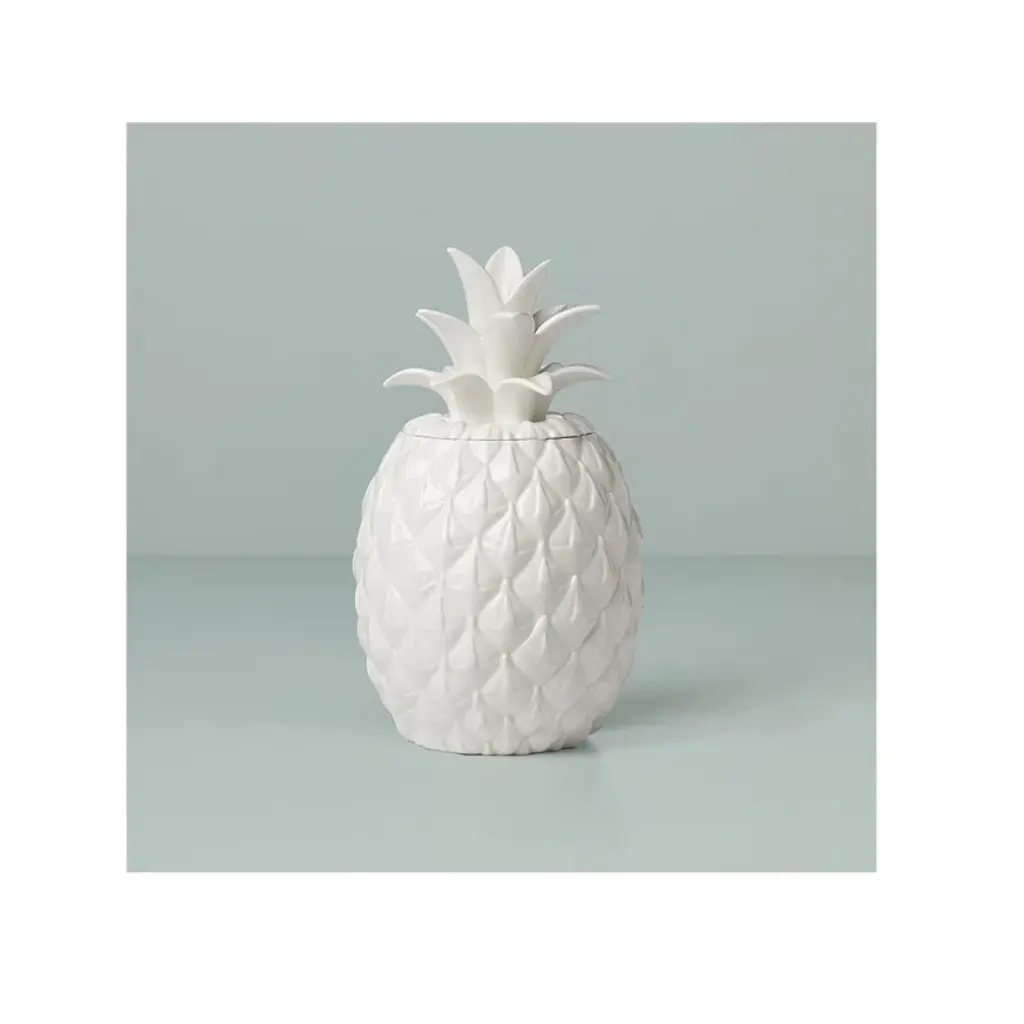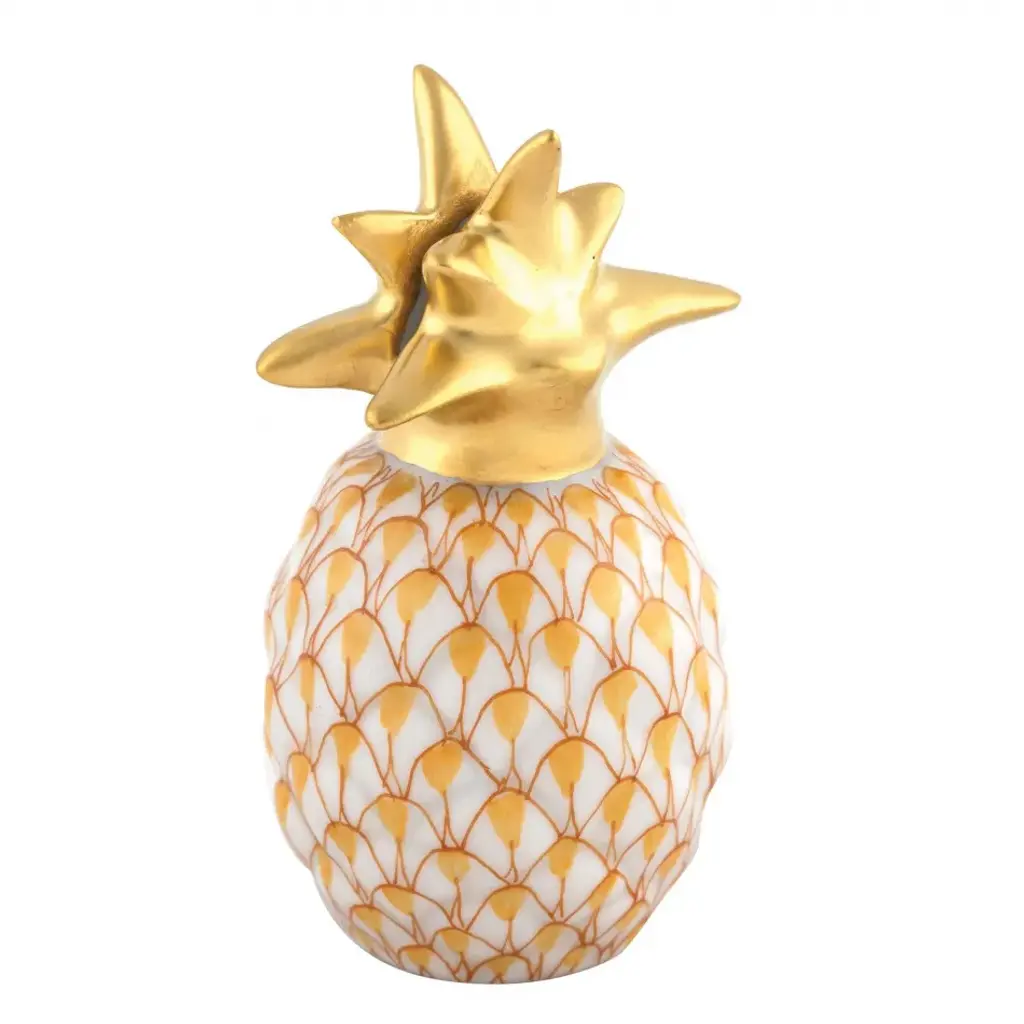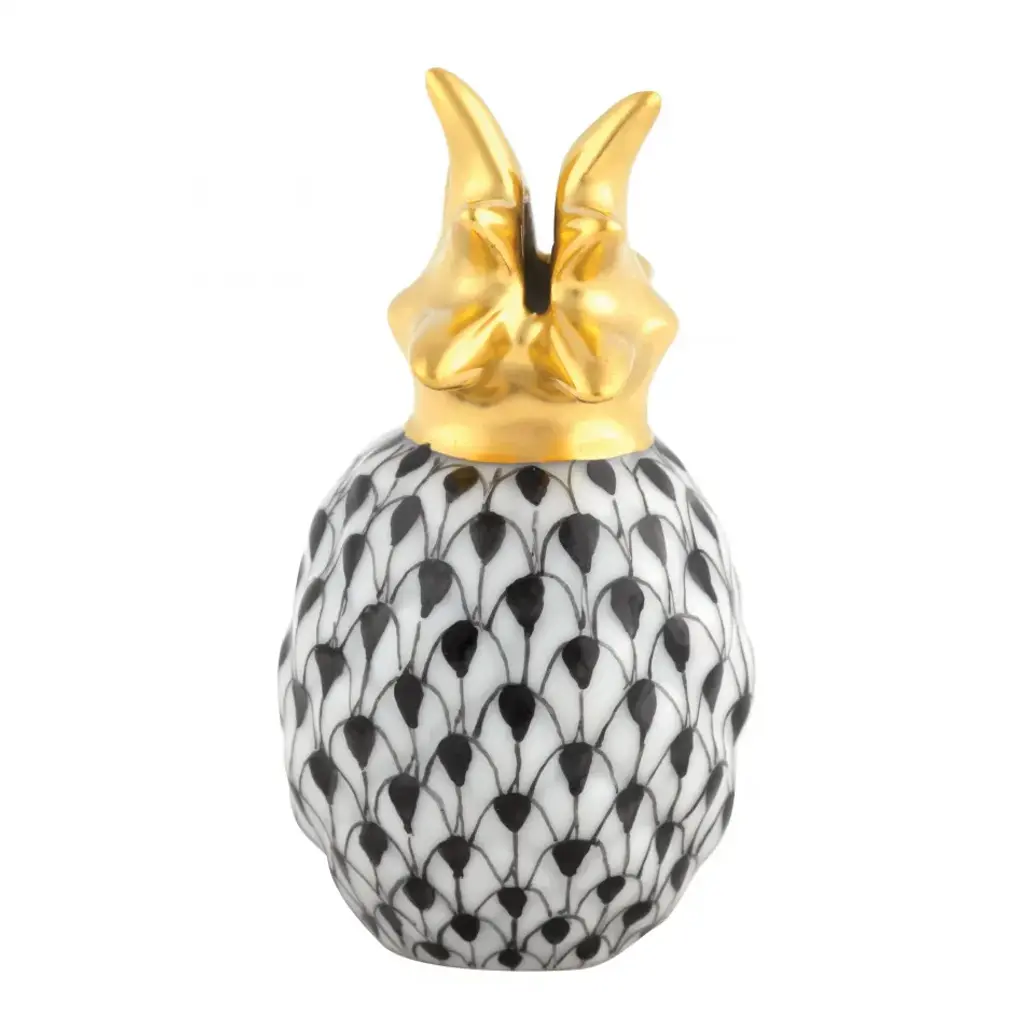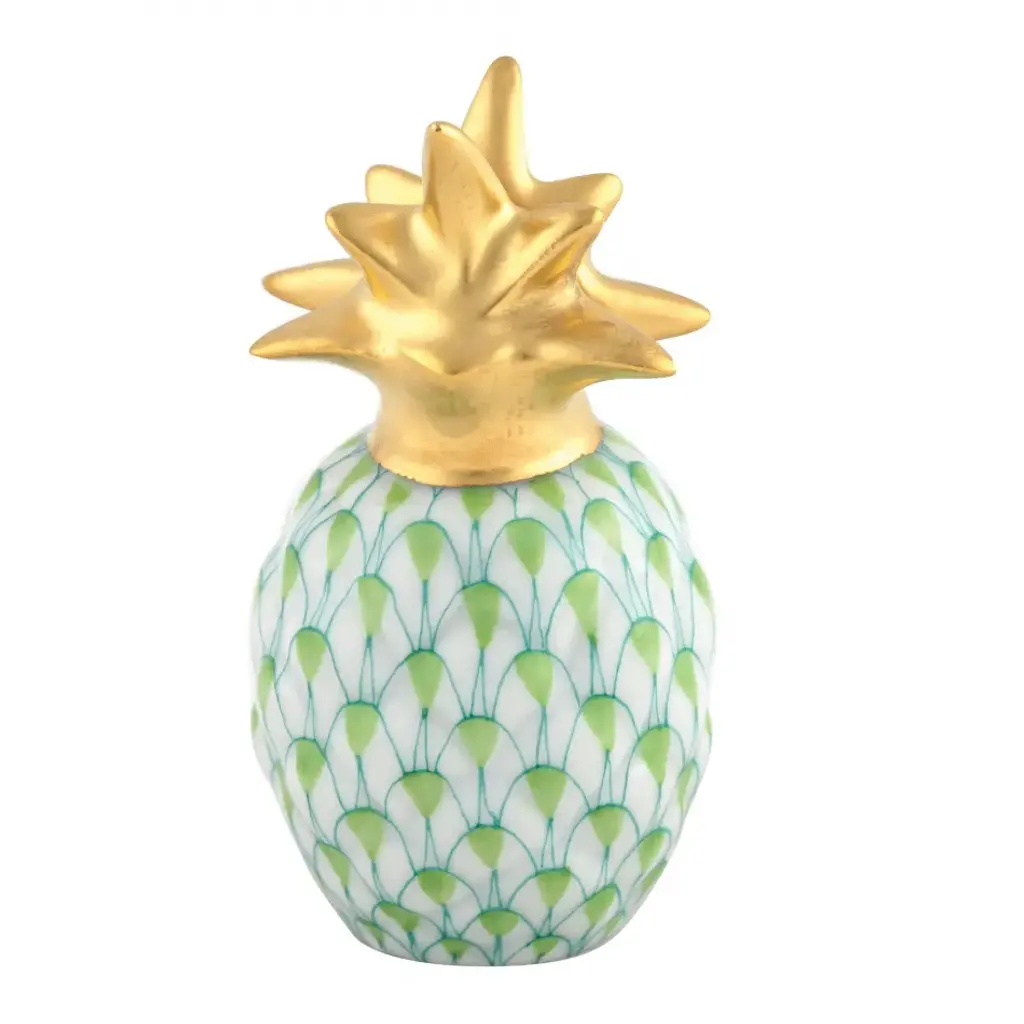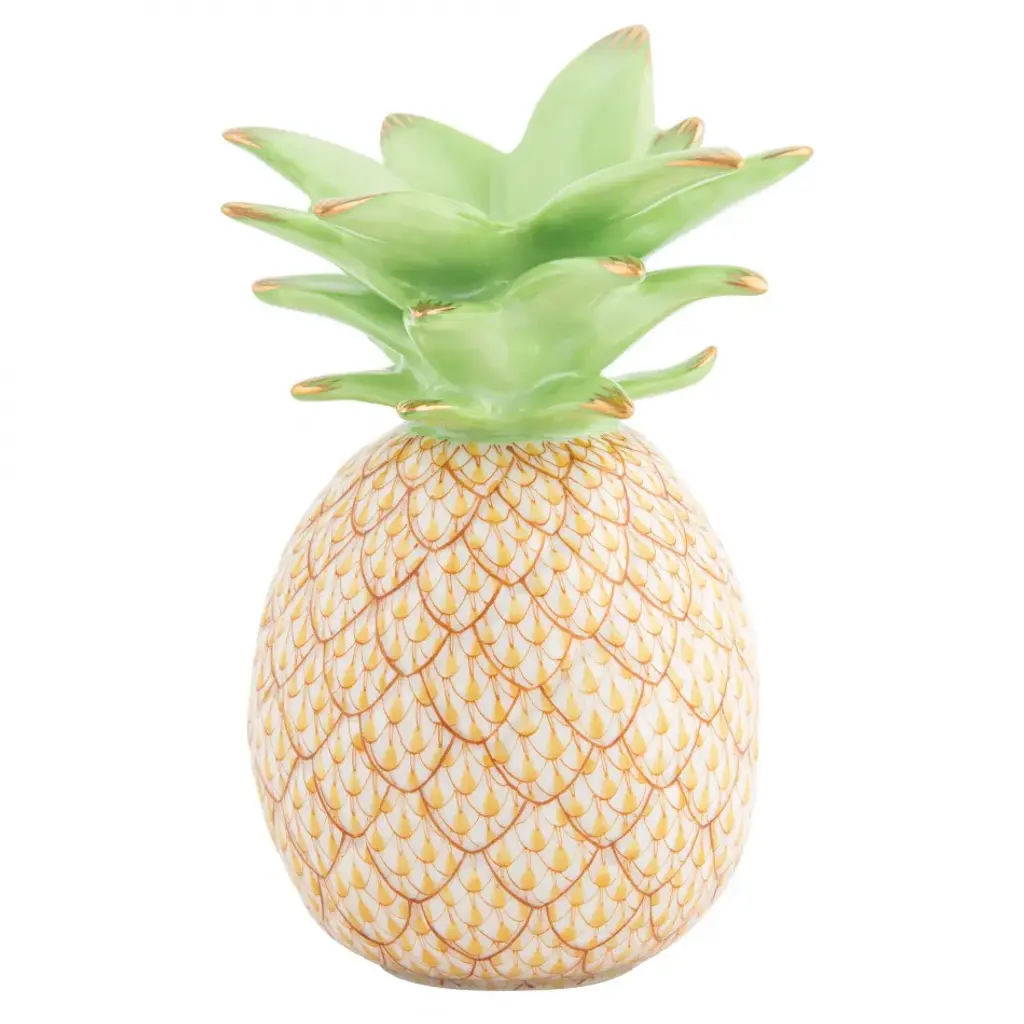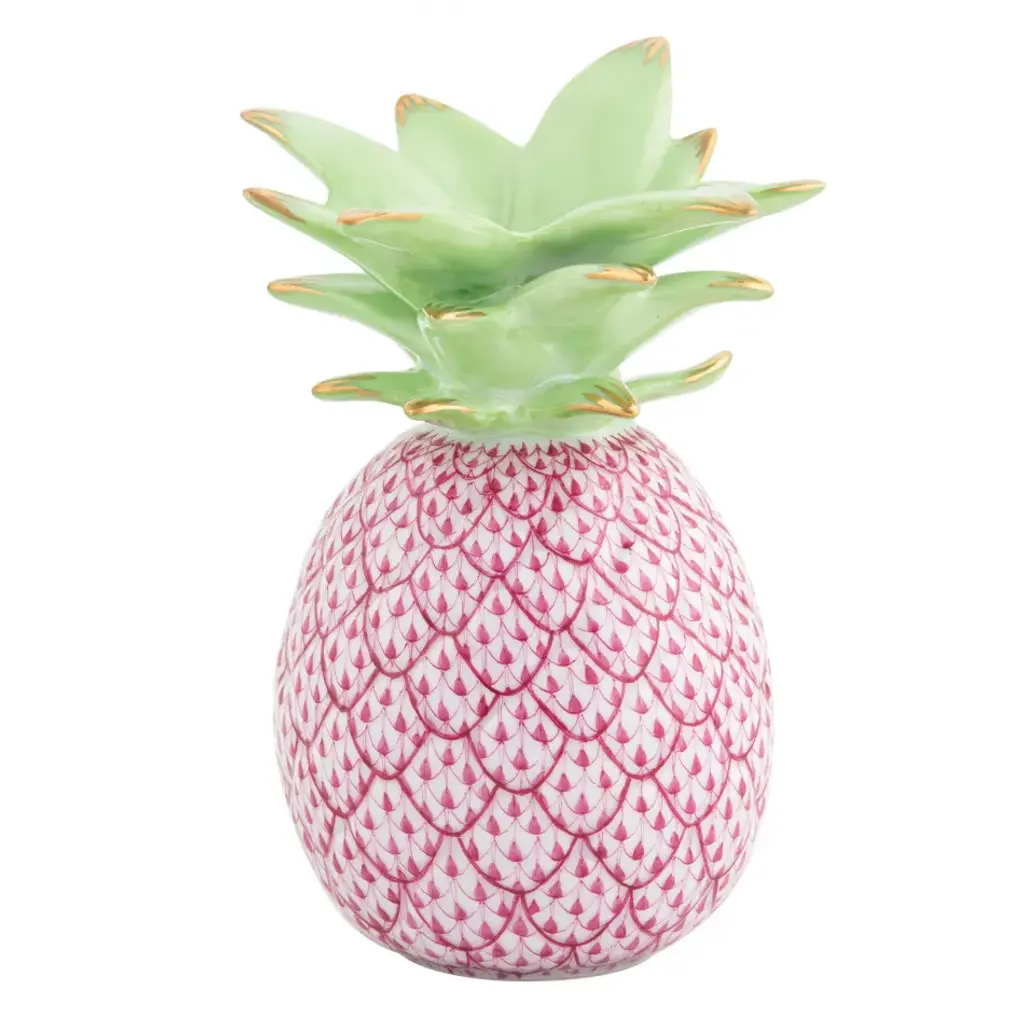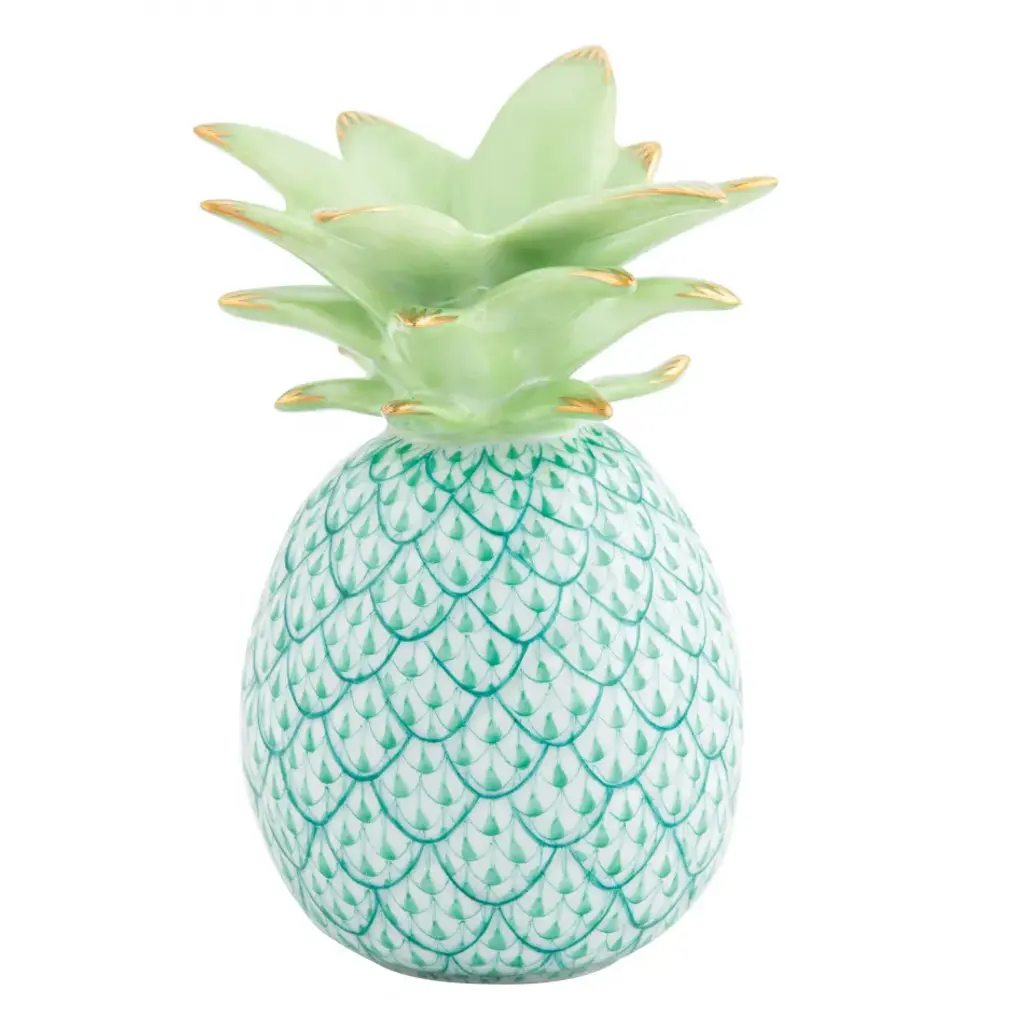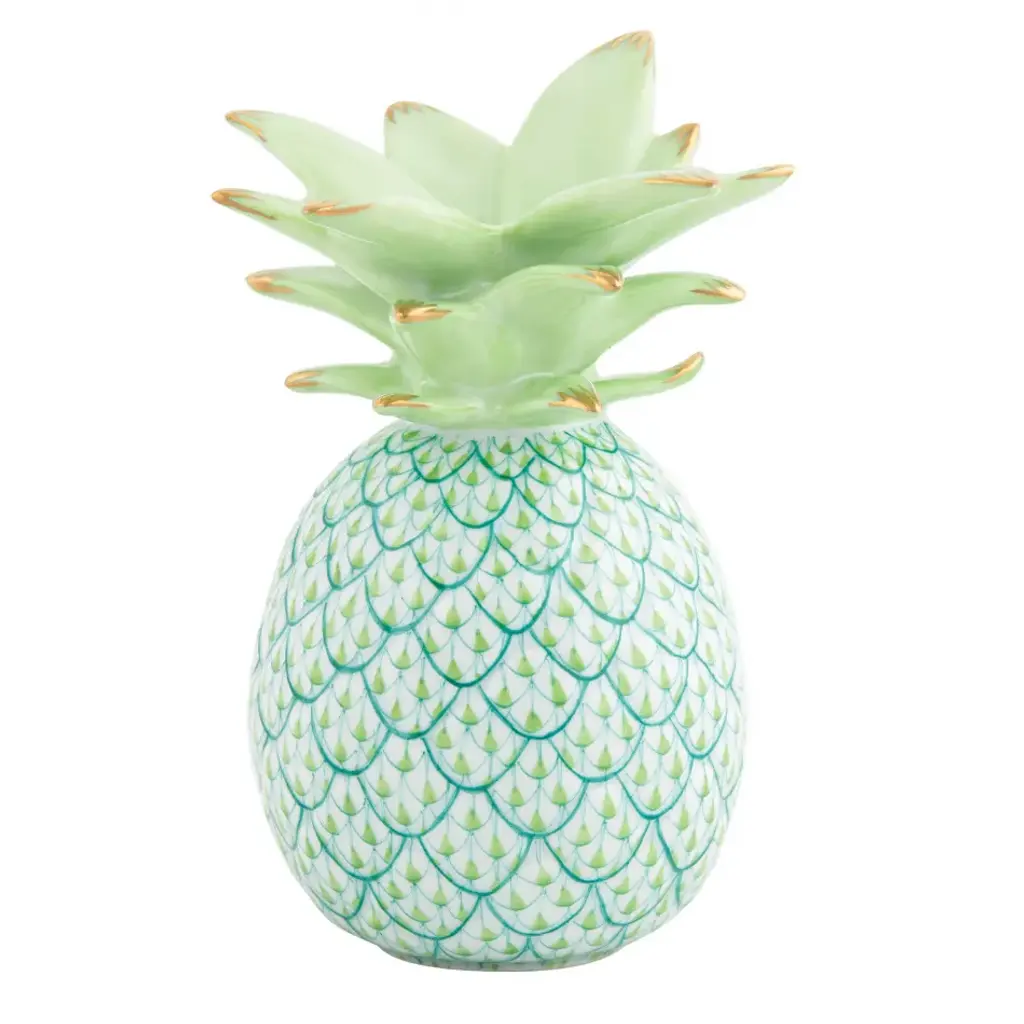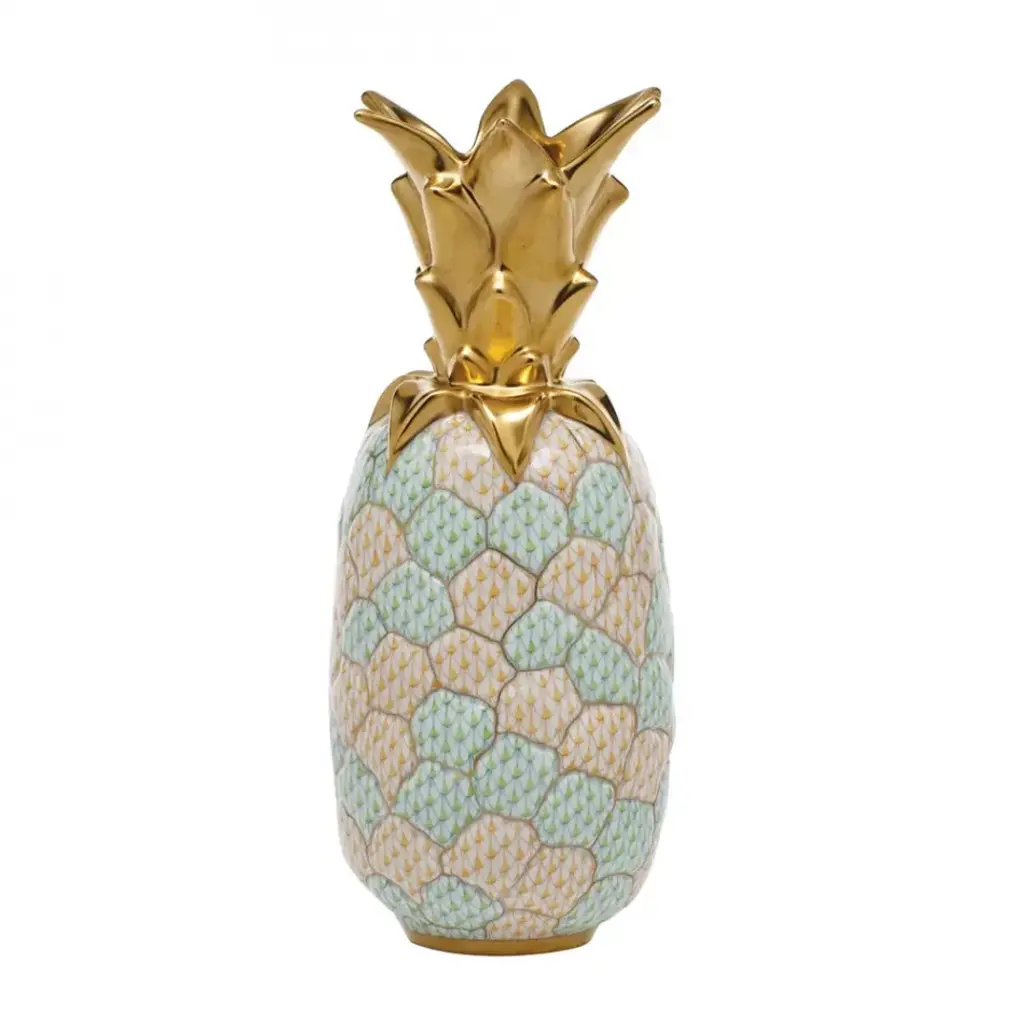
Pineapple Multicolor 3.5 In L X 8.5 In H
$1,550
Gracious Style
During colonial times, many communities consisted of small primitive settlements where the home was at the center of social life and visiting was the main source of entertainment and communication. Any well-heeled hostess of the day would try to impress her guests and reflect her family’s social position by creating grand displays of food. Consisting of pyramids and pedestals of treats often drizzled in sugar and intertwined with flowers and porcelain figurines, the lady of the house would try to outdo her social rivals by offering her guests the most lavish welcome she could afford. Often, these lush displays were topped off by a pineapple. Considered a luxury at the time, pineapples were very scarce since they were difficult to cultivate domestically and often did not survive the long, ocean voyage. That combined with their natural shape made the pineapple the sought after crown on top of these extravagant spectacles. Colonial women were so desperate to have this exotic fruit as a guest at their table that middle-class women would often resort to renting it for the day; of course, this was a well-kept secret between merchant and mistress. Only the wealthiest of neighbors could afford to buy the pineapple outright and enjoy its sweet temptation. With this newest addition to the Reserve Collection, the lady of the house will no longer have to resort to subterfuge to bring a pineapple into the home. While its ranking as an essential for home entertaining may have dwindled, Herend’s version consisting of alternating butterscotch and key lime fishnet panels topped off with a dramatic crown of gold leaves will no doubt still impress guests. Now the biggest porcelain manufactory in Europe, Herend was founded in 1826 to produce earthenware in the small Hungarian village for which it was named. At the time, Hungary was flooded with low-cost pottery, but in 1839, Mor Fischer became the Manufactory’s new owner and he decided to focus on producing dinnerware replacement pieces for Europe’s royal families to complement their valuable porcelain patterns from Germany and the Far East. As his client base grew, Fischer commissioned his artists to begin designing dinnerware patterns of their own. Queen Victoria’s 1851 purchase of a large set for Windsor Castle was a milestone, setting the stage for aristocrats throughout Europe to clamor for Herend in their estates. In the 1850s, Herend added meticulously-crafted figurines to its creations. Herend’s trademark fishnet pattern, which is widely recognized and prized as Herend’s signature design, started in 1858 when an artist who was intrigued with a Chinese plate’s fish scale design painted it onto a rooster figurine to imitate feathers.
Similar Items