•
Onton Team
Interior designers love a good turn of phrase. You’ll hear about spaces that “breathe,” objects that “tell a narrative,” and layouts designed with “intention” — all in service of creating “emphasis.” But what does it all mean?
Emphasis in interior design is more than a buzzword. It’s a fundamental design principle that helps everything in a room fall into place. Read on to learn the importance of creating a focal point that draws the eye in, creates a sense of harmony, and makes the rest of your design feel intentional rather than accidental.
What’s emphasis in interior design?
Emphasis in a room is about choosing one element to take center stage. A focal point can be anything — a piece of furniture, an architectural detail, a striking lighting fixture. Some features, like a fireplace, naturally attract attention. Others, like a low-slung Japanese-style sofa, may need an extra push to stand out. But no matter what you choose, you’ll want to use contrasting colors and shape, placement, scale, or color to guide the eye and establish a clear visual hierarchy in interior design.
Imagine a living room with a beautiful bay window. On its own, the window is charming, but without proper emphasis, it might not draw the eye. Add two towering plants for balance, sheer curtains that soften the light, and a low-slung sofa that frames the view, and suddenly the window becomes the star of the room's interior design.
Key elements to create emphasis in interior design
How do you emphasize one element in a room full of other stuff? It boils down to a few key furniture and decor strategies.
Color and contrast
Bold color choices are an easy way to draw attention to a focal point. For example, an emerald green sofa against off-white wallpaper creates a high-contrast pair that automatically pulls you in. Even a single unexpected hue in an otherwise muted room can act like a visual exclamation point — like a gold-toned mirror frame and matching fire screen over a sleek fireplace.
Texture and pattern
Even in a monochrome color palette, texture and pattern create depth, which invites a viewer to explore. A boucle chair in a room full of smooth surfaces or a woven wall hanging against a flat wall gives a space dimension. These tactile details break down monotony and subtly signal what deserves your attention.
Lighting
Lighting is directional. A well-placed pendant light, inset down lights, or a dramatic floor lamp highlights a specific area to create a sense of emphasis. It tells your eye: “Look over here.”
Scale and proportion
Bigger doesn’t always mean better, but it definitely gets noticed. Oversized Brutalist artwork, an extra-tall headboard, or a carved room divider that stretches wide can all serve as focal points simply by standing out from the rest of the room’s proportions.
Types of emphasis in interior design
Now that we’ve covered how furniture and decor can emphasize a space and direct the viewer’s eye, let’s examine how designers achieve that emphasis. Here are a few go-to strategies.
Emphasis by contrast
If you step back from a fully furnished room and feel like everything blends together, you’re in need of some contrast. An emerald green accent wall in an all-white bathroom or bright red rug in a neutral-toned Scandinavian-inspired space creates the kind of deliberate contrast that tells your eye where to go. It’s just as much about varying a visual pattern as it is about giving the room an anchor.
Emphasis by isolation
Sometimes, what makes something stand out isn’t what’s around it but what isn’t. Emphasis by isolation uses negative space to draw attention to a single design element. Think of a large piece of artwork on an otherwise bare wall or a solitary reading chair in a hobby room. All that breathing room makes the object feel intentional. When everything else steps back, the focal point steps forward.
Emphasis by placement
Placement works best when it responds to the architecture of a room. Your focal point should work with what’s already there — centering a bed between two windows, placing seating around a fireplace, or positioning a mirror to reflect an archway with intricate millwork. These choices reinforce the room’s structure, which makes emphasis in interior design feel like a natural reflection of the room itself.
4 examples of emphasis in different rooms
Emphasis looks different depending on the space and its specific purpose. Here’s how to create focal points in interior design for every room in the house.
Living room
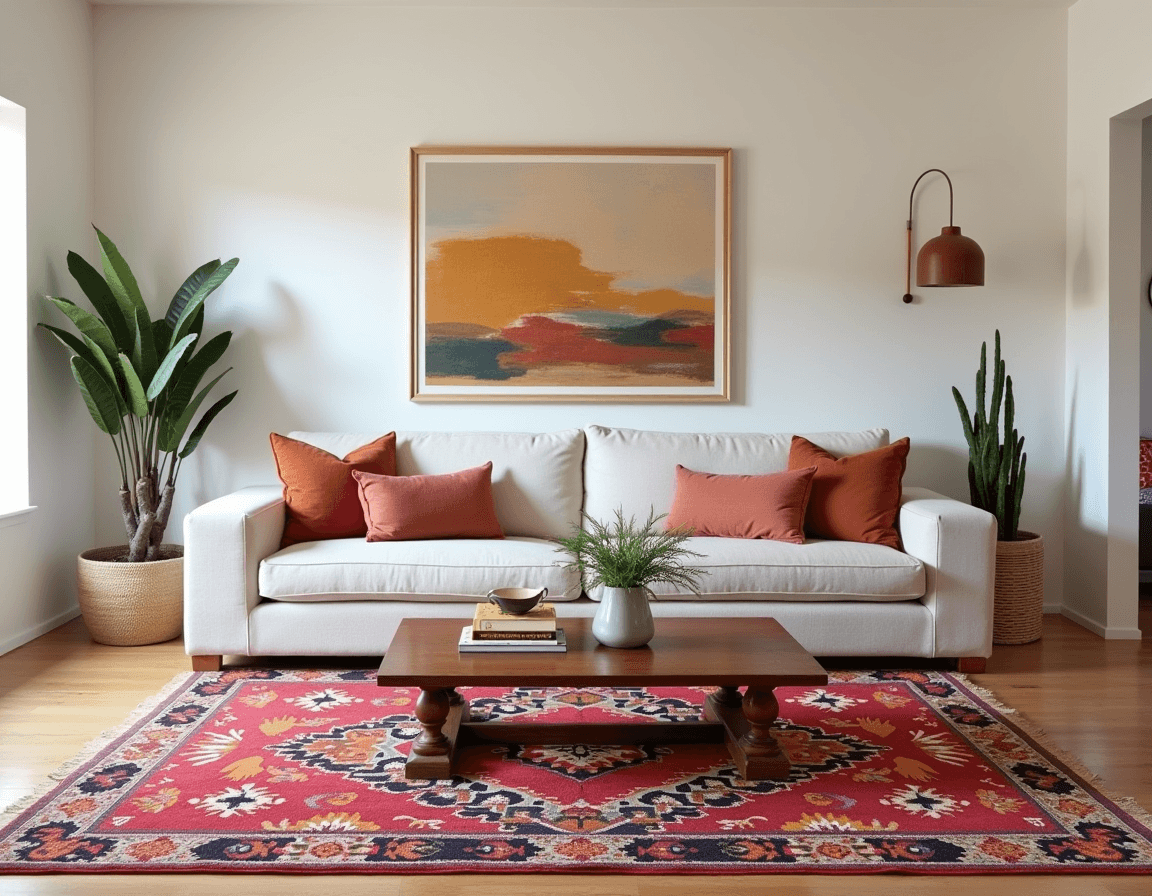
Unless your living room has a standout architectural feature — like a fireplace, beamed ceilings, or a stunning view — the couch is your focal point. It’s the largest piece in the room, and where people naturally gather, so designing around it makes sense.
This living room uses emphasis primarily through feng-shui inspired symmetrical placement. Two tall plants flank the white couch, naturally framing the space. A painting, rug, and coffee table center the couch even further. Color and pattern add extra support — a coral rug with pops of yellow, blue, and white mimic the artwork, naturally pulling the eye up and over the couch.
Find the perfect couch on Onton
Bedroom
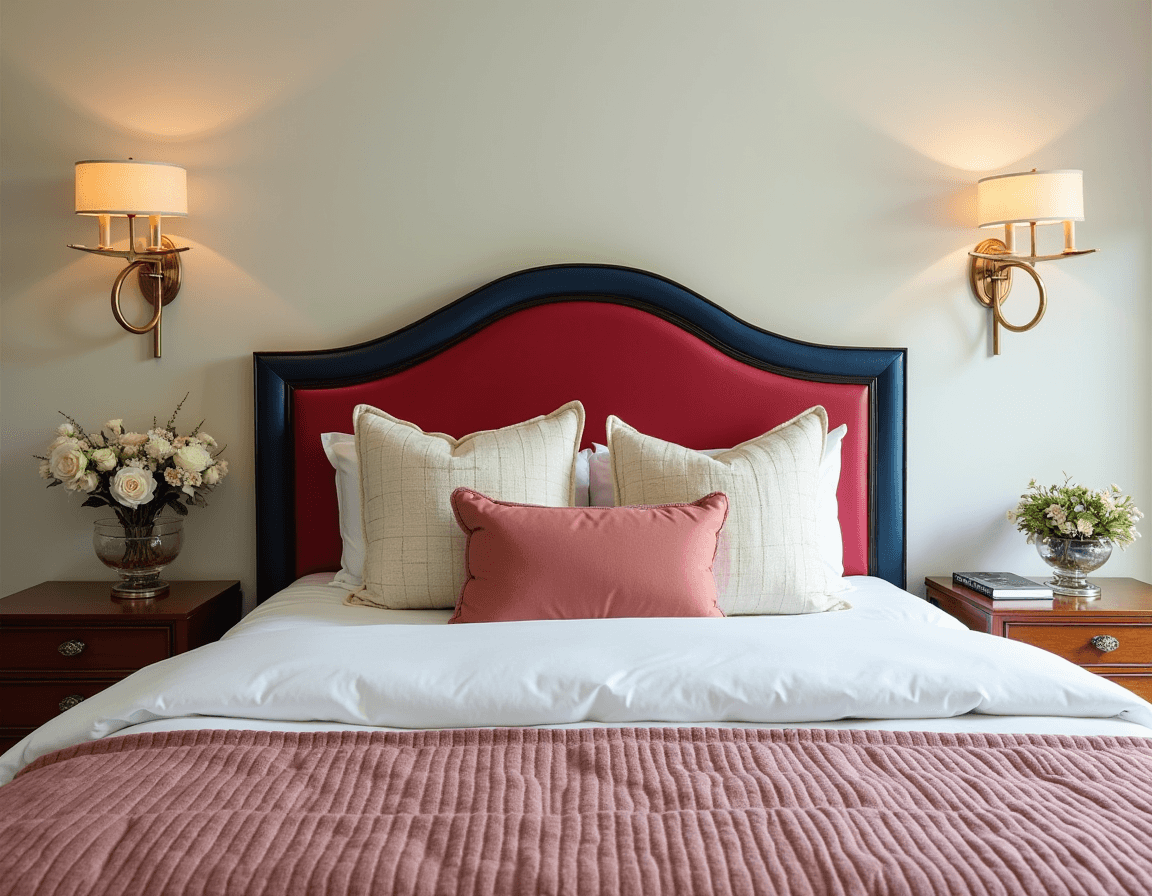
Bedrooms are for rest and relaxation, so naturally you want to attract your attention to the bed. Similar to the living room, this bedroom uses symmetrical placement and subtle color contrast to convince you to take a load off. A bold red and navy headboard immediately grabs your eye, while matching nightstands, flower arrangements, and wall sconces subtly frame everything.
Dining room
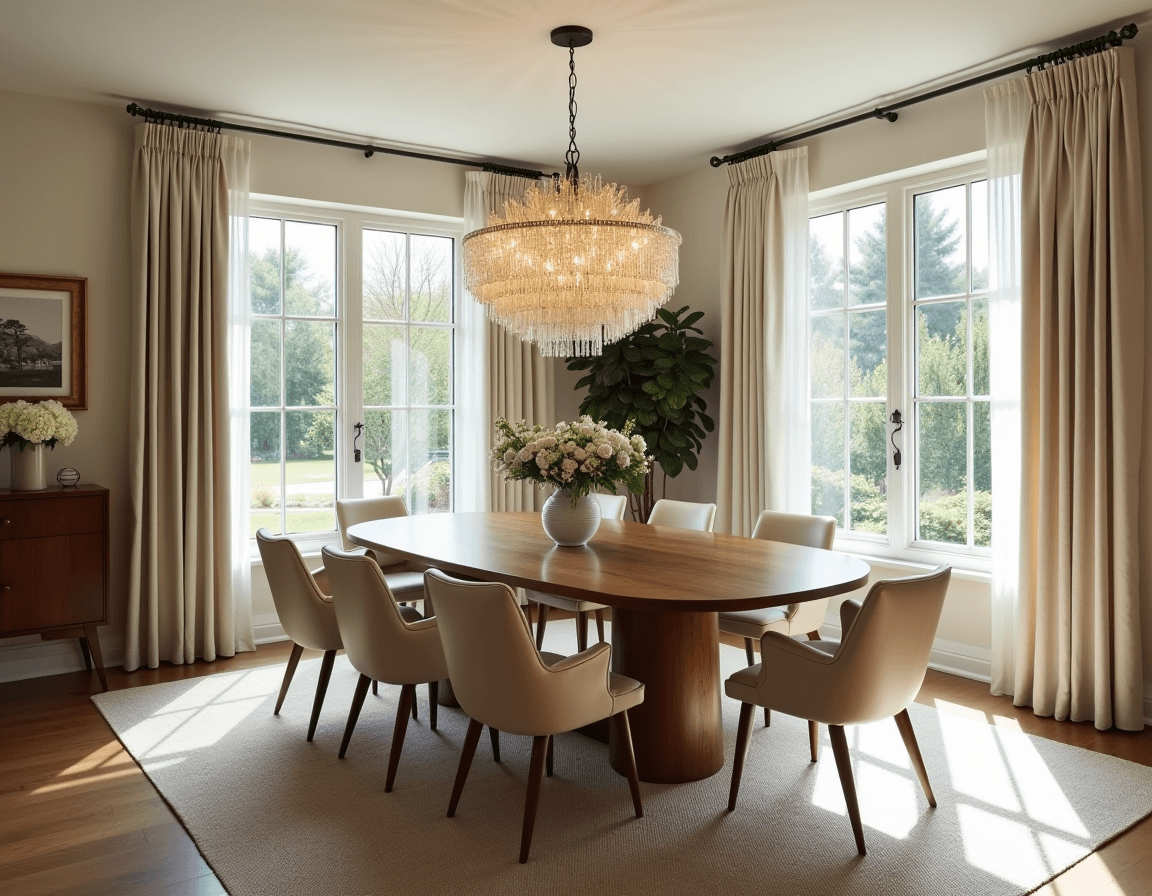
Formal dining rooms should encourage guests to linger over a warm meal and conversation. This traditional interior design uses a large chandelier full of texture to bring your eye toward the dining table. Subtle curves on the dining table and chairs mimic the curves of the light fixture, creating a natural center.
If you don’t want to install a chandelier, a bold centerpiece or patterned rug beneath the dining table can create a similar focal point.
Office
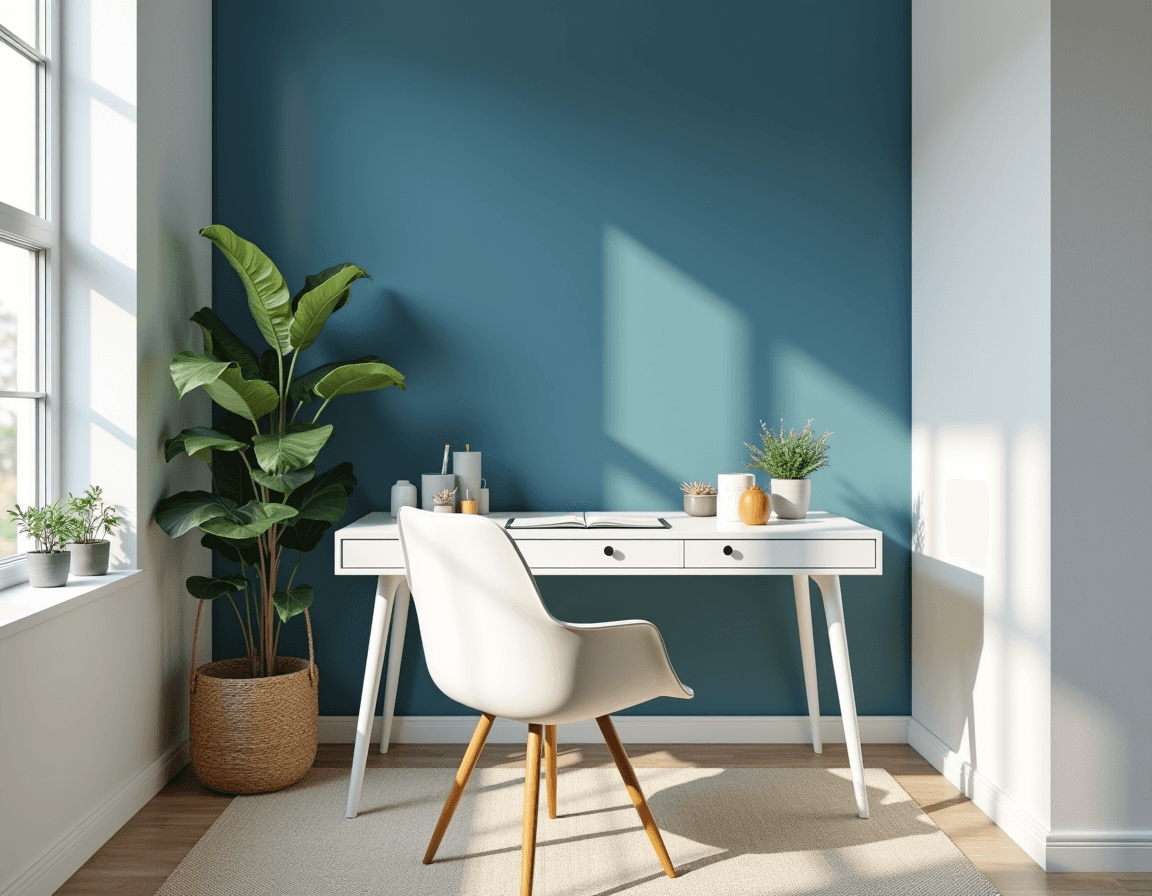
An office’s interior design should keep your mind on track, but that doesn’t mean it can’t make a statement. Here, a bold-colored accent wall breaks up the neutral color palette, highlighting the work space. And plants disrupt the clean-lined aesthetic and lead the eye toward a large window, which can be gazed out for moments of deep thinking or a quick break.
Find your perfect focal point with Onton
Need the perfect furniture piece to bring all eyes to that gorgeous fireplace? Let Onton’s AI-powered search engine help you find design elements that emphasize all the right places. Try prompts like “statement sofa” or “oversized chandelier” and browse items from the best brands.
Then, bring it all to life with Onton’s Imagine tool. Upload a photo of your space and experiment with color palettes, materials, and furniture combos to see how everything comes together before you commit.
Dream up your ideal focal point aesthetic with Onton.
Related reading
Keep reading
Design guides, smarter shopping, and AI-powered ways to find what you love
