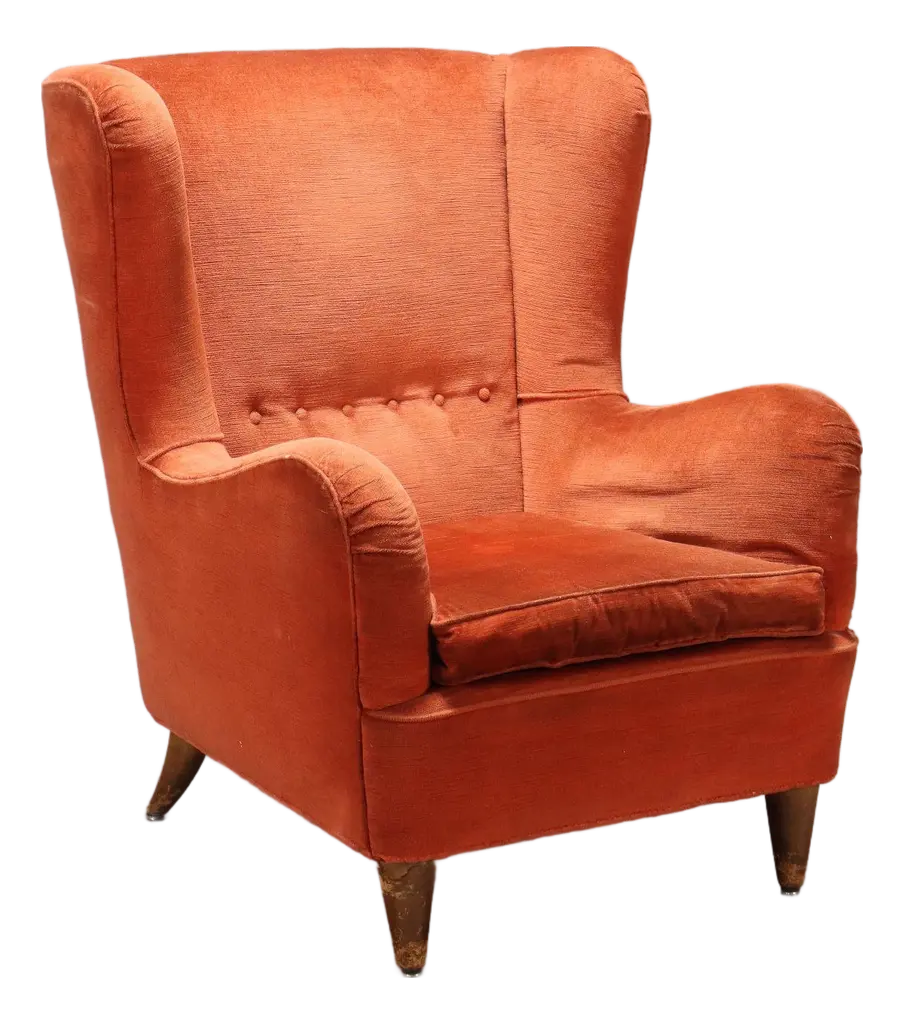
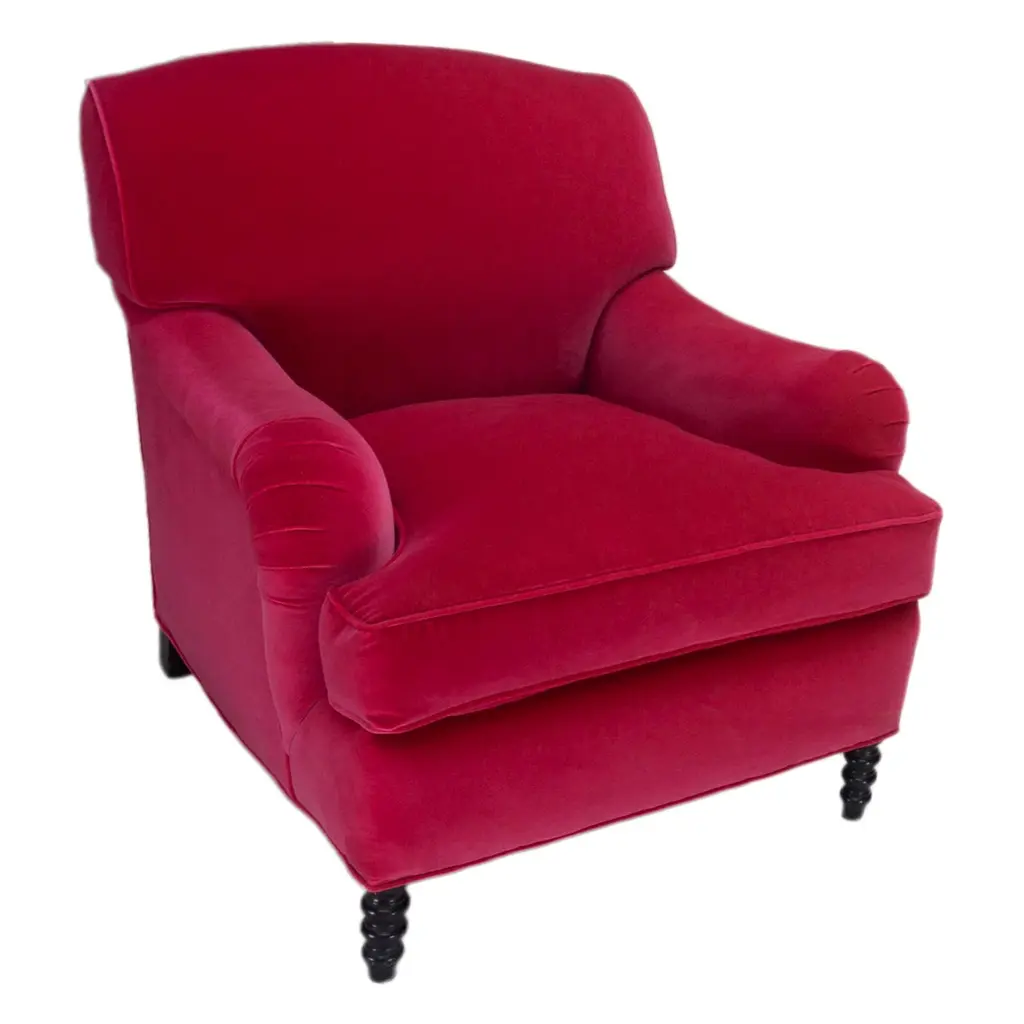
This high-backed upholstered armchair dates from around 1880 and follows the then-common form of fully upholstered seating with turned front legs on casters. The rising back, the rolled armrests, and the tapered legs create a calm, well-proportioned overall form. Historical Context: Fully upholstered armchairs of this type emerged as part of the bourgeois domestic culture of the late 19th century, when seating comfort and upholstered surfaces gained increasing importance. Such armchairs were typically placed in the parlor or living room and served as comfortable individual seating separate from the dining set. The widespread use of coil spring upholstery and turned, sometimes ebonized, legs on casters allowed for both seating comfort and easy repositioning within the room. Features: The front legs are ebonized, turned, and mounted on wooden swivel casters. The armrests are finished with rolled, upholstered ends that are visibly edged at the front. Design: The armchair follows the late historicist upholstery style of the late 19th century, with echoes of the French fauteuil. The fully upholstered, frameless outer contour emphasizes the flowing lines of the back and arms, while the dark, turned leg frame provides a calm formal counterpoint to the expansive upholstery. Function: Formerly used as a parlor and living room armchair in prestigious residential settings. Today, the piece is suitable as a reading or accent chair in living rooms, bedrooms, or dressing areas. Dimensions: Height 93 cm × Width 81 cm × Depth 67 cm; Seat height 40 cm, seat width 53 cm, seat depth 52 cm. Material and Condition: Upholstery in velvet, presumably mohair or wool velvet; frame in wood with ebonized, turned front legs and wooden casters. The armchair is in good condition for its age, with a subtle patina and minor signs of wear. Partial paint chipping is visible on the ebonized legs, and the wooden casters show signs of age. These signs of age and use are part of the historical character.
Similar products