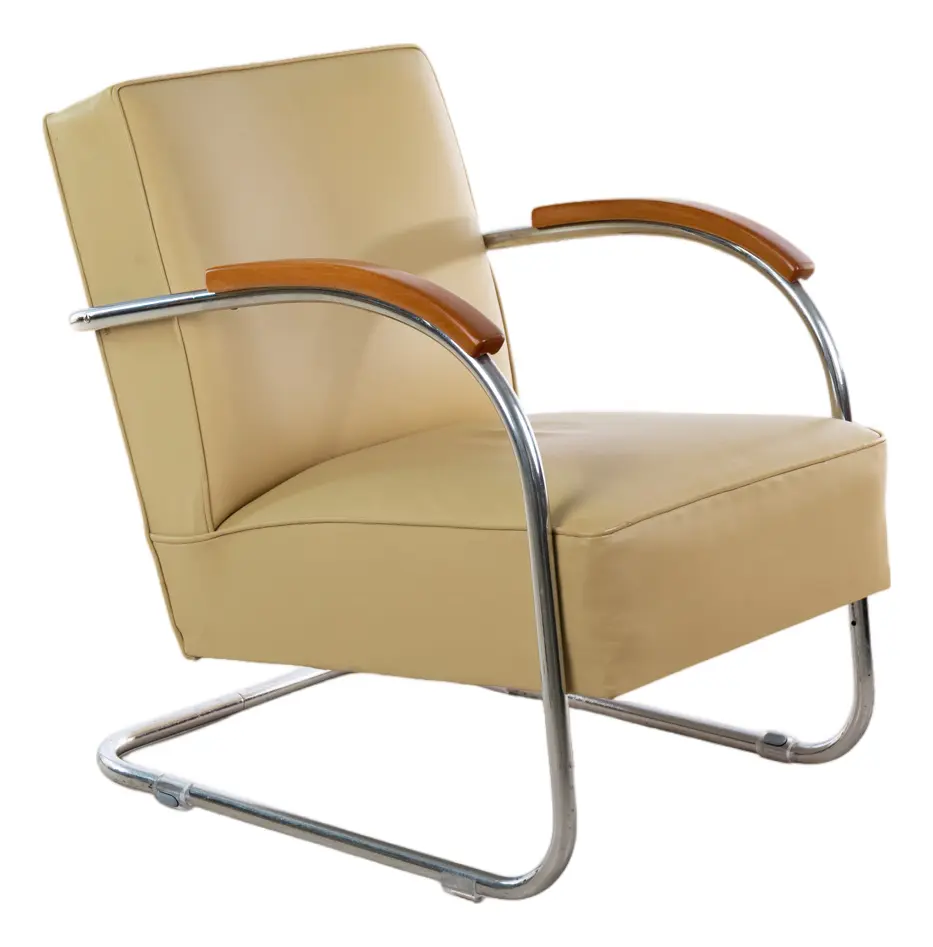
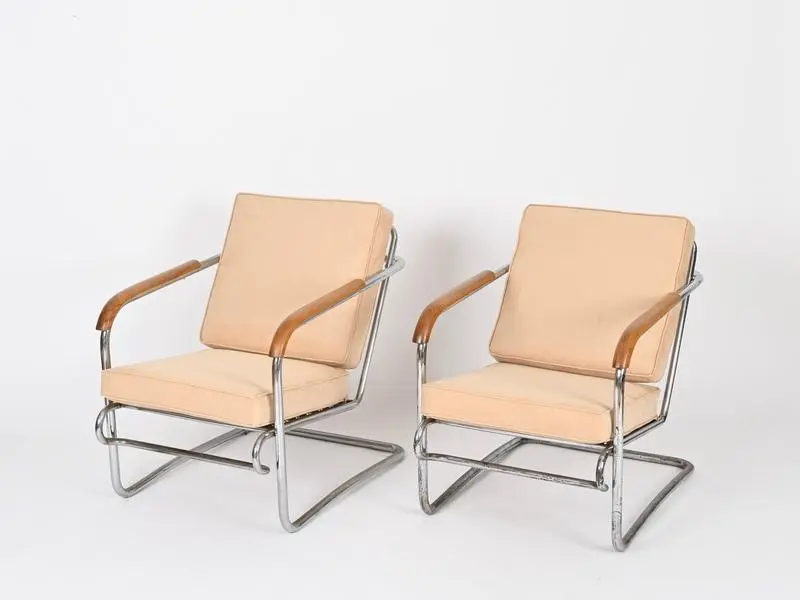
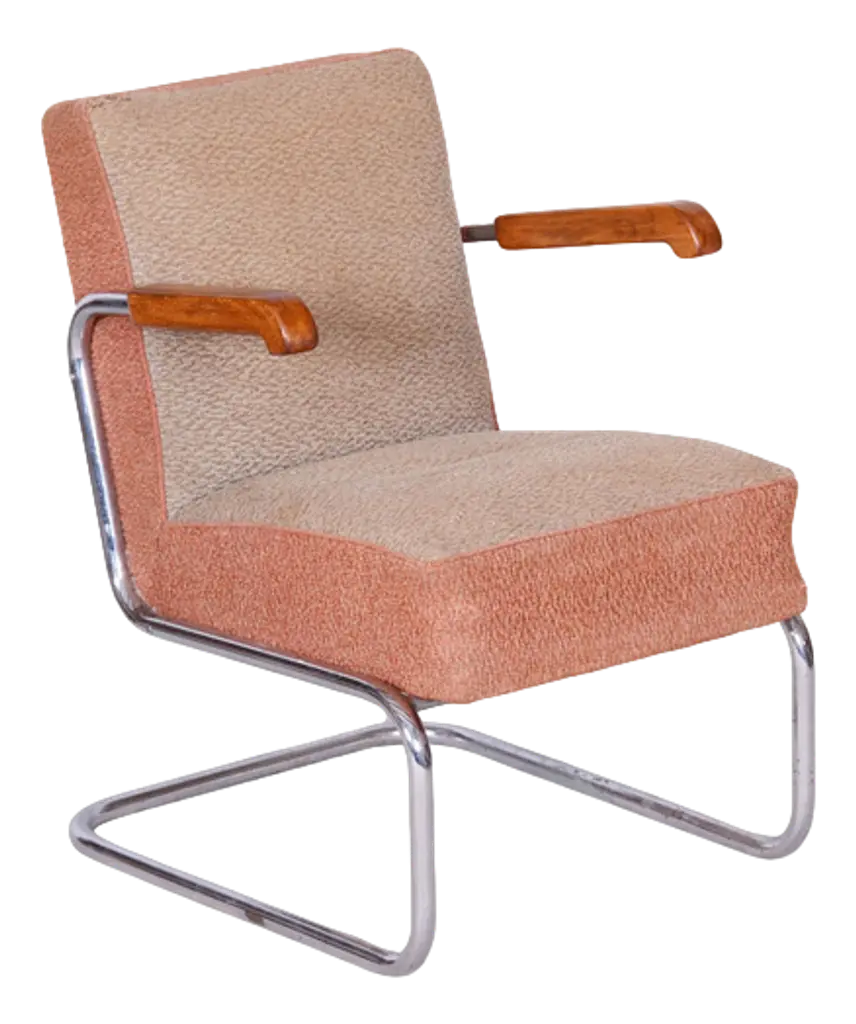
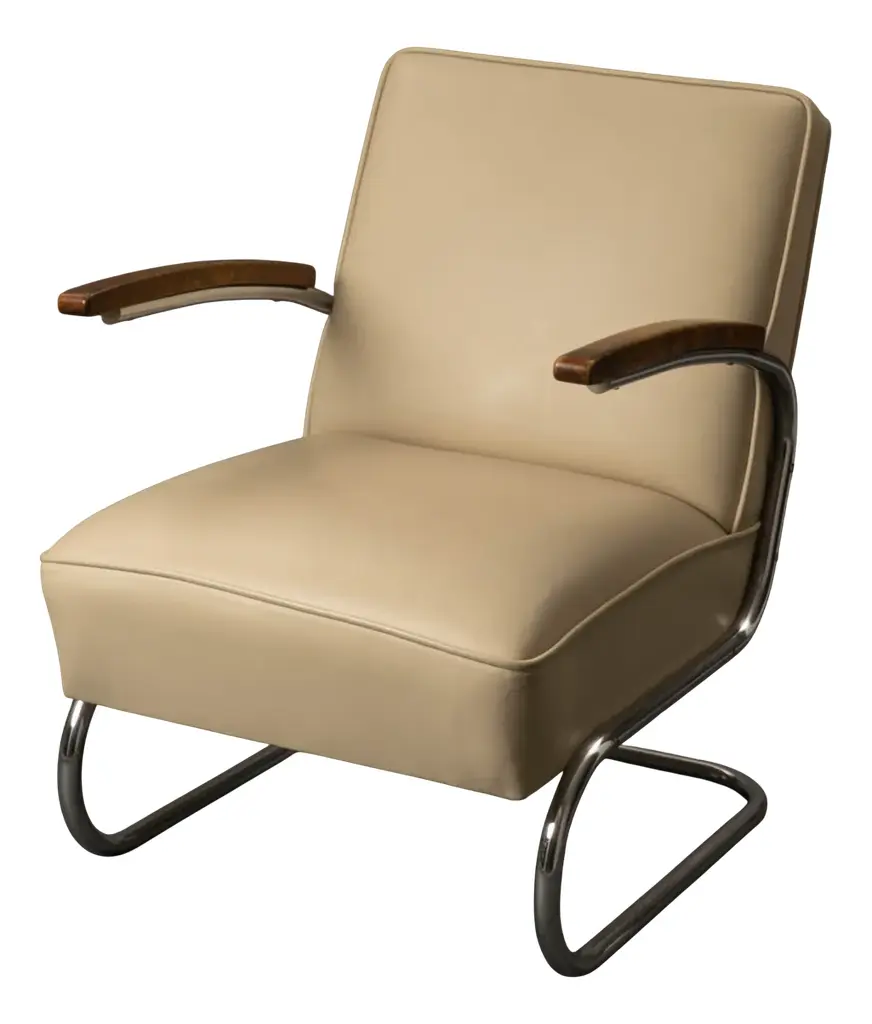
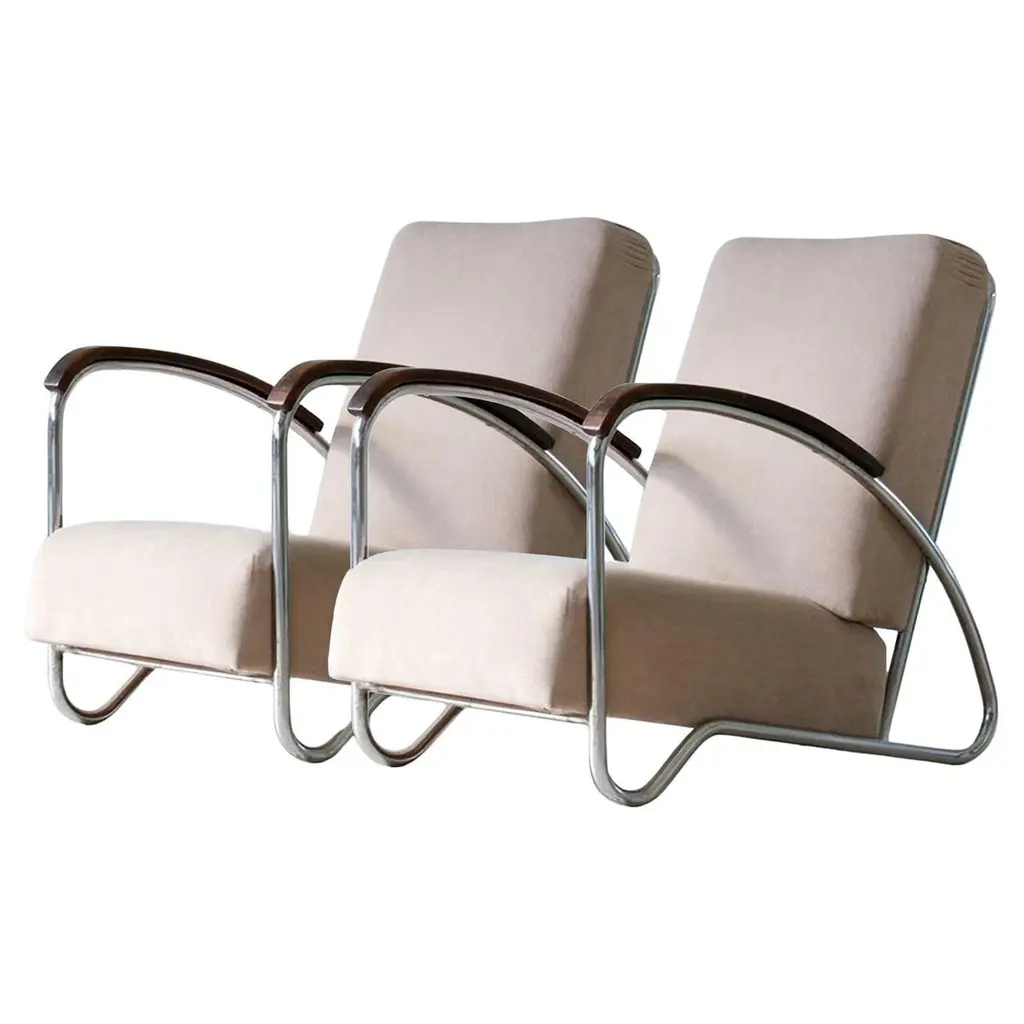
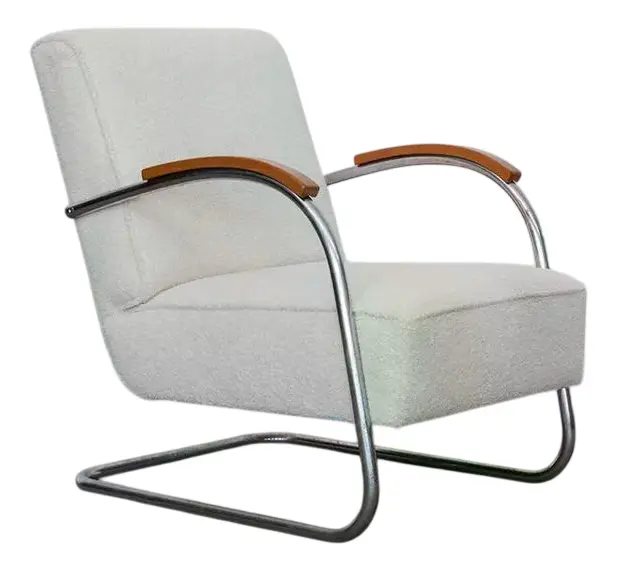
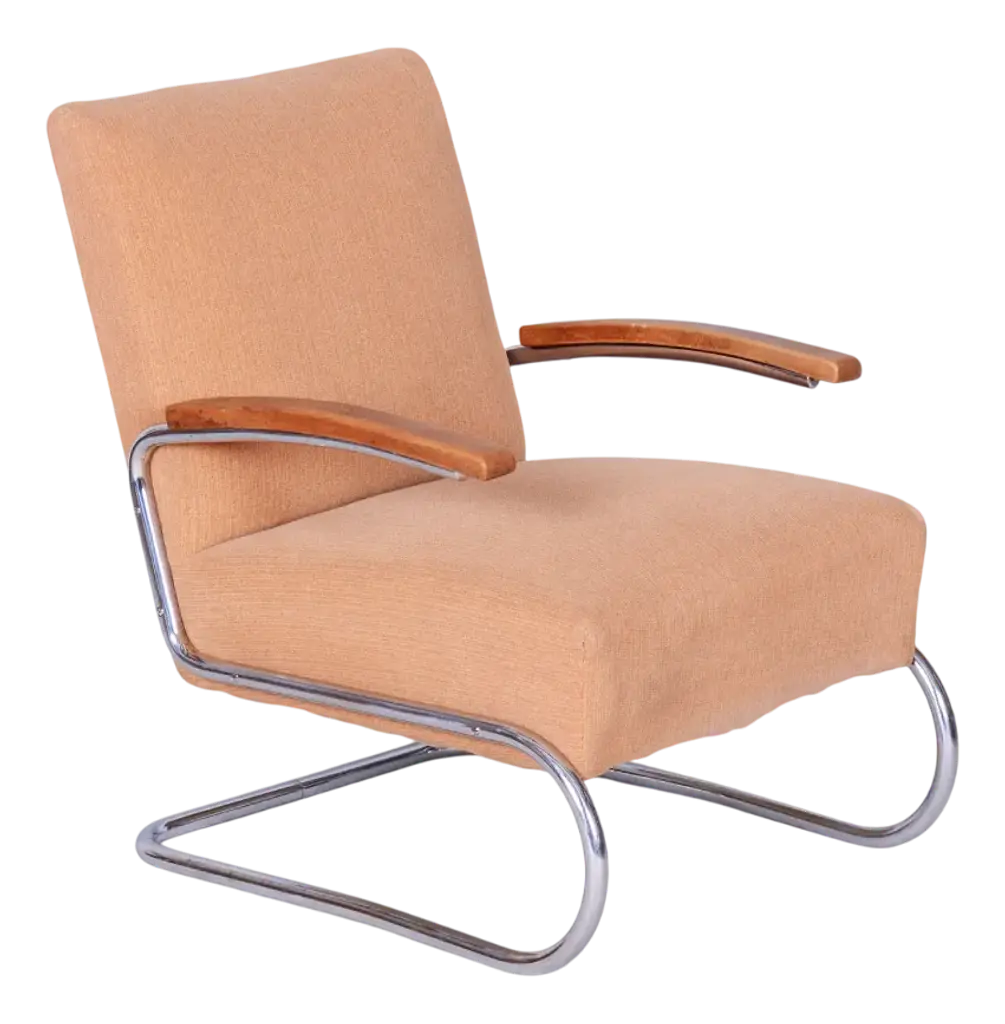
Introducing an exceptional tubular armchair in the Bauhaus style from the 1930s, distinguished by its innovative double-spring construction. This atypical model is attributed with high probability to the visionary Czechoslovak architect Jindřich Halabala. His original double-spring solution, achieved through the S-shaped curve of the side supporting tubes of the frame, represents a remarkable refinement of Marcel Breuer original designs. Inspiration may have originated from iconic models such as the SAB model No. 533 armchair or the elegant Thonet France chair. The frame of the armchair, made of seamless chrome-plated steel tubing, has undergone precise professional cleaning, restoring its original luster. The armrests, crafted from bent solid oak, boast a revived original polish that highlights the natural beauty of the wood. The new professional spring upholstery, made from high-quality cotton fabric with an elegant contrasting piping according to traditional upholstery techniques, ensures exceptional seating comfort. This armchair is not merely a design element but a testament to the innovative approach to furniture design of the interwar period. Its unique structural solution and high quality of craftsmanship make it a collectors item of significant value and a fully functional statement piece that will elegantly enhance any interior. According to the original process, our professional refurbishing team in Czechia has restored and reupholstered the item. It has been re-polished with polyutherane piano lacquer by our professional refurbishing team in Czechia according to the original process. This item features classic Art Deco elements. Art Deco is a style that originated in France in the early 20th century. Its furniture designs are meticulously crafted, usually using exotic woods. Pieces are typically lacquered to give off a dazzling gloss. These eloquently crafted pieces will add visual performance and posh to any interior. This piece is attributed to the mentioned designer/maker. It has no attribution mark and no official proof of authenticity, however it is well documented in design history. I take full responsibility for any authenticity issues arising from misattribution
Similar products