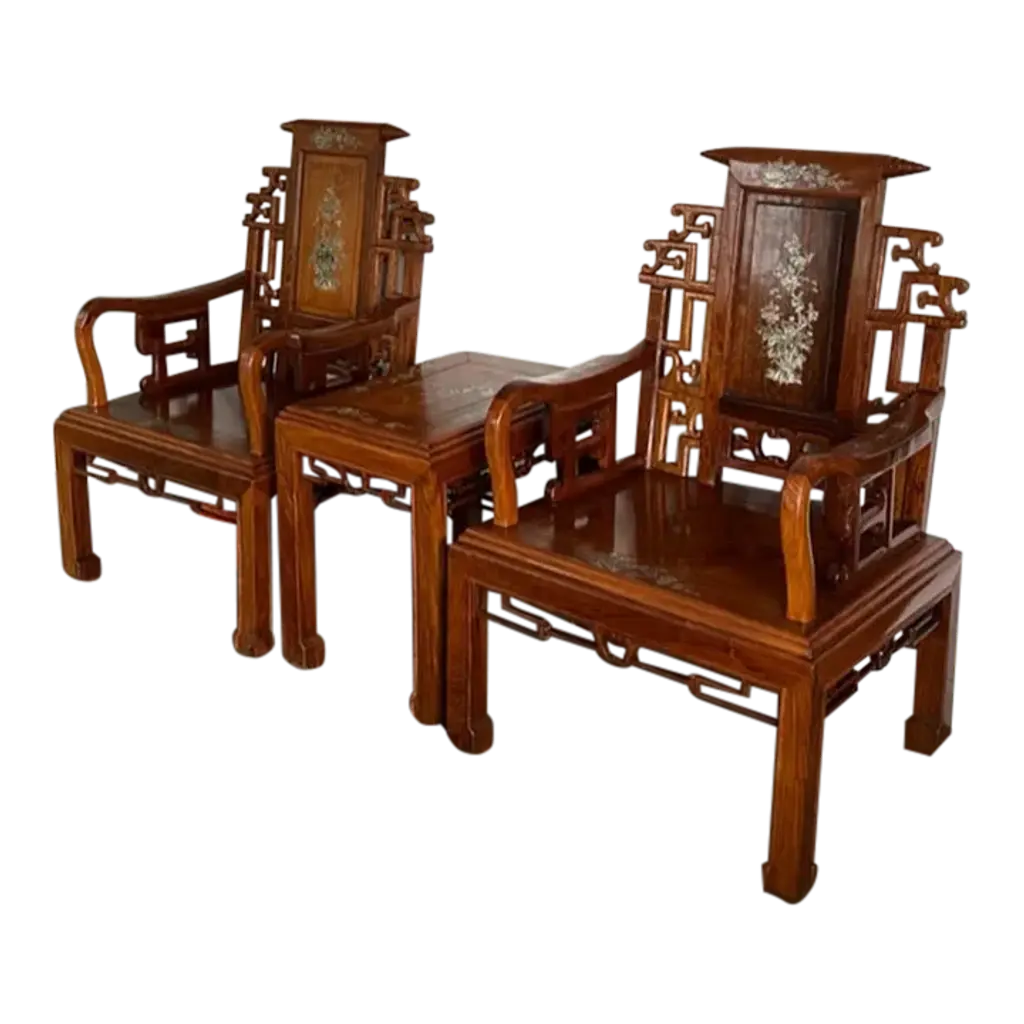
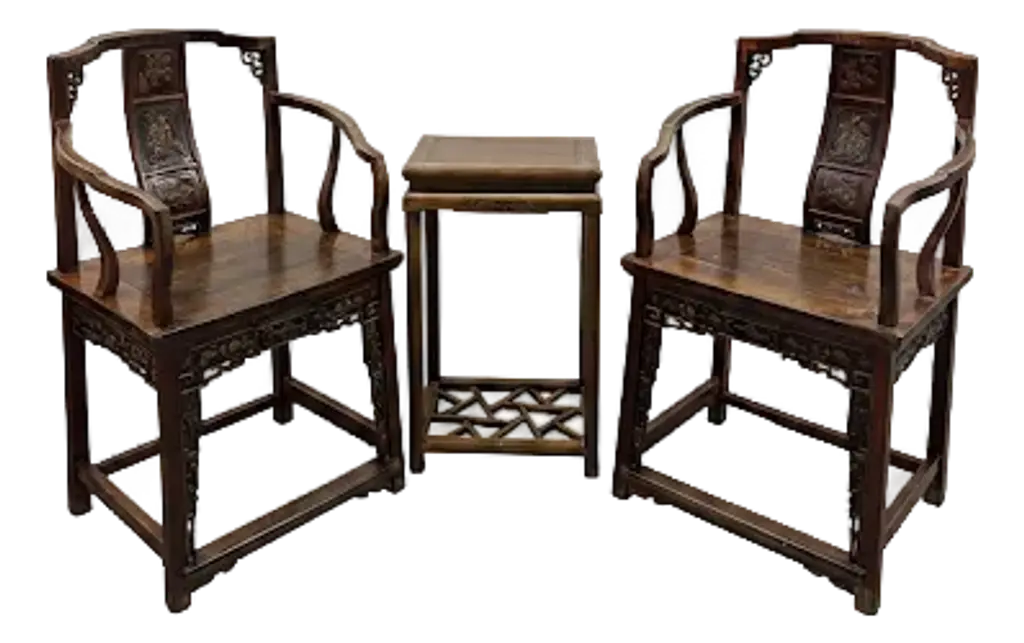
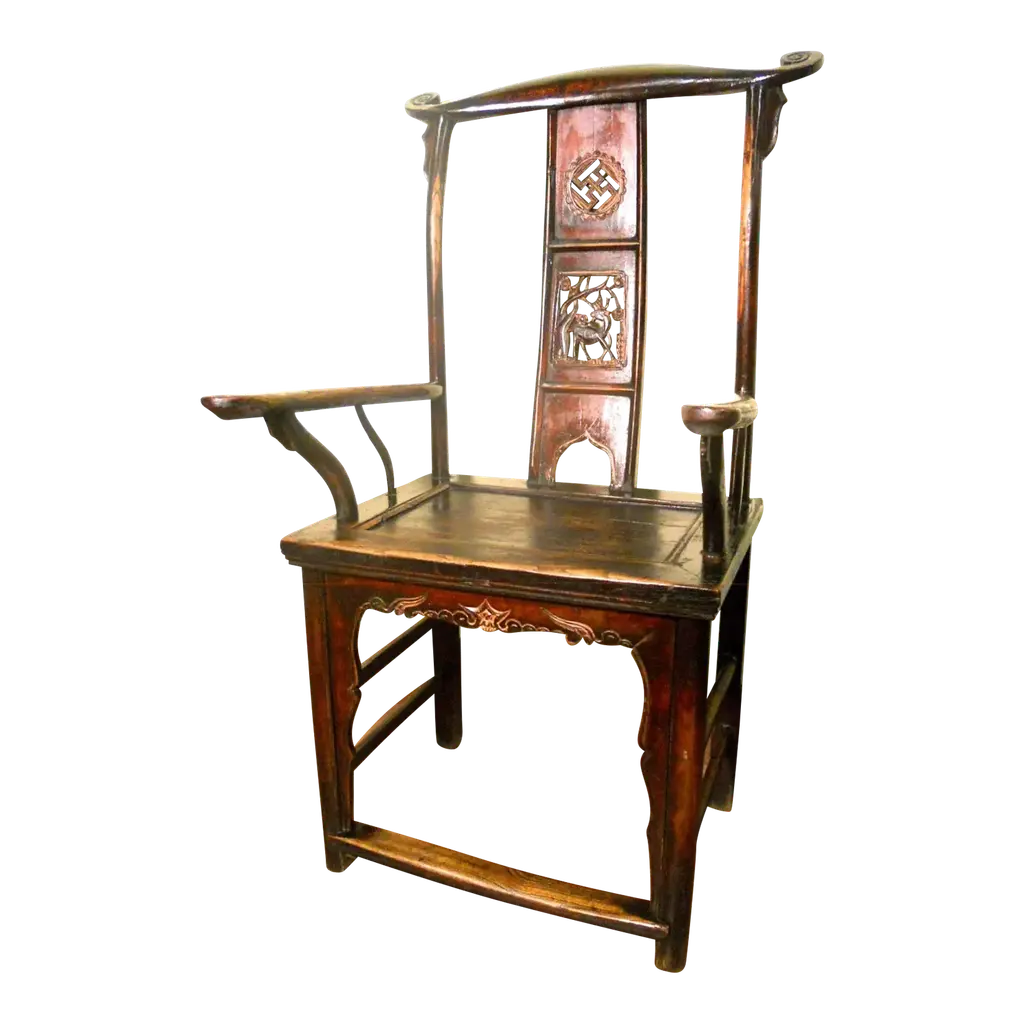
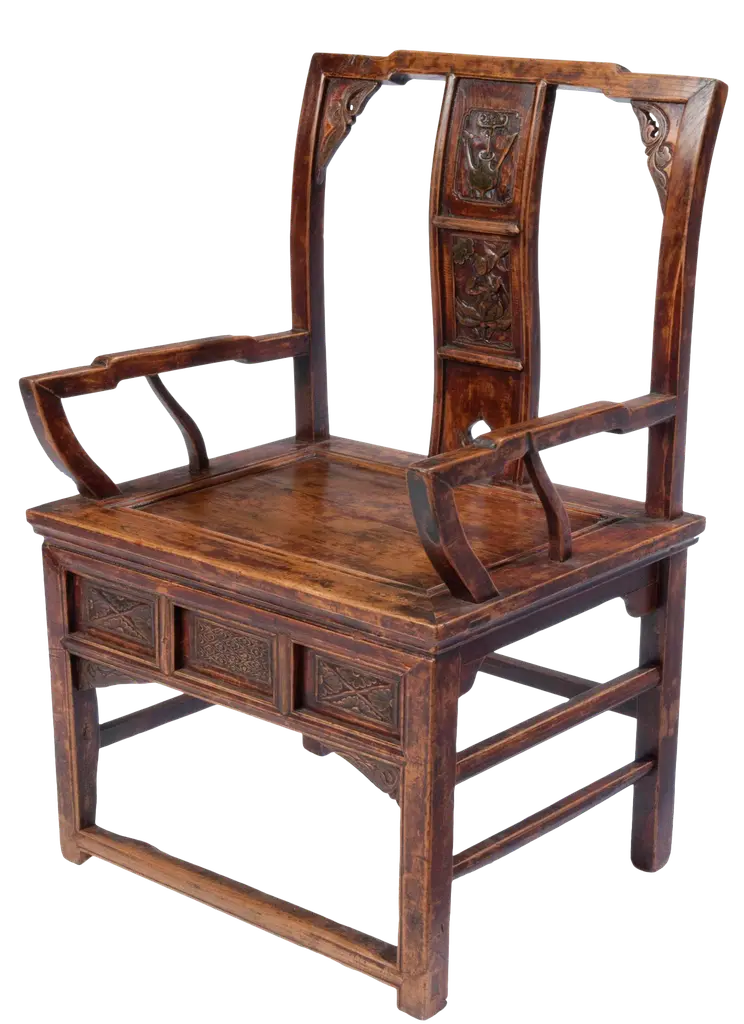
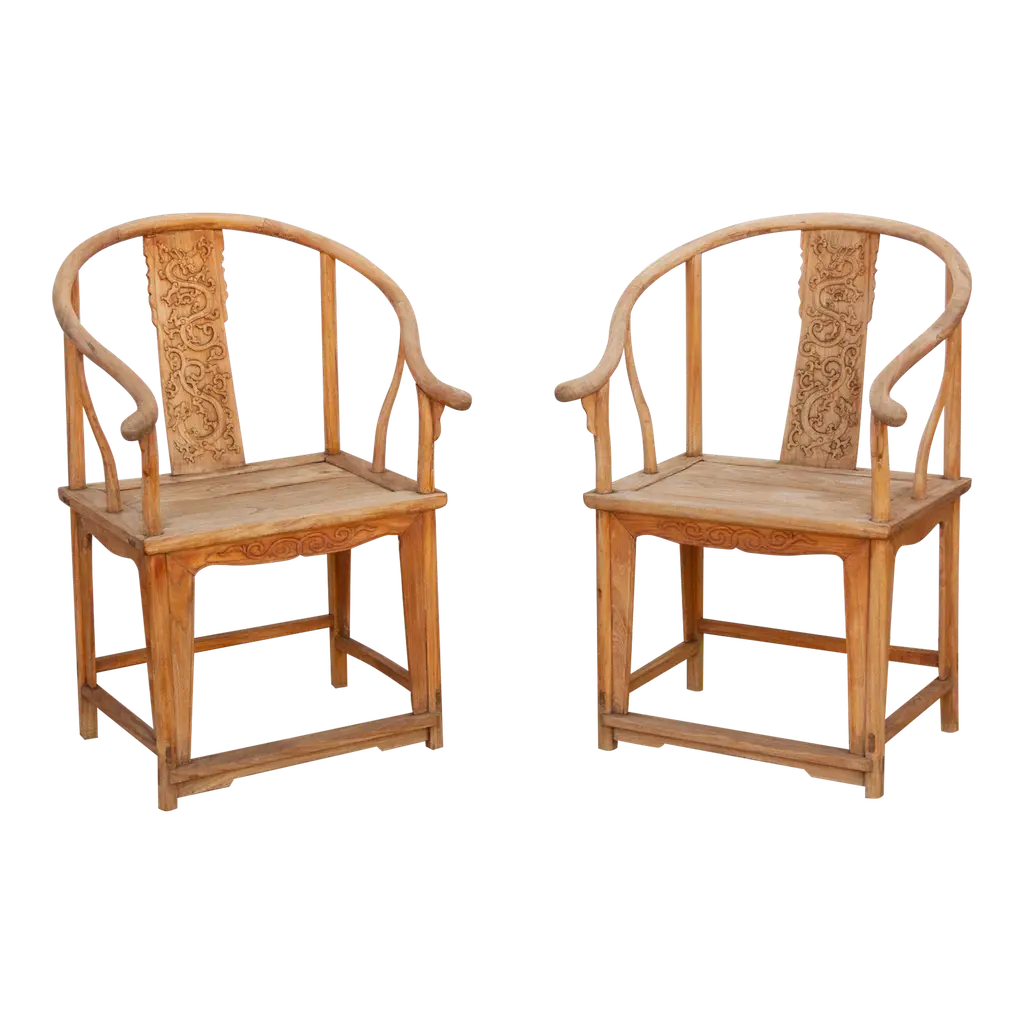
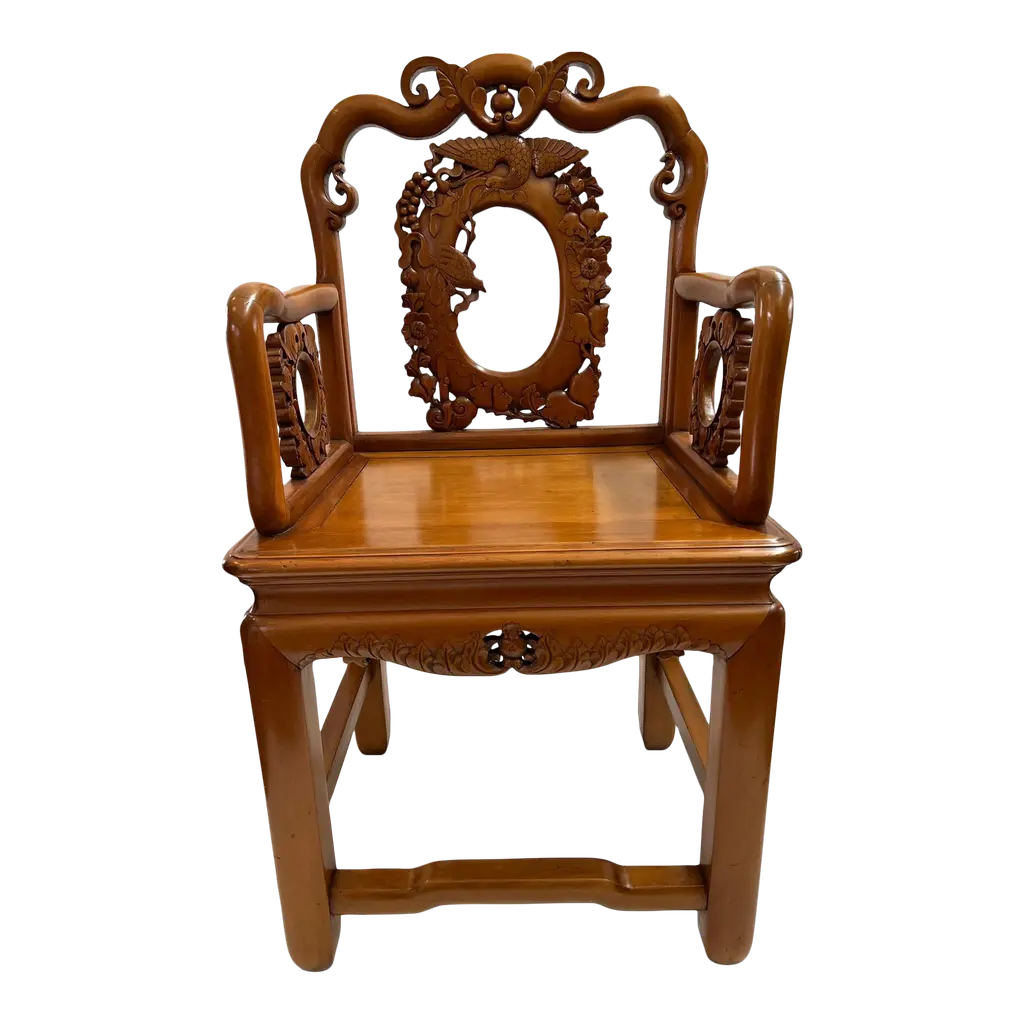
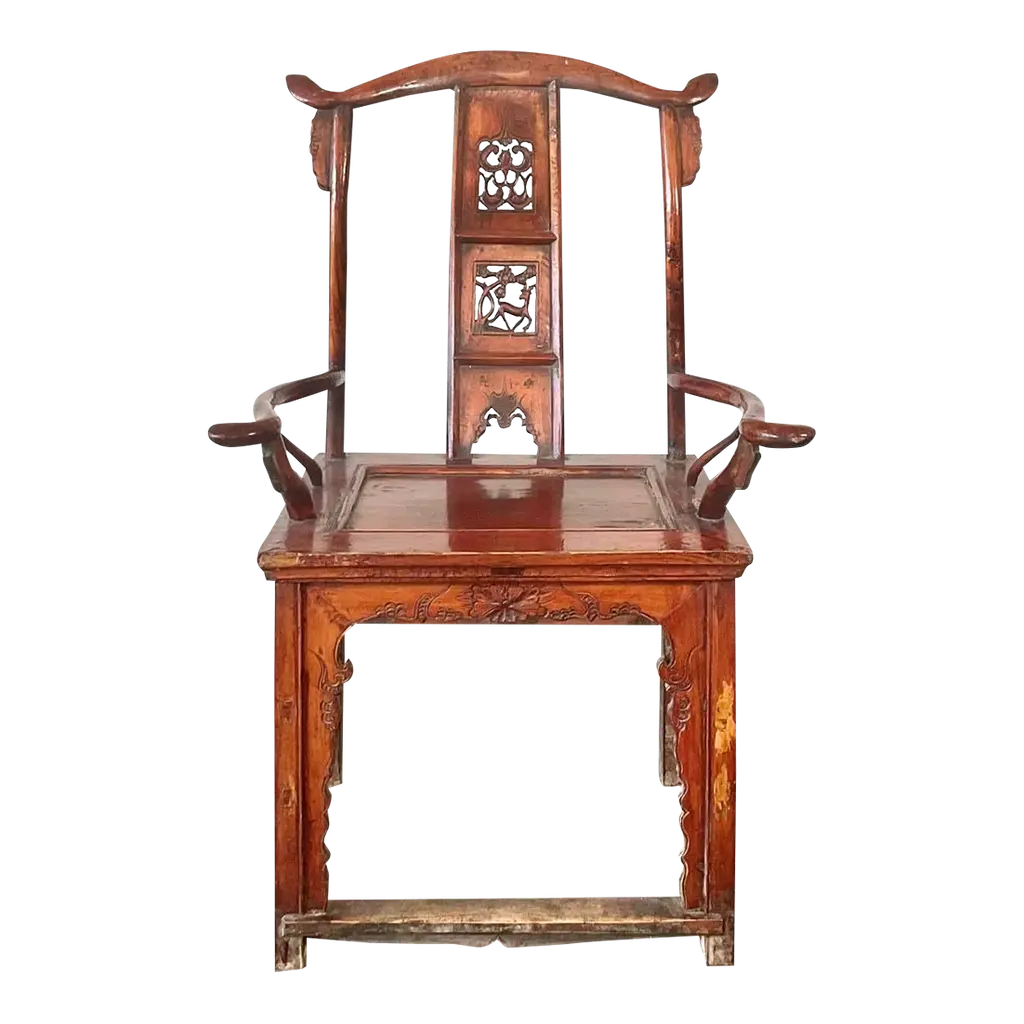
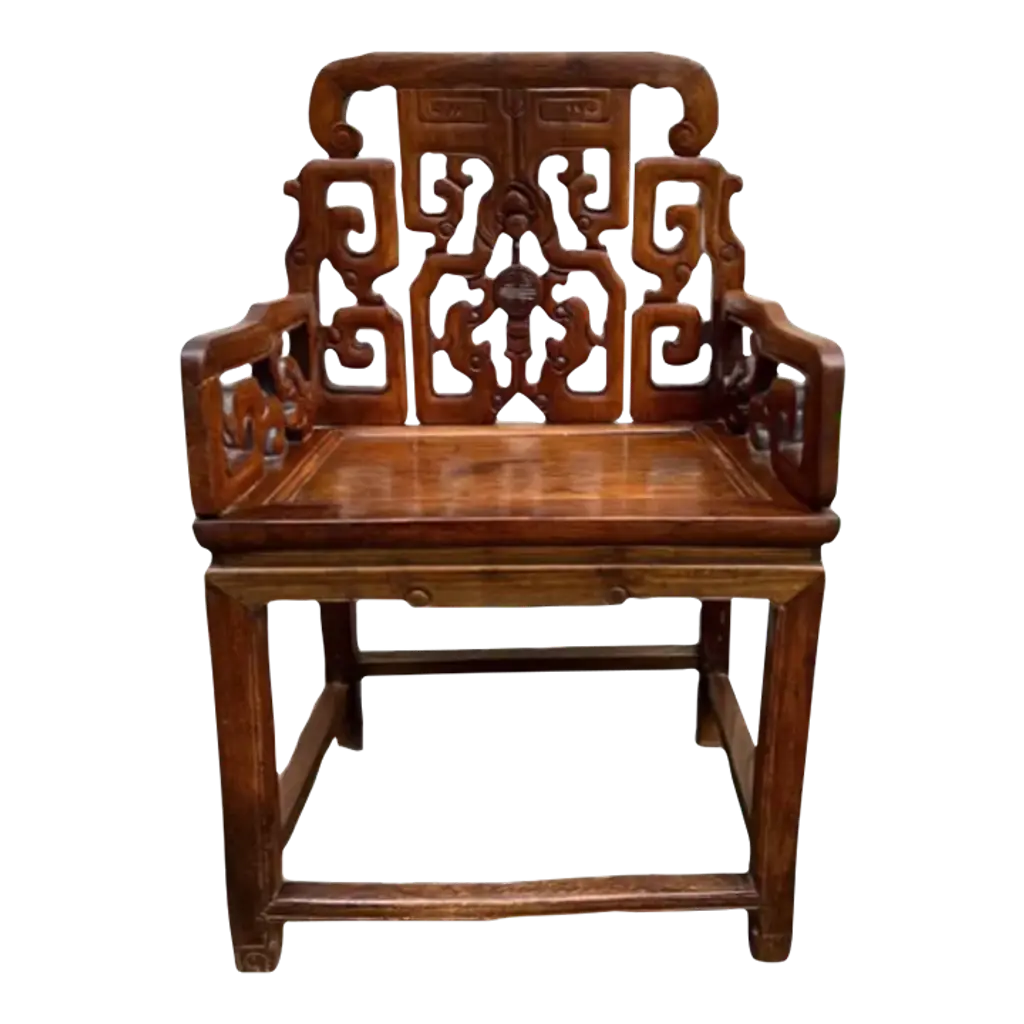
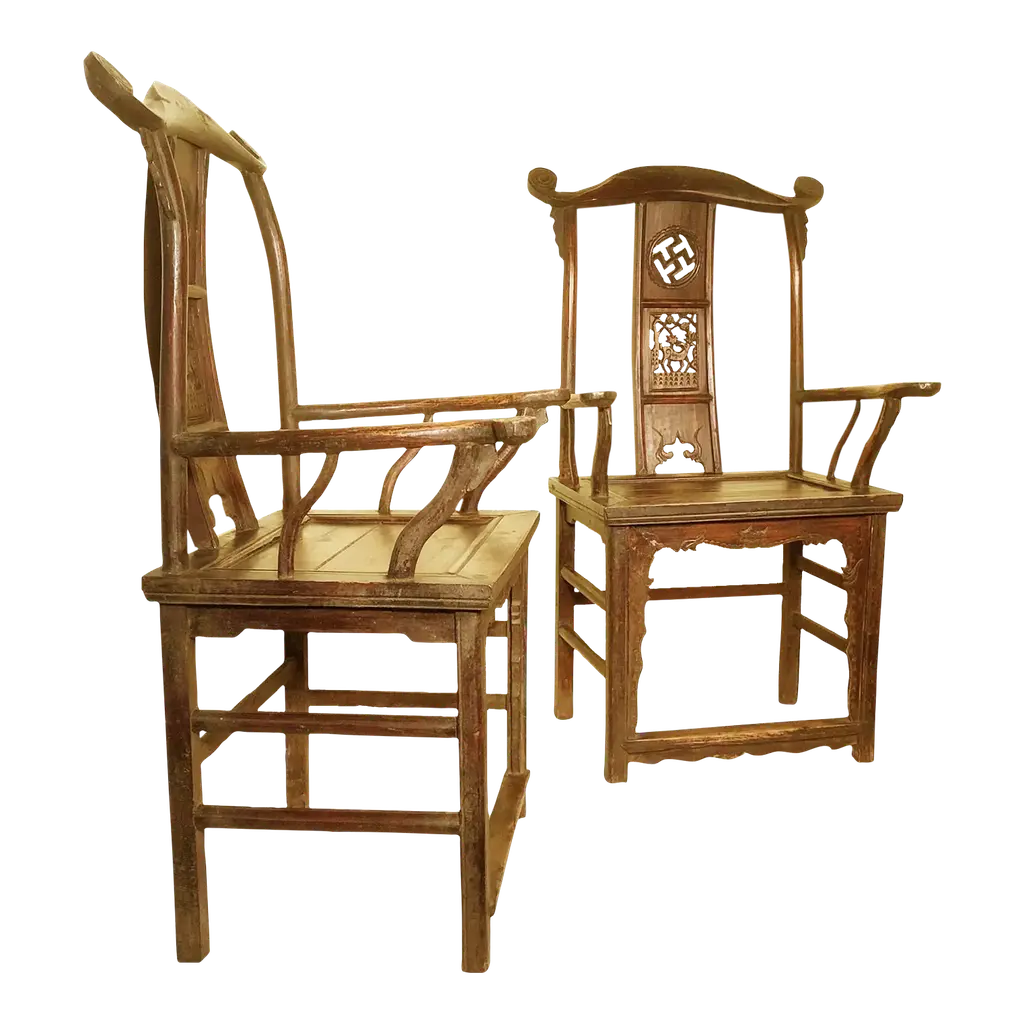
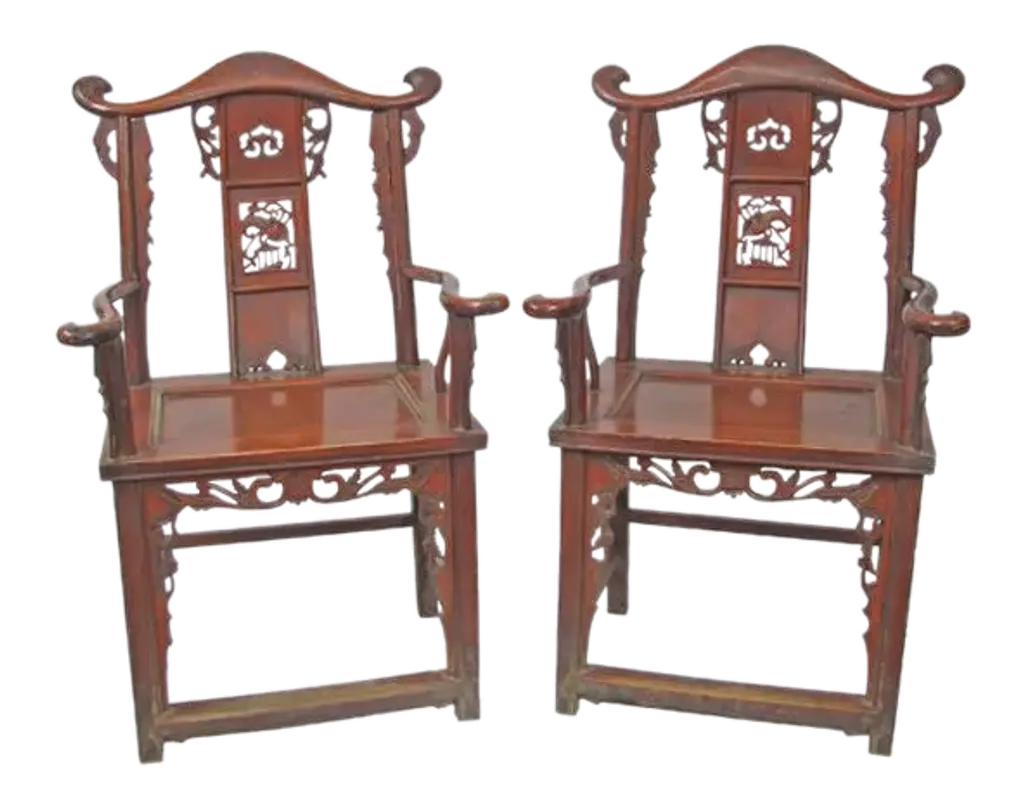
As I age, I look for chairs with high seats and arms so I rise from the chair gracefully hiding the fact I need the arms for support. This pair of chairs fit the bill. They are solidly made with a small variety of hardwood, northern elm among them. Although they are made in the style of traditional armchairs, they are not without charming details. The crest trail is a wavy with two raises, each carved with a fruit with two leaves. On each side on the chair back is a small carving of a double scroll motif known as a ruyi. The back splat has a very elaborate carving of a bat with out-stretched wings . Hanging from its mouth is a round openwork roundel that is supposed to be the letter "wan" which means plentiful. Underneath are leaves from a gingko tree and a deer surrounded by double gourds. Two S carve support the scrolls that hang from the bat form the sides of this carving. They represent the ruyi, a Chinese form of a sceptor. Then, underneath the arms are carvings on each side. The designs are gingko leaves and double gourds. There is a lot of symbols to decipher. First of all, they are auspicious symbols. Longevity is represented by the deer and gingko. The bat and the letter "wan" represent good luck. The ruyi sceptor is the symbol of power. And the double gourd is a magical object that also grants good wishes. In short, this is the auspicious chair that should be in every stately home. Beautiful chairs went with homes in Shanxi province in North Central China where wealthy nobles and merchants built elaborate houses. Examples of these houses can be found in the city of Pingyao, an UNESCO protected site.
Similar products