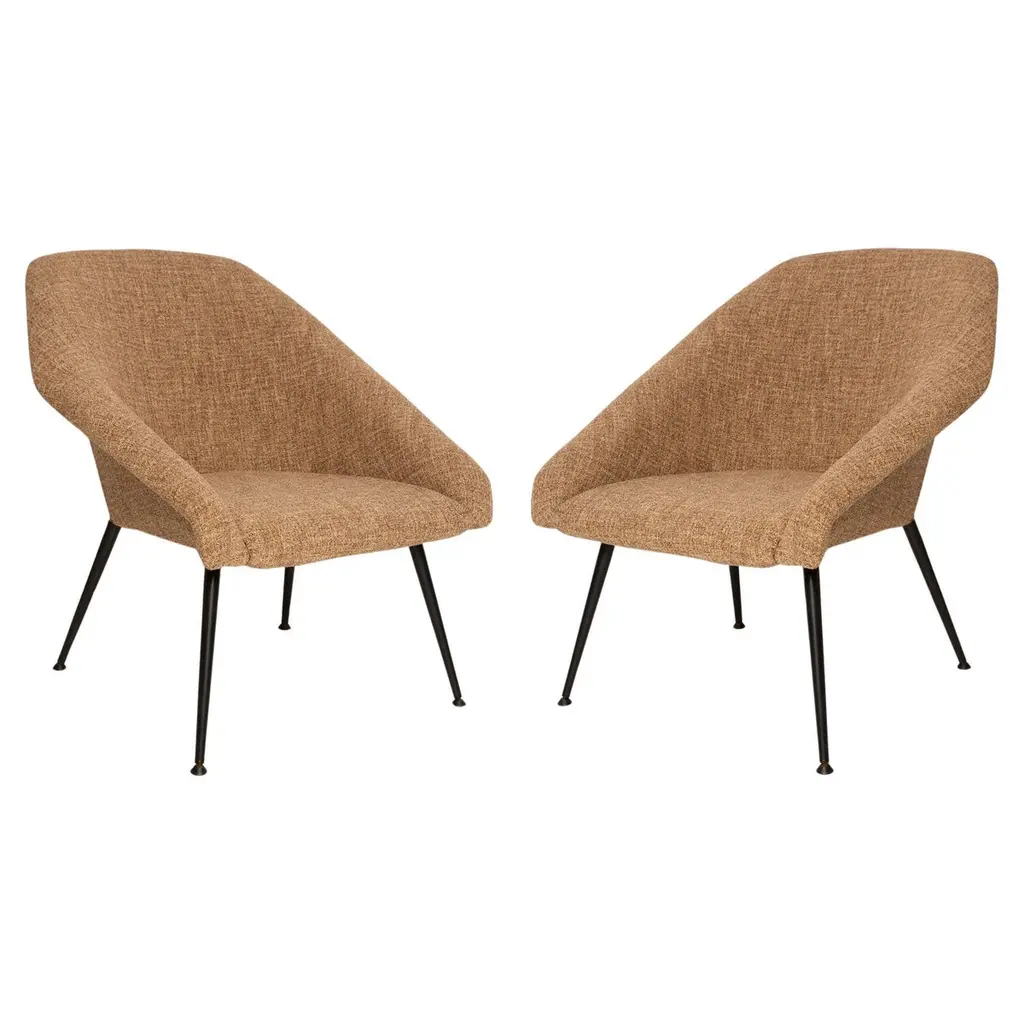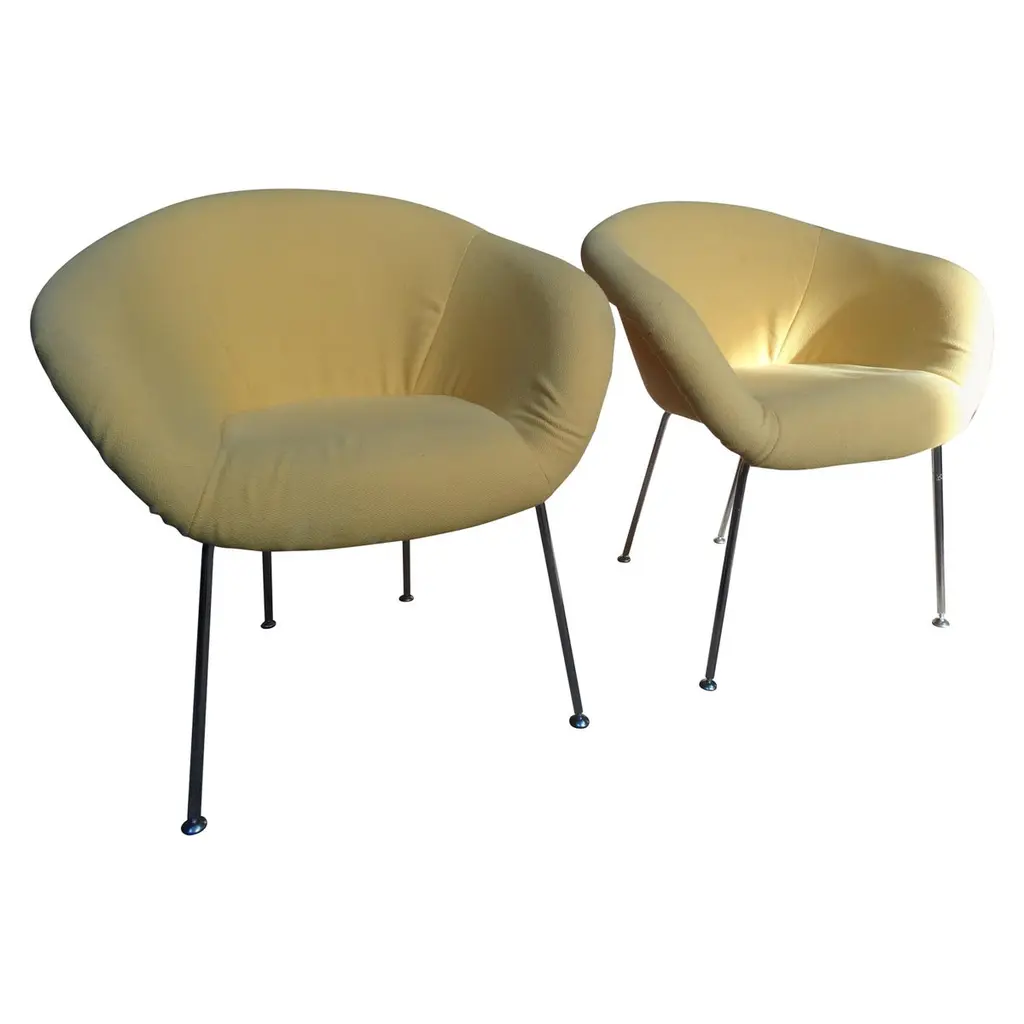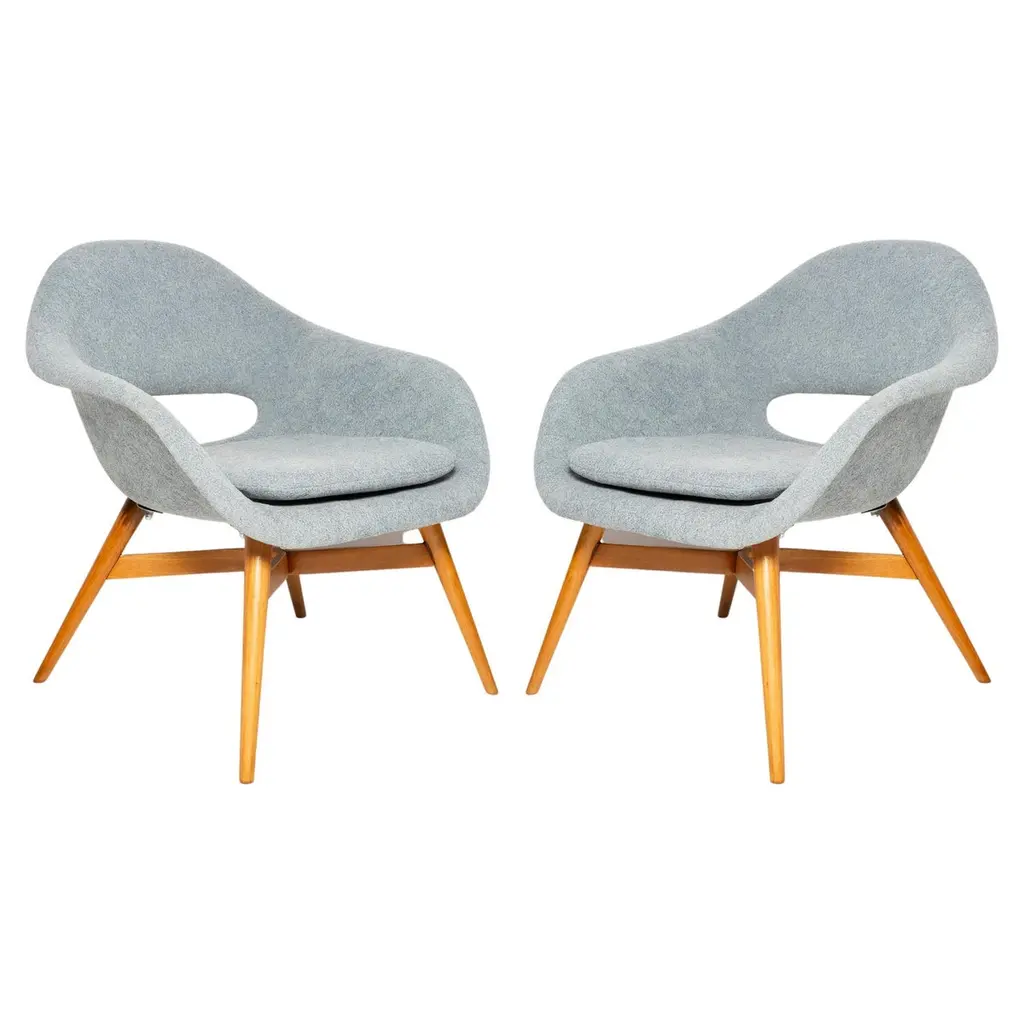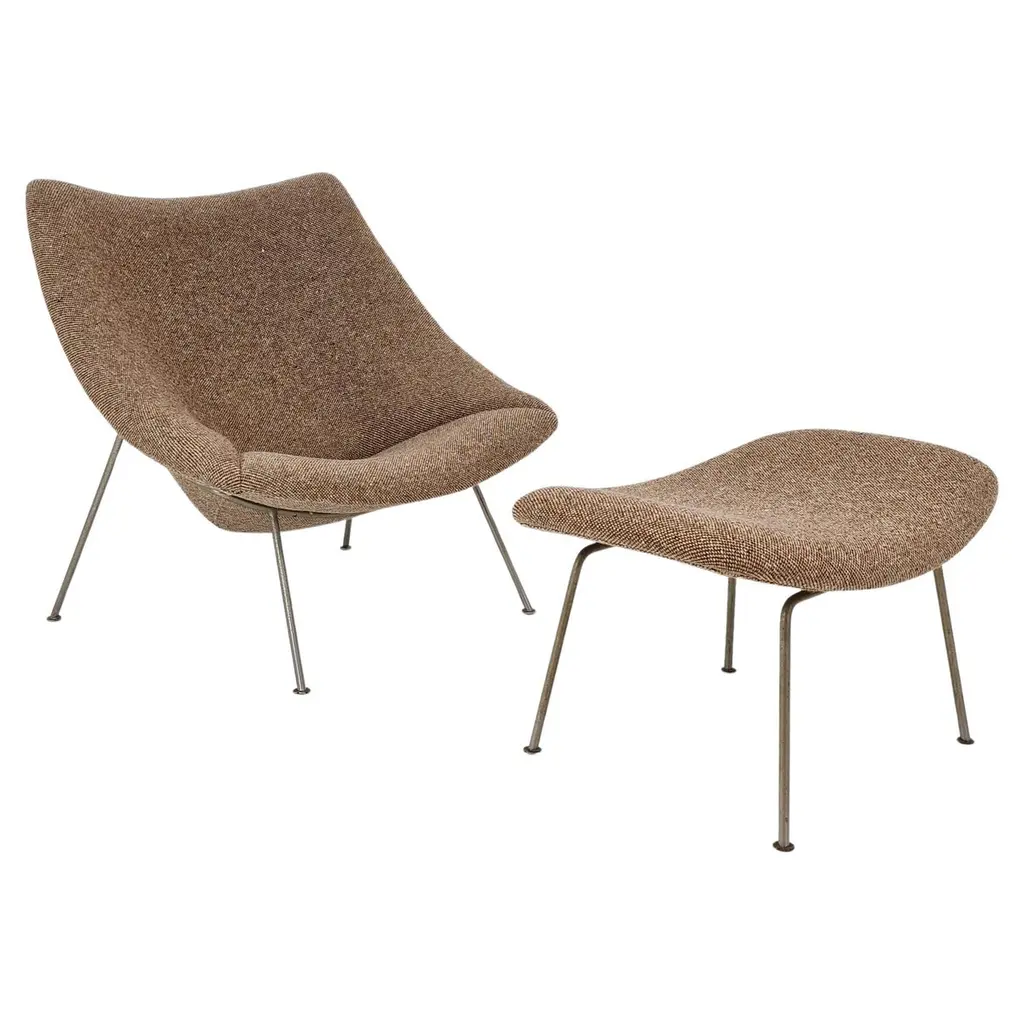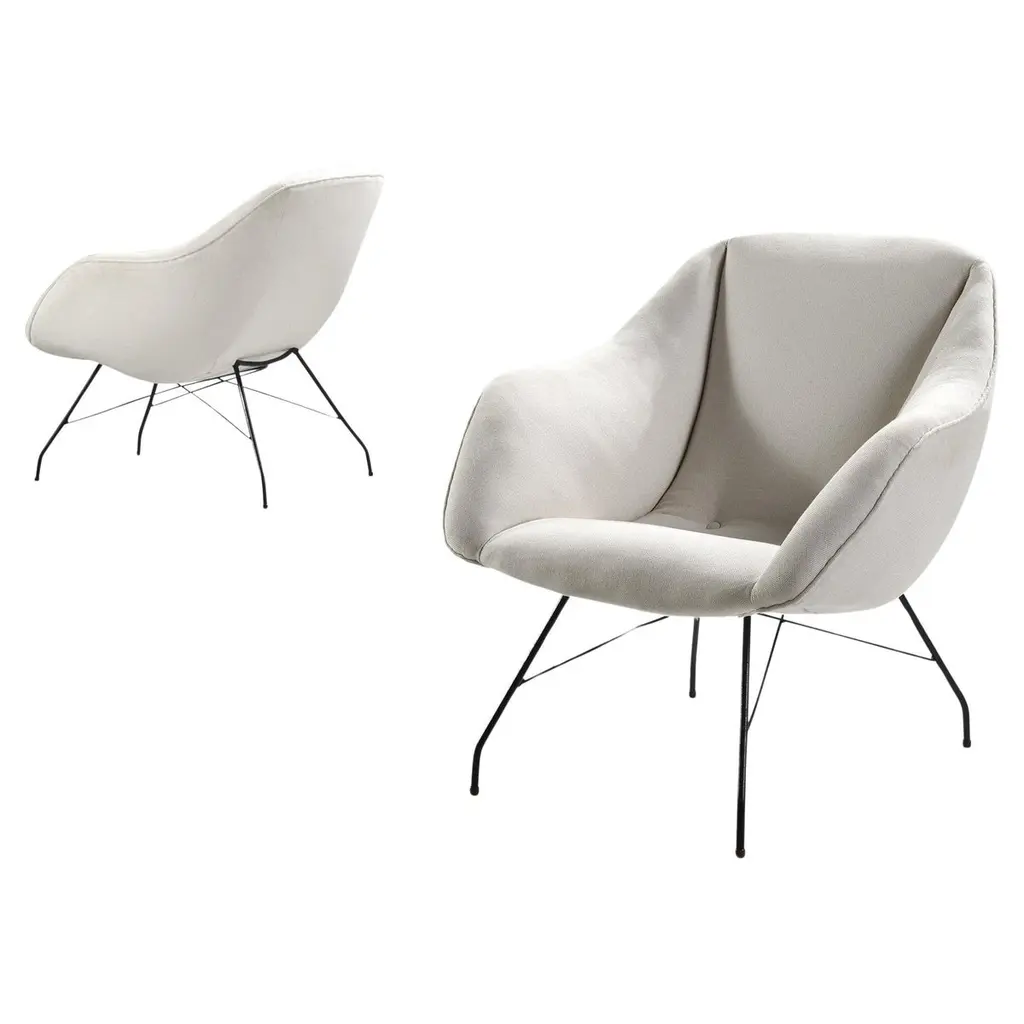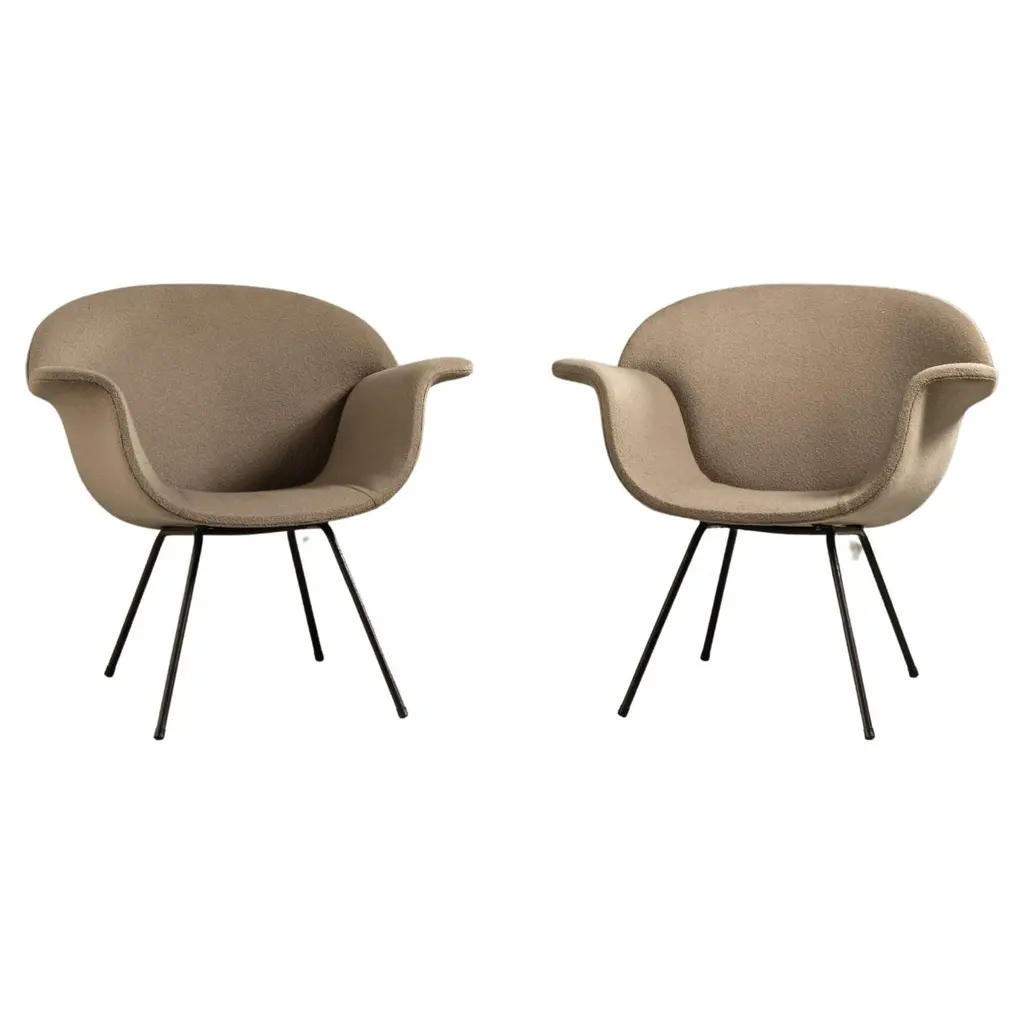
Pair Of Armchairs In Grey Fabric, By Carlo Hauner, Brazilian Mid-Century Modern
$4,200
1st Dibs
In the domain of furniture design, few movements capture the zeitgeist of their era as succinctly as the Brazilian mid-century modern style, a testament to the innovative spirit of designers like Carlo Hauner. His chairs, as seen in the provided images, are quintessential examples of this iconic design period, merging the beauty of organic form with the precision of modernist sensibilities.The most striking feature of Hauner's chairs is their organic silhouette, reminiscent of the natural shapes found in flora and fauna. The backrest enfolds the sitter like a petal, with armrests that emerge smoothly from the sides, as if sculpted from a single form. This seamless integration of parts is a hallmark of mid-century modern design, where the delineation between function and form becomes beautifully blurred.The upholstery of these chairs is equally noteworthy. Textured fabric envelops each piece, suggesting a tactile experience as inviting as the visual one. The choice of a neutral hue not only aligns with the mid-century modern palette but also imparts a timeless quality, ensuring these pieces can stand the test of time both in style and function.Supporting the voluptuous upholstered form are slender, tapered legs crafted from metal. The legs, which splay outward, do more than just physically elevate the chair—they elevate its design to a form of art. The contrast between the soft contours of the body and the rigid, linear legs creates a visual dialogue, a characteristic dance between different materials that is often celebrated in modernist design.Detailing in Hauner's chairs is minimal yet purposeful. There are no extraneous ornaments to distract from the purity of the form. Instead, visible stitching accentuates the chair's organic contours, serving as subtle adornments that trace the outline of the chair much like the veins of a leaf, highlighting its structure while adding to the overall aesthetic.These chairs by Carlo Hauner are not merely functional objects; they are embodiments of a design philosophy that champions clean lines, functional form, and an affinity for both traditional and contemporary materials. In the Brazilian mid-century modern context, they stand as a testament to an era where the crafting of furniture was as much about creating usable art as it was about providing comfort. Hauner's work, as evidenced by these chairs, pays homage to the period's innovation while maintaining a timeless elegance that continues to resonate in today's design landscape.Carlo Hauner was an Italian-born designer who played a significant role in shaping Brazilian modernist design. He was born in 1927 in Brescia, Italy, and initially studied painting, but his creative pursuits would eventually span into the realms of design, ceramics, and textiles. His early work in Italy included studying at the Brera Academy in Milan, where he honed his skills in technical drawing and design.Hauner is perhaps best known for his partnership with Martin Eisler in creating the iconic furniture company Forma. Together, they introduced a range of furniture that was characterized by its modern aesthetics and an innovative approach to traditional Brazilian craftsmanship and materials. Their work was a fusion of European modernist influences and Brazilian styles, contributing to a distinct genre of mid-century modern design.While his partnership with Eisler was profoundly influential, Hauner's individual contribution to design was also significant. He led the design department at Móveis Artesanal, a furniture company where he created pieces that were not only functional but also artistically driven. Hauner's designs often featured clean lines, organic forms, and a harmonious blend of materials, reflecting the modernist ethos of form following function.Throughout his career, Hauner's work was not confined to furniture alone. He also explored ceramics and textiles, showcasing his versatility and commitment to design across various mediums. His aesthetic sensibility and innovative designs have left a lasting legacy and continue to be celebrated and sought after in the design world.
Similar Items