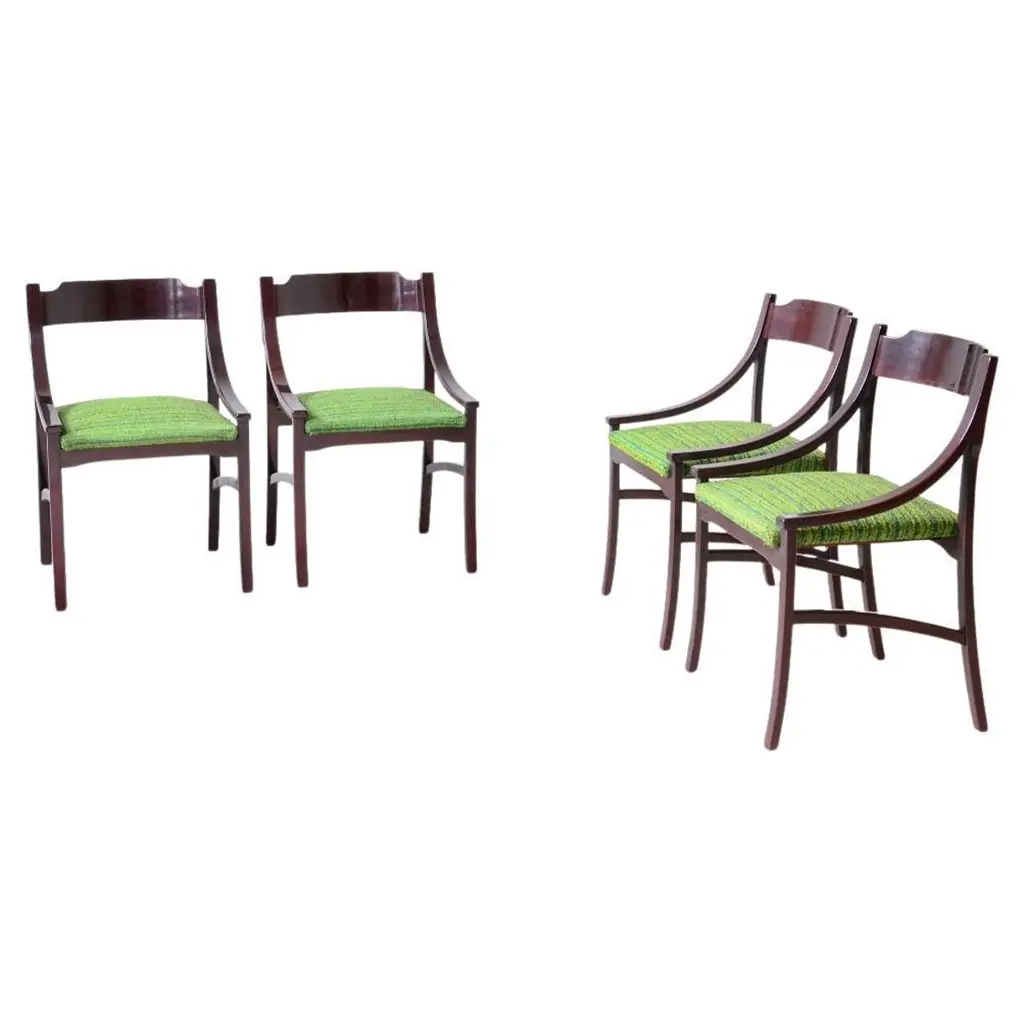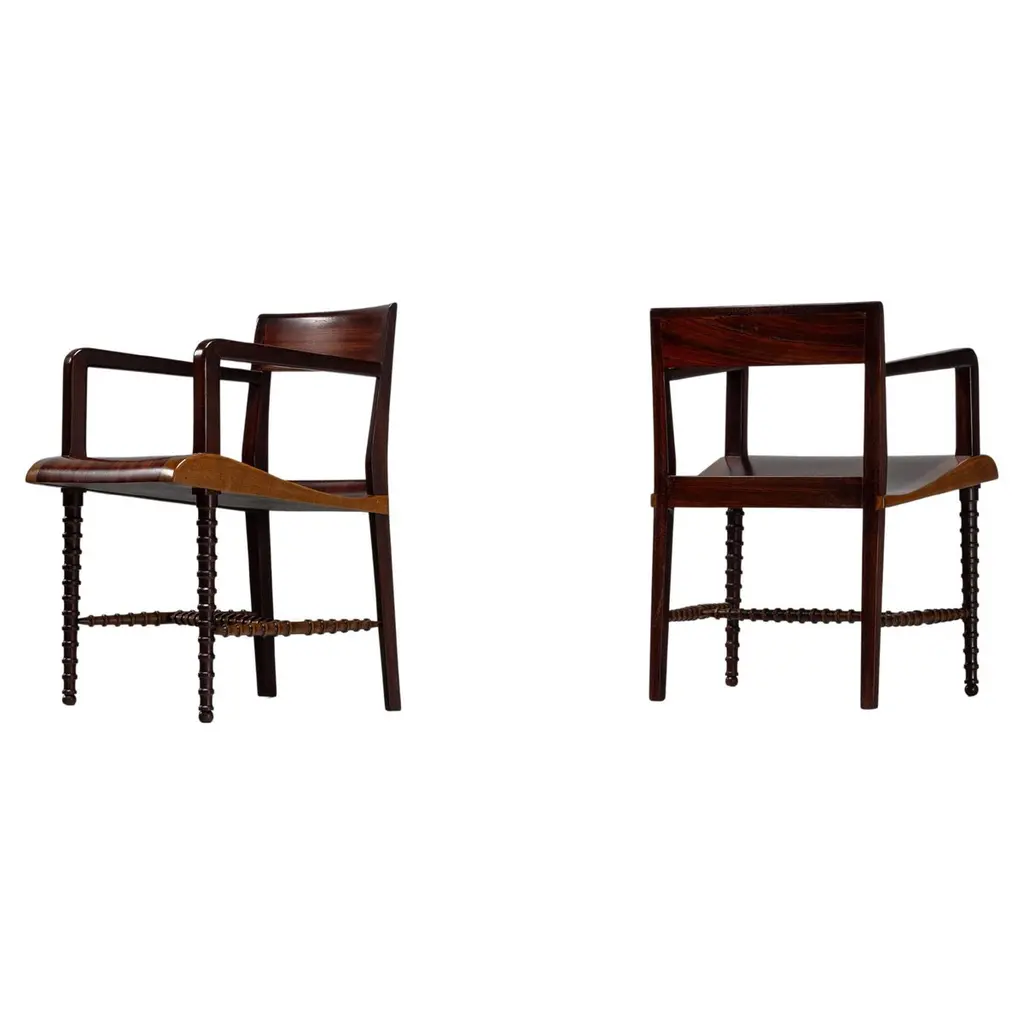
Post Art Nouveau Sculptural Armchairs Made In Italy 1950s
$4,453
1st Dibs
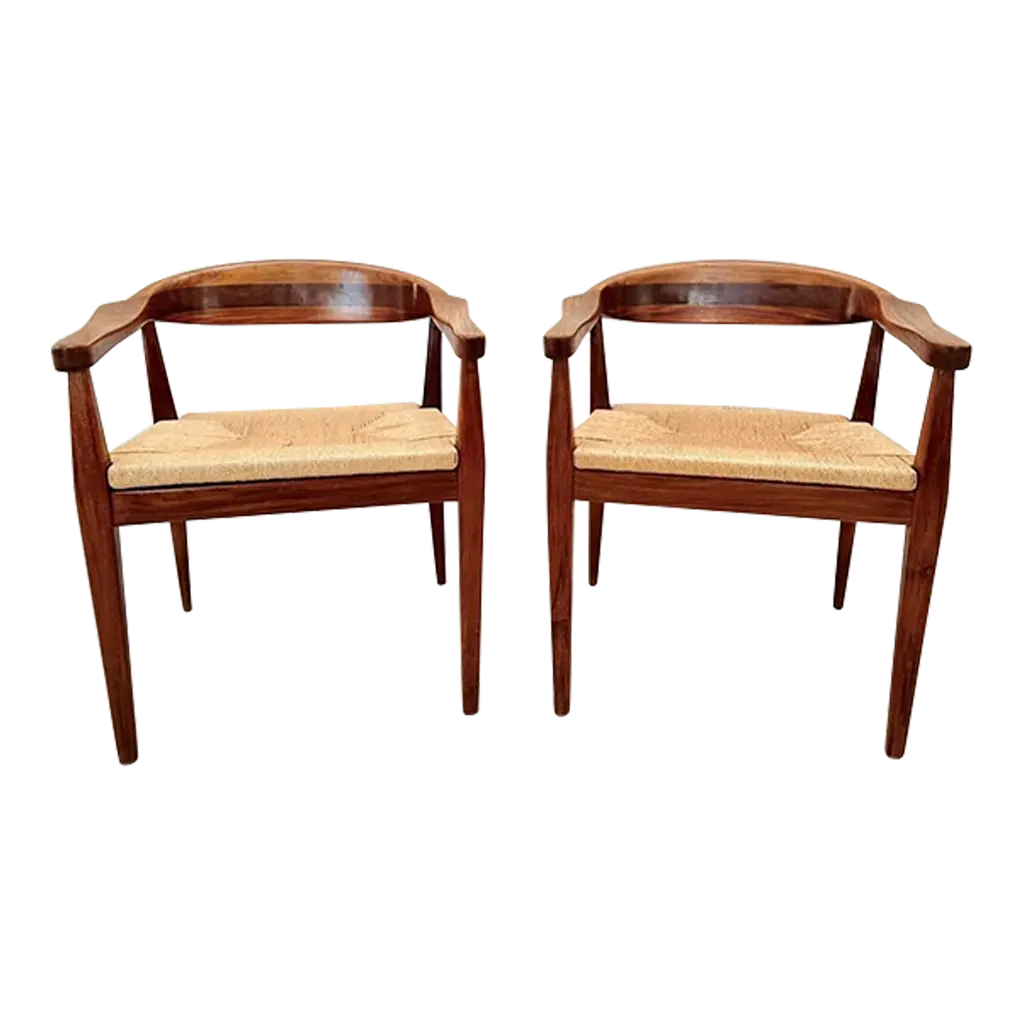
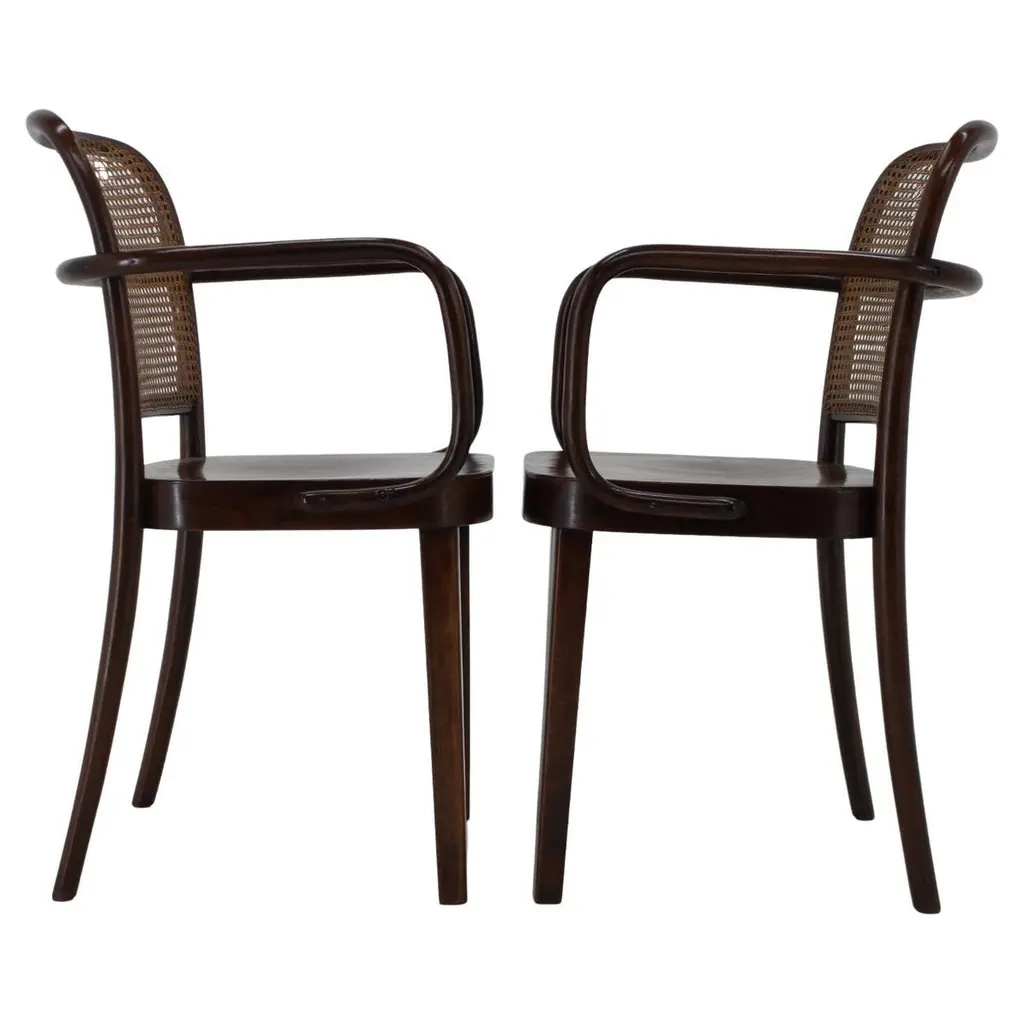
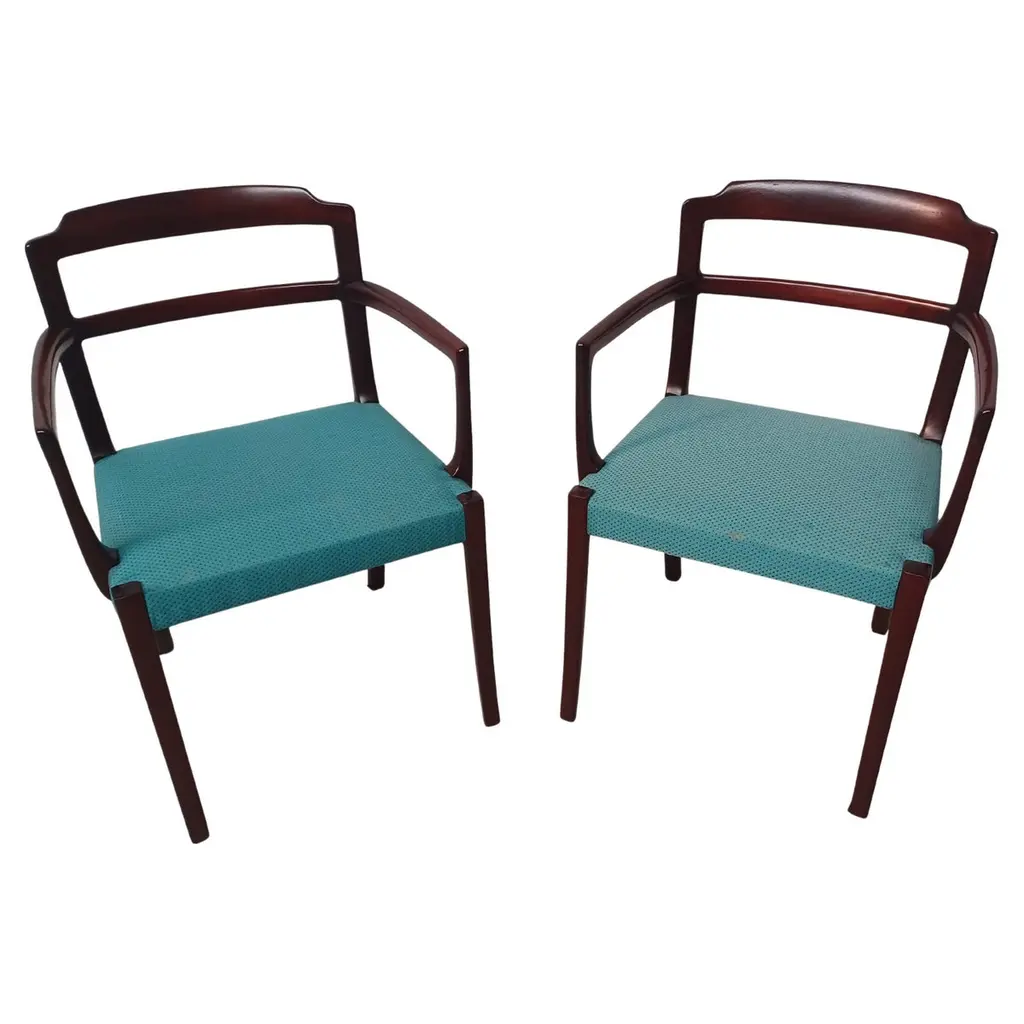
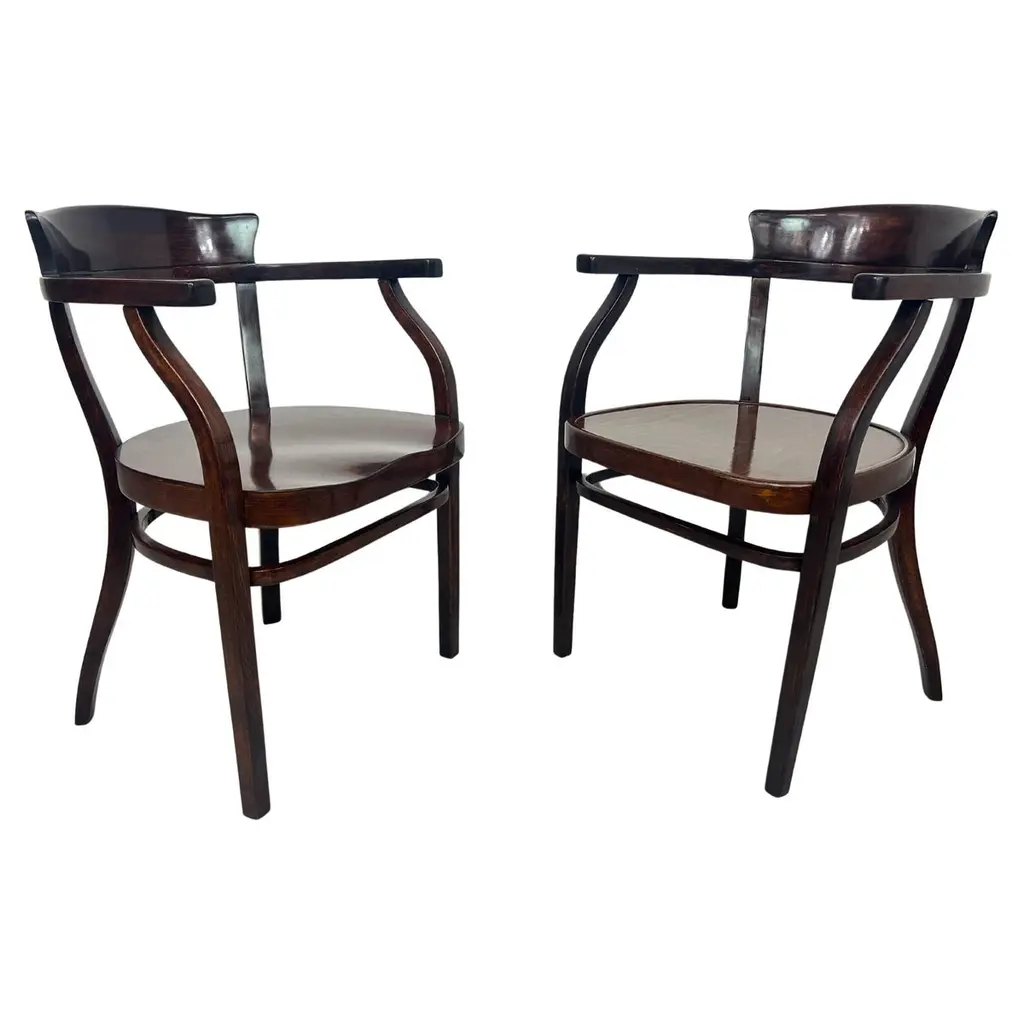
Introducing a stunning set of 1950s armchairs, crafted by an unknown yet exceptionally talented Italian designer. These exquisite chairs seamlessly blend elements of Art Deco and Art Nouveau, resulting in a timeless aesthetic that captures the essence of mid-century elegance. Each armchair is meticulously handcrafted using three luxurious types of wood: rosewood, walnut, and ash. The combination of these fine materials not only ensures durability but also adds a rich, natural warmth to the overall design. The minimalistic structure of the chairs highlights their sleek lines and sophisticated silhouette, making them a perfect addition to any contemporary or classic interior. One of the most striking features of these chairs is their Art Nouveau-inspired front legs, which are true graphical sculptures. These intricately carved legs showcase the designer’s exceptional skill and attention to detail, adding an artistic touch that elevates the chairs from mere furniture to works of art.Echoing the refined styles of renowned designers like Gio Ponti, Paolo Buffa, and Osvaldo Borsani, these chairs embody the best qualities of all three. They offer a superb level of craftsmanship and design, making them not only visually stunning but also exceptionally comfortable and functional. These superb quality chairs have been lovingly refinished, ensuring they are in fantastic condition, ready to be admired and enjoyed for years to come. They are a rare find and an invaluable addition to any discerning collector’s home.Art Nouveau, a revolutionary art and design movement that flourished from the late 19th to the early 20th century, is characterized by its elegant, flowing lines and organic forms inspired by nature. This style, which translates to "New Art" in French, encompasses a wide range of disciplines, including architecture, furniture, jewelry, and graphic arts. Distinctive features of Art Nouveau include intricate floral and plant motifs, curvilinear shapes, and an emphasis on craftsmanship and fine detail. This movement aimed to break away from traditional design conventions, creating a harmonious blend of beauty and functionality that remains influential and admired today.
Similar Items