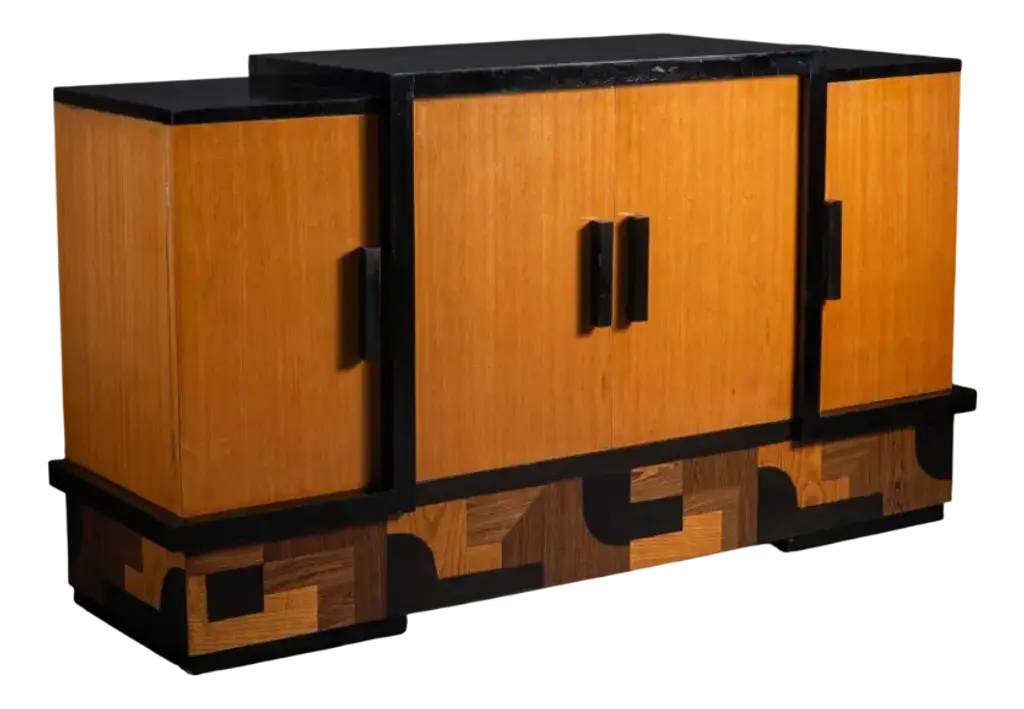
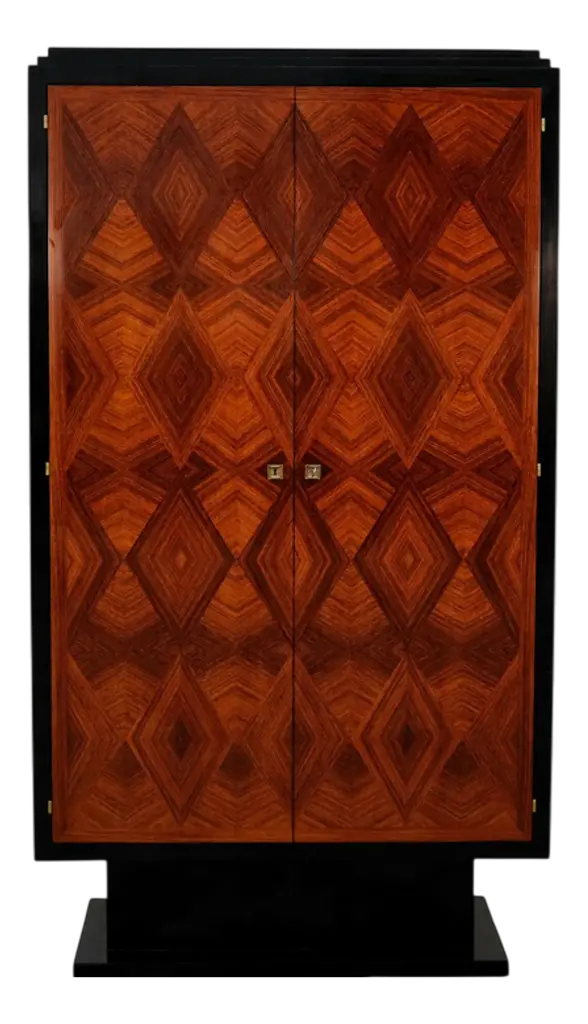
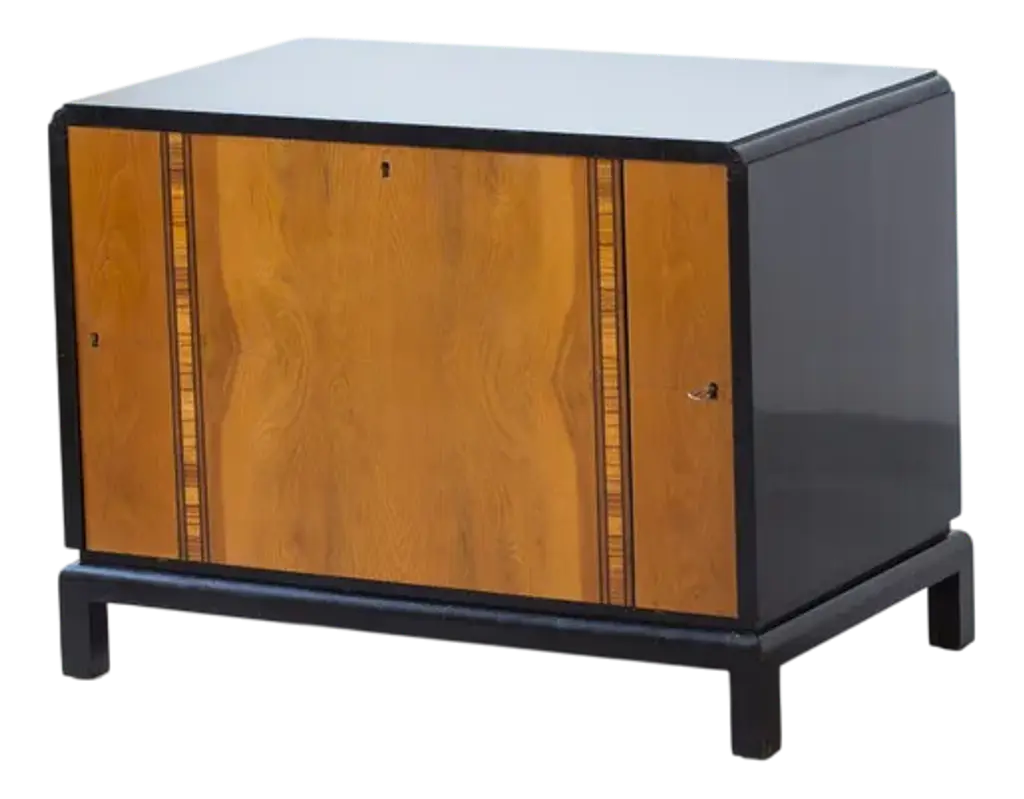
Art Deco Bar Cabinet, Wood, 1940s – France Style: Art Deco Material: Wood Period: 1940s Country of Origin: France Good condition considering its age and use Dimensions: 130 x 100 x 45 cm This extraordinary Art Deco bar cabinet, made in France around 1940, boasts exquisite craftsmanship in both its design and materials. Its simple design, influenced by the polygonal forms of Art Deco, is characterized by its geometric elegance. Its compact dimensions make it ideal for urban homes or sophisticated spaces, adapting to a modern lifestyle. When closed, the cabinet presents a spacious rectangular shape, with the main body separated from the leg structure. A geometric design adorns both doors of the front, creating a dynamic and symmetrical focal point characteristic of Art Deco visual language. The doors open via a concealed magnetic mechanism, eliminating the need for handles and leaving the surface smooth and glossy. It is also perfectly equipped inside, with a vertical divider and two horizontal shelves, a total of six compartments for storing various items such as bottles and glasses. However, it is a versatile piece of furniture that can be used as a cabinet or sideboard. In the 1930s and 1940s, French design was undergoing a transition between Art Deco and the more functional styles associated with the Modern Movement. Furniture like this reflects the spirit of the era, where home entertaining and compact furniture for small apartments were paramount. About the Art Deco Style The term Art Deco was defined in the 1960s to refer to the art that emerged during the interwar period. It was a style that developed in all facets of design and reached its peak at the International Exhibition of Decorative Arts in Paris (1925). Art Deco is characterized by its use of straight lines and geometric volumes; it is a style that arose from the combination of different trends. Some of the major influences on Art Deco include avant-garde art, mechanization, and archaeological discoveries in Ancient Egypt and Mesopotamia. Art Deco differs from other artistic periods because it is a purely decorative style where artists focus on creating attractive and balanced pieces that reflect the society of their time.
Similar products