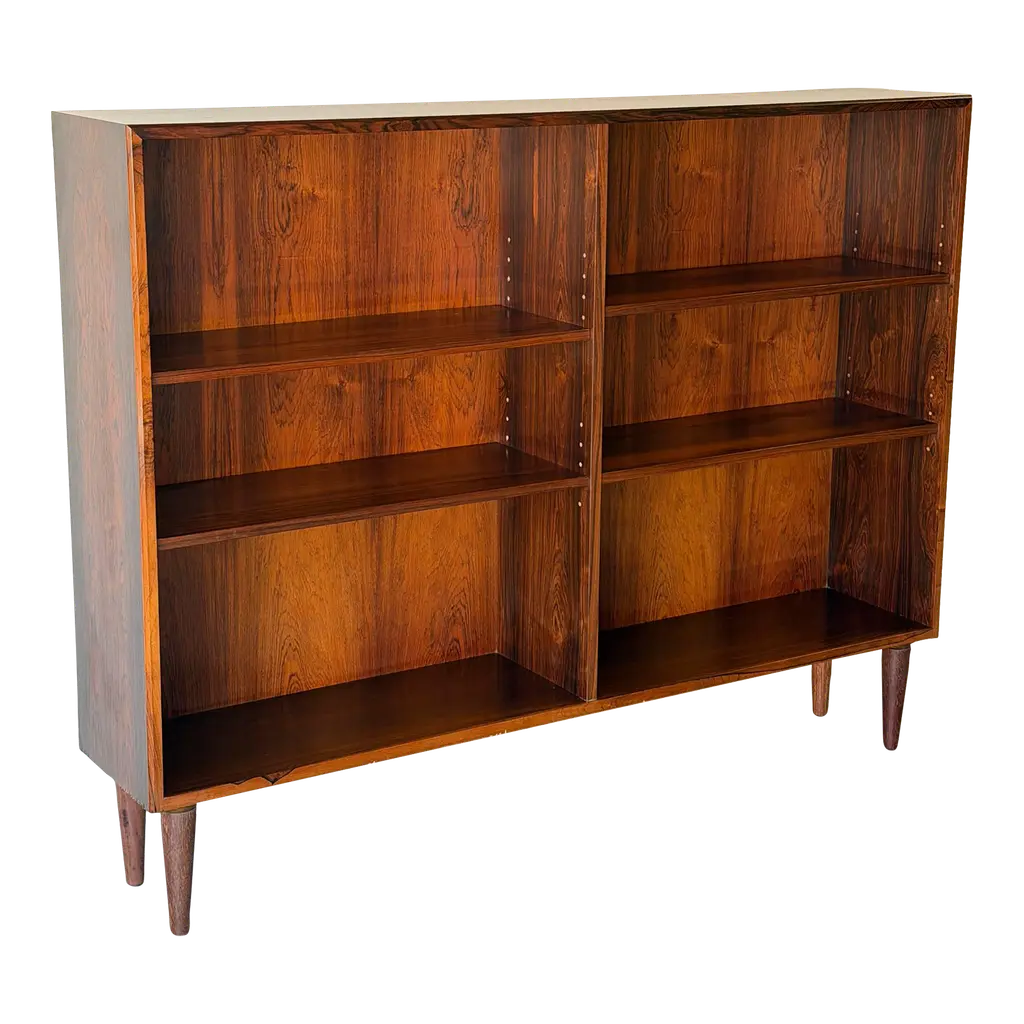
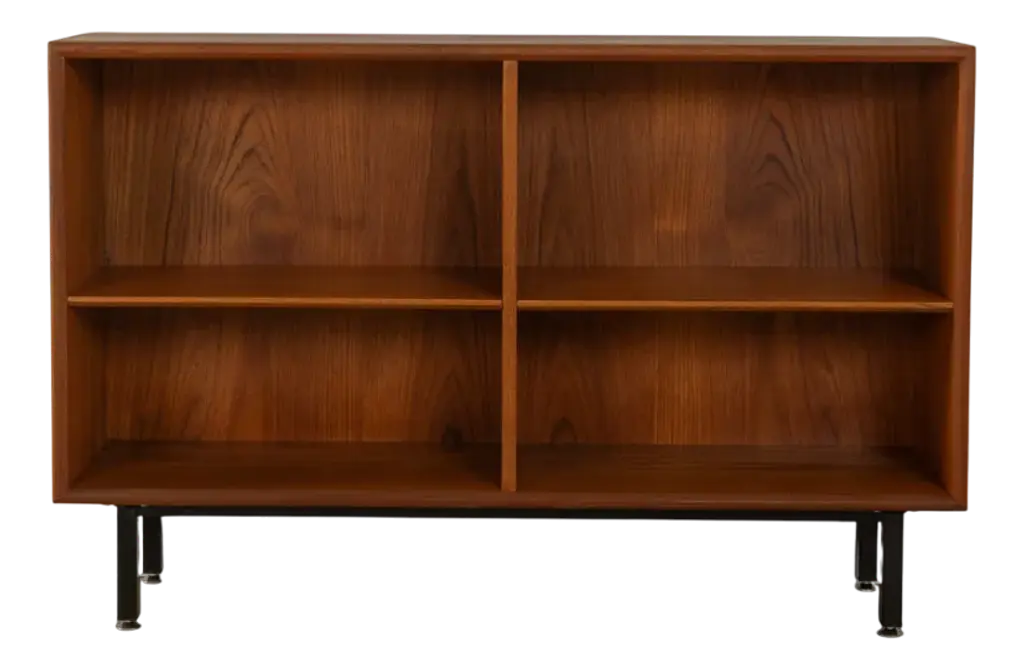
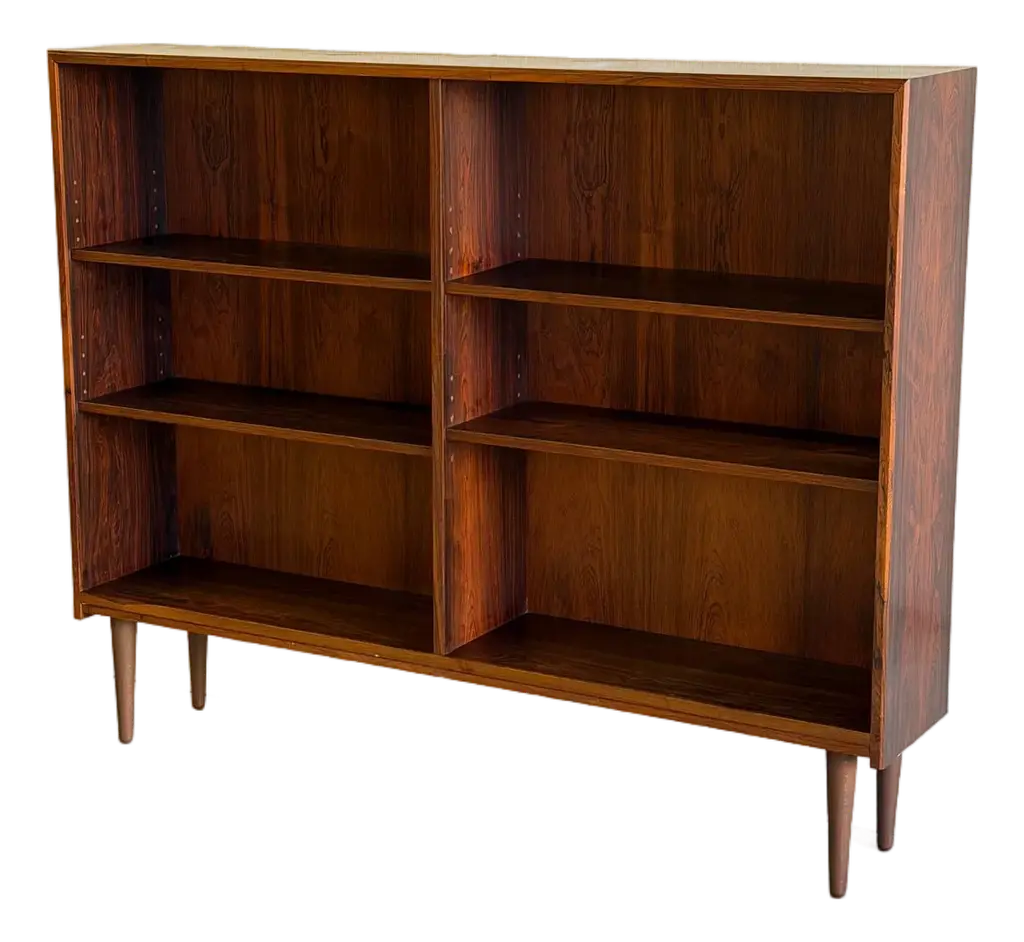
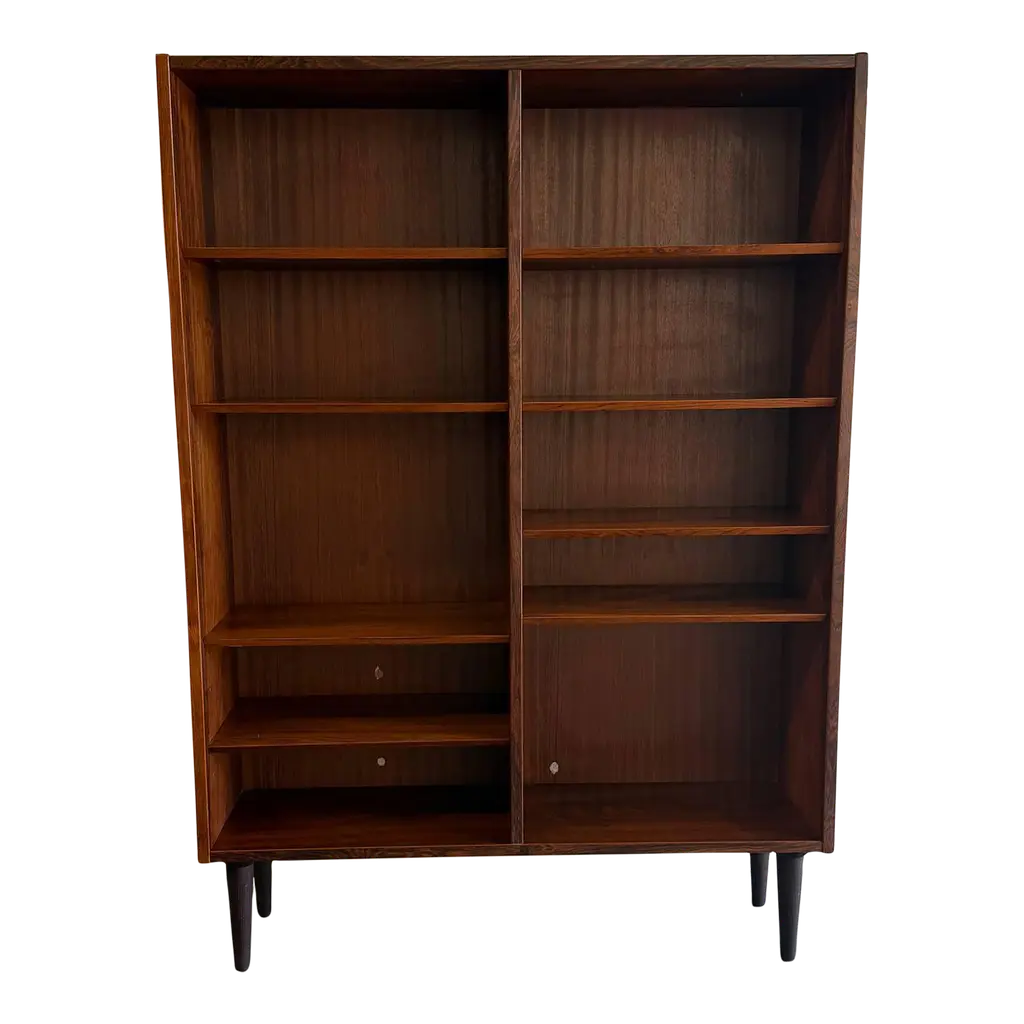
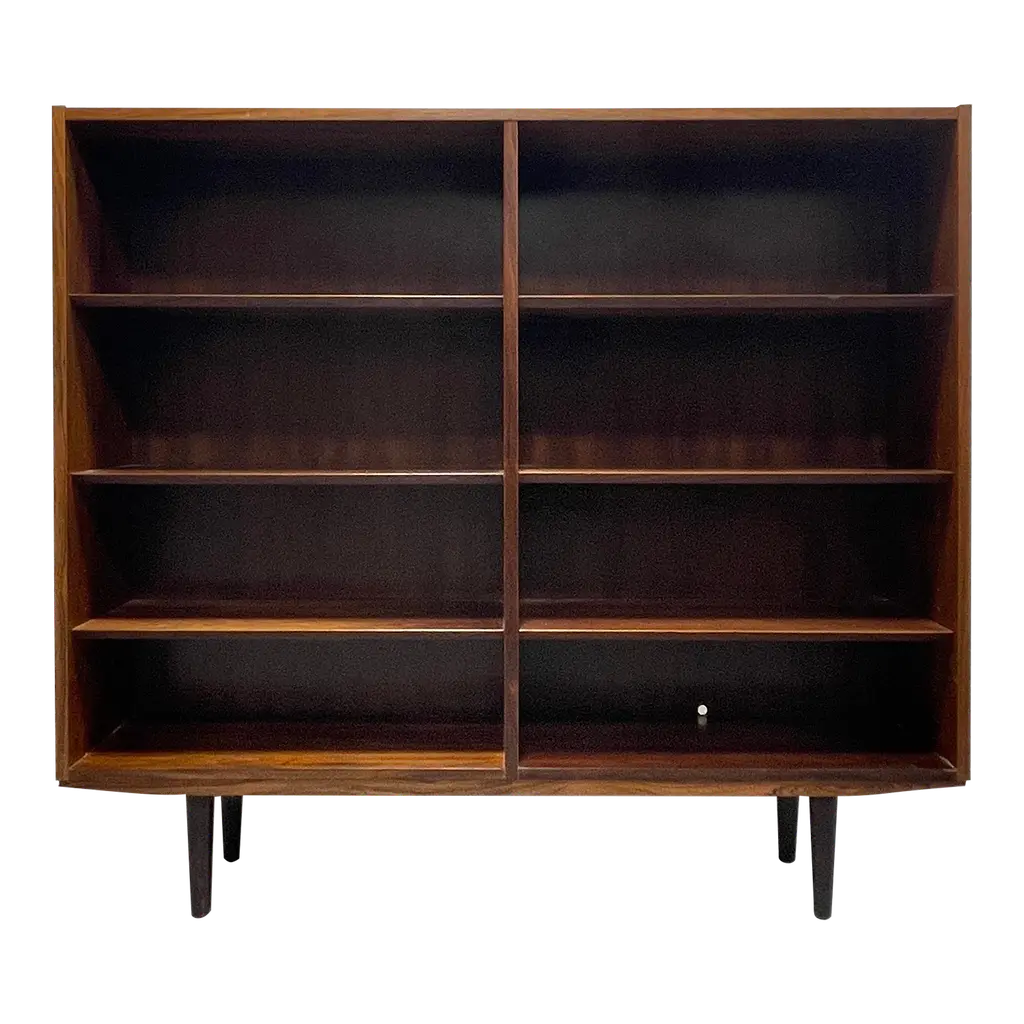
Rosewood Bookcase by Brouer, Denmark, 1960s Dimensions: Height – 129 cm Width – 144 cm Depth – 28.5 cm Condition: Very good. Minor scratches consistent with normal use. There is an opening in the back panel made by the previous owner to allow cables to pass through (for connecting audio equipment or a lamp). The bookcase is made of high-quality rosewood with rich, deep coloration, featuring shades of chocolate brown interwoven with subtle, almost black grain patterns. The natural wood grain is clear and symmetrical, indicating careful veneer selection and great attention to detail. The form of the bookcase is simple, geometric, and well balanced. The корпус is set on new, slender metal hairpin legs, which lift the piece off the floor and give it a light, elegant visual appearance. The interior has been designed in a thoughtful and highly functional way. The bookcase is equipped with a system of adjustable shelf supports, allowing the shelf heights to be freely regulated. This makes it easy to adapt the interior to individual needs and arrange the shelves in various configurations, suitable for storing books, vinyl records, ceramics, or glassware. The bookcase will work perfectly in a living room, study, home library, as well as in an office or showroom space. The piece is relatively heavy, which attests to its solid construction and the high quality of the materials used. The stable form combined with a substantial корпус provides a sense of durability and safe everyday use, while also confirming that this is furniture made for long-term use rather than a lightweight contemporary production. The bookcase bears the characteristics of designs by Brouer, a Danish manufacturer known for solid construction, high-quality materials, and timeless design. Shelving units by this brand are valued for their functionality, durability, and elegant, restrained form that fits perfectly within the mid-century modern aesthetic. This piece is attributed to the mentioned designer/maker. It has no attribution mark and no official proof of authenticity, however it is well documented in design history. I take full responsibility for any authenticity issues arising from misattribution
Similar products