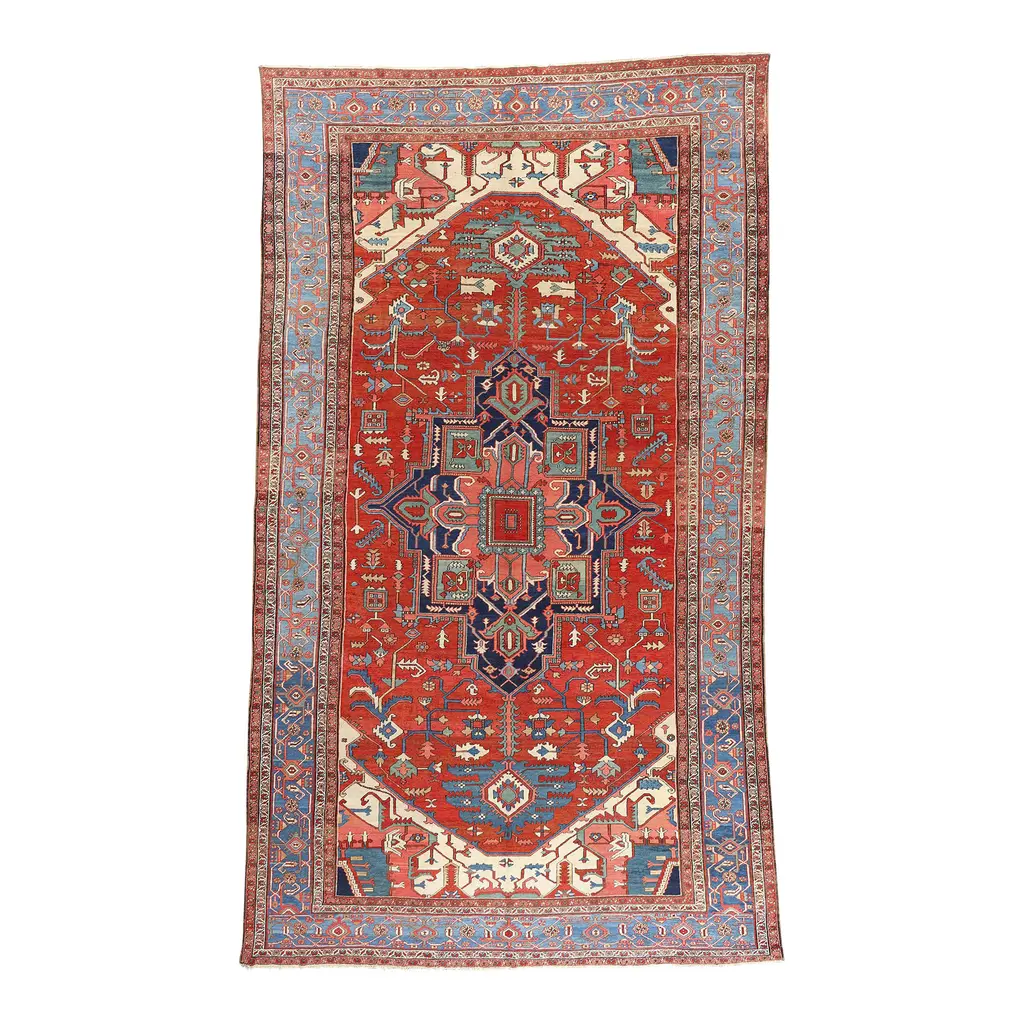
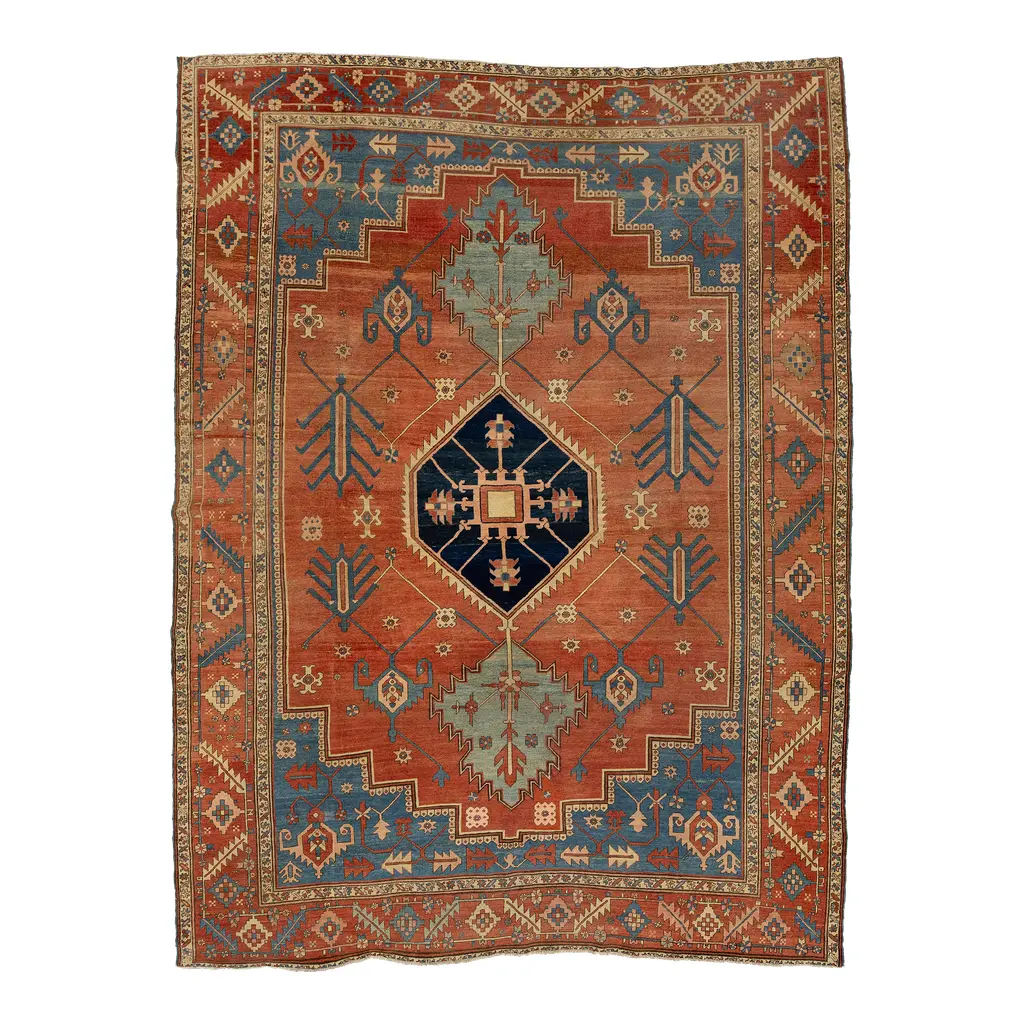
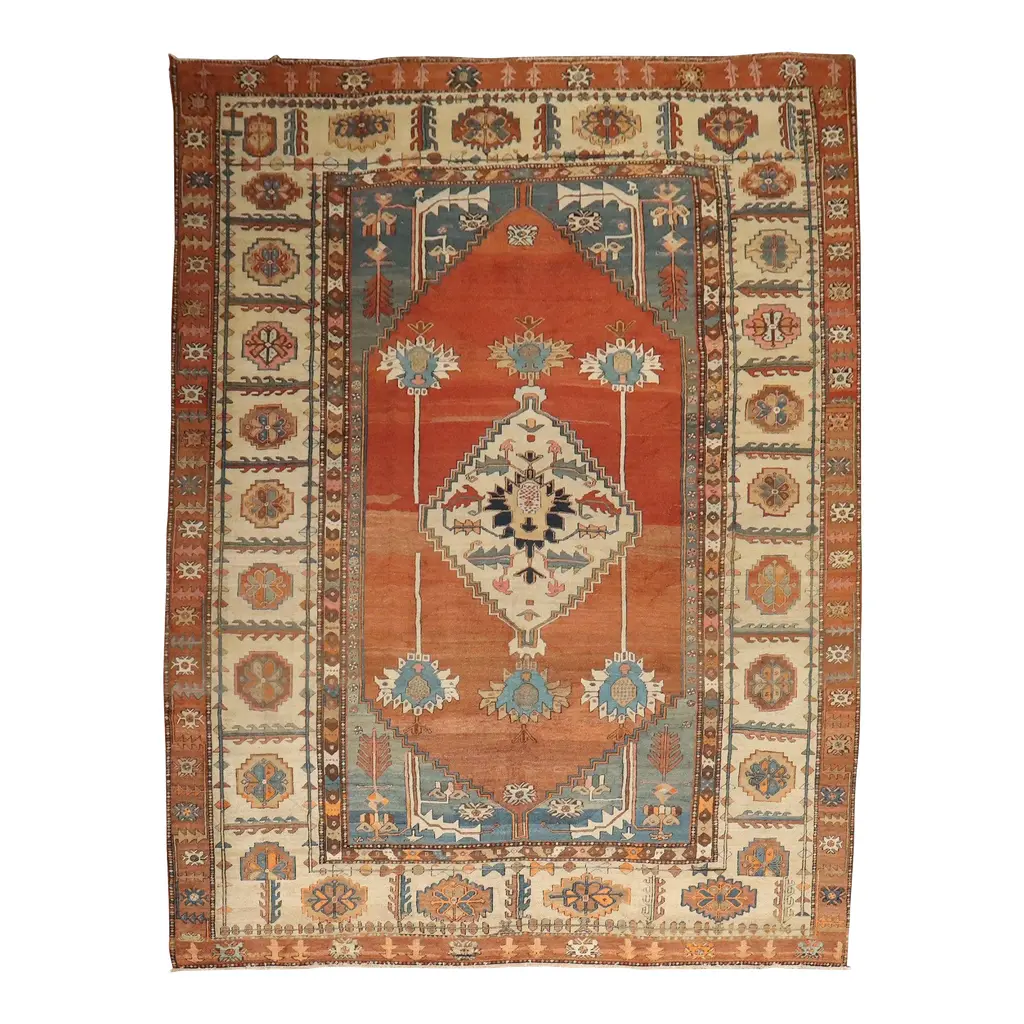
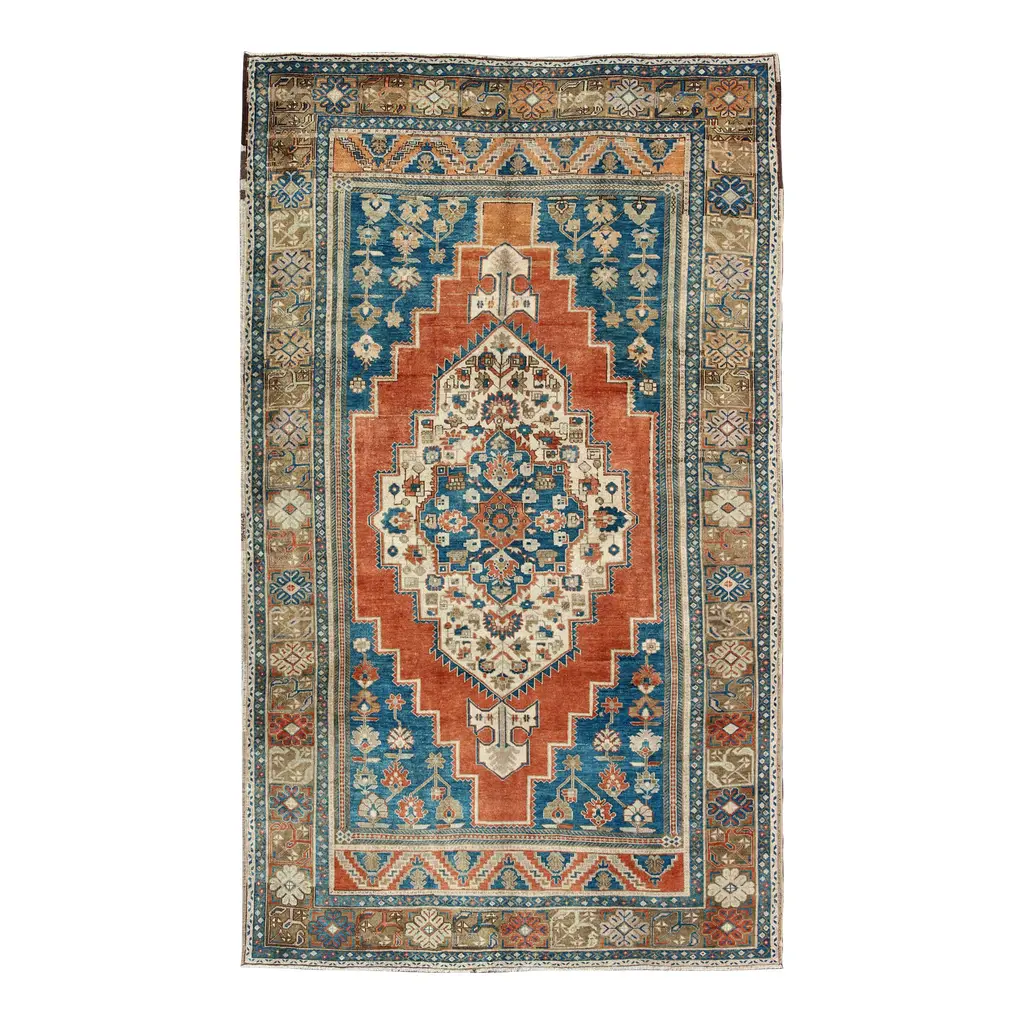
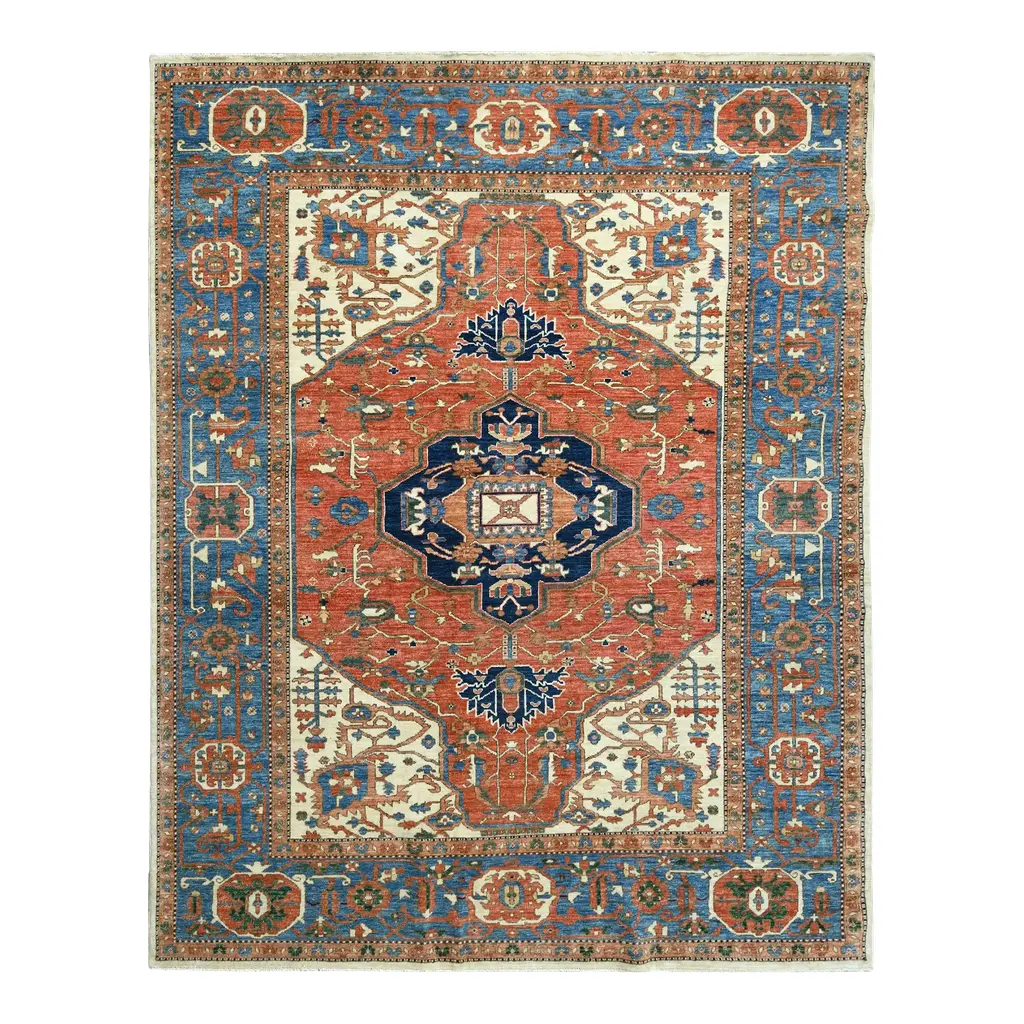
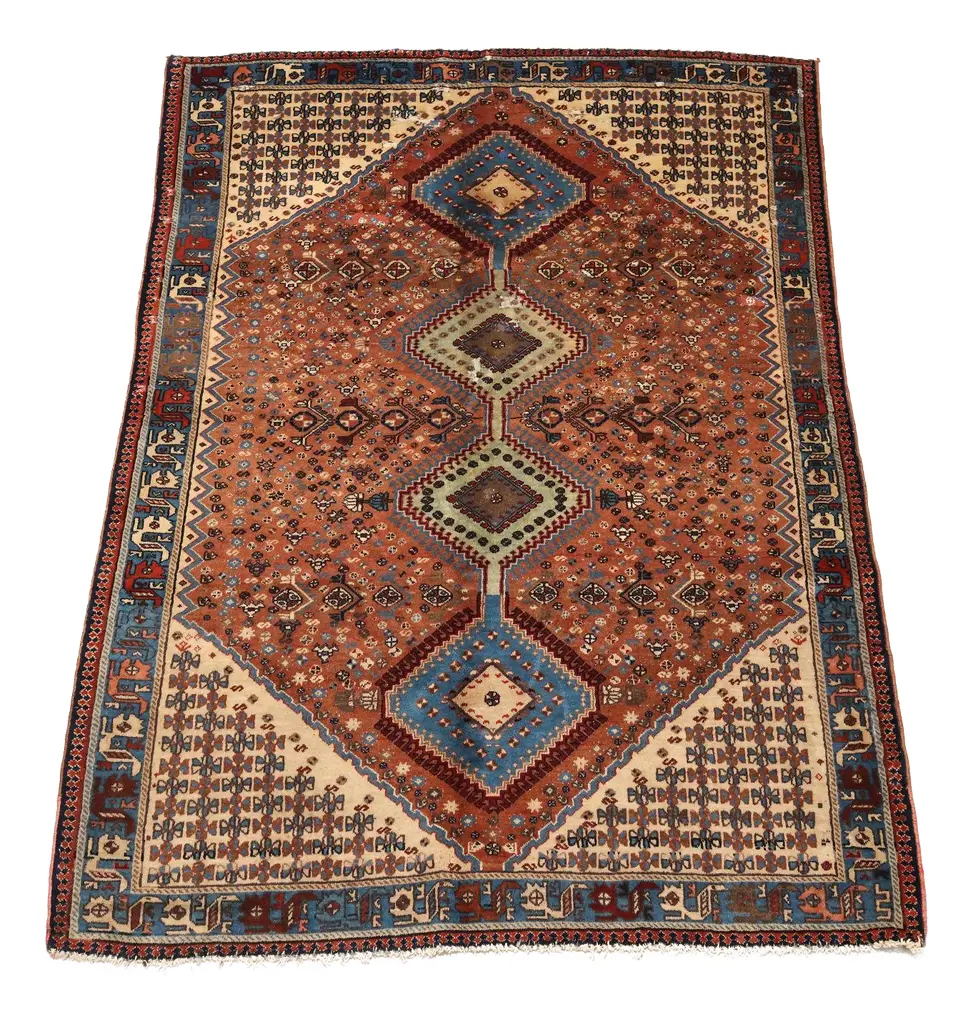
This exceptional 1875 Persian Bakhshaish carpet, measuring an impressive 9'6" x 14'8", represents one of the most sought-after weaving traditions of 19th-century Northwest Iran. Originating from the village of Bakhshaish (also spelled Bakshaish or Bakhshayesh) in the Heriz region of Azerbaijan, these carpets are celebrated for their bold artistry, large-scale geometric design, and remarkable decorative presence. Dating to the third quarter of the 19th century, Bakhshaish carpets from around 1875 were woven during a period when village weavers maintained strong tribal aesthetics while responding to increasing international demand. Unlike more refined urban Persian carpets, Bakhshaish rugs are admired for their expressive drawing, spacious compositions, and architectural medallions. Their designs often feature dramatic central medallions, angular vinery, stylized palmettes, and striking corner spandrels set against richly saturated fields of madder red and indigo blue. The natural vegetable dyes used during this period — particularly madder root for reds and indigo for blues — have aged beautifully, producing the soft, luminous patina collectors prize today. The wool, typically hand-spun and sourced locally, contributes to the rug’s durability and uniquely textured surface. Oversized examples such as this 9'6" x 14'8" format were woven for grand interior spaces and are increasingly rare on the market. Their scale, combined with powerful tribal geometry and balanced symmetry, makes them highly desirable among collectors, designers, and connoisseurs of 19th-century Persian village weaving. Antique Bakhshaish carpets from this era are regarded as foundational pieces within the Heriz weaving tradition, influencing later Serapi and Heriz production while retaining their distinct, more spontaneous character. Today, authentic 1875-period examples stand as enduring works of textile art, embodying both the cultural heritage and master craftsmanship of Northwest Persia.
Similar products