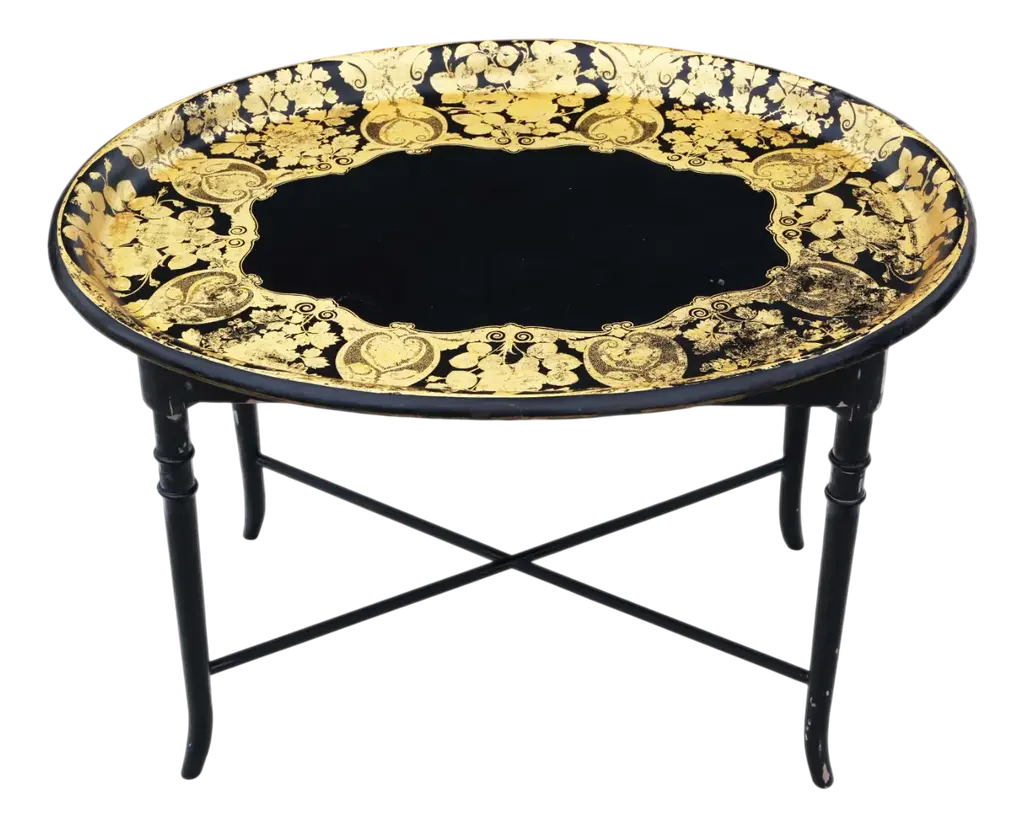
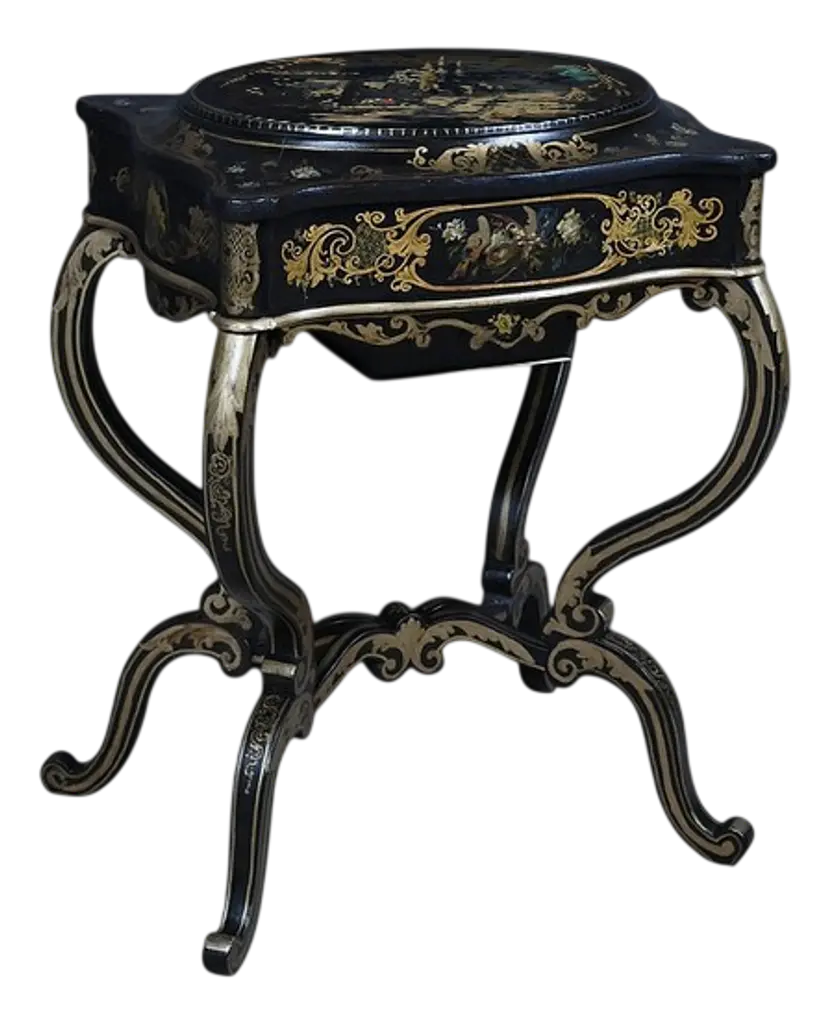
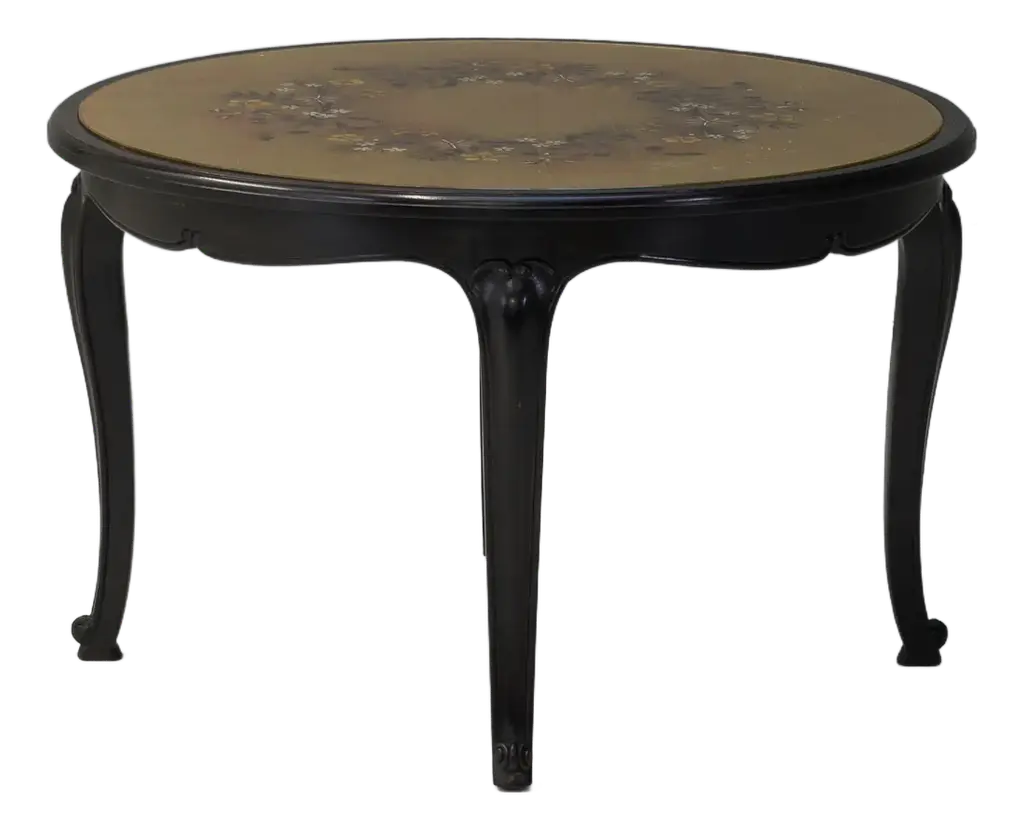
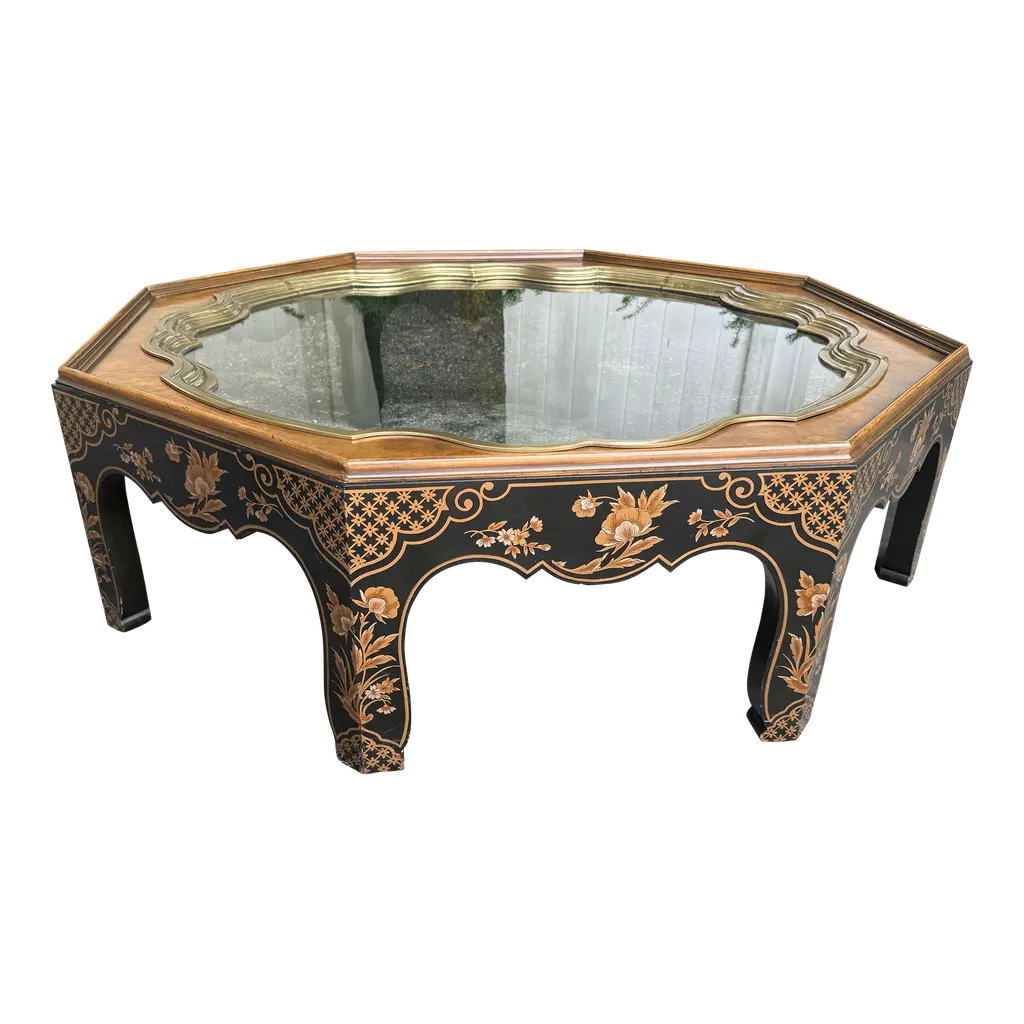
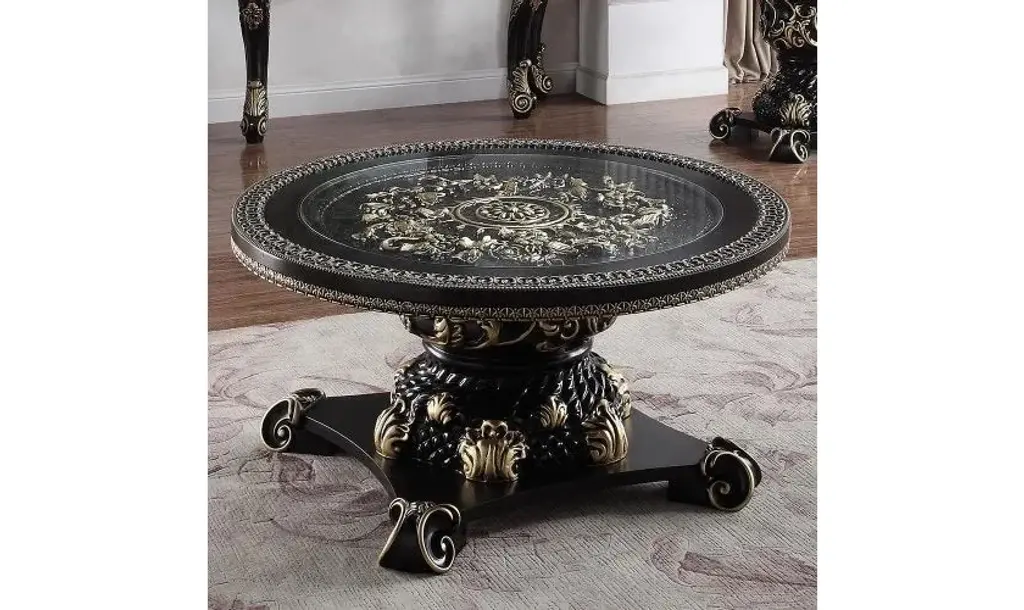
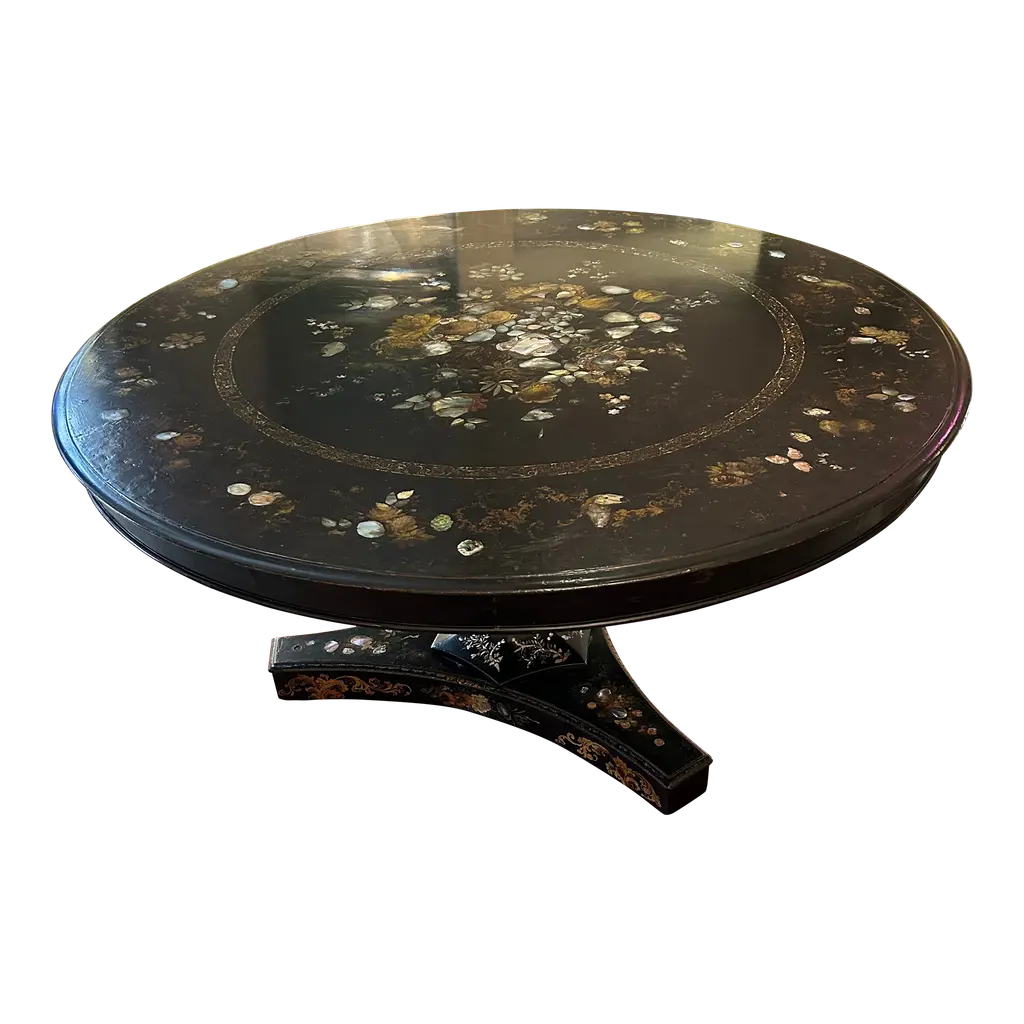
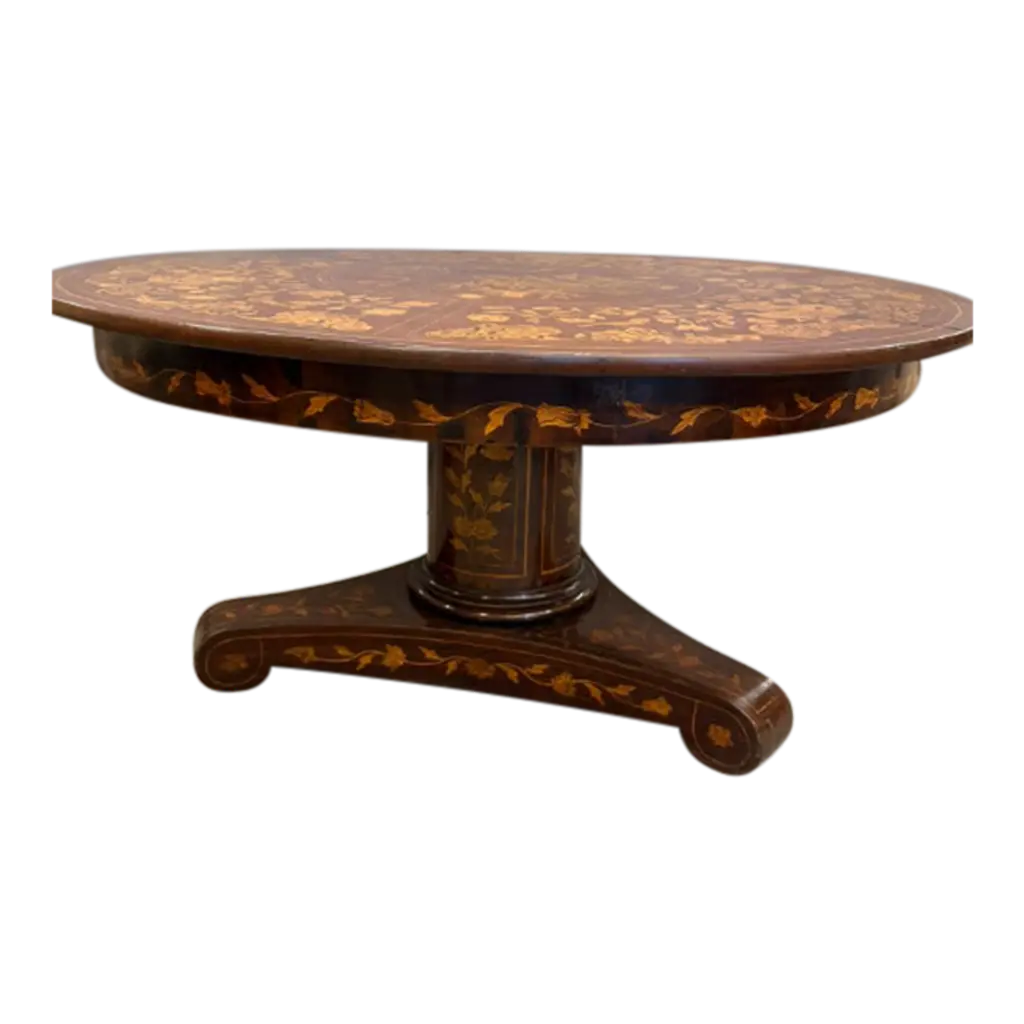
A finely crafted mid to late 20th century Anglo-Indian style circular center table, notable for its exceptional surface decoration and formal architectural composition. Entirely executed in black lacquer with parcel-gilt embellishment, the table's top displays a dense, radial arrangement of foliate scrolls, stylized lotus blossoms, and chrysanthemum blooms rendered in shimmering gold against a deep black field. These concentric floral bands are organized with rhythmic precision and culminate in a central medallion, exemplifying a fusion of Indian botanical ornamentation and Western formal symmetry. The frieze of the table incorporates openwork sections framed by floral and vine motifs, with squared floral cartouches punctuating the horizontal plane at intervals. The apron is further articulated with gilt-lined borders and gently stepped moldings, adding a subtle sense of depth and refinement to the structure. The shaped supports—scrolling legs in the form of exaggerated cabriole forms—are adorned on all visible surfaces with coordinated vegetal designs, emphasizing the decorative continuity from top to base. The legs terminate in tight scrolls, referencing both Western Rococo and traditional Indian furniture forms. Though inspired by 19th century Anglo-Indian prototypes—particularly those produced in Bombay and Vizagapatam for colonial and export markets—this example is unmistakably of later manufacture. The precision of the surface decoration, consistent tonality of the gilding, and uniformity of the lacquered finish suggest mid to late 20th century production, likely executed by an Indian workshop working in revivalist traditions for export or high-end interior decoration. Measures 42 inches in diameter and 23 inches high.
Similar products