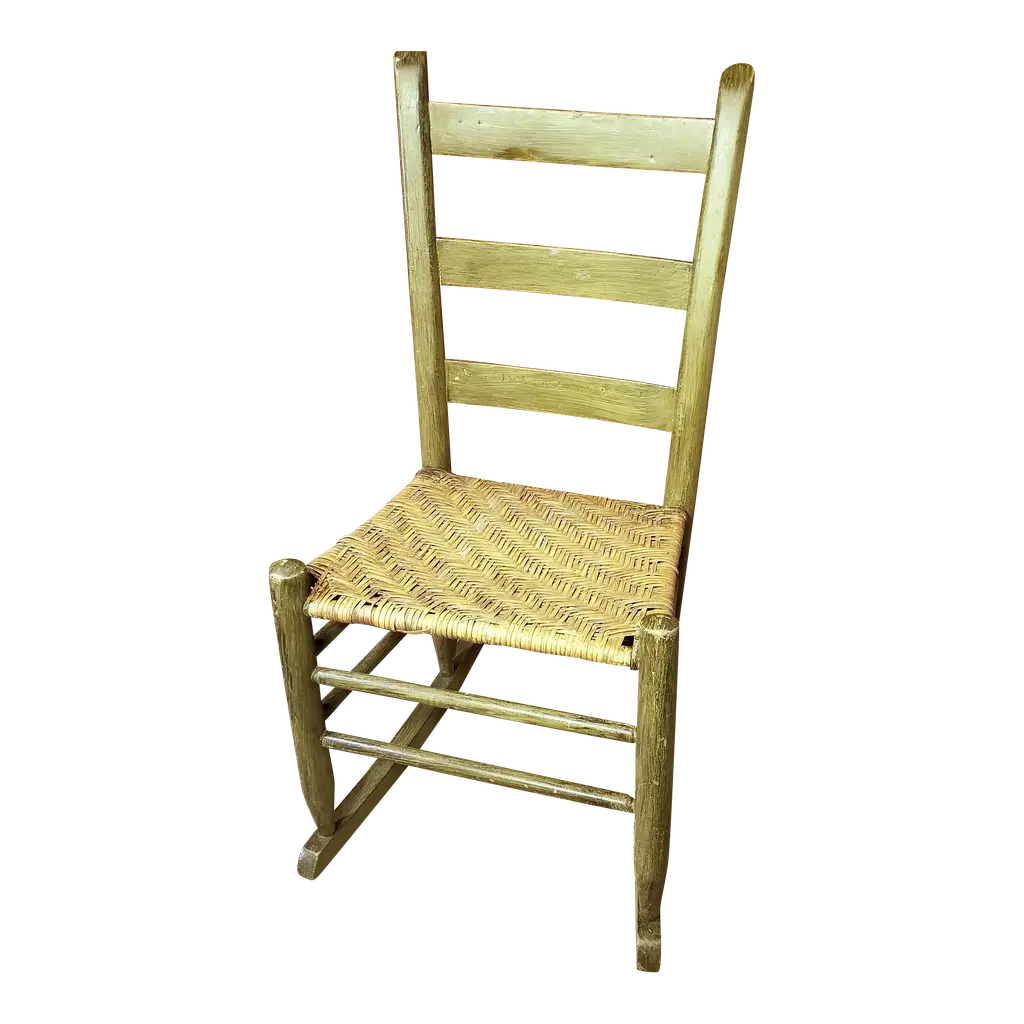
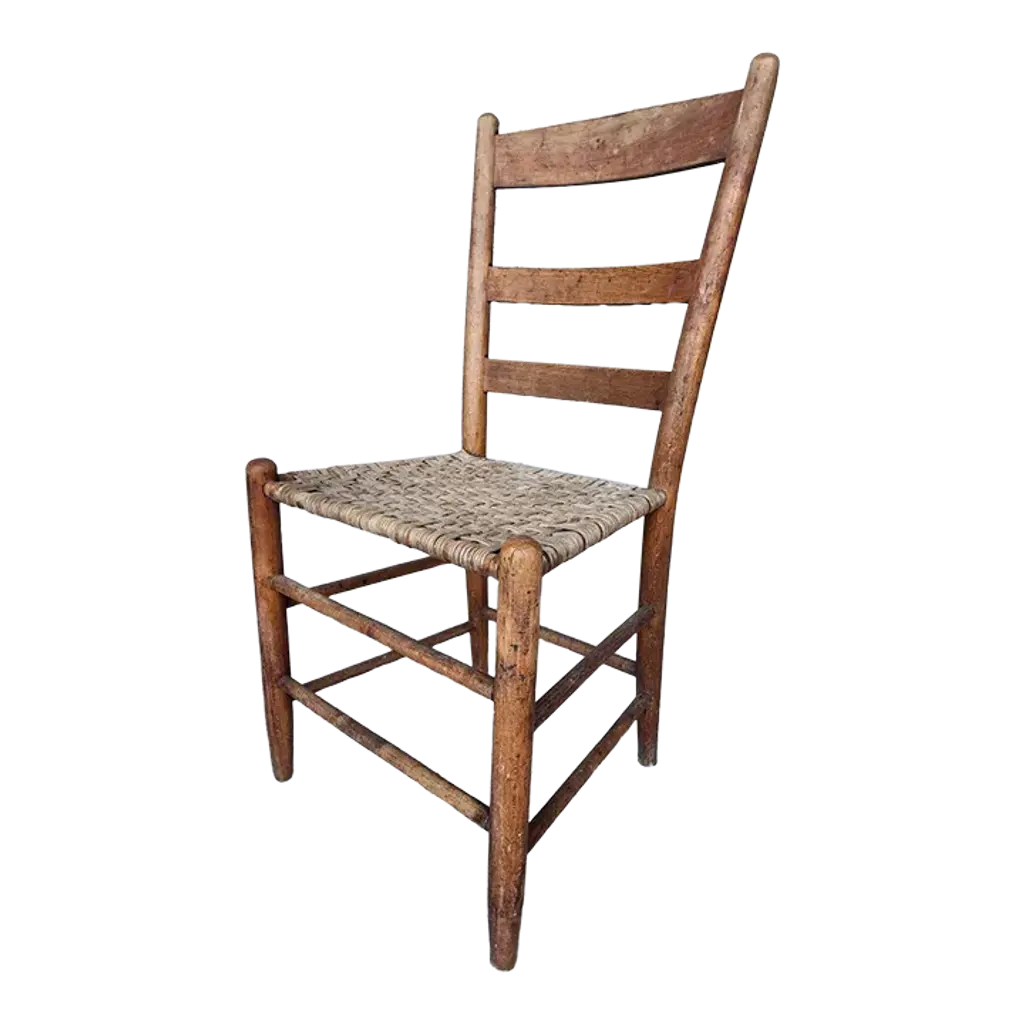
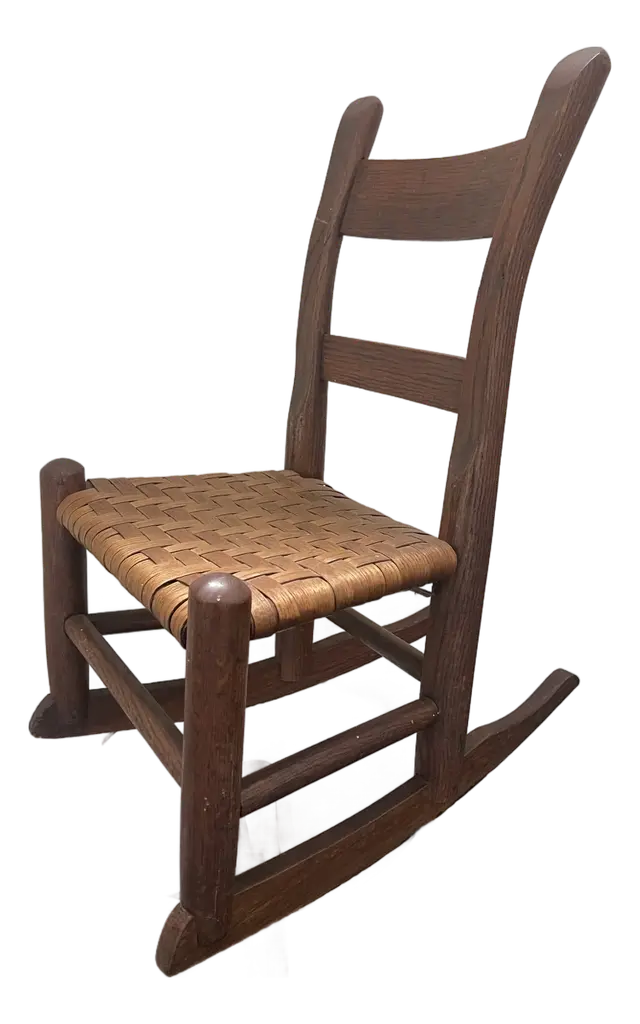
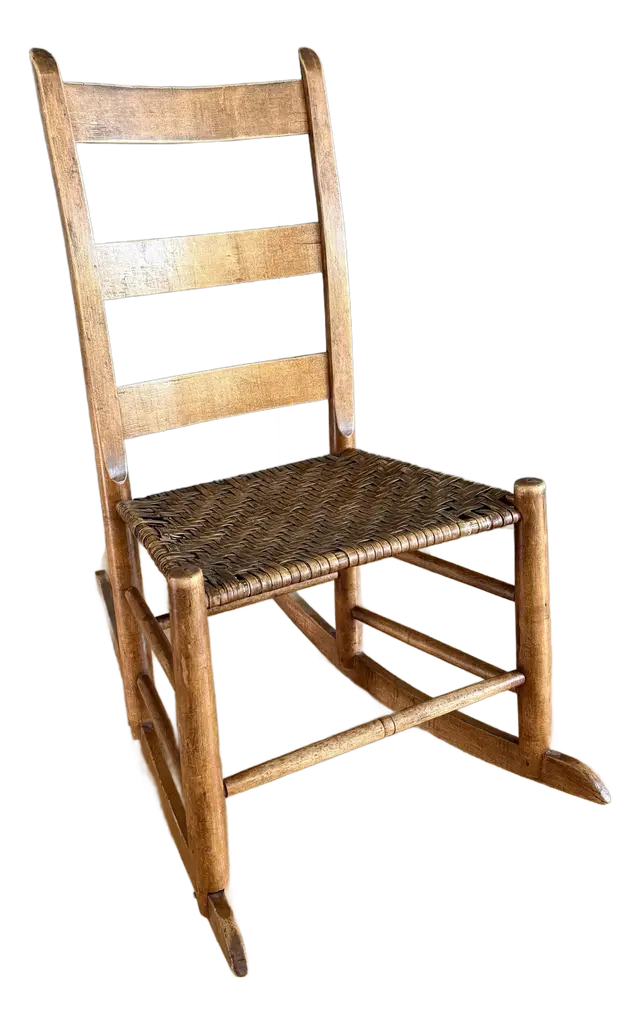
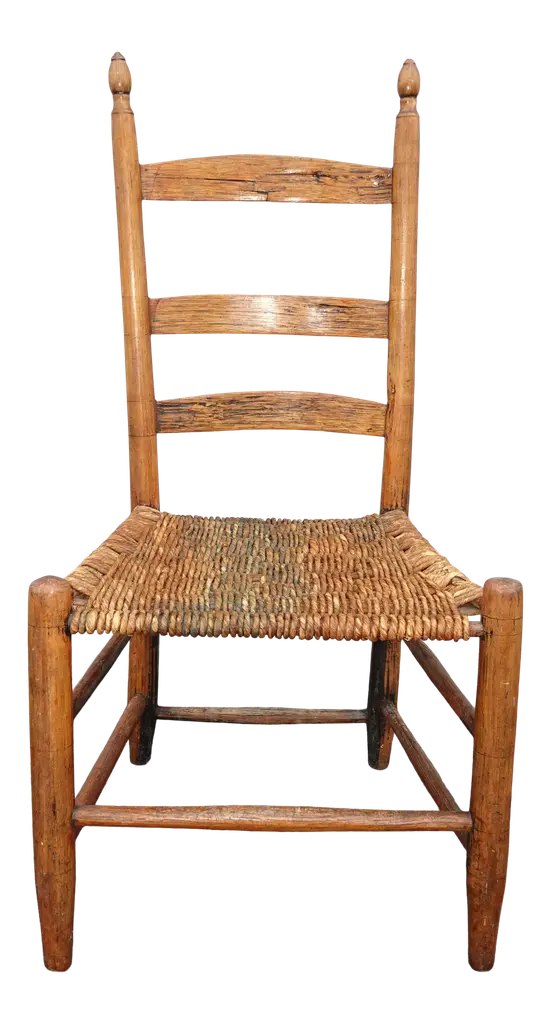
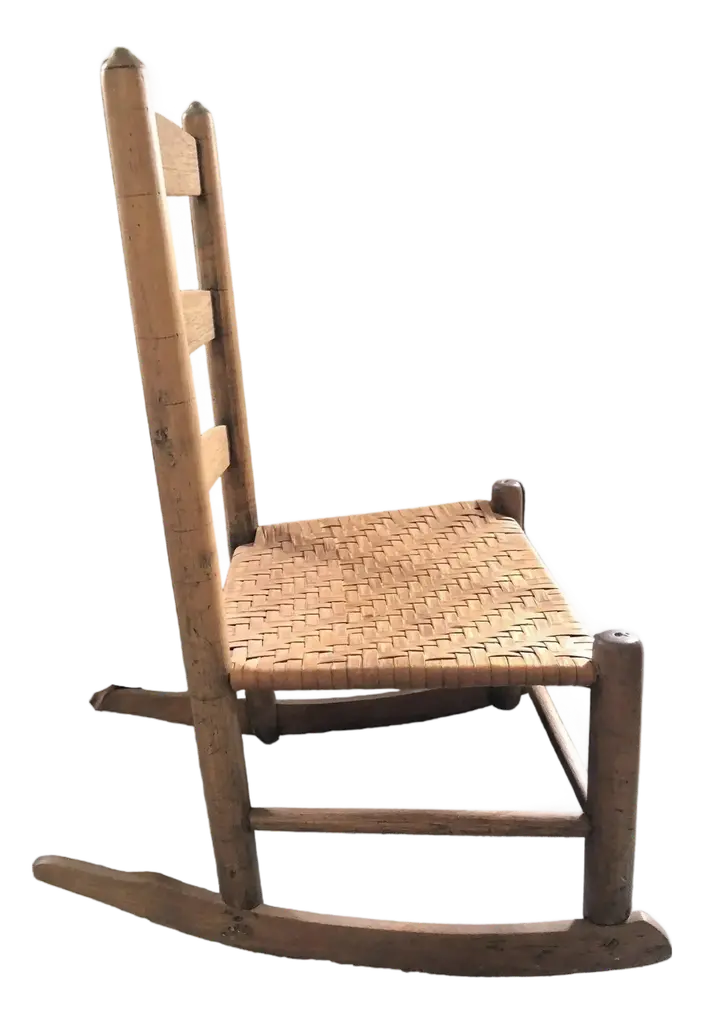
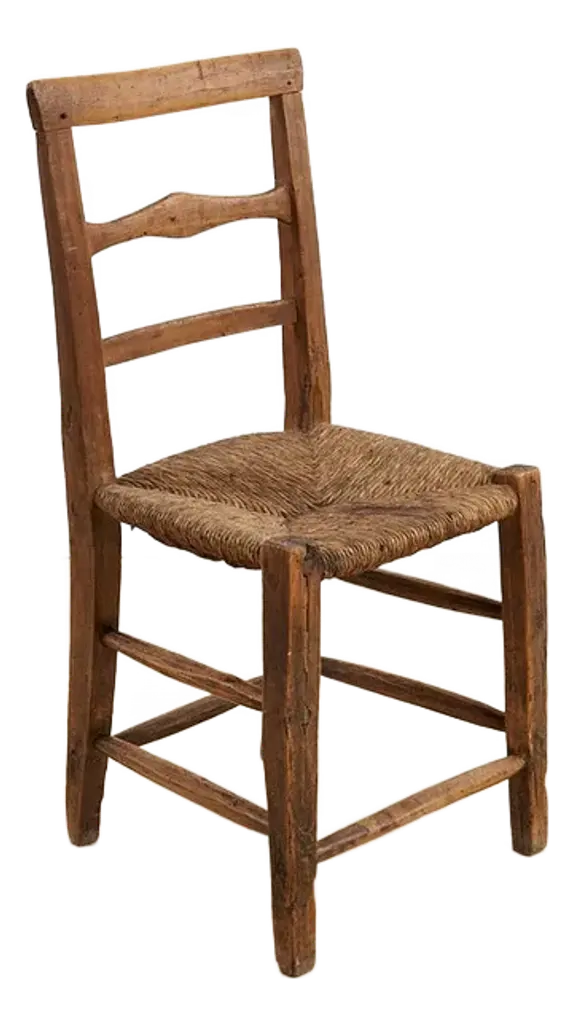
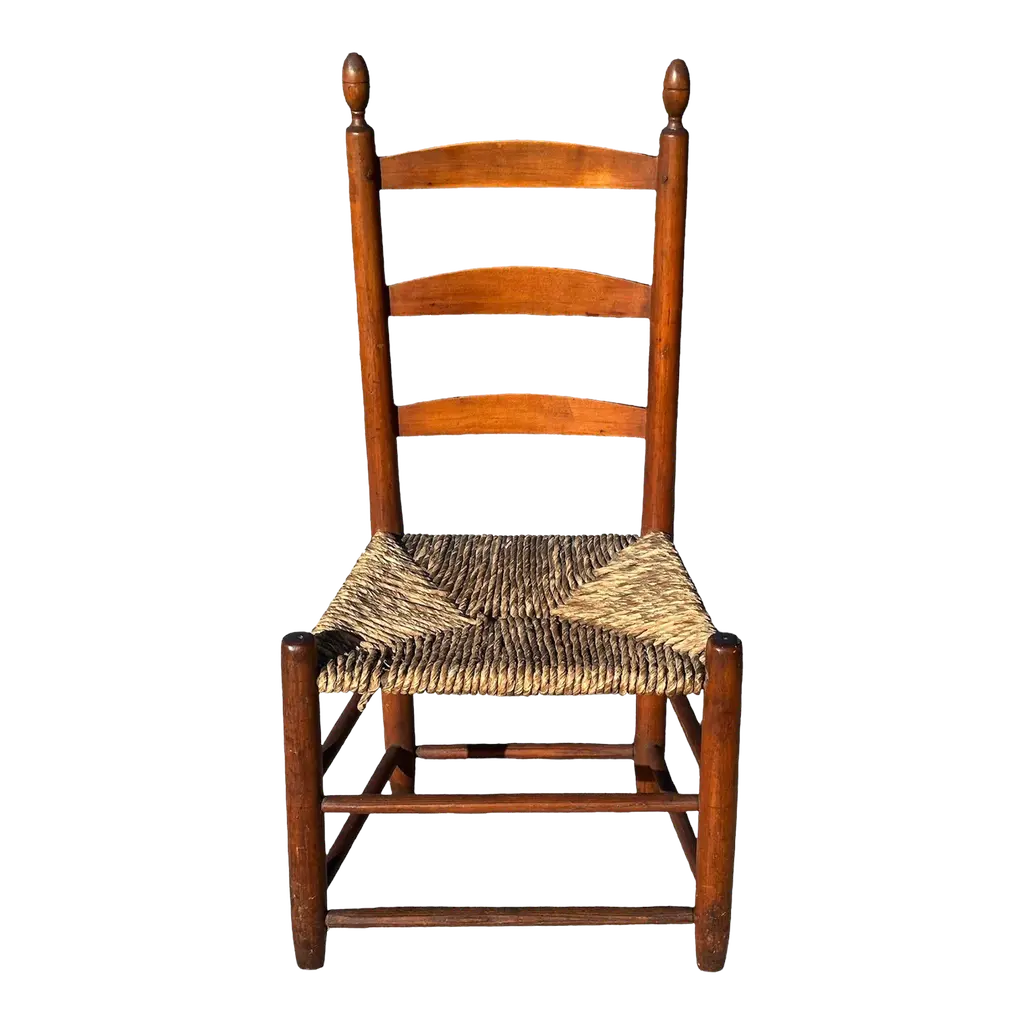
One of a kind, hand made, hand carved Early American hearth chair. This primitive chair was handcrafted with during the late 1700's or early 1800's by a Savannah man. The wood and weave are made from local materials. The curved front legs and hatchet marks are particularly interesting features. The weave is a hand made twisted natural fiber with slight variations in thickness but great care in its overall consistent creation. Its pattern is a unique grid design that looks like an open book. The lineage can be traced back 9 generations of Savannah families. Originally, it was used as a hearth chair by the Savannah family and when not in use, would hang out of the way on a nail near the fireplace. Twisted natural fibers were numerous and varied to the Savannah area during the early colonial period: Marsh grass, pine needles, woodland grasses, palmetto reeds, wild grape vines, and bamboo, to name a few. People used whatever was nearby to make chair seats, furniture, baskets, bowls, hats, bassinets, beds, mats, swings, and toys among other things. Twisting, soaking, pounding, and smoking were among the various techniques sometimes used by weavers to make fibers more pliable or stronger. Weavers more commonly used 'green' fresh cut materials. They twisted and wove them into shape, working quickly before the fibers dried and became less pliable. No stain or oils have been applied to the wood or fibers.
Similar products