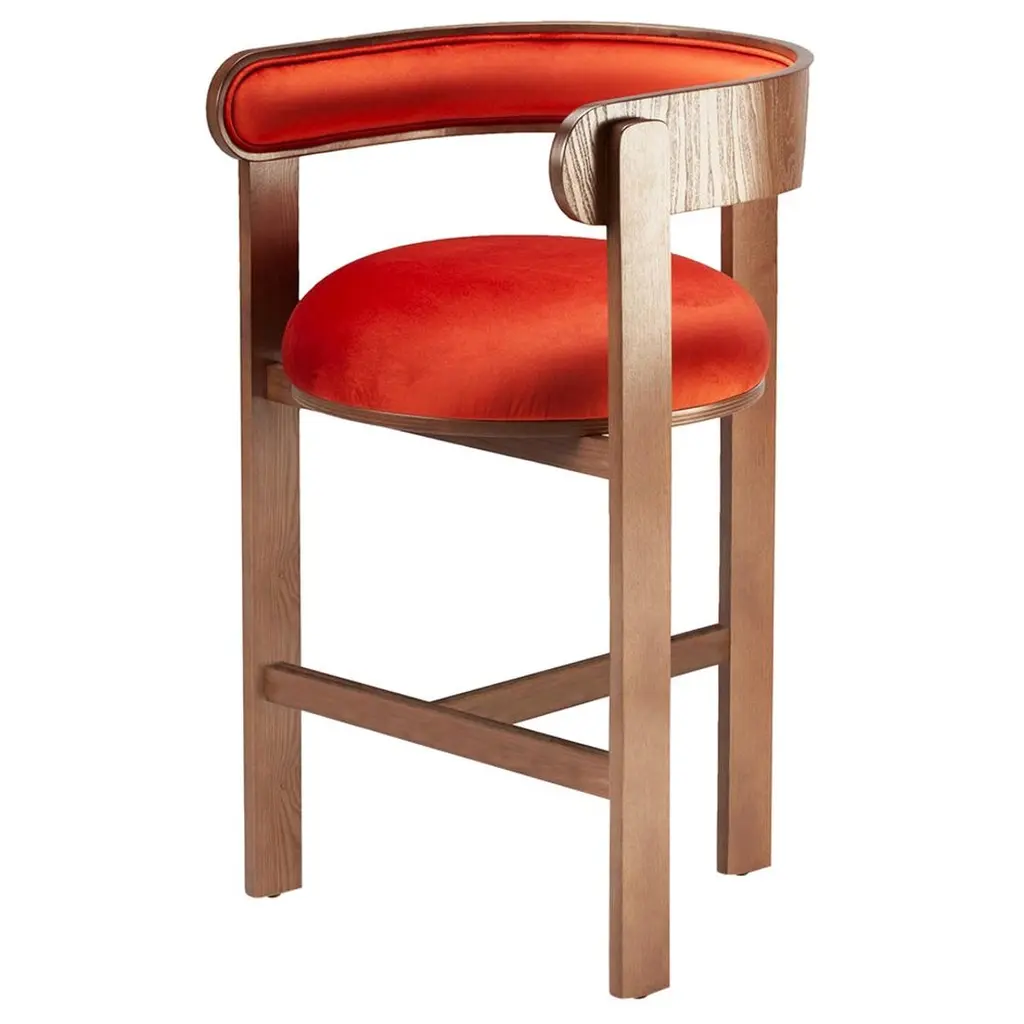
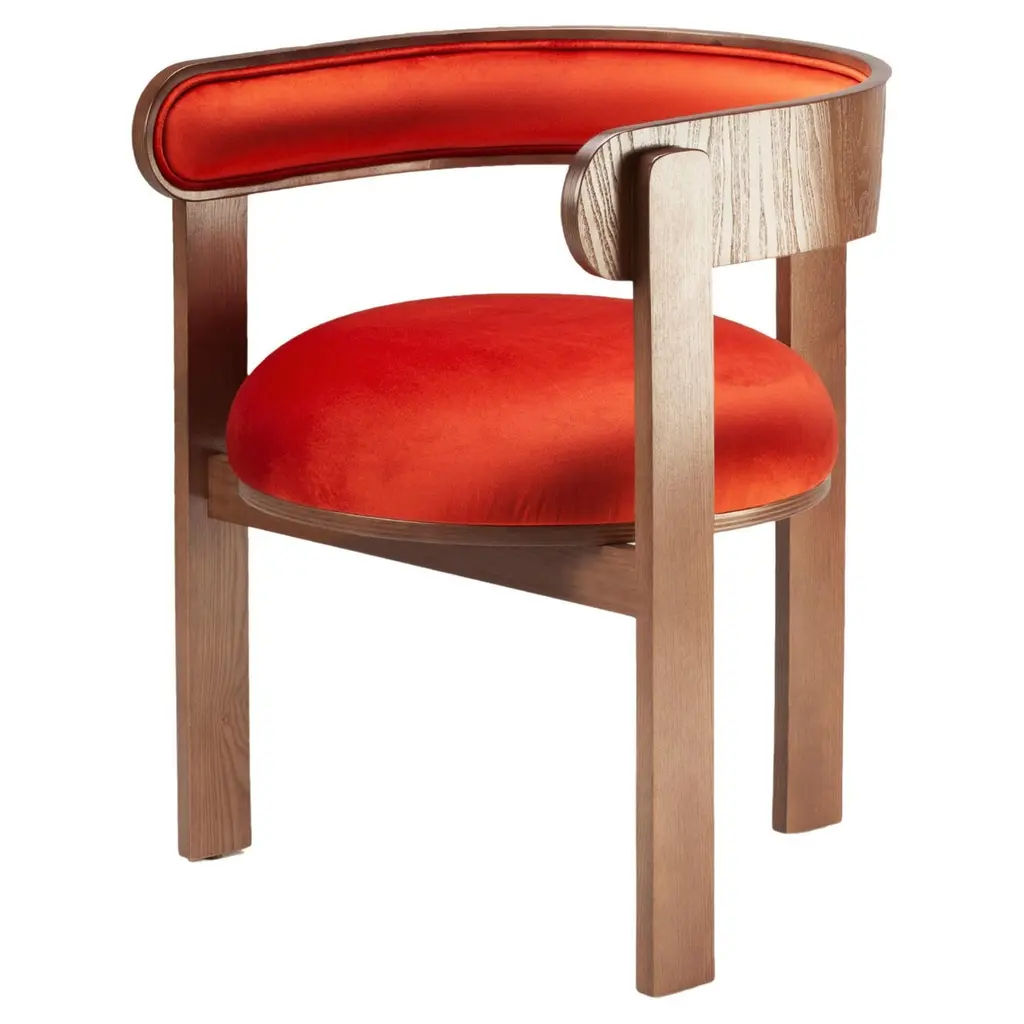
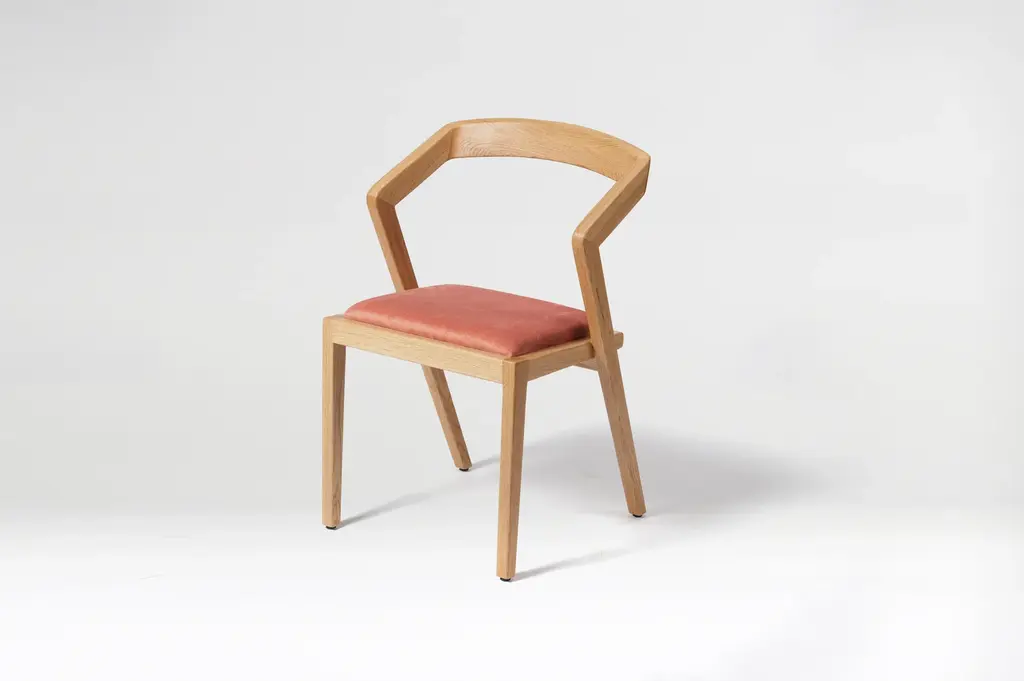
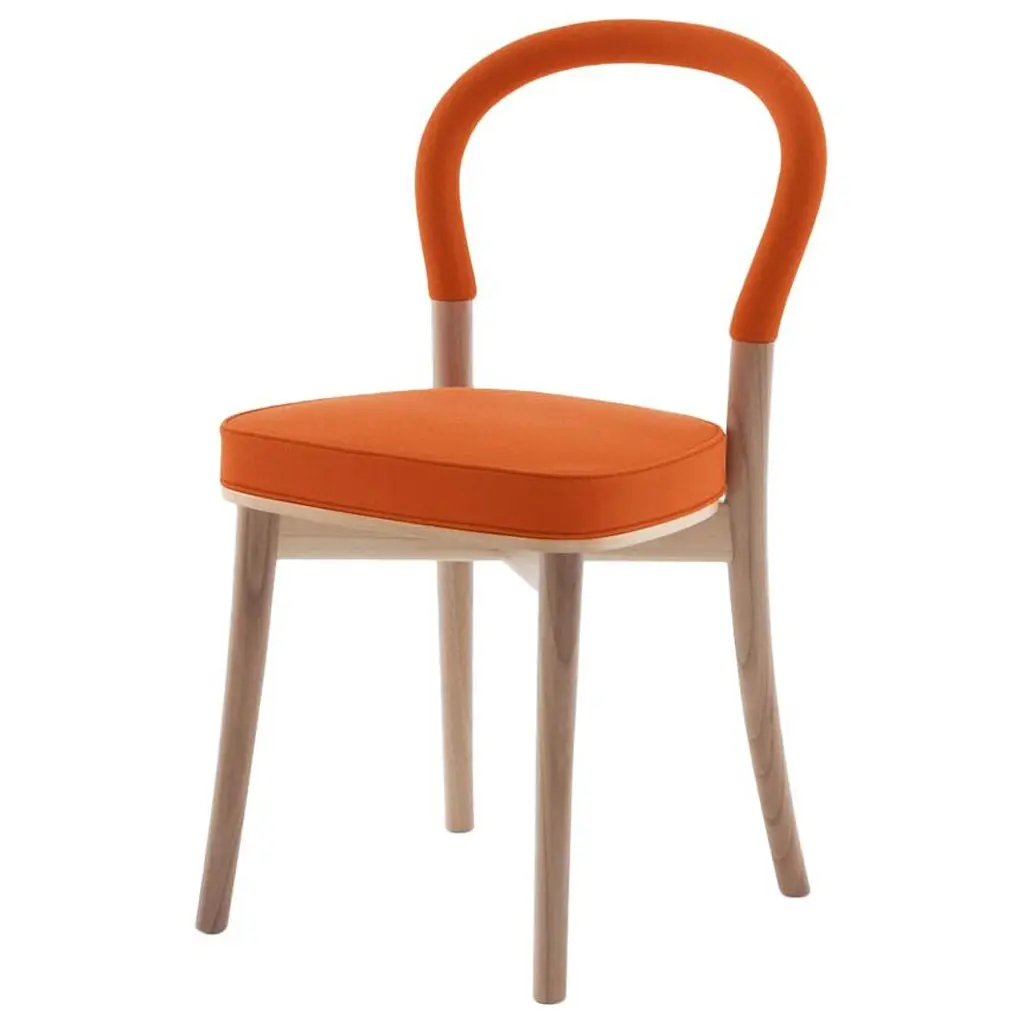
Erik Gunnar Asplund Göteborg 1 Chair For Cassina The Göteborg solid wood design chair is the conceptual representation of Rationalism by the Swedish architect who designed the furnishings for the Gothenburg Town Hall.The rounded slightly convex curves are reminiscent of the stylistic features of the Bauhaus school. This chair also echoes a tribute to the legendary Thonet chair No. 14, among the early examples of design furniture on an industrial scale.PADDINGCold processed polyurethane foam.LEGSSolid ash.UPHOLSTERYFabric or leather.The Göteborg chair is Erik Gunnar Asplund’s poetic interpretation of Rationalist ideas. The chair was commissioned for the extension of the Town Hall in Göteborg, Sweden, whose warm, wood-panelled rooms are evoked in its ashwood frame. The curved and slightly convex profile recalls Bauhaus designs. In this case, though, Asplund keeps the back and legs the same width. We also see an homage to the historic Thonet No. 14 chair, one of the early examples of industrially manufactured furniture.Important information regarding images of products:Please note that some of the images show other colors and variations of the model, these images are only to present interior design proposals. The item that is selling is on the first image.Important information regarding color(s) of products:Actual colors may vary. This is due to the fact that every computer monitor, laptop, tablet and phone screen has a different capability to display colors and that everyone sees these colors differently. We try to edit our photos to show all of our products as life-like as possible, but please understand the actual color may vary slightly from your monitor.About the Designer:Born in Stockholm, Erik Gunnar Asplund occupies a central position in the development of Scandinavian architecture and design of the twentieth century.He is considered the archetype of the generation that gave rise to the maturing process of the above estates, subsequently developed by such figures as Alvar Aalto, Erik Bryggman, Arne Jacobsen, Jørn Utzon.After graduating as an architect in 1909, many trips to Europe and the United States punctuated his apprenticeship.His works from the years 1911 to 1930, influenced by a strong romantic tradition, express a neoclassical language, founded on vernacular cultural bases.However, it was in 1930, the year of the Stockholm Exhibition, that Asplund managed to go beyond the rigid and stereometric language of the early years of rationalism very clearly by anticipating in a very personal way the trends of the Modern Movement.His most remarkable works of architecture are: the Chapelle du Bois (1918-20); the Skandia Cinema, Stockholm (1922-23); the Municipal Library, Stockholm (1921-28); the expansion of the Town Hall, Gothenburg (1916-37); the Brendenberg stores, Stockholm (1933-35); the Bacteriological Laboratory (1932-37); his country house in Stennäs (1937); the Crematorium and the southern part of the Stockholm Cemetery: the pinnacle of all his experience.In terms of decoration and design his most notable works are: the study of popular housing for the exhibition of the Swedish Society of "Arts and Crafts" (1917); interior design for the "Art and Industry" association, Stockholm (1920); the decoration and furniture of the City Hall, Stockholm (1921); some furniture dating back to 1931, such as the famous judge's chair and the furnishings of the Lister Sölvesborg courthouse; the decoration of the Swedish pavilion at the Paris Exposition (1925); decoration and objects created for the Stockholm Municipal Library (1920-28); the Council Room at the Headquarters of the Arts and Crafts Association (1931); decoration for the Palace of Justice and for the Town Hall, Gothenburg (1916-37).About Manufacture:Established in 1927 by Cesare and Umberto Cassina in Meda, Italy, Cassina launched industrial design in Italy in the 1950s, based on a totally innovative approach that marked the transition from artisan production to mass production. With a mindset focused on research and innovation, Cassina combines technology and long-standing artisan craftsmanship. Memory, research, innovation. Cassina blends traditional skills and superior productivity, meticulous attention to detail and passion, uniqueness and experimentation, wellbeing and sustainability. Today, the company continues to address new lifestyles with the creation of complete, harmonious interior decor solutions that embody the best contemporary design for all areas of the home.
Similar products