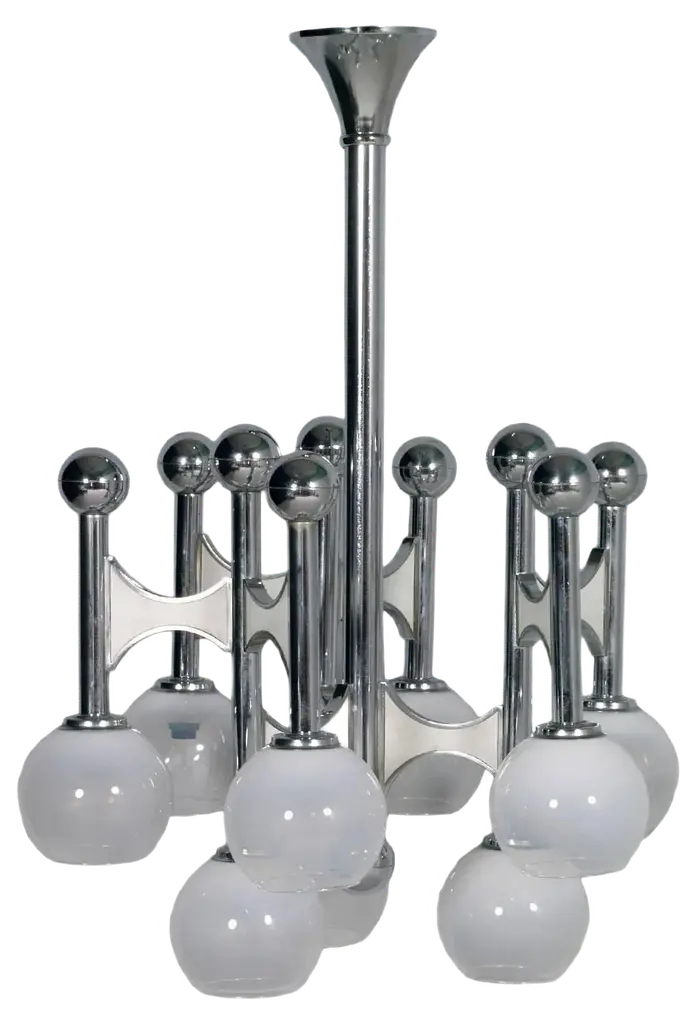
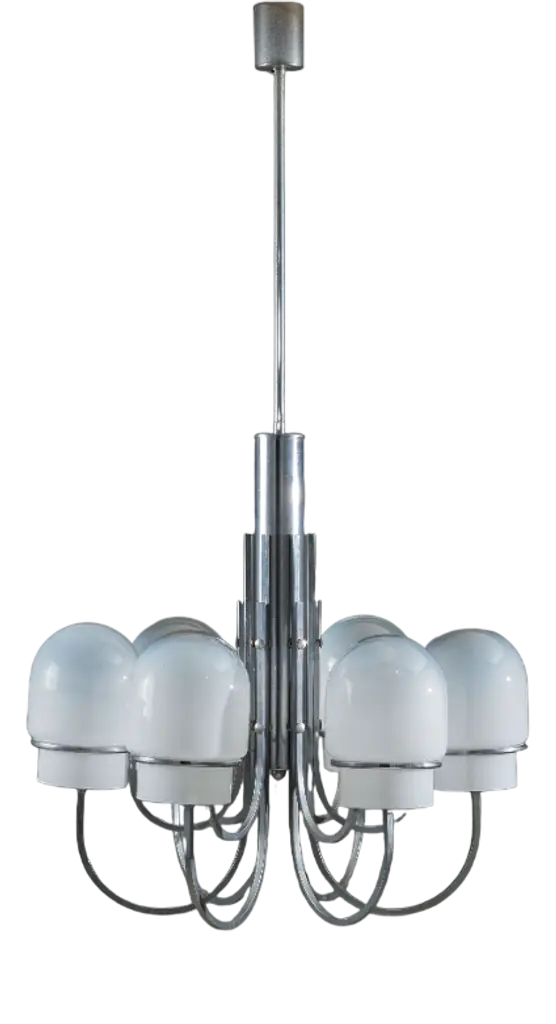
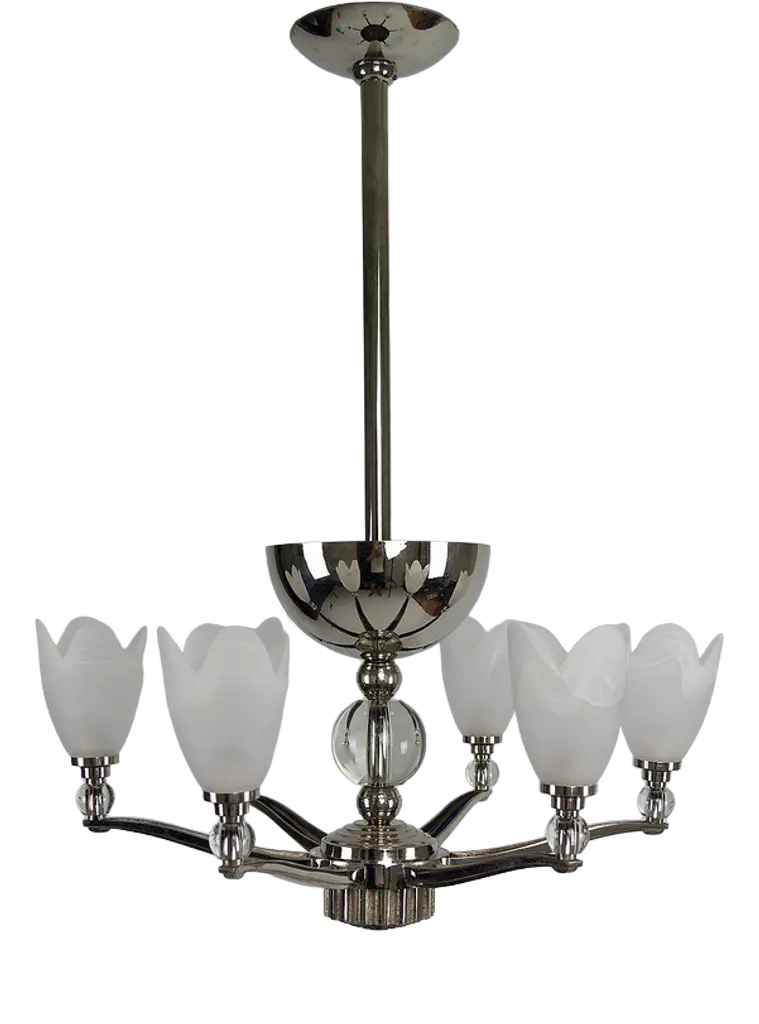
Rondocubistic Czechoslovakian 4 flame chandelier in chromed brass in excellent condition. 100 cm tall, 50 cm wide, weight around 8 kg. Only one in chrome version ever documented. Rondocubism is specific architectual style stemming from cubism in early 20s and predecessor of an Art deco in former Czechoslovakia,. Existed only couple of years and was widely used by architects such as Pavel Janak or Jan Kotera who would design complete exterior and interior for well established and demanding clients. "Rondocubism developed after the First World War in the newly formed Czechoslovakia and became the national style for a short time, but was replaced by functionalism as early as in mid-1920s. It is characterized by the introduction of round forms such as semicircles, circles and ovals, which were intended to evoke echoes of the national Slavic traditions. Rondocubism was preferred in Prague, but was also used in industrial architecture in the surrounding area. Several rondocubist buildings were built also in Slovakia, mainly in Bratislava. The main works of architectural Rondocubism are the commercial building of the Legion Bank, or Legiobanka, by Josef Gočár and the Adria Palace by Pavel Janák in Prague'' ''Following the First World War a new style developed out of Cubism: Rondocubism. One excellent example of this style is the building of the former Czechoslovak Legions bank in Na Poříčí street in Prague, where the original, austere geometric edges, cubes and pyramids are supplemented by crescents and circles in the spirit of national Slavic traditions. Rondocubism was also widely applied in industrial architecture¨ European Plug (up to 250V).The wiring of this item may be original and might need replacement, if not specified otherwise.
Similar products