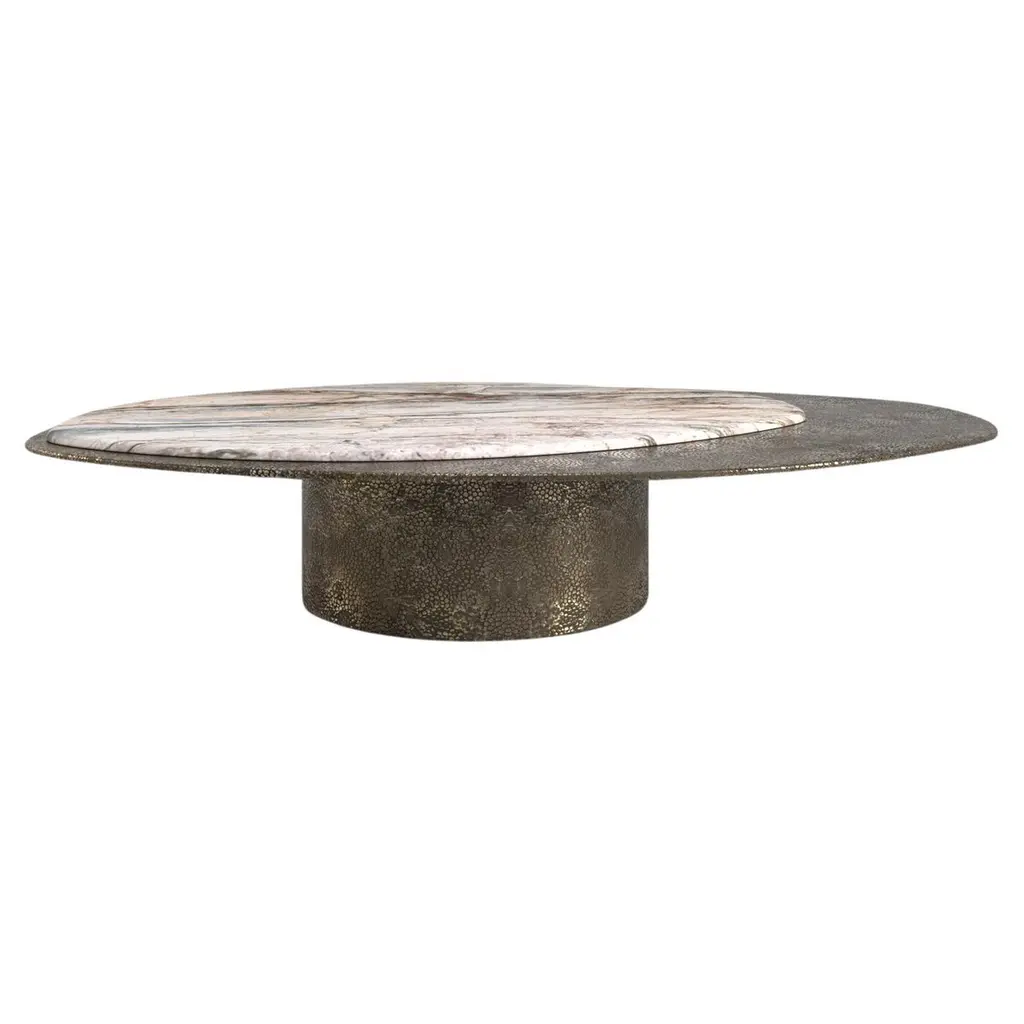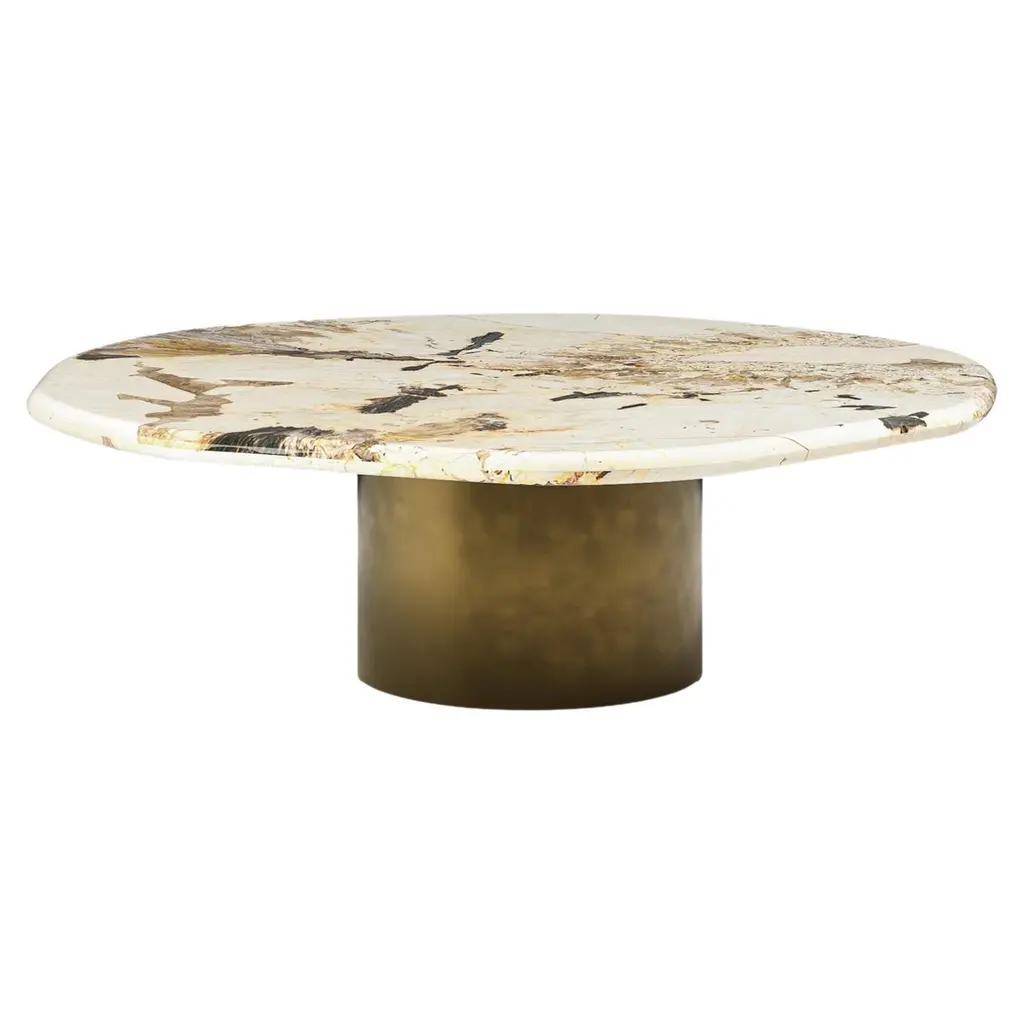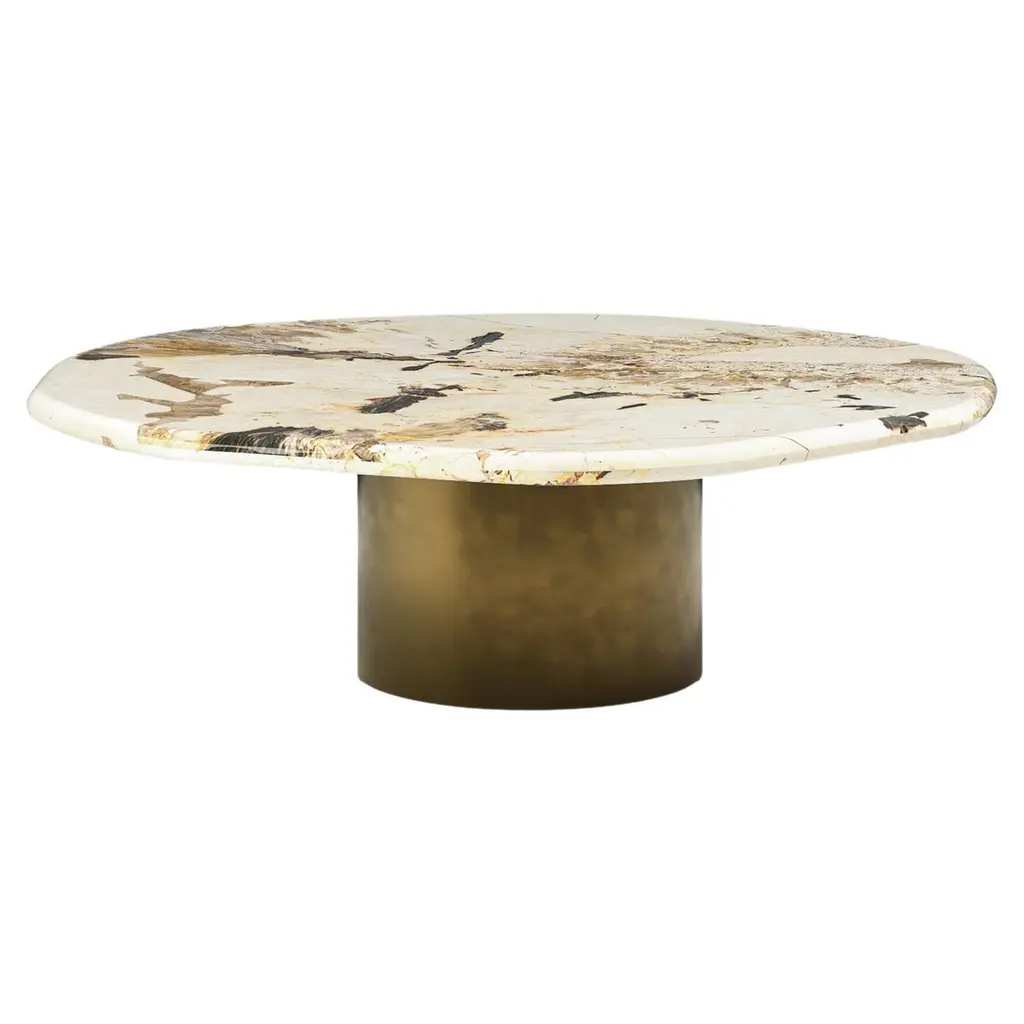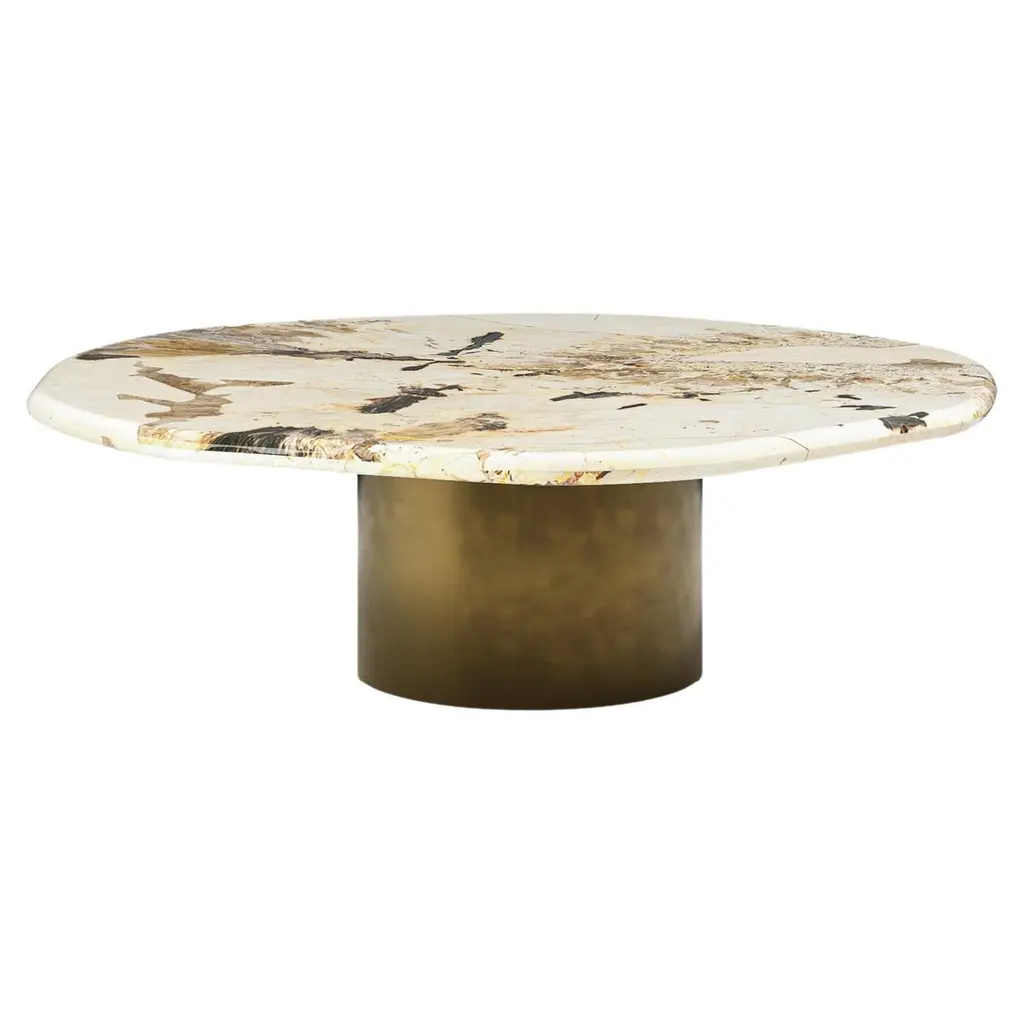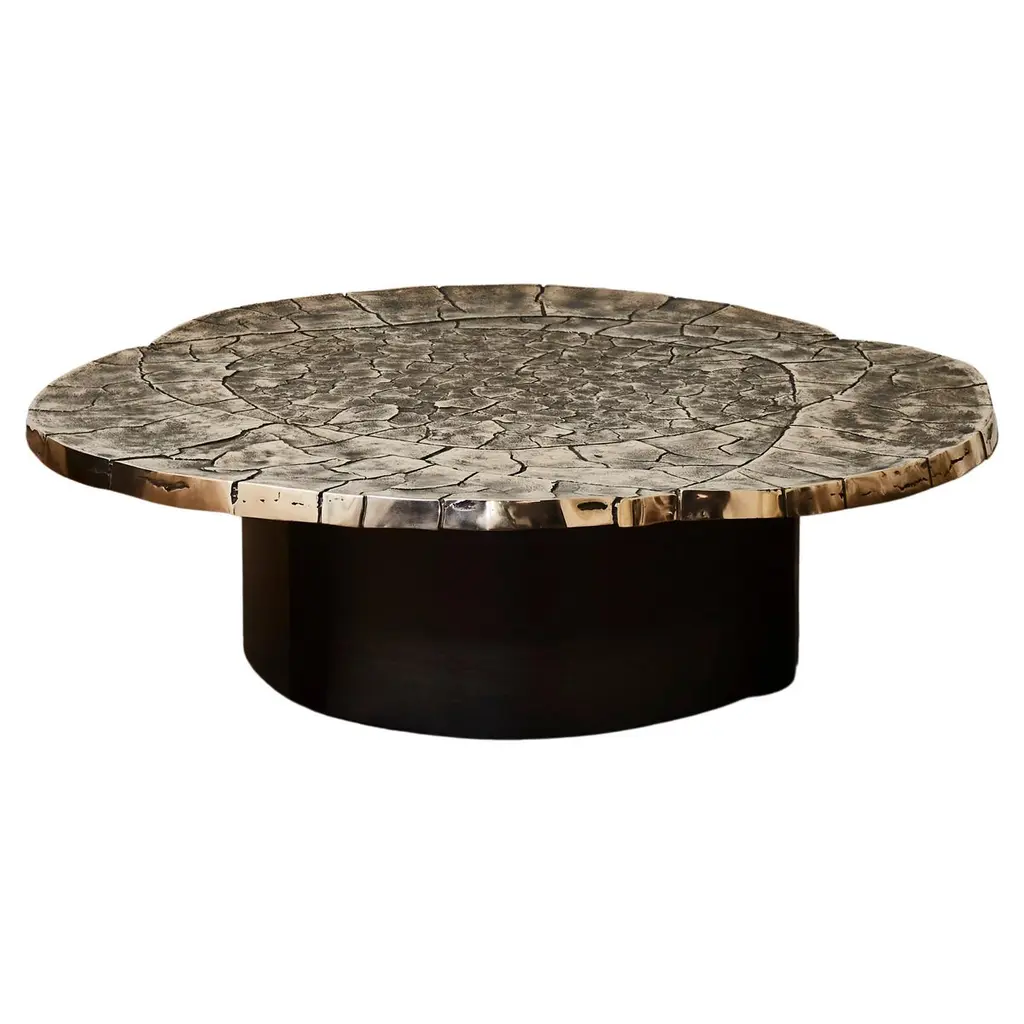
"3 Dry Potatoes" Coffee Table By Erwan Boulloud
$42,509
1st Dibs
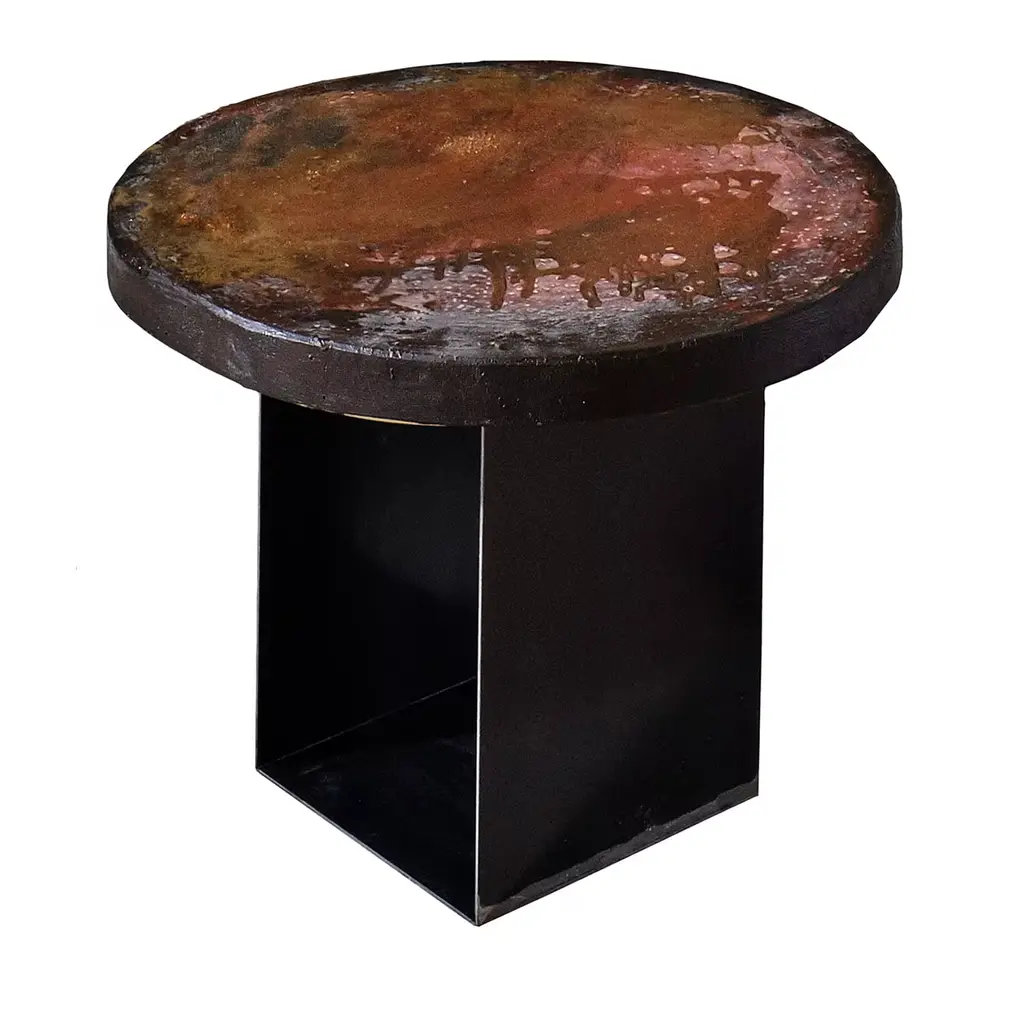
Exceptional "3 Dry Potatoes" coffee table in sculpted and patinated bronze. Base in patinated stainless steel. Limited and signed piece by the french artist Erwan Boulloud, 2022.From the VESTIGIUM collection:"Each hollow or raised vestige, trace, image, and imprint of a passage over a surface signifies both a presence and an absence; a tale left in suspense. The imprint signals the time that has elapsed, while also evoking past occurrences of physical phenomena from bygone histories. It is both the sign and the vestigium. Through the geological sciences and archeology, we can observe and study the traces left by physical phenomena and humankind, in order to weave a tale of our genesis.The Earth can be read like a genre-bending tome of cosmology, mineralogy, biology, economics, physiology, culture, and philosophy. Through these disciplines, we attempt to learn our origins. Offering clues on how the Earth was formed, Chile's Atacama Desert region abounds in geological formations, from tiny crystals to vast intrusive and metamorphic rocks. The latter are the result of sedimentary rocks slowly converting to the solid state due to certain constraints, such as pressure and temperature changes, and water content.The Earth's surface is replete with the geological and archeological memories of volcanic eruptions, oxidation, sedimentation, magma flows, fissures, and traces of water from long ago. These various vestigia tell the tale of Earth's prehistory and of the first humans to wander across its lands millions of years ago. Present in art since prehistoric times, the footprint has profoundly influenced all fields of knowledge by serving as a direct material record of the past. At the crossroads of archeology, anthropology, paleontology, geology, and esthetics, the footprint constitutes what French philosopher Michel Foucault called the "writing of things." Moreover, it subverts history through its paradoxical temporality, acting as the remnant of a disappearance and questioning our relationship with our origins."E. Boulloud.
Similar Items