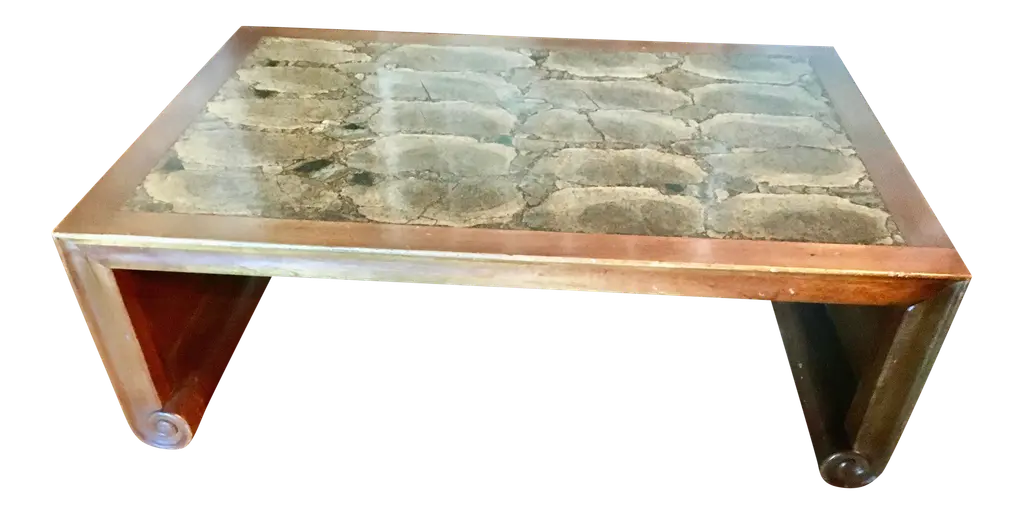
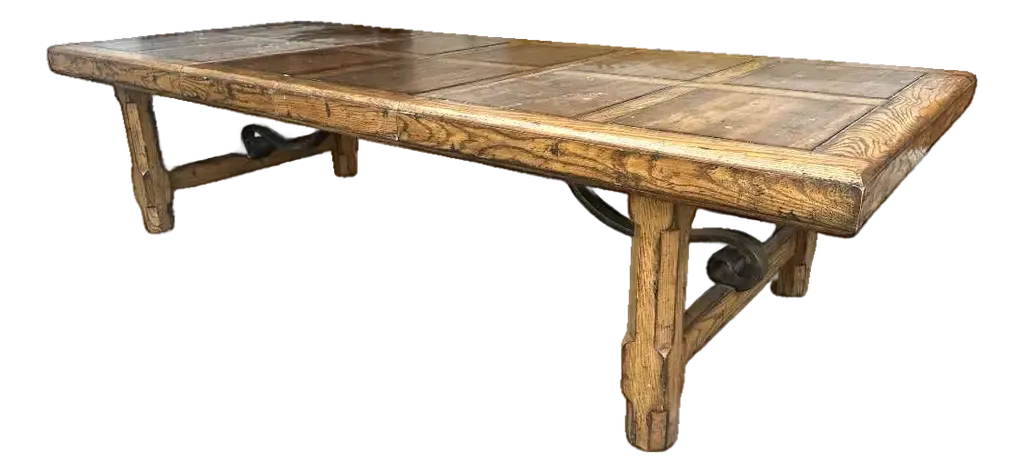
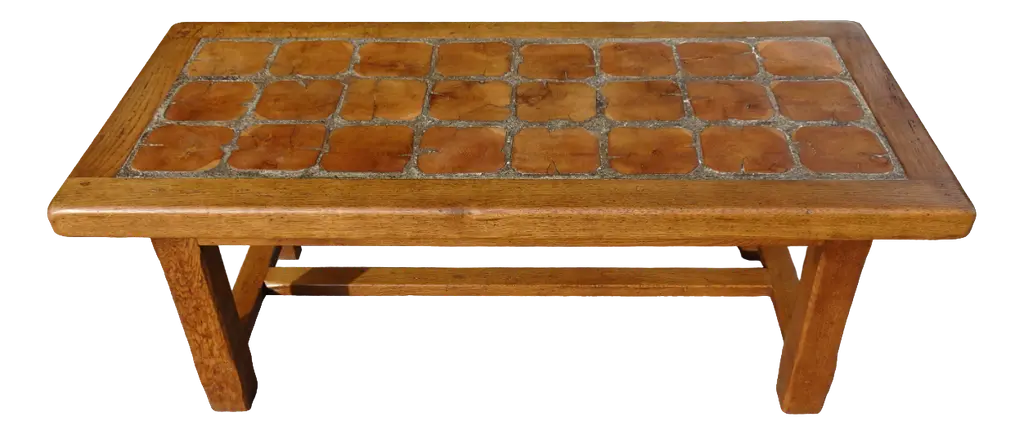
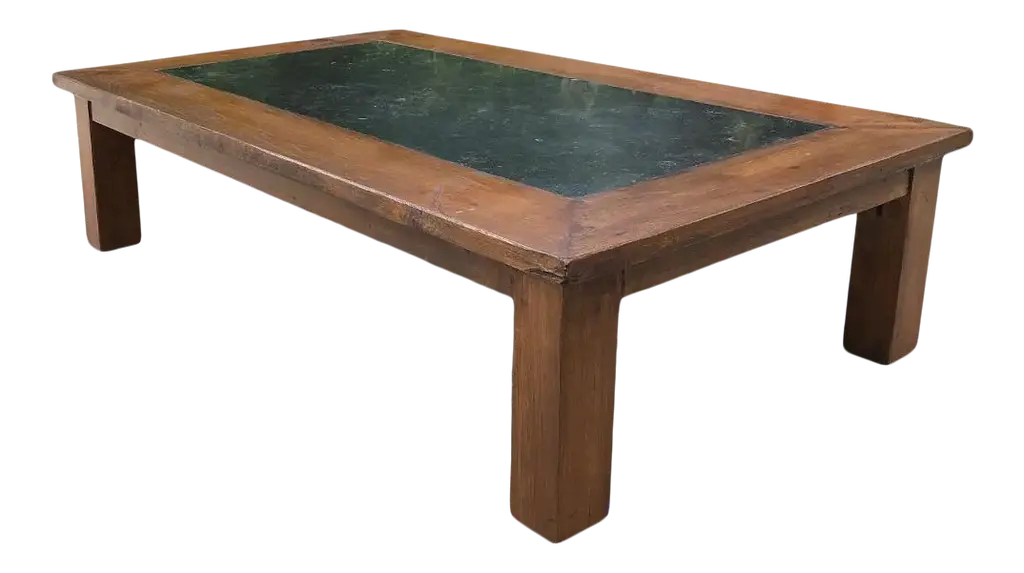
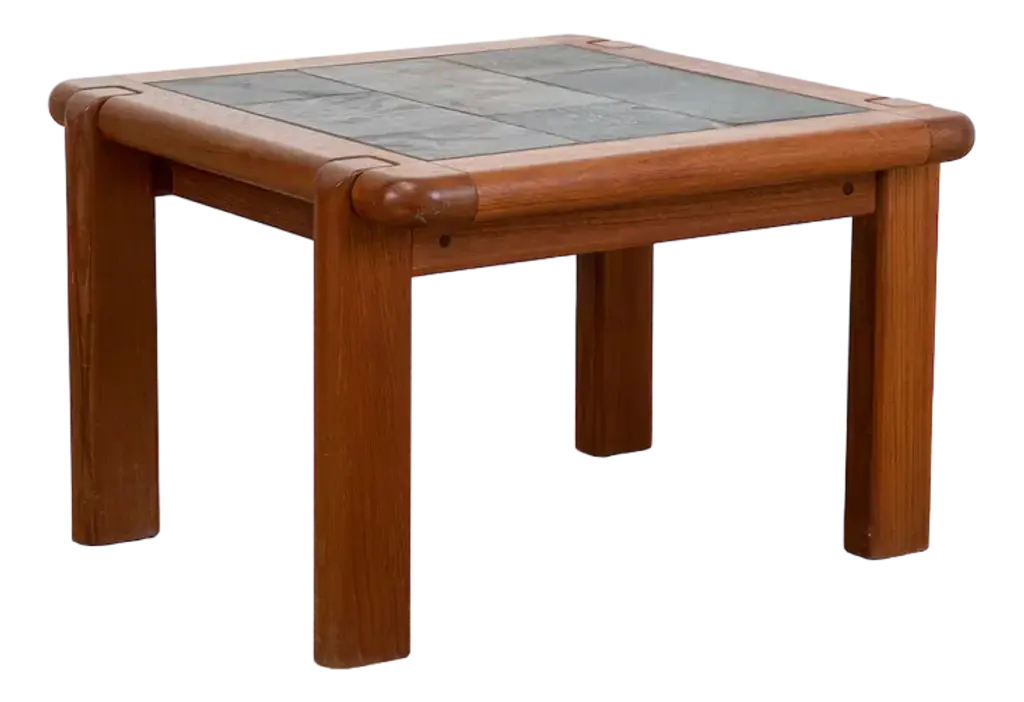
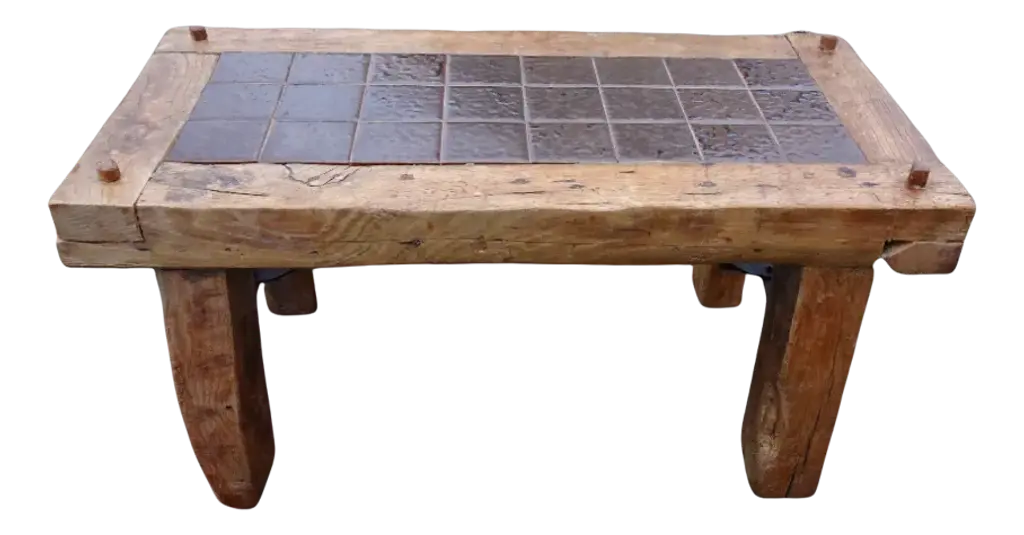
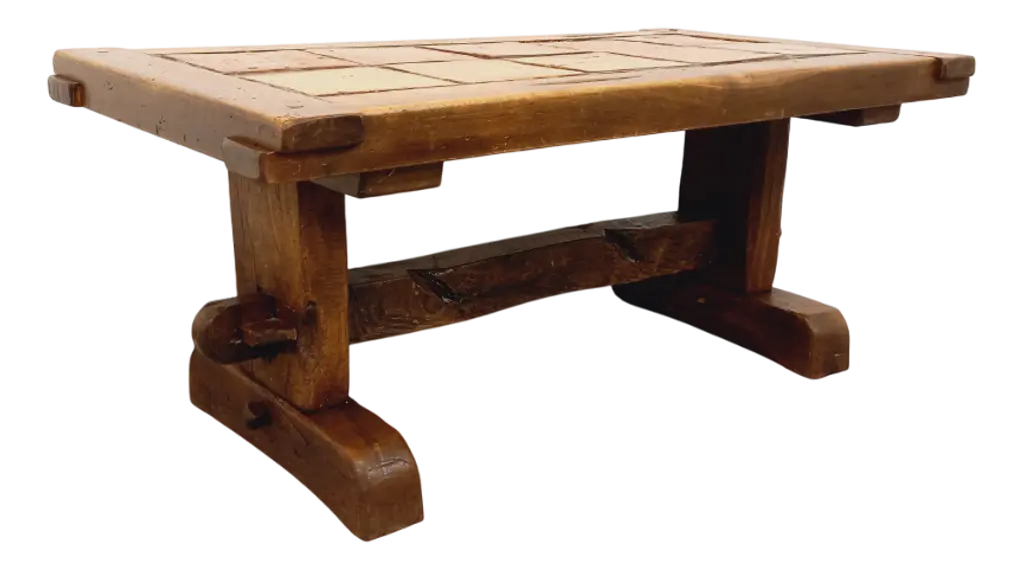
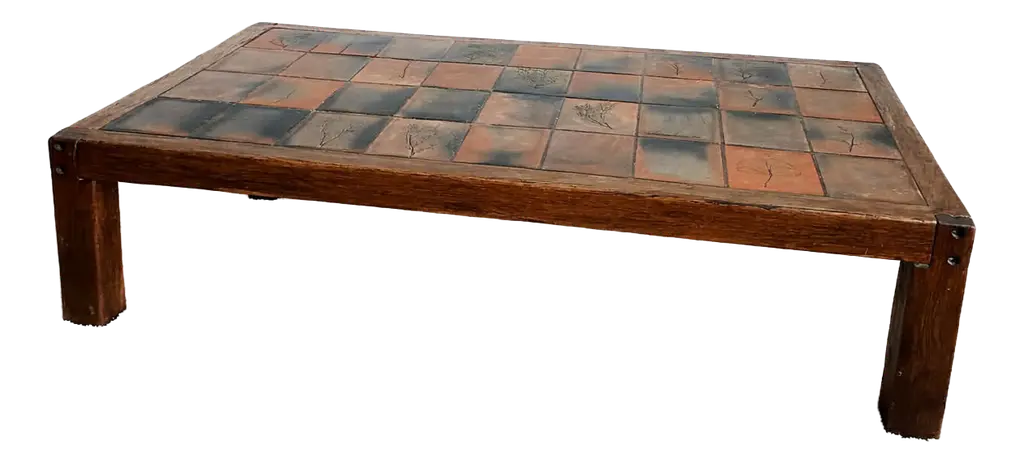
A substantial brutalist coffee table with tiled top, dating to the 1960s–70s, notable for its weight, texture and sculptural construction. The solid timber frame is formed from thick, gently chamfered supports with exposed pegged joinery, giving the piece a distinctly architectural, almost monolithic quality. The legs are deeply cut emphasising mass and stability, while the visible dowel details at the corners highlight the hand-crafted construction. The top is inset with a grid of square ceramic tiles in muted, earthy green tones. The softly variegated glaze contrasts beautifully with the warmth and pronounced grain of the timber, creating a balanced interplay between rustic materiality and structured geometry. The tiles sit within a broad wooden surround, reinforcing the table’s grounded presence. Stylistically, the piece sits firmly within the Brutalist and organic modern movement of the late 20th century. It recalls work produced in France, Belgium or the Netherlands during this period, and bears similarities to tables by makers such as De Puydt, Juliette Belarti, or certain provincial French ateliers working in a robust, hand-crafted idiom. While no firm attribution can be made without a mark, the construction and material palette are consistent with high-quality Northern European production of the era. A confident and characterful table, well suited to interiors that favour natural materials, texture and sculptural form.
Similar products