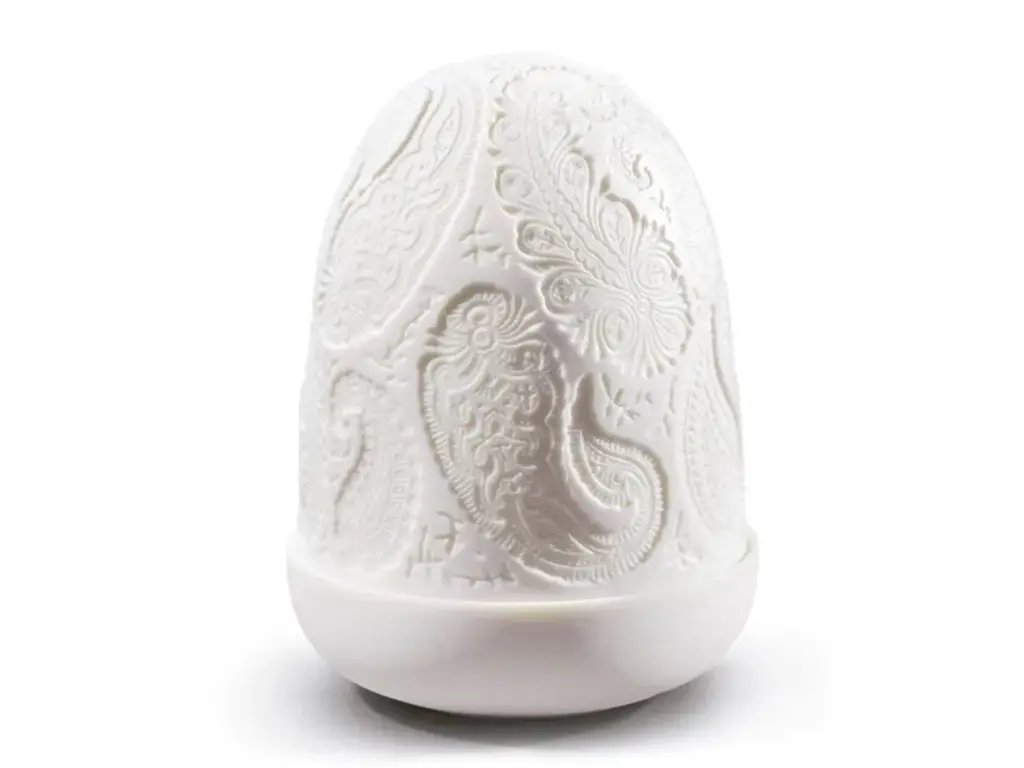
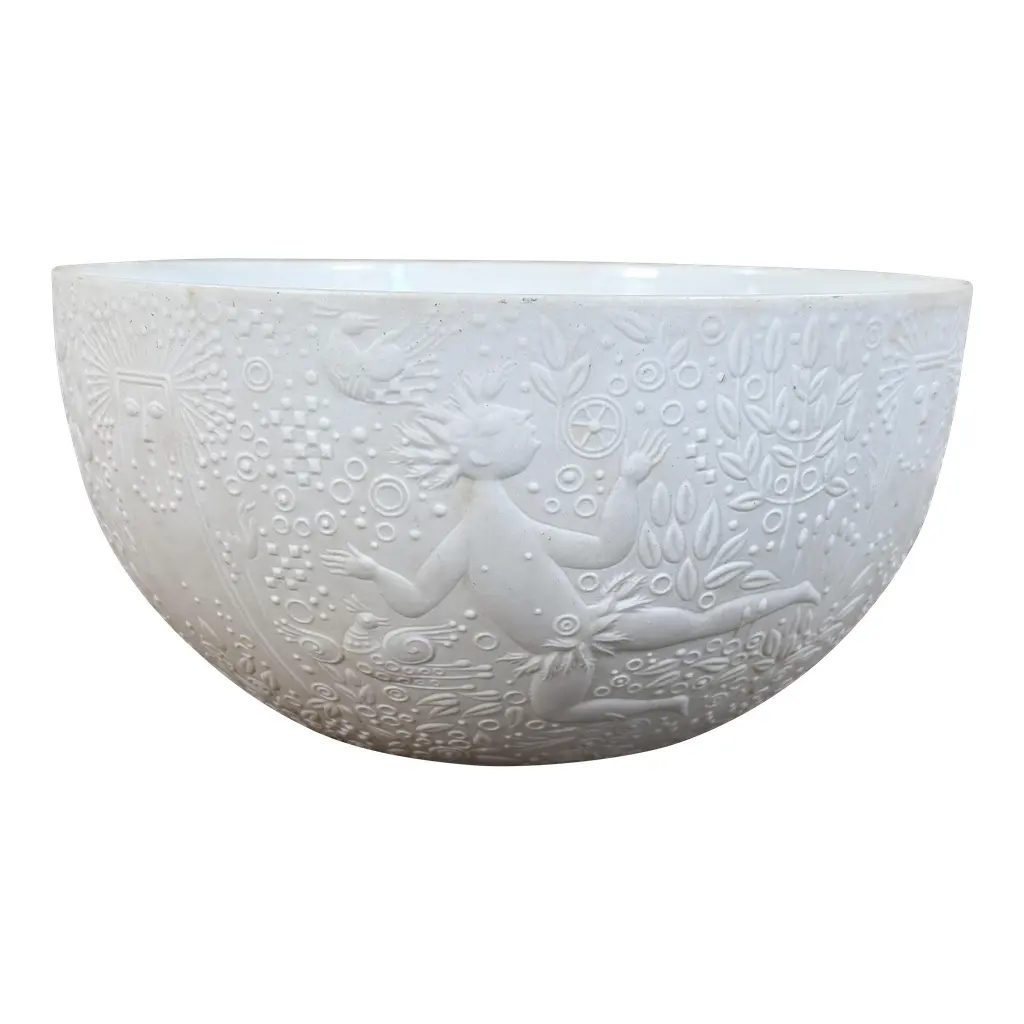
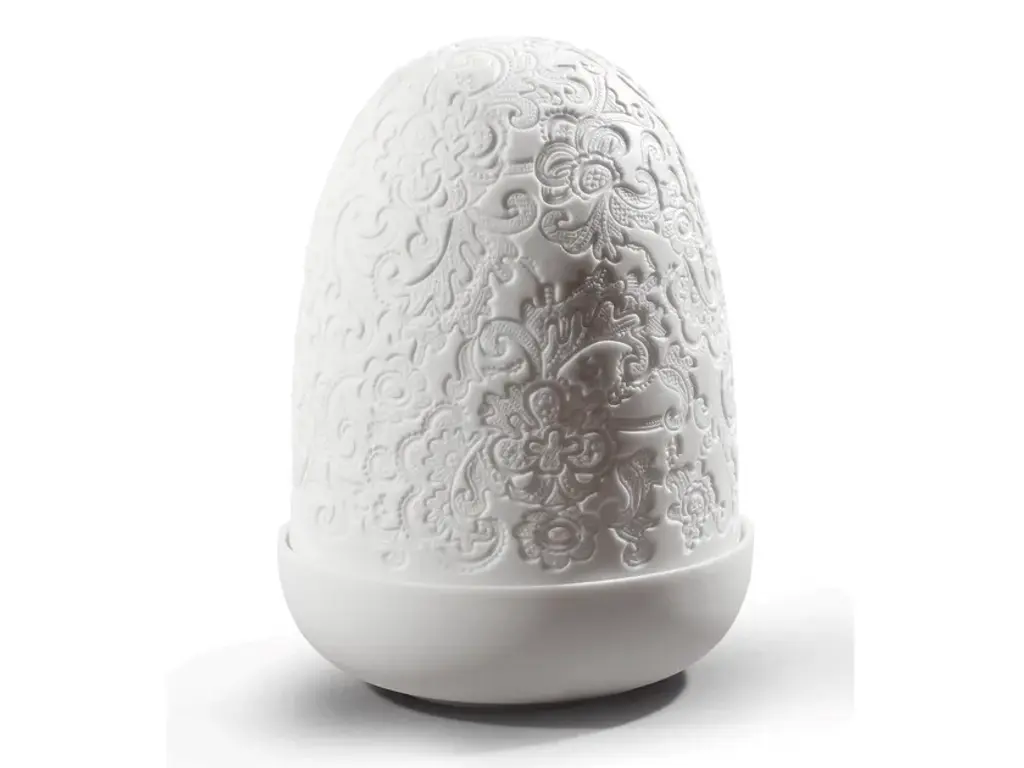
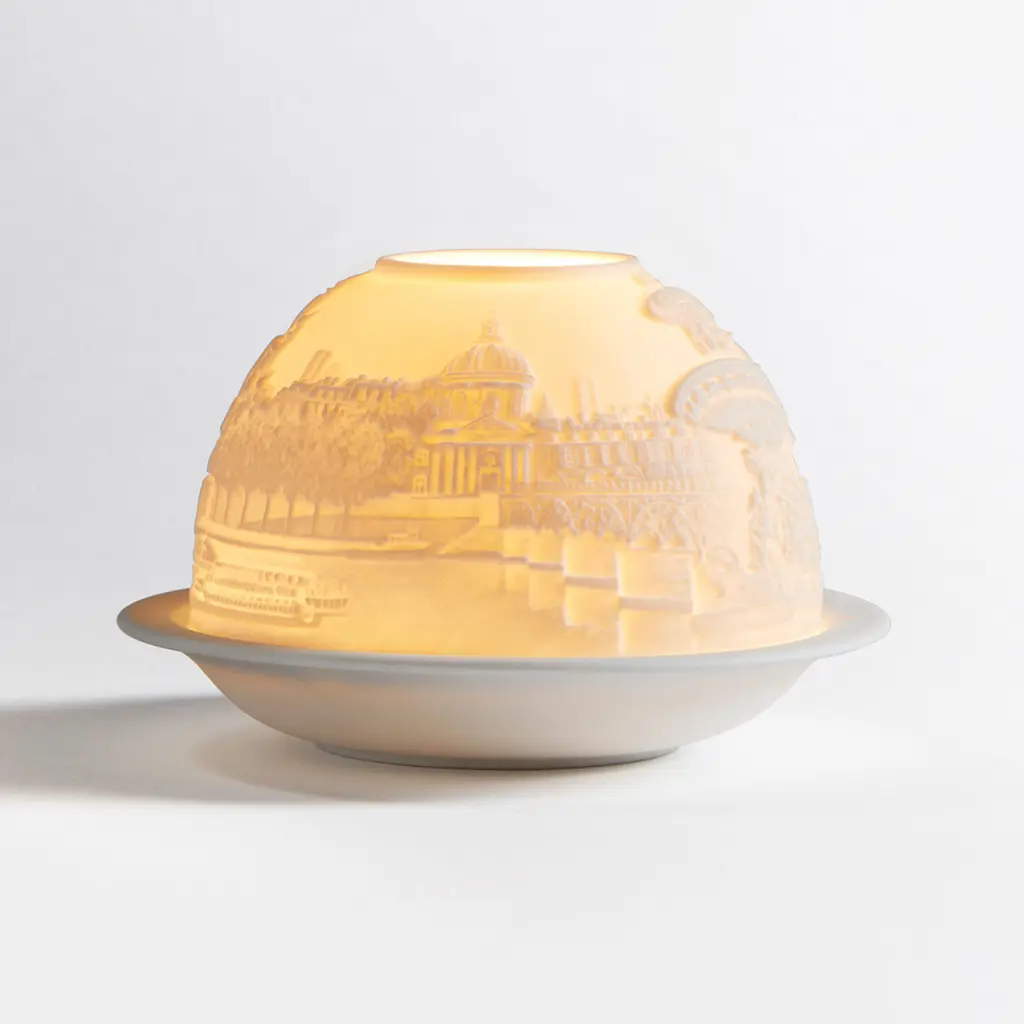
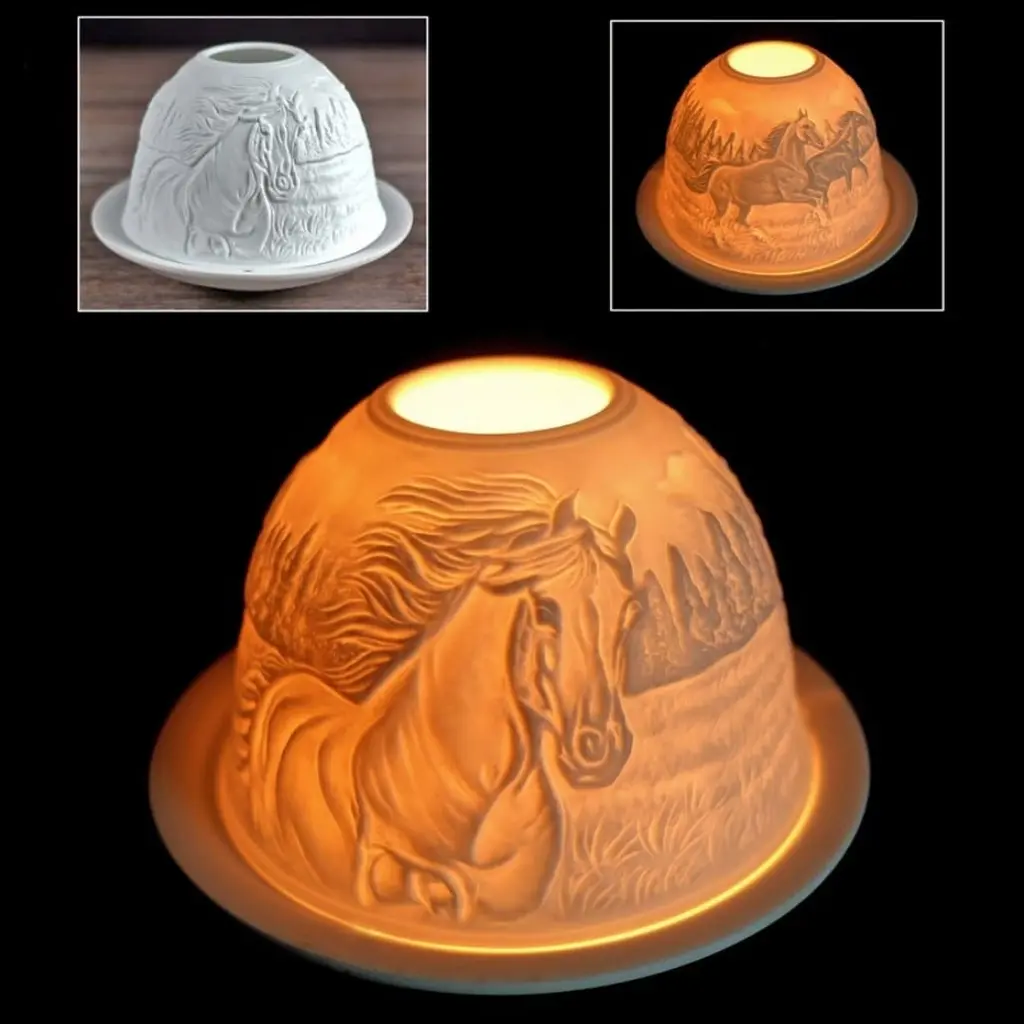
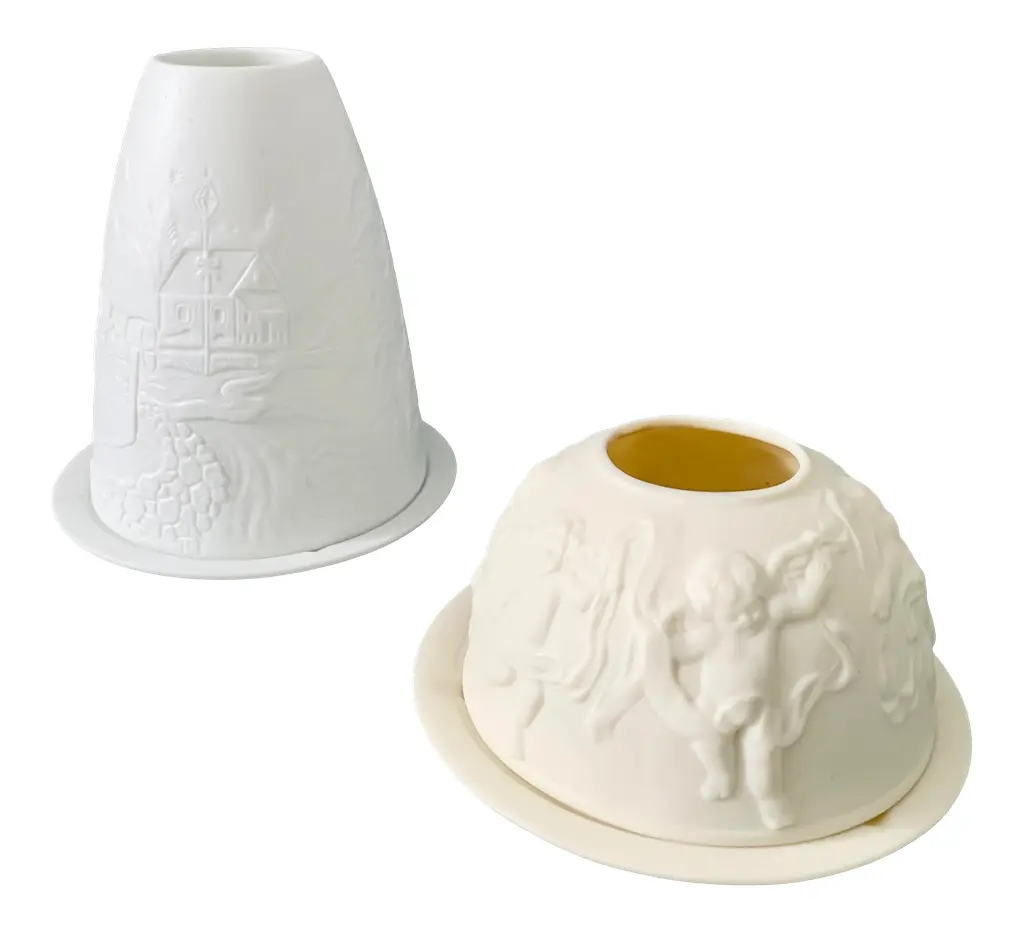
The Festive Cherub Lithophane from Wedgwood employs varying thickness to create imagery that becomes visible when backlit. Thinner areas allow more light to pass through, revealing the cherub scene in glowing detail that shifts with changing illumination. The lithophane technique dates to 19th-century European porcelain production, where dimensional carving created luminous pictures. When placed near a light source, the relief pattern transforms into a composition that appears to emerge from within.
RatingsNone
Similar products