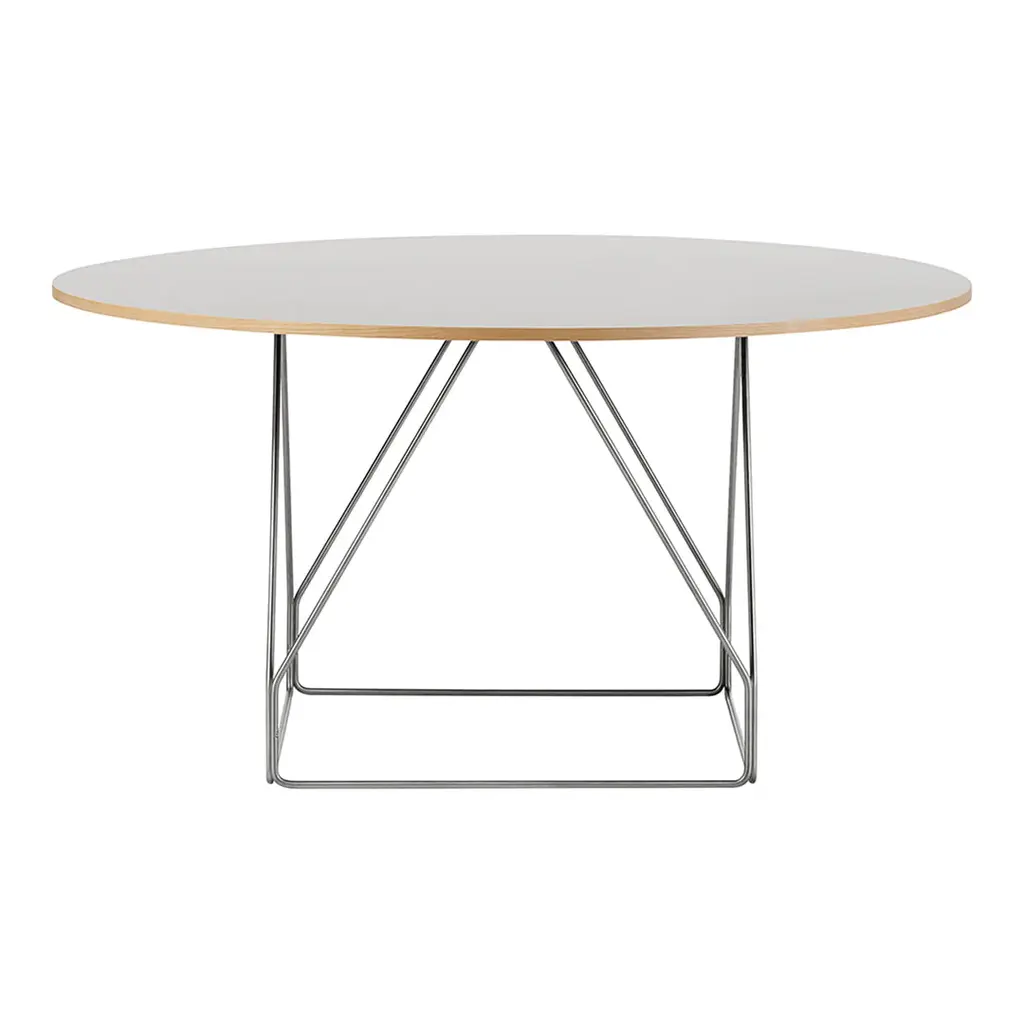
Le Corbusier Lc15 Table De Conférence For Cassina
$8,688
1st Dibs
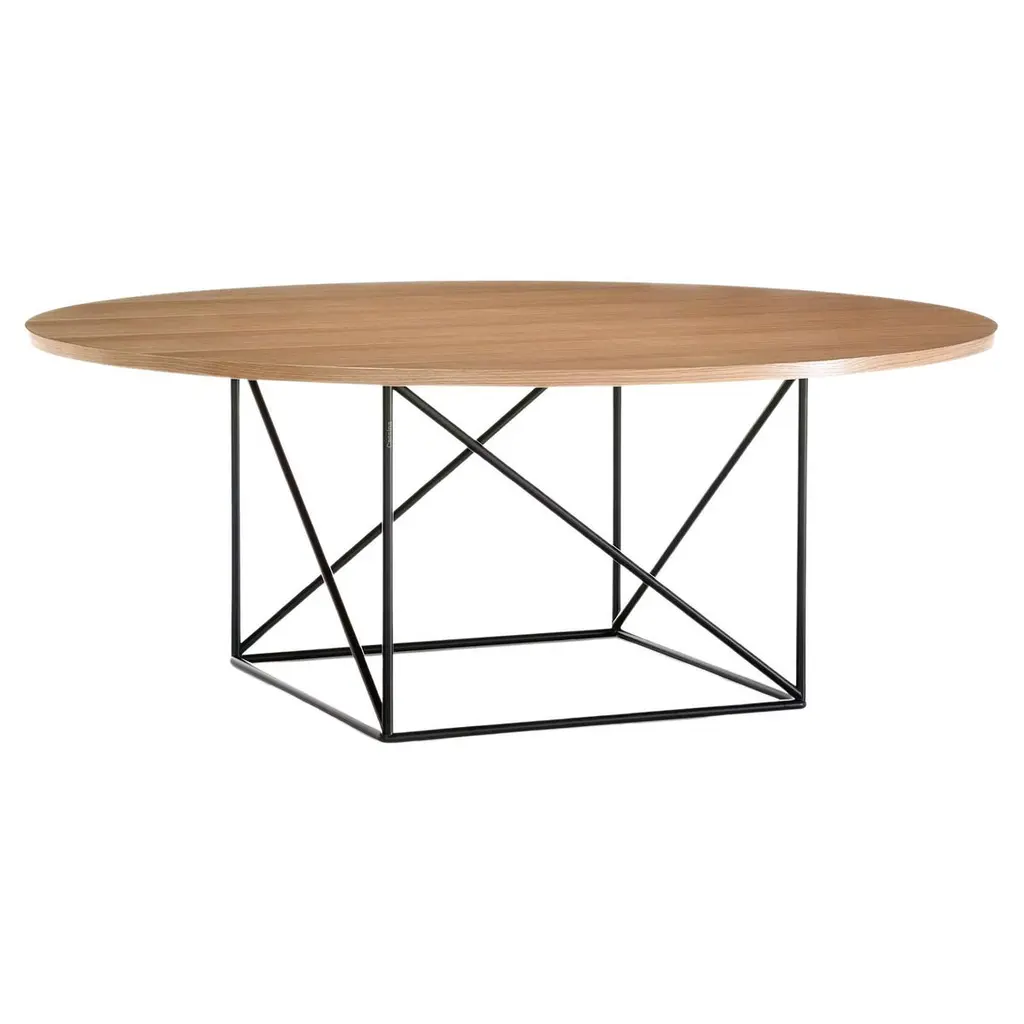
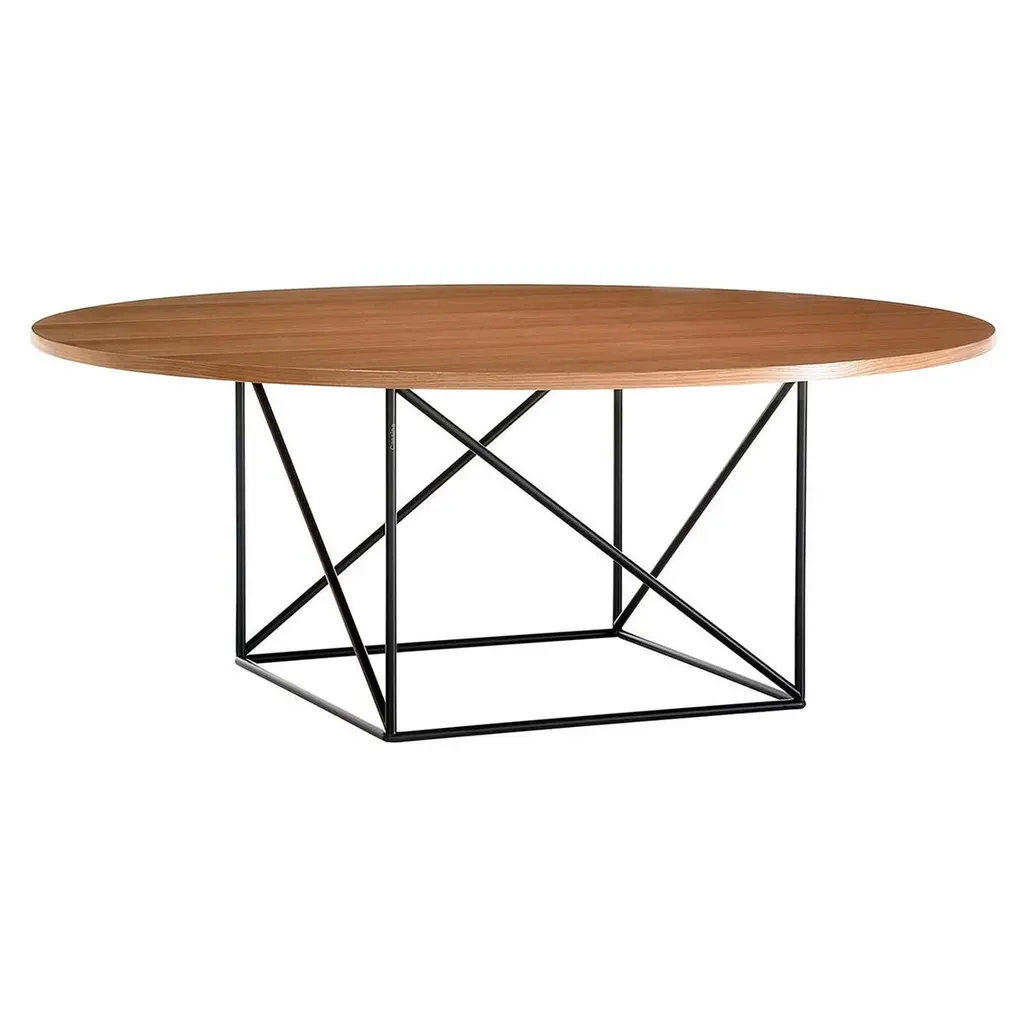
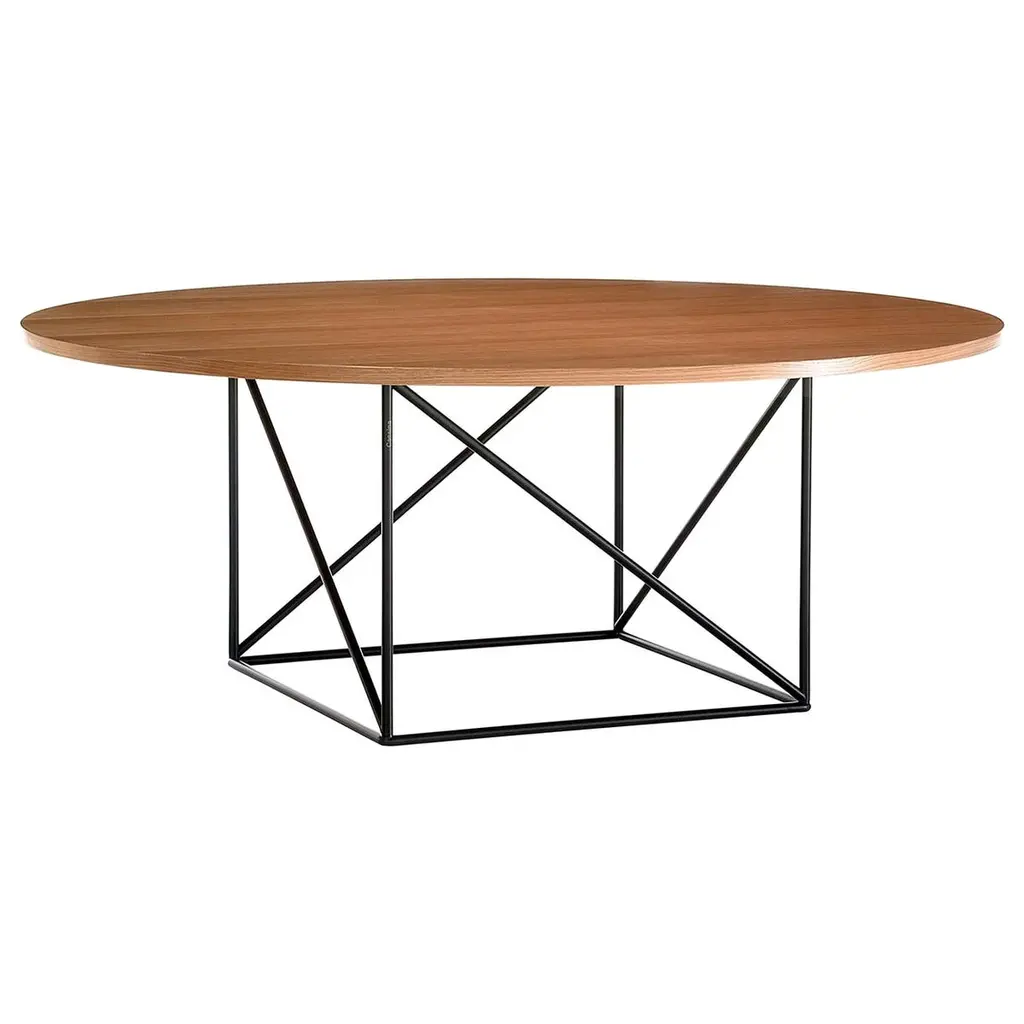
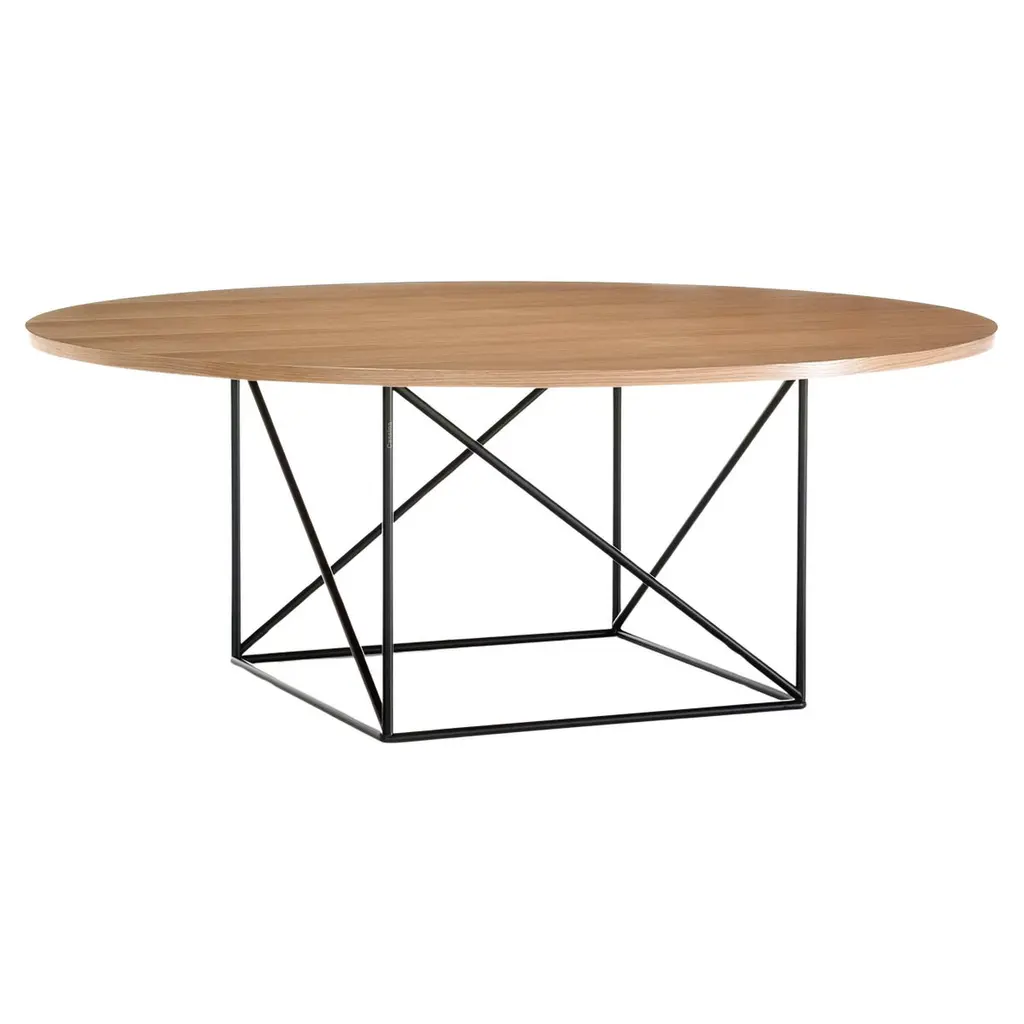
Le Corbusier LC15 Table de Conférence For Cassina Le Corbusier crafted this design table by devising an organic, rational shape, sleek and dynamic, intended to furnish homes and corporate offices.Its distinctive construction begins with the interpretation and combination of two opposing geometric figures: the circle, transformed into a robust solid wood top, and the cube base, formed by tubular metal combined at right angles. Designed to seat up to 10 people, the LC15 Table de conférence round table pairs the top in walnut or oak with the various finishes of the steel support in shades of gray, black or green.TOPOak or American walnut.BASECube-shaped tubular steel base.Organic and yet rational, this table was designed by Le Corbusier in 1958. Its distinctive construction derives from two geometric figures: the circle, in the form of a sturdy oak table-top, sitting on a cube-like base, composed of steel tubes at right angles to each other. This clean-cut dynamic style confers on the future a piece of great value, aesthetically speaking, that makes a perfect partner in the home, or as a conference table, seating up to ten․Important information regarding images of products:Please note that some of the images show other colors and variations of the model, these images are only to present interior design proposals. The item that is selling is on the first image.Important information regarding color(s) of products:Actual colors may vary. This is due to the fact that every computer monitor, laptop, tablet and phone screen has a different capability to display colors and that everyone sees these colors differently. We try to edit our photos to show all of our products as life-like as possible, but please understand the actual color may vary slightly from your monitor.About the Designer:Charles-Edouard Jeanneret, known as Le Corbusier, was born at La Chaux-de-Fonds, in the Swiss Jura, in 1887; he died in France, at Roquebrune-Cap-Martin, on the French Côte d’Azur, in 1965.Early in his career his work met with some resistance owing to its alleged «revolutionary» nature and the radical look it acquired from its «purist» experiments; in time , however, it won the recognition it deserved and it is still widely admired. His message is still being assimilated by an ever increasing number of people in the profession, but his far-out avant-garde attitudes should be interpreted with due consideration for the use of rational systems in his planning method, evidenced by extremely simple modules and formes based on the functional logic.«Functionalism tending not so much to an exaltation of the mechanical function at the expense of the symbolic, as to the rejection of symbol that he now considers outmoded and insignificant and the restoration of the pratical function as a symbol of new values»(¹)In his activities as town-planner, architect and designer, his method of research continued to develop, at times going to the opposite extremes of a rich plastic idiom.Instances of this are: Unité d’Habitation, Marseille (1946-52); the Chapel at Ronchamp (1950-55);the Dominican Monastery «La Tourette» (1951-56); the Centre of Zurich (1964-65) the Hospital in Venice (1965).Much the same commitment will be found in the furniture of the Equipement intérieur de l’habitation (tables, chairs, armchairs, sofas) designed for the Salon d’Automne, 1928, with Pierre Jeanneret and Charlotte Perriand and “Casiers Standard”, system of container units designed for the Pavillon of the Esprit Nouveau, 1925, with Pierre Jeanneret.Cassina reproposes this furniture considered “up-to-date”; its clear and essential “form” is highly adaptable to change in time and in environment, constantly providing new significance.(¹) G.C.Argan, Arte Figurativa in the Enciclopedia Universale dell’arte, vol. 1, col. 760About Manufacture:Established in 1927 by Cesare and Umberto Cassina in Meda, Italy, Cassina launched industrial design in Italy in the 1950s, based on a totally innovative approach that marked the transition from artisan production to mass production. With a mindset focused on research and innovation, Cassina combines technology and long-standing artisan craftsmanship. Memory, research, innovation. Cassina blends traditional skills and superior productivity, meticulous attention to detail and passion, uniqueness and experimentation, wellbeing and sustainability. Today, the company continues to address new lifestyles with the creation of complete, harmonious interior decor solutions that embody the best contemporary design for all areas of the home.
Similar Items