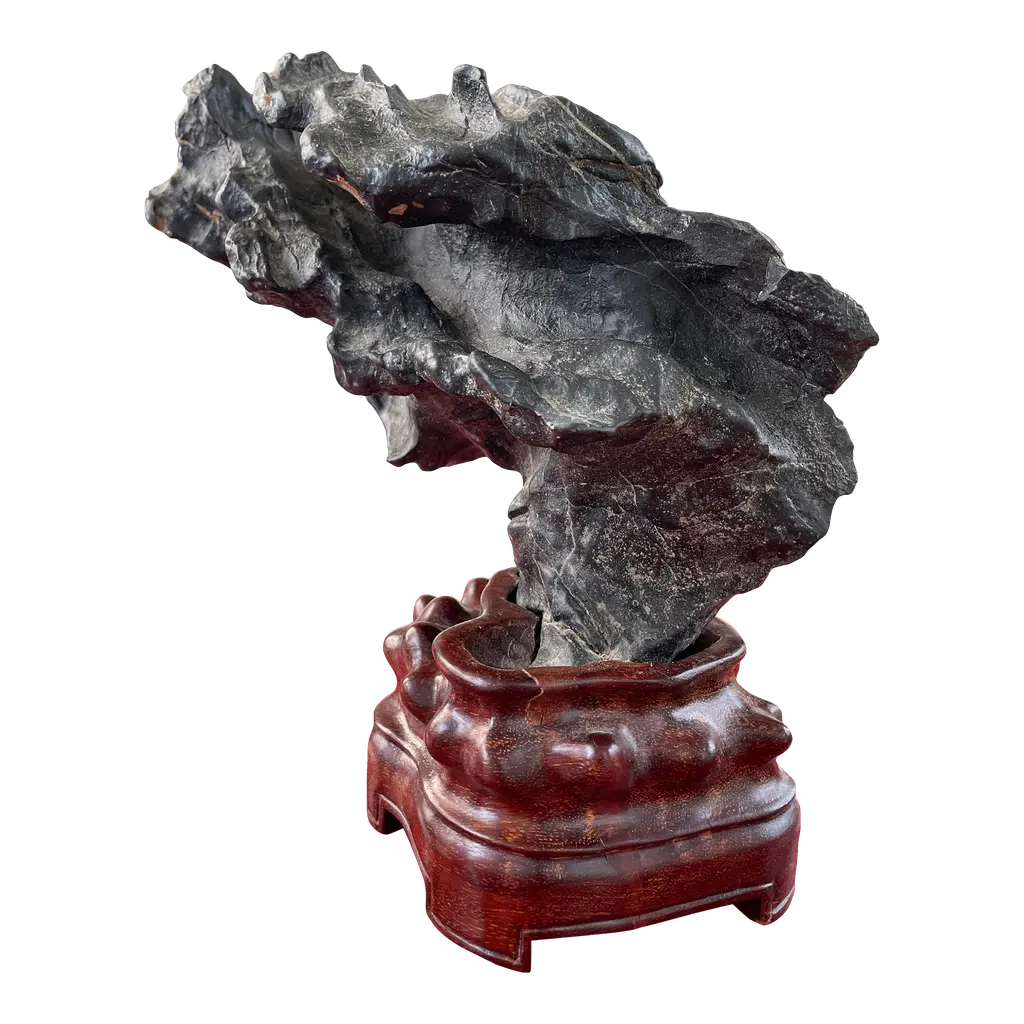
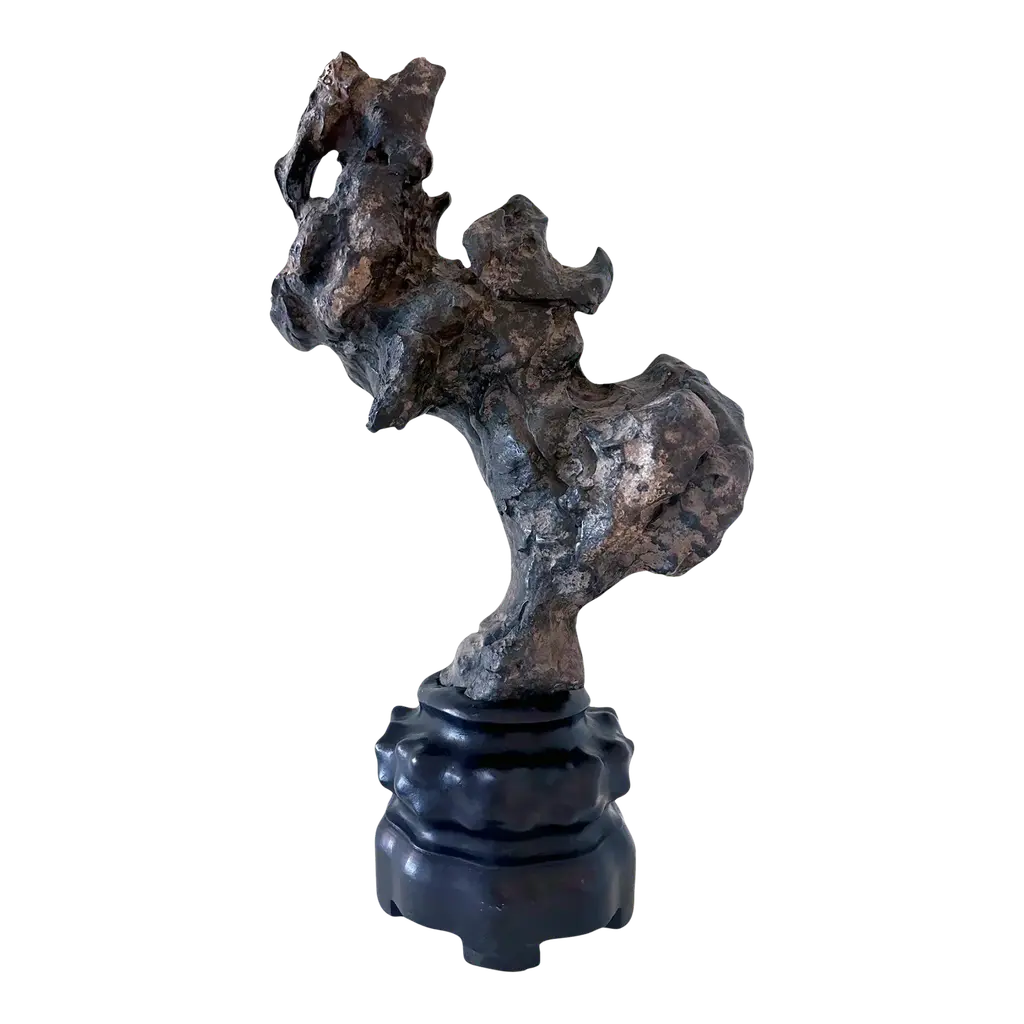
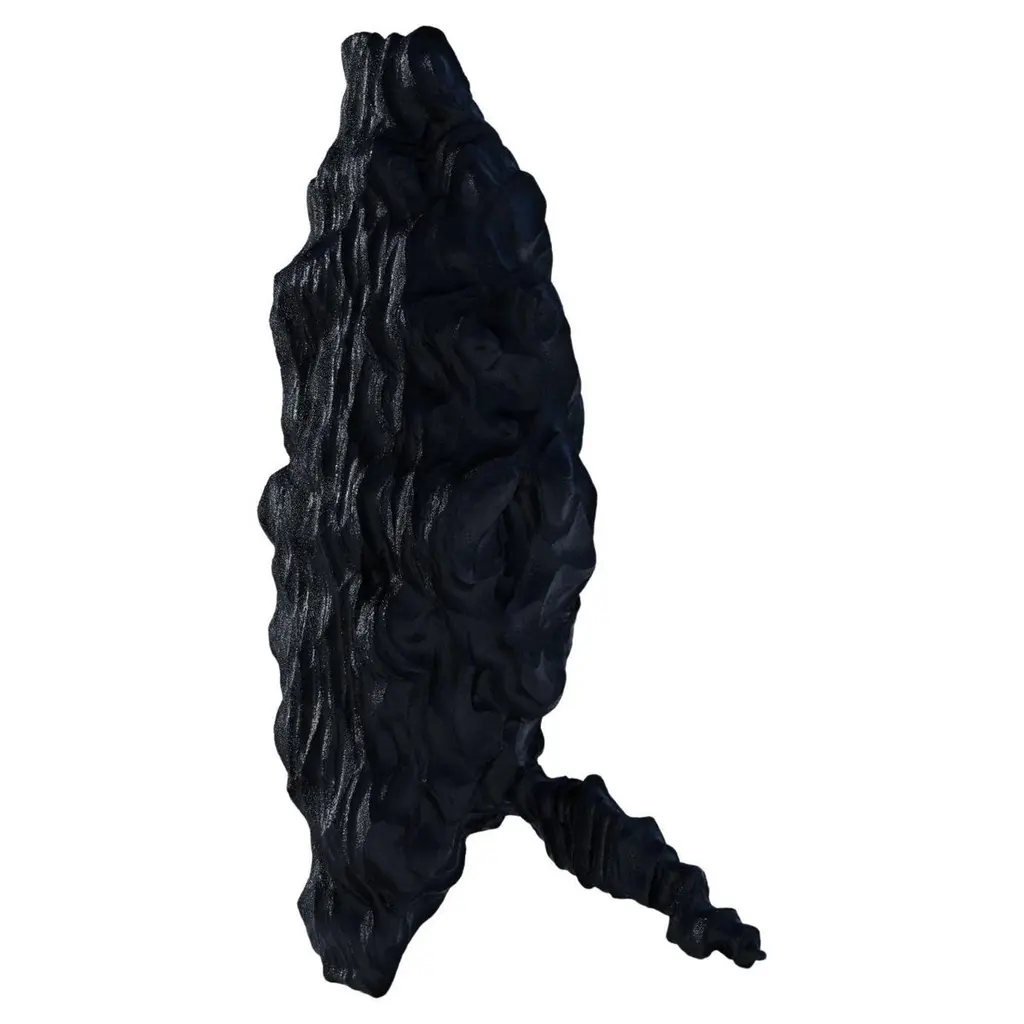
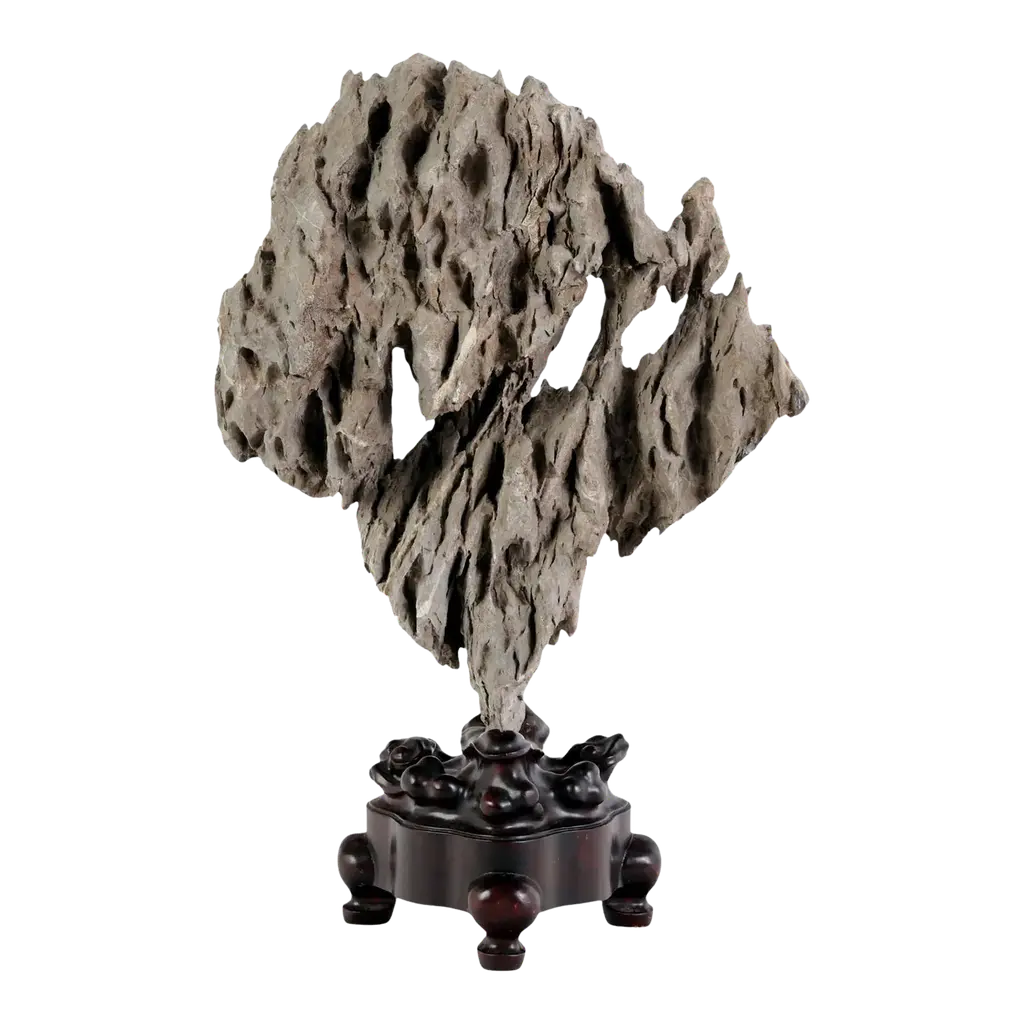
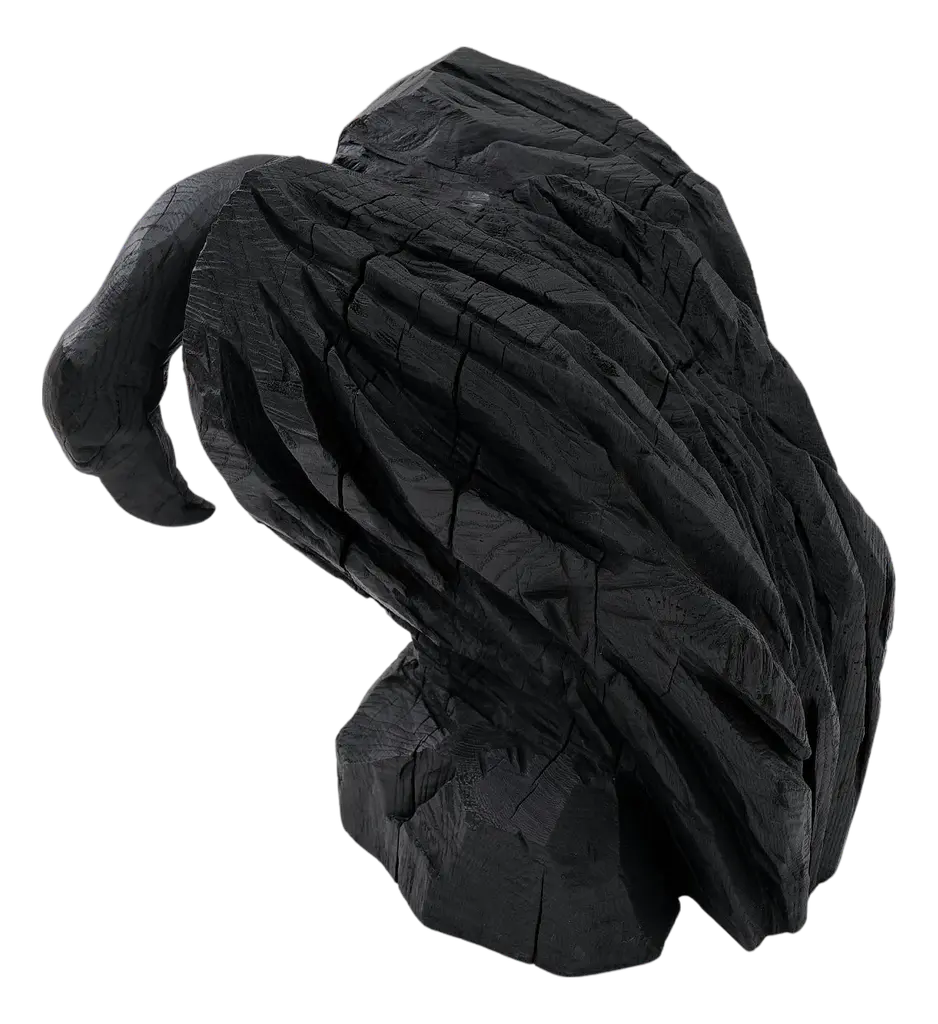
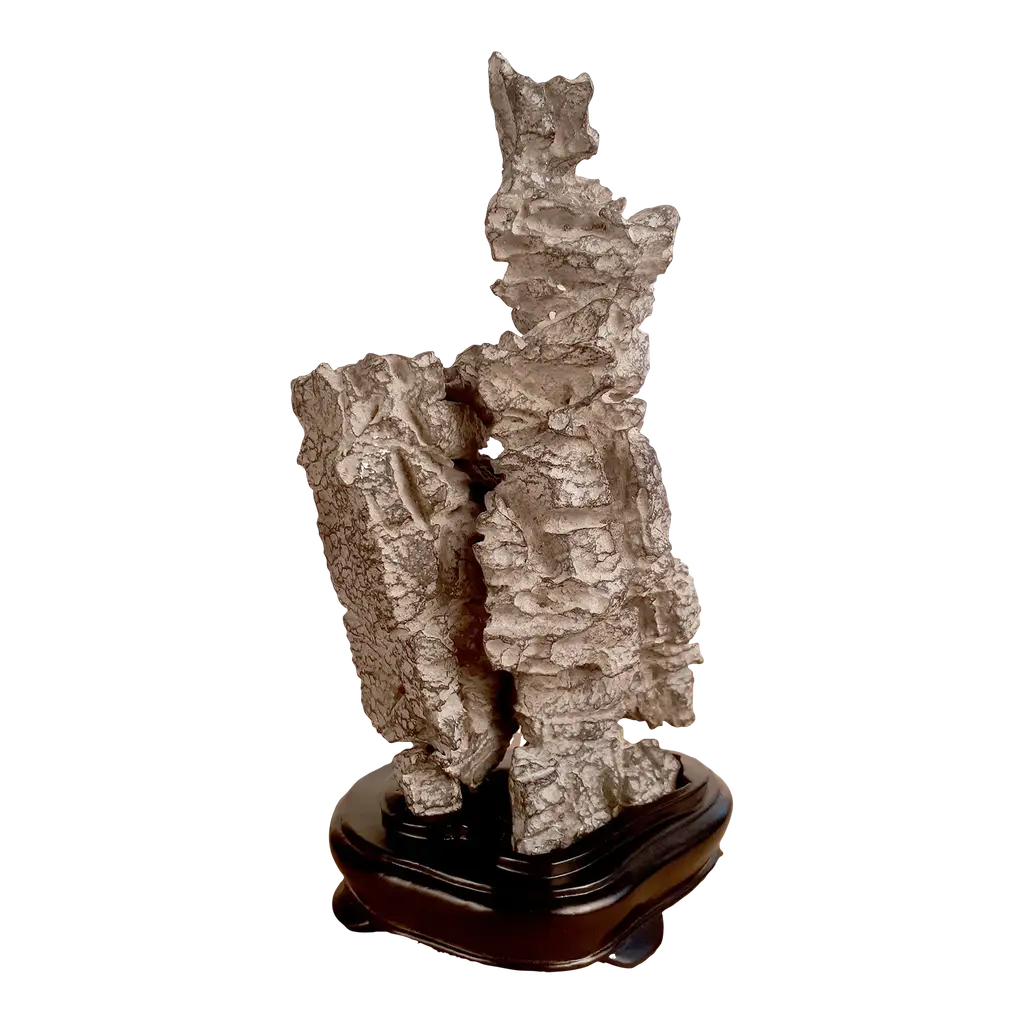
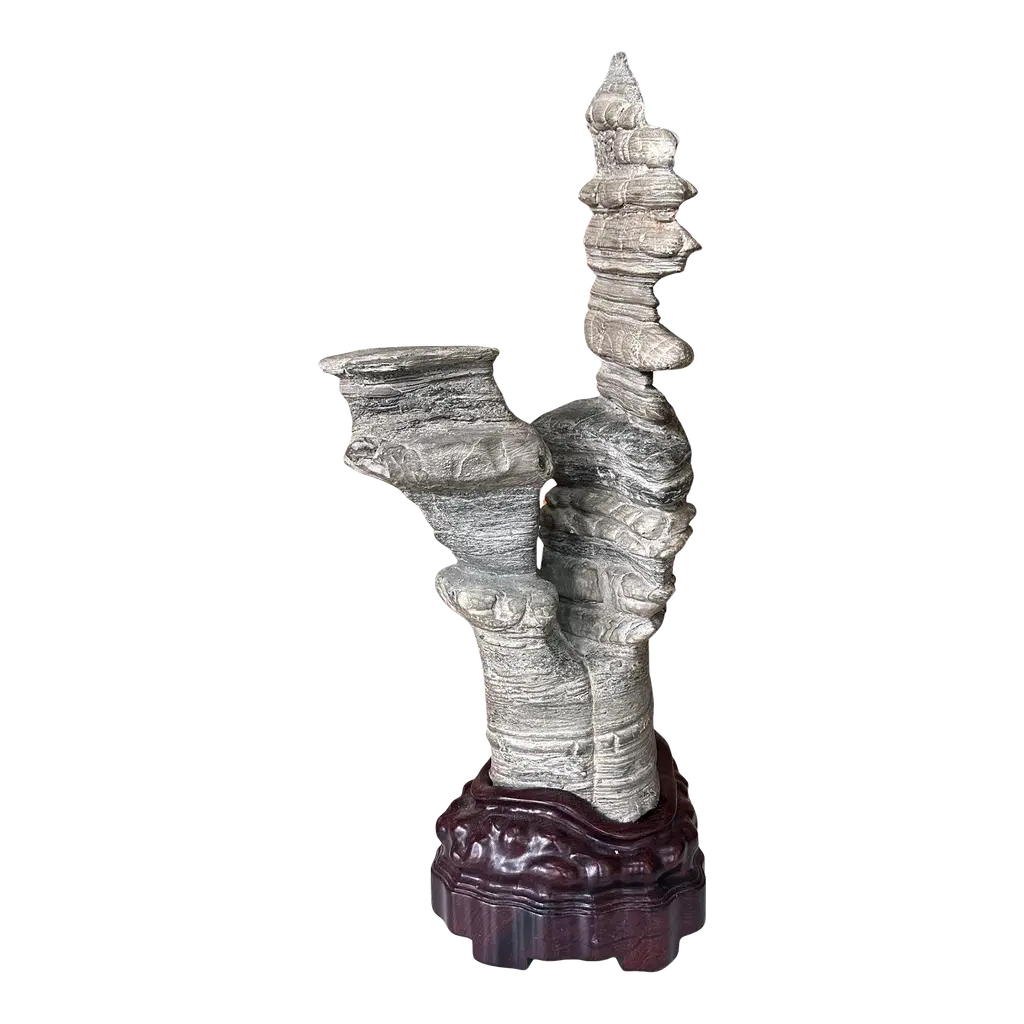
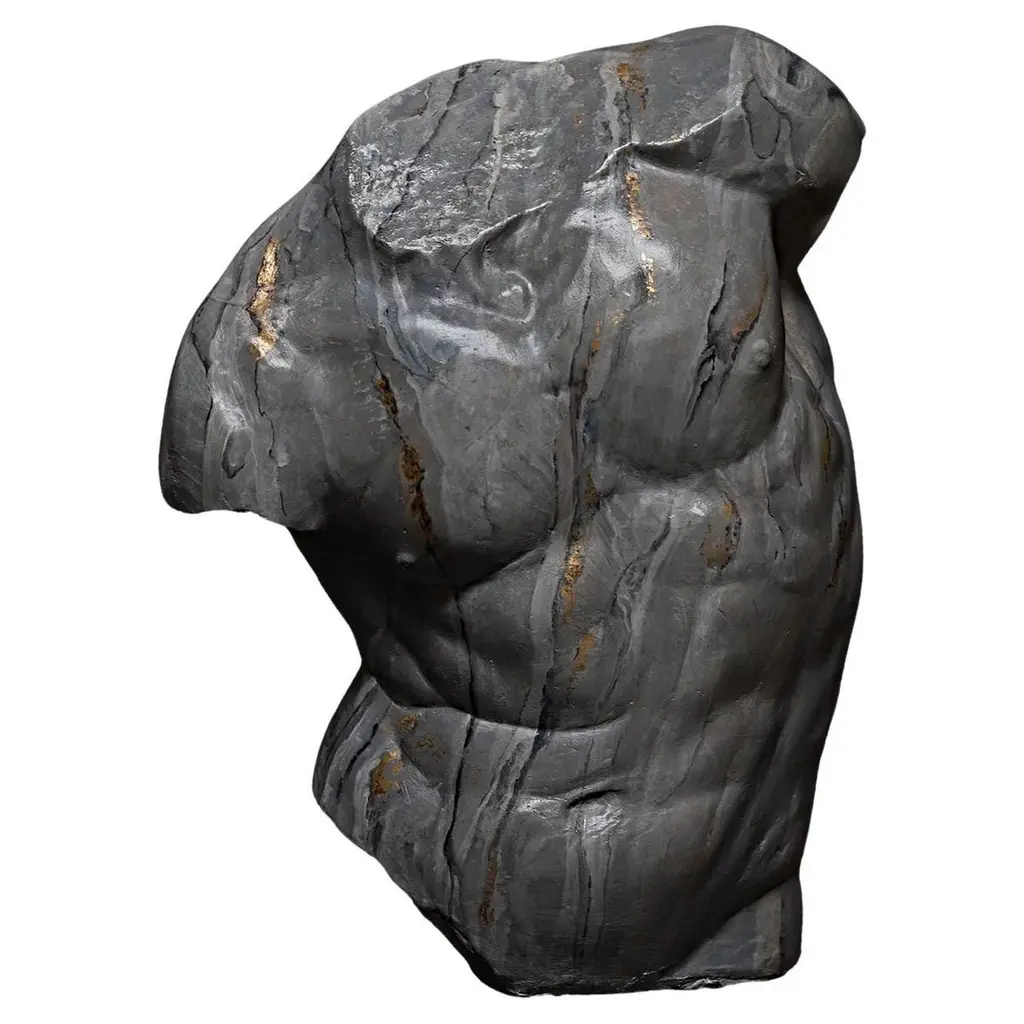
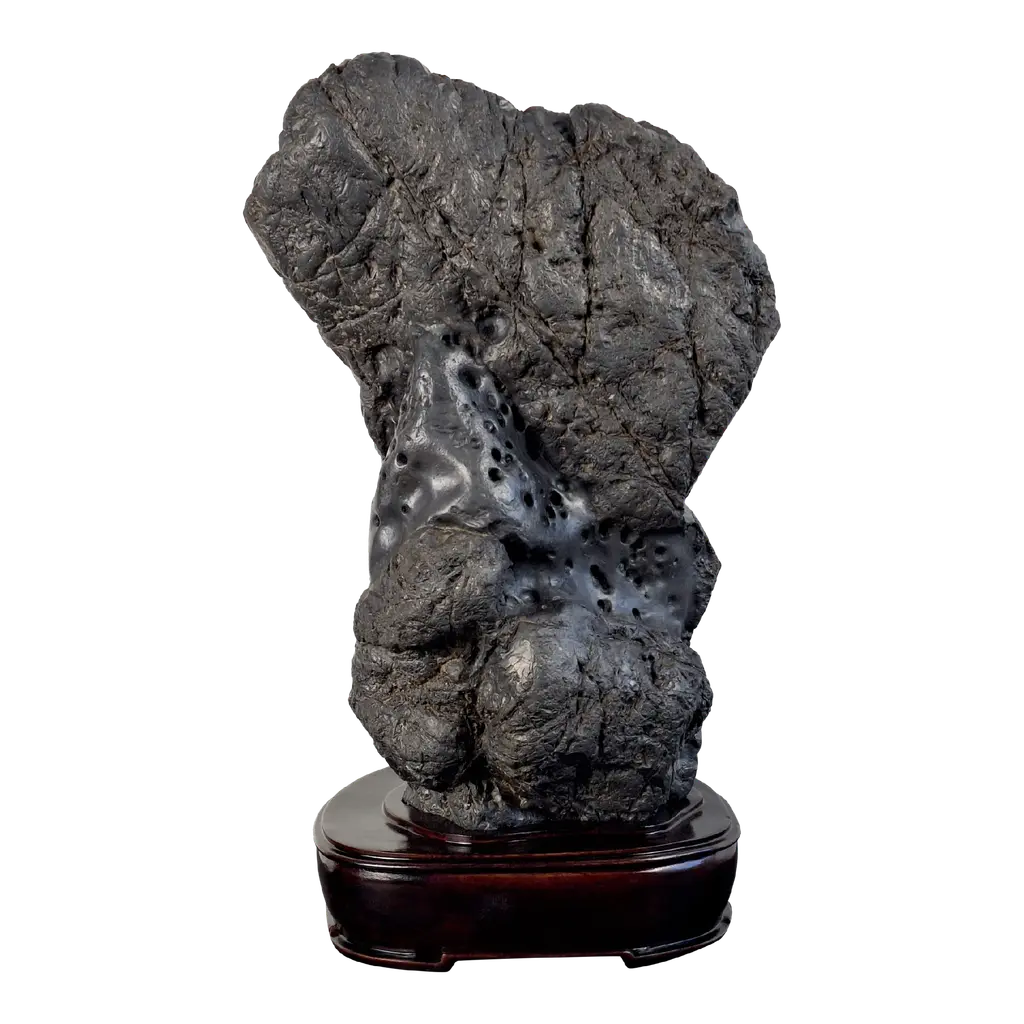
A Chinese scholar stone of Lingbi type presented on a carved wood base. This stone takes a singular vertical form with one convex side that is largely flat, and the other side slightly concaved with prominent folding. It is supported by a small stalk that attached to the wood base. As a result, the lone stone appears suspending in the air, forming the classic silouette of the limestone peaks in Zhangjiajie that inspired the Hallelujah Mountains in Avatar. The surface, nearly uniformly black/dark grey, is smooth yet showcases lines of furrows and wrinkles, intercepted by white mineral veins and mineral deposits. This visual effect is highly desirable for scholar stone lover as it evokes a wintery scenery with snow accumulations in the mountain crevices, fulfilling the philosophical role of the scholar stone to mimic nature in miniature form in one's study. Due to its form, the stone display distinct views from different angles. The stone is quite dense and heavy, and it is fixed to the base for stability. Lingbi stone, as the name indicated, was collected form Lingbi, Anhui Province in China. It is one of the four main stones collected by scholars as Gongshi (Spirited Stone or meditation stone) in Chinese history: Lingbi, Taihu, Yingde and Kun. These exotic rocks are priced and rated for their four qualities: shou (thinness), zhou (wrinkles), lou (hollowness), and tou (transparency). The history of collecting and appreciating interesting stones among the literati in China began as early as the 13th century in Yuan Dynasty, and it continued to this day. They are considered containing the spirit of nature and are priced item displayed in the scholar's studio for meditation.For other similar example of Lingbi stone with white veins, see "Spirit Stone the Ancient Art of the Scholar's Rock" by Kemin Hu and Thomas S. Elias. illustration 57 and 64.
Similar products