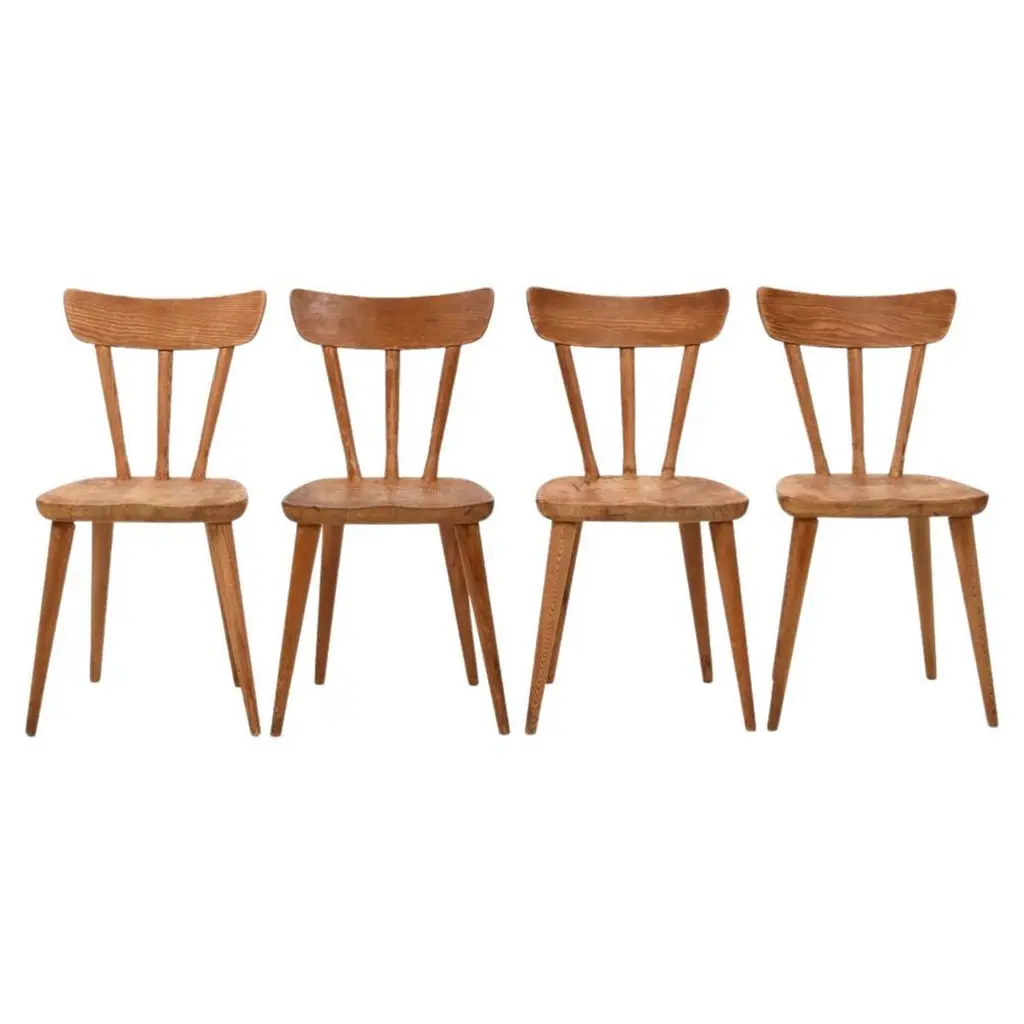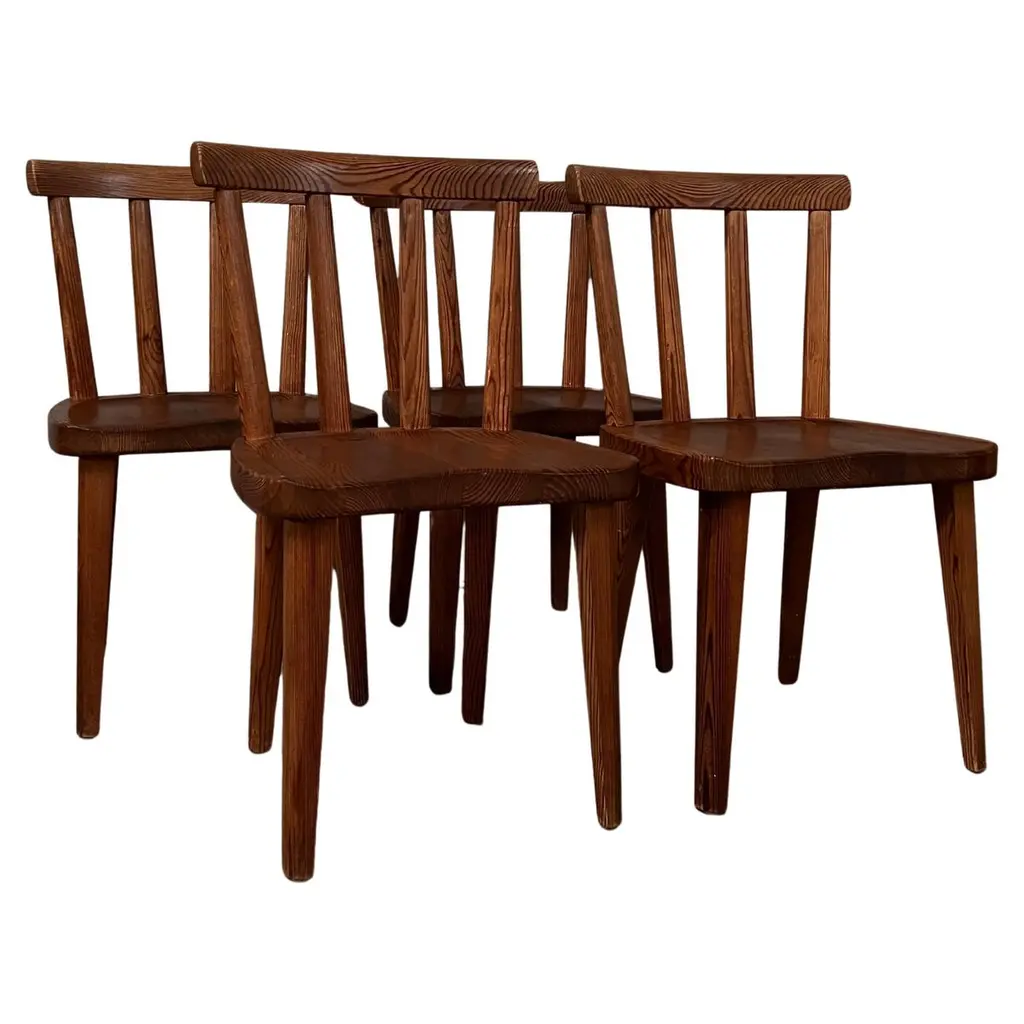
A Set Of 8 Axel Einar Hjorth Utö Chairs
$4,037
1st Dibs
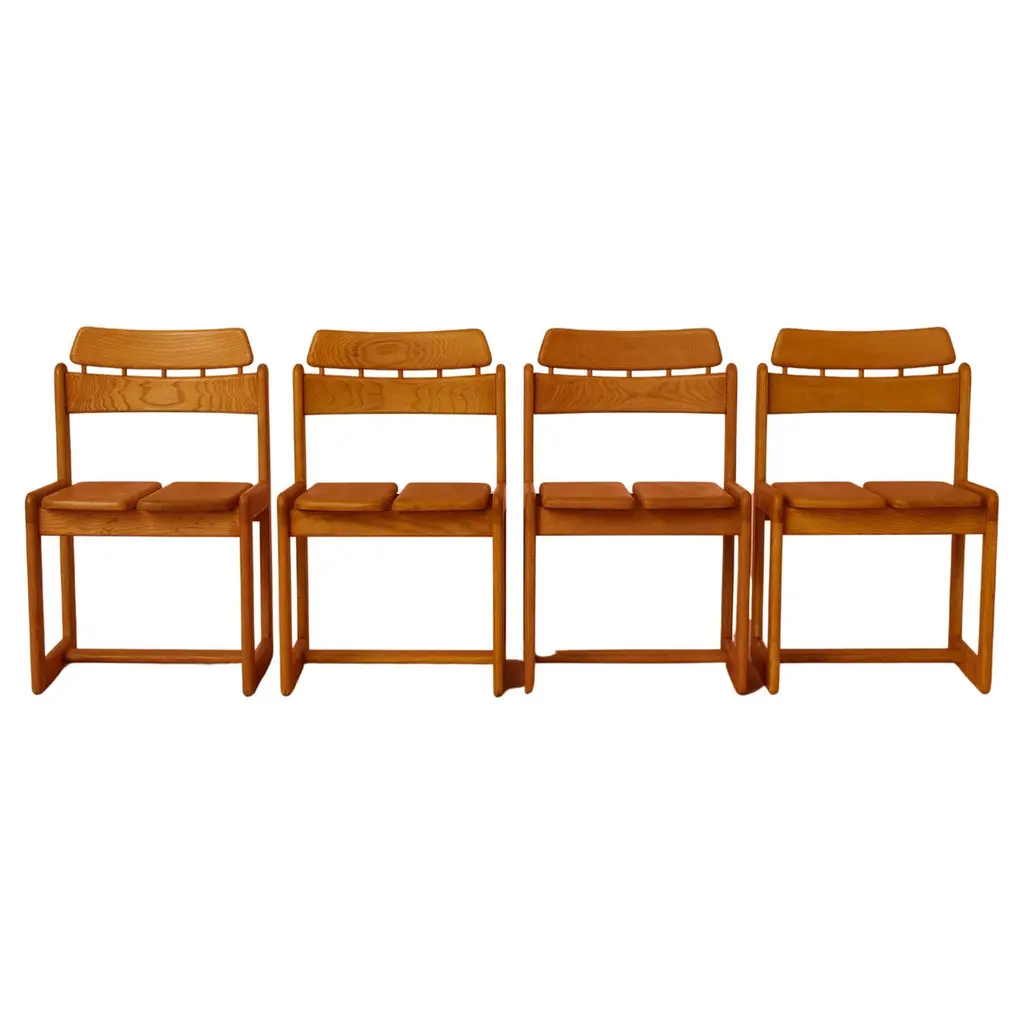
Utö/Uto pine chair by Axel-Einar Hjorth, Sweden, circa 1933. Produced by Nordiska Kompaniet. A set of 2 in total. Purchased for a sports cabin on the Kulla Peninsula, Skåne.A chair marked with an inscription in pencil “36270" which is the drawing number for the article “Utö chair” in NK's Kundliggare 7/1 1932.LITERATUREChristian Björk, Thomas Ekström and Eric Ericson, Axel Einar Hjorth Furniture Architect, Lund 2009, picture p. 130.Info on designer :Axel Einar Hjort1888 - 1959Although he never graduated, in the 1920s Hjorth started workingas a furniture designer for various manufacturers.The anniversary exhibition of 1923 in Gothenburg - which markedthe breakthrough of Swedish decorative arts - as well as the 1927exhibition of the Contemporary Swedish Decorative Arts at theMetropolitan Museum in New York (together with Carl Malmsten andCarl Hörvik) made Axel Einar Hjorth a well-respected artist, and to alarge extent, part of the international success of Swedish design.For October 1927, Hjorth acted as the chief designer/architect of theNordiska Kompaniet department store in Stockholm, which wasone of the major manufacturers of modern furniture in Sweden. Heleft Nordiska Kompaniet in 1938 in order to start his own business.In the 1930s, Hjorth designed a furniture collection out of pine meantfor serial production known as Sportstugemöbler (furniture forholiday houses). The collection is based on Swedish rural traditionsmixed with international modernism, and has its pieces named afterStockholm’s islands including Blidö, Sandhamn, Toro and Lovö. Thepieces are renowned for their modern look, displaying strong propor-tions, simplicity in construction, and a brilliant union between traditi-on and modernism.He often incorporated playful ornamentation from different histori-cal periods by which he was inspired, such as the French Art Déco,using mixed exotic woods, bright colours, and textiles.He was often overlooked by the lack of published and archivedworks. He remained a rather unknown entity in the design world andhis achievements were under-appreciated. Today Hjorth is oftenviewed as a precursor to the modern designs popularized by Char-lotte Perriand, Jean Royére, Pierre Chapo, or Josef Frank.
Similar Items