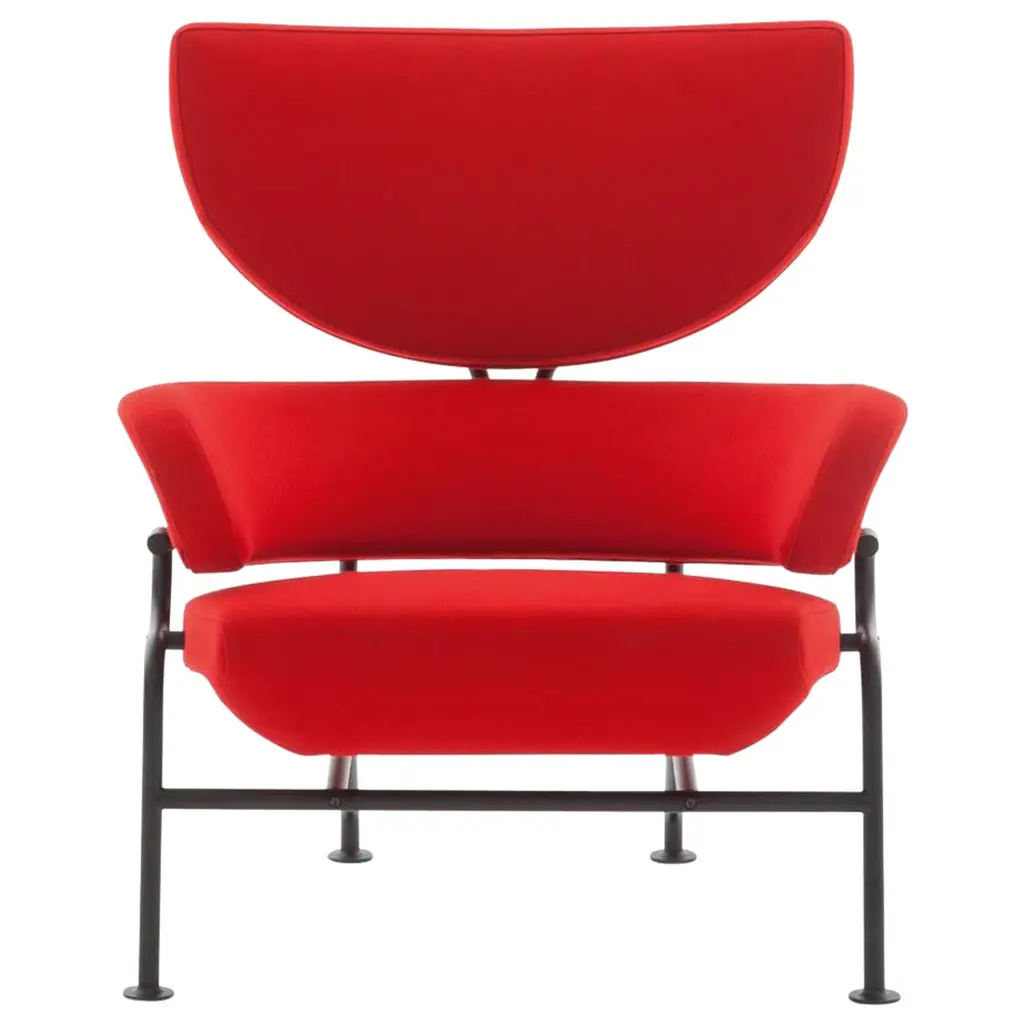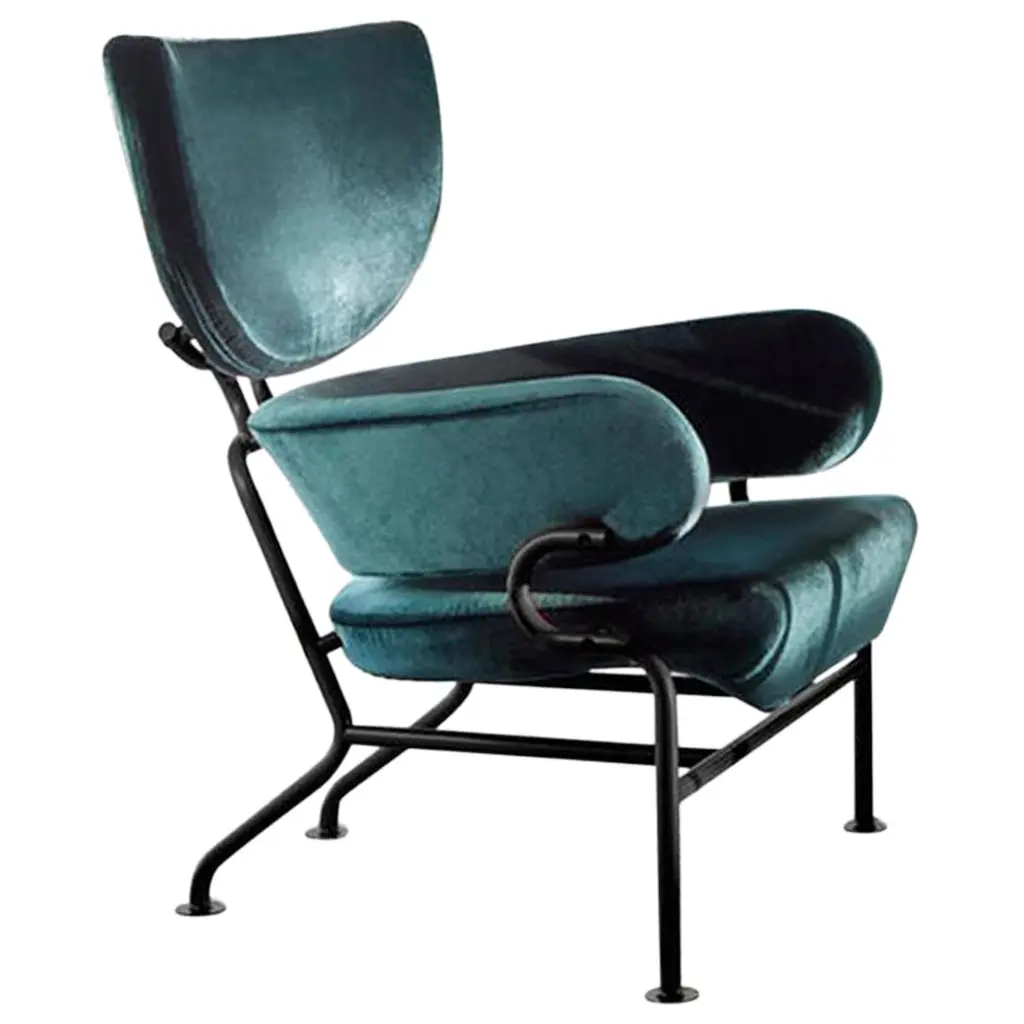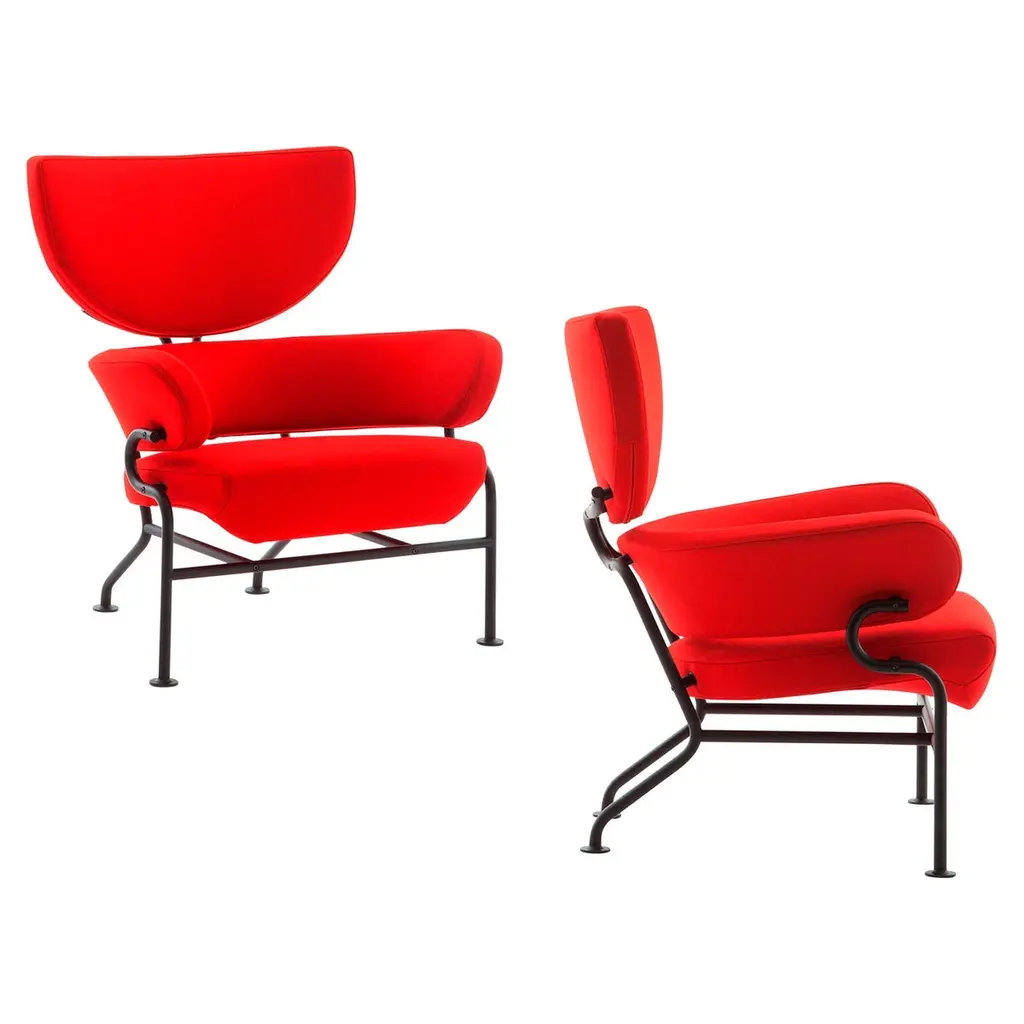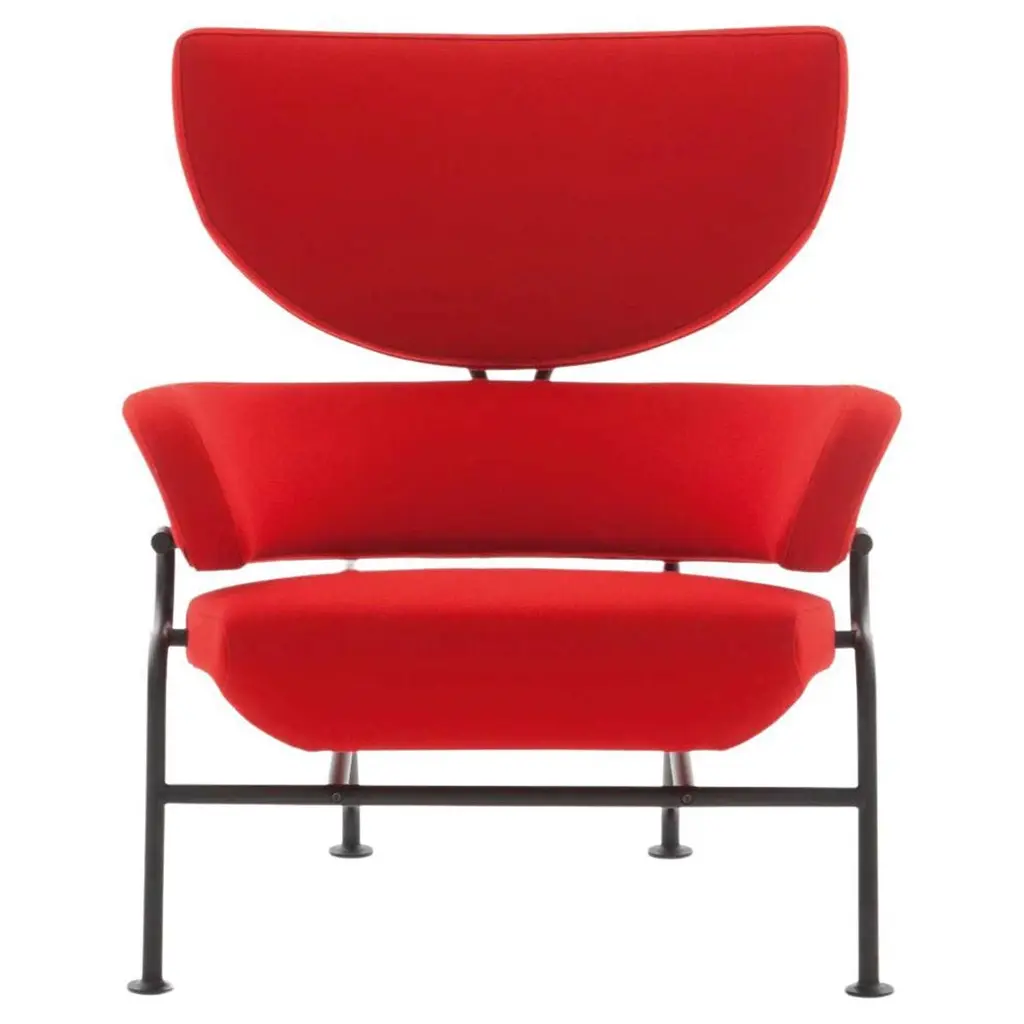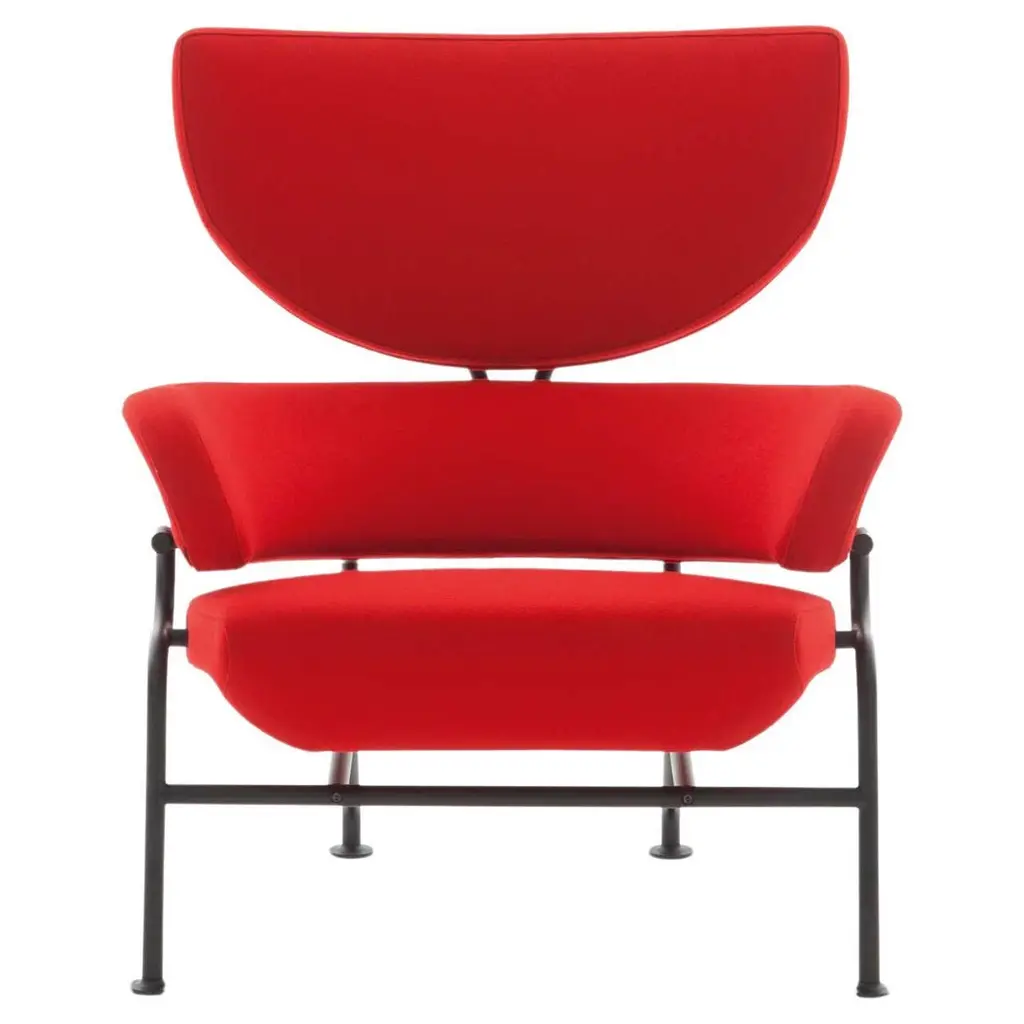
Franco Albini Tre Pezzi Armchari For Cassina
$8,792
1st Dibs
Franco Albini Tre Pezzi Armchari For CassinaLEATHER Y : Softness and durability blend in these high-quality leathers, providing a distinctive and lasting luxury experience.In 1959, working with Franca Helg, his long-time assistant, FrancoAlbini designed Tre Pezzi, a contemporary restatement of the classicbergère chair. The chair is composed of a deep curved seat, a ringshaped back rest and a half-moon head-rest, each of these geometricshapes standing out independently. Wide and welcoming, theupholstered sections combine clean-cut lines with total comfort. Thetubular metal frame is cued on scaffolding poles, while the sidewayscurve of the armrests recalls the handrails on the Milan undergroundsystem, which were also the work of Albini and Helg. The outcome isan up-to-the-minute armchair with a strong visual impact revisited byCassina in the utmost respect for the original.External structure· Tubular steel frame.Chrome-plated finish or painted inthe colours on the price list.Internal structure· Seat tubular steel frame with elasticbelts.· Backrest/armrests tubular steelframe.· Headrest tubular steel frame withsteel spiral springs.Padding· Cold polyurethane foam (singledensity).· Resin-treated polyester fibrewadding paired with canvas.Upholstery· Fabric or leather.Corrimano della Metropolitana Milanese. Progetto di F. Albini e F.Helg, 1964/Handrail of the Milan Underground. Project by F. Albini, F.Helg, 1964Dettaglio della struttura portante della poltrona Tre Pezzi, ispirato al corrimanodella MM/ Tre Pezzi armchair: structure detail inspired by handrail of MilanUndergroundImportant information regarding images of products:Please note that some of the images show other colors and variations of the model, these images are only to present interior design proposals. The item that is selling is on the first image.Important information regarding color(s) of products:Actual colors may vary. This is due to the fact that every computer monitor, laptop, tablet and phone screen has a different capability to display colors and that everyone sees these colors differently. We try to edit our photos to show all of our products as life-like as possible, but please understand the actual color may vary slightly from your monitor.About the Designer:He was a major figure in the Rationalist Movement, excelling in architectural, furniture, industrial and museum design. After receiving a degree in architecture from the Politecnico di Milano in 1929, he worked with the Ponti and Lancia design studios. His work for the magazine Casabella also played a key part in his development, marking his conversion to the Rationalist Movement and his becoming its spokesman on the Italian cultural scene. When he set up his own practice in Milan in 1931, he took on the challenge of workers’ housing and continued in this vein after the war, thanks to the opportunities offered by the reconstruction projects he worked on with Franca Helg from 1952.During the 1940’s, Albini expanded his collaboration with Cassina, which started with chair designs that paved the way for his signature style. He also pursued his furniture designs with other firms, such as Poggi. Milan and Genoa form the geographical axis where Albini left his strongest imprint. For the Lombard capital, he planned the development of the stations on Line 1 of the city’s subway system (1962/63), in collaboration with graphic designer Bob Noorda. His numerous urban development and building projects for Genoa include the Palazzo Bianco (1949/51), Palazzo Rosso (1952/62), and Tesoro di San Lorenzo (1952/56) museums. Franco Albini was the recipient of many honors in recognition of the importance of his cultural contributions.Among others, he is a member of the INU, the CIAM, the Accademia Ligustica di Genova, MOMA in New York, the ADI, the Accademico di S. Luca, the Fondazione Pagano and the London Royal Society of Arts.He also received numerous prizes, including the La Rinascente-Compasso d’Oro for the design of the Luisa chair (1955), the Bronze Medal from the Parson School in New York (1956) for his contribution to industrial design, the Olivetti Award for Architecture (1957), the Gran Premio Nazionale La Rinascente-Compasso d’Oro (1958), the La Rinascente-Compasso d’Oro Award for the Milan Line 1 Subway project (1964), and the Royal Designer for Industry title awarded by the London Royal Society of Arts (1971). In all his work, from home furnishings to industrial and museum design projects, Franco Albini always instilled a logical consistency, an extreme purity of expression and exceptional ethical and historical integrity.The architectural and design work of Franco Albini represents a keystone of the Italian architectonic culture from the early 20th century through his intense activity revolving around a creative and rigorous approach to composition and building that expresses a particularly high degree of estheticismAbout Manufacture:Established in 1927 by Cesare and Umberto Cassina in Meda, Italy, Cassina launched industrial design in Italy in the 1950s, based on a totally innovative approach that marked the transition from artisan production to mass production. With a mindset focused on research and innovation, Cassina combines technology and long-standing artisan craftsmanship. Memory, research, innovation. Cassina blends traditional skills and superior productivity, meticulous attention to detail and passion, uniqueness and experimentation, wellbeing and sustainability. Today, the company continues to address new lifestyles with the creation of complete, harmonious interior decor solutions that embody the best contemporary design for all areas of the home.
Similar Items