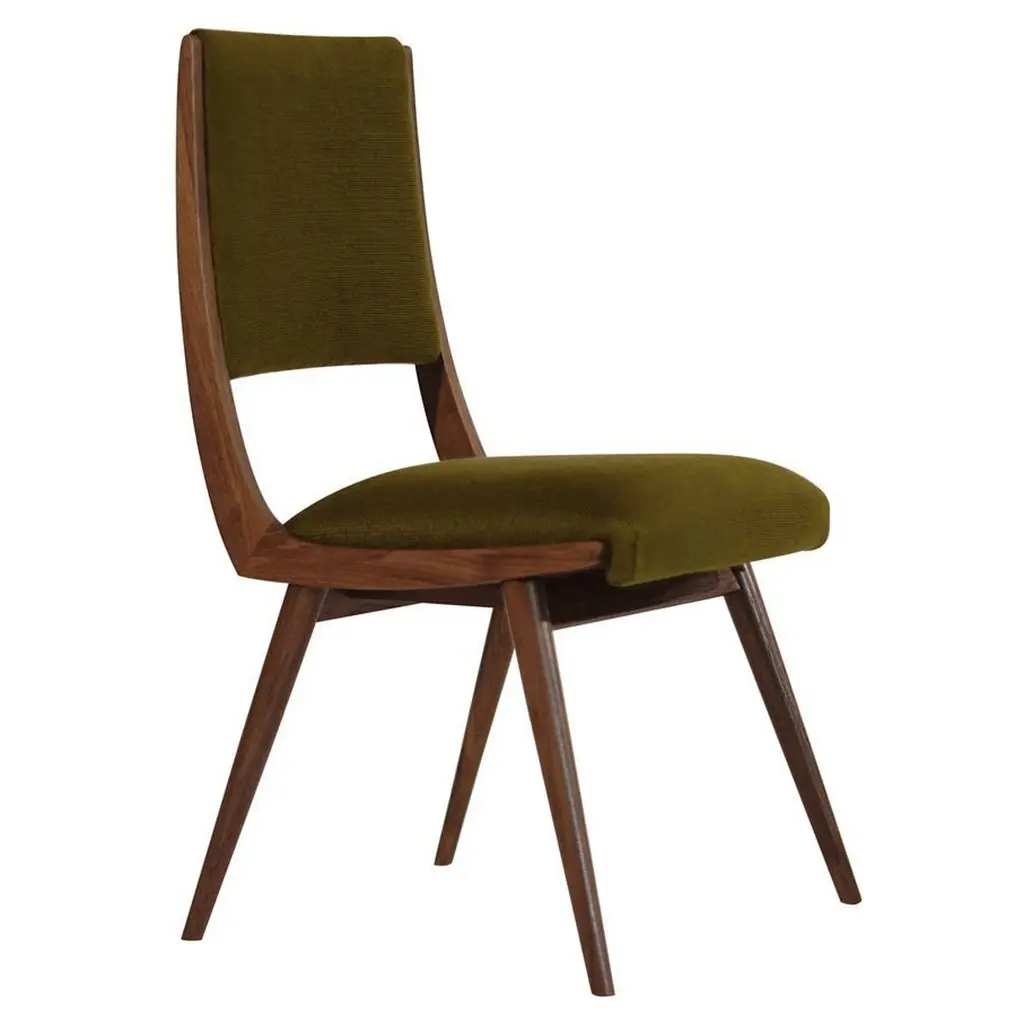
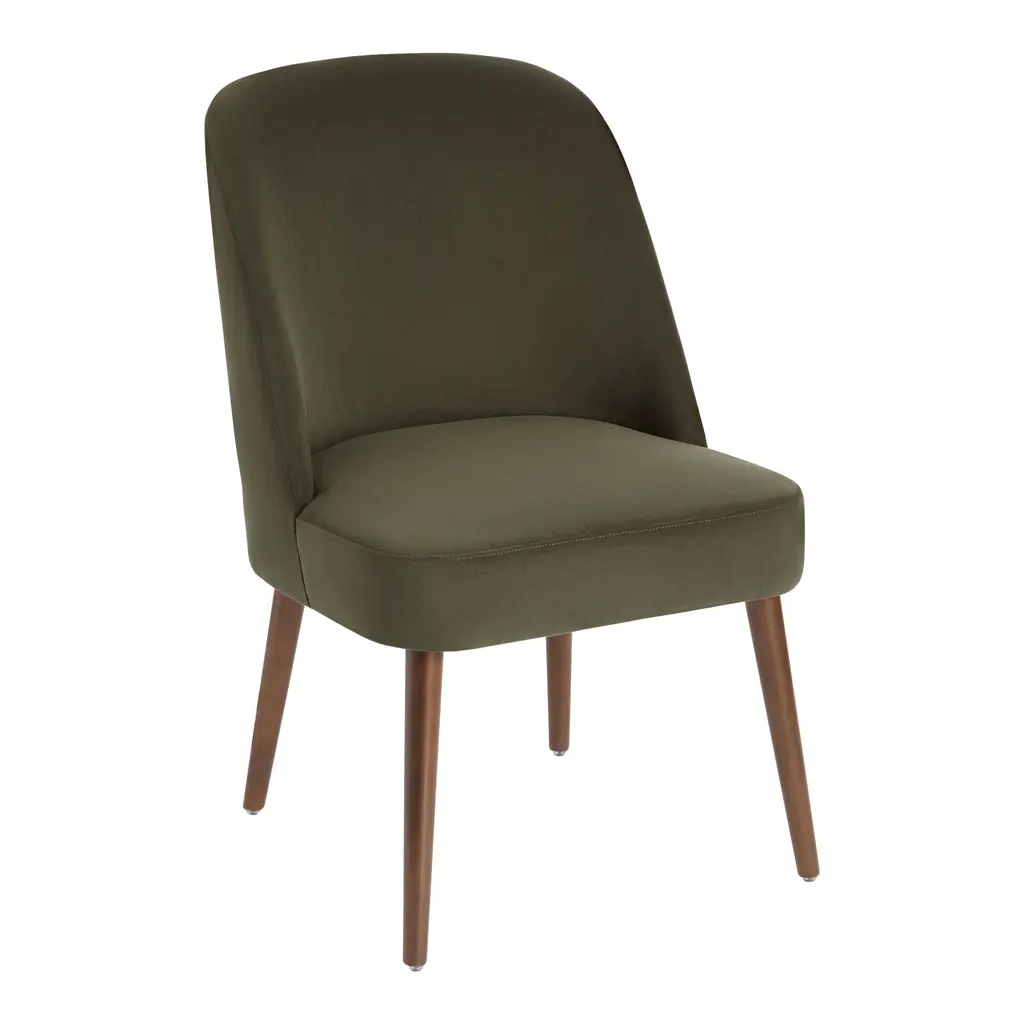
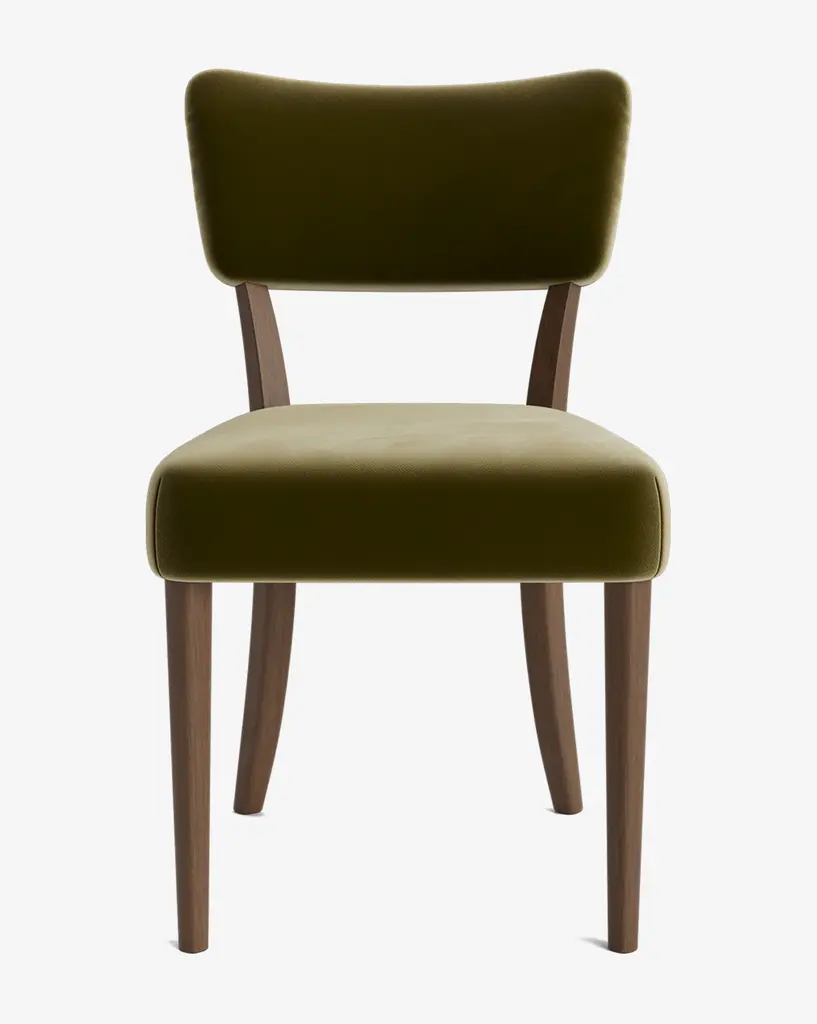
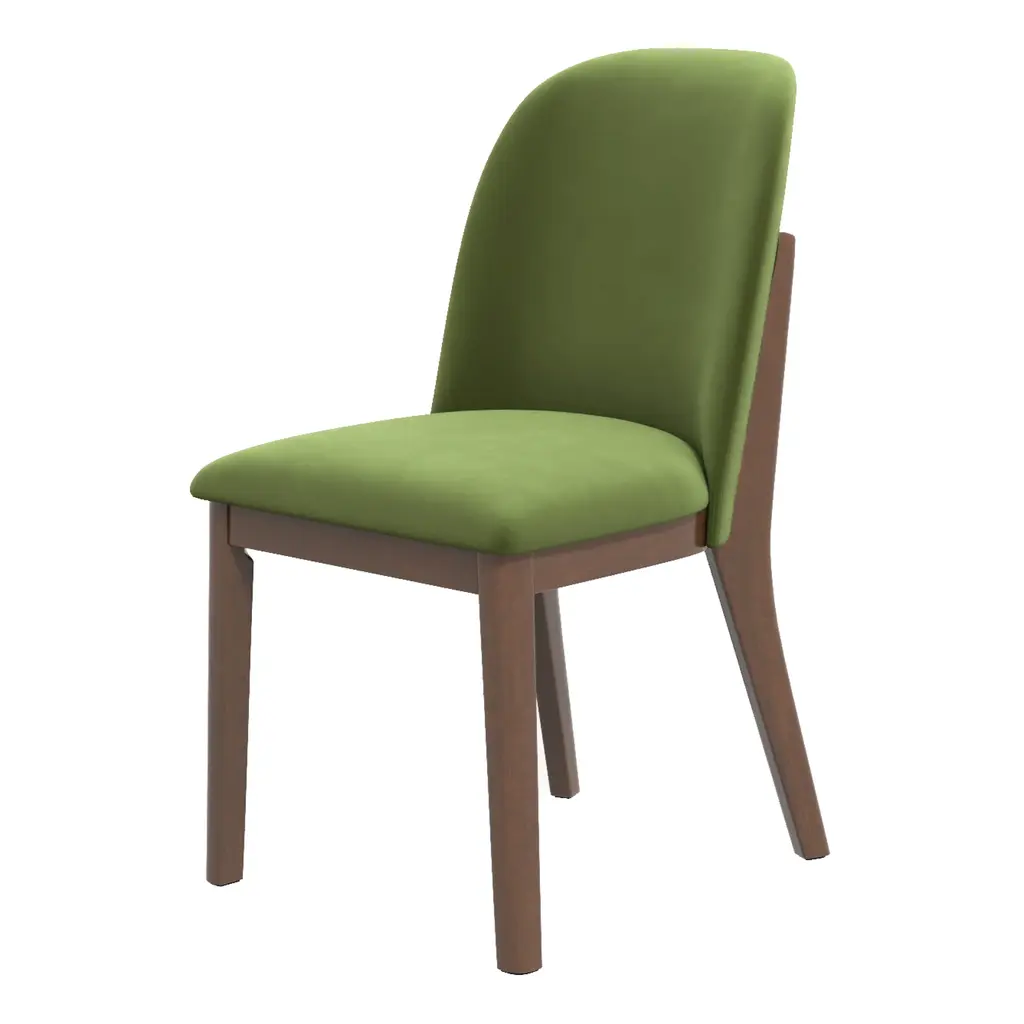
Paul Bode Dining Chair for Deutsche Federholzgesellschaft, wood and ash, Germany, 1955The chair is built around a single structural idea: the seat and the backrest are not rigidly joined to one another, but rest on independent bent ash elements that flex slightly under weight, giving the seating a gentle spring rather than a fixed resistance. The front legs are shaped as a continuous V, curving from the seat rail down to the floor in one bent piece, while the back legs run straight and slightly splayed to the tall, narrow backrest. The result is a light, almost linear silhouette typical of the structural experiments in bent and laminated wood carried out in Germany through the 1950s.Paul Bode developed the design in 1955 for Deutsche Federholzgesellschaft, a manufacturer based in Kassel that specialized in laminated spring wood construction (Federholz, literally "spring wood") and became one of the more technically inventive German furniture producers of the postwar period. Bode's chairs for the company, of which this dining model is among the best documented, are held today as one of the clearer expressions of German design's engagement with bent wood technology outside the more widely known Scandinavian and Italian production of the same years.
Similar products