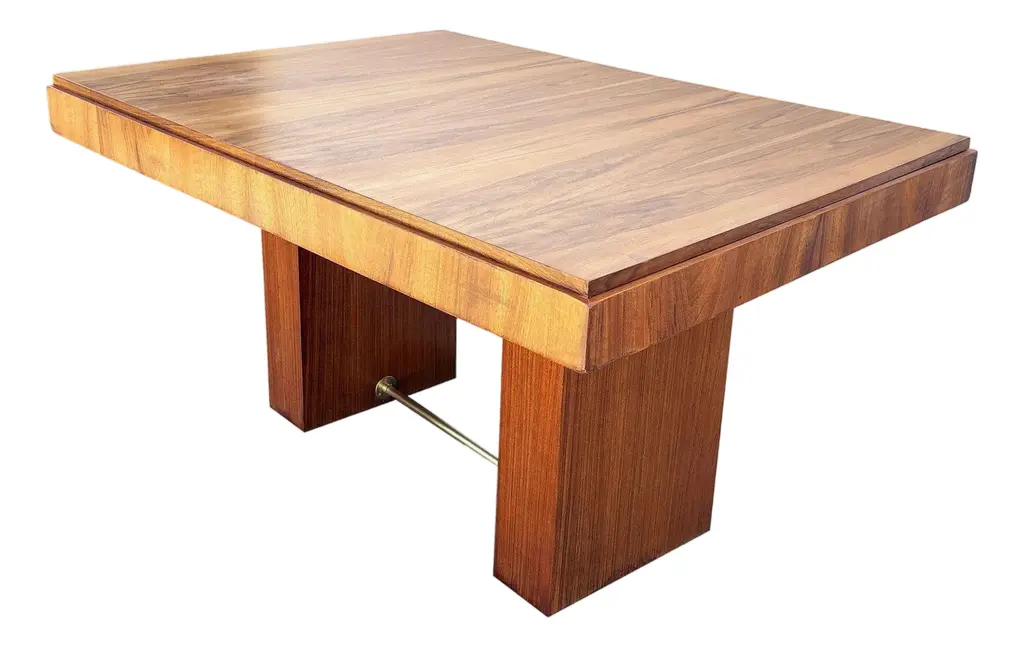
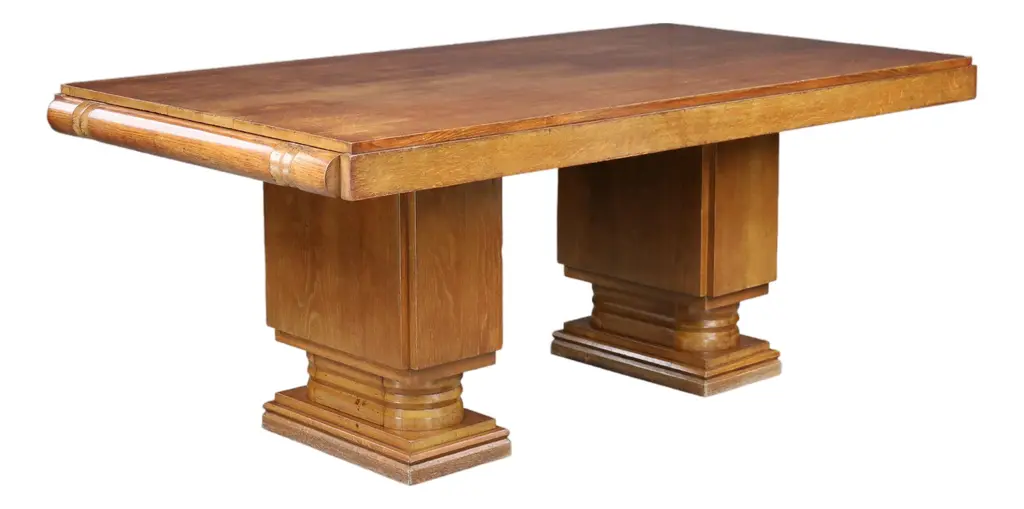
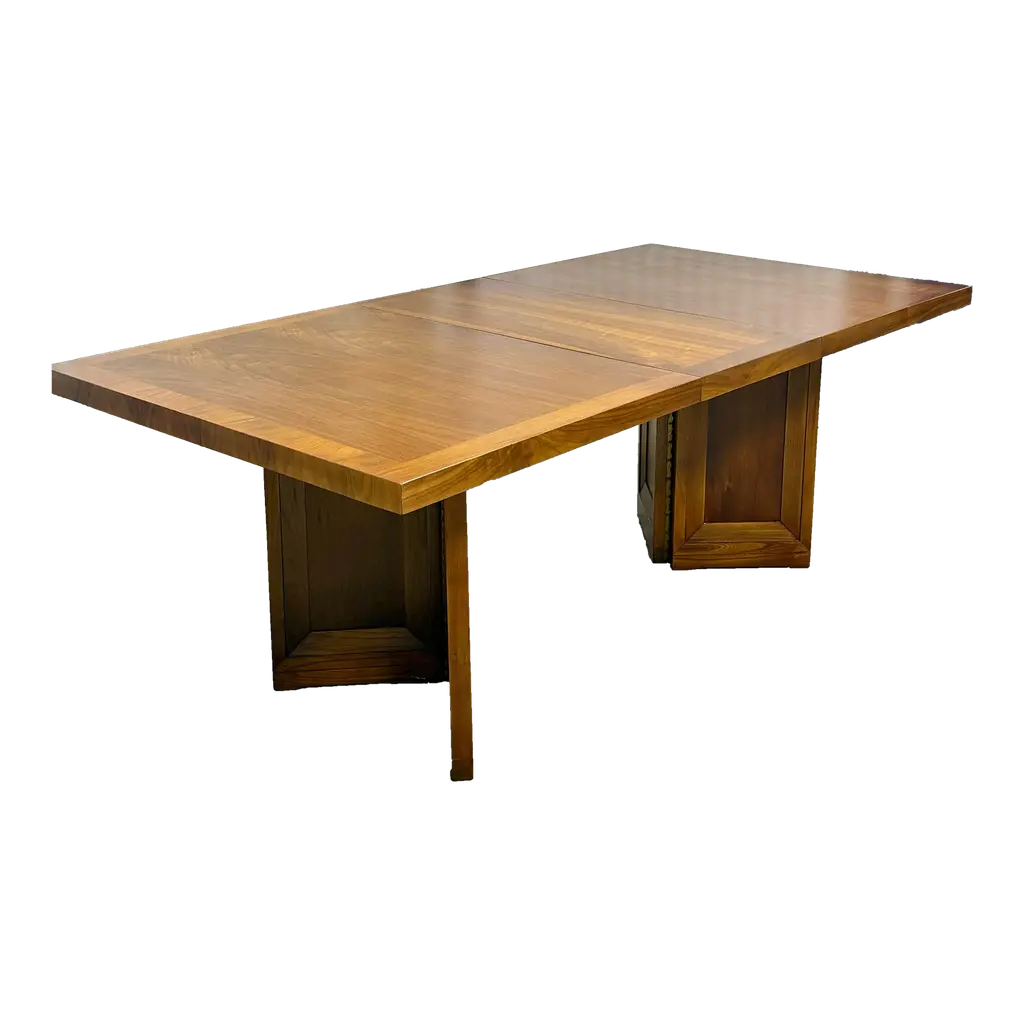
Some pieces quietly demonstrate the confidence of Italian design during the transition from Art Deco to early modernism. This elegant dining table, attributed to Paolo Buffa, reflects that moment with a restrained architectural presence, refined craftsmanship and an intelligent multifunctional design. Design Executed in finely figured walnut, the table combines geometric clarity with subtle decorative detail. The rectangular top is composed of beautifully matched parquetry veneer, creating a rhythmic pattern that changes with the light and highlights the natural variation of the timber. A gently moulded edge gives the substantial top an elegant profile without adding unnecessary ornament. Beneath, two sculptural pedestal supports define the character of the piece. Each pedestal is built from a series of carved walnut blocks, producing a softly faceted surface that introduces depth and shadow. This treatment is closely associated with several Italian cabinetmakers and designers working during the late 1930s and early 1940s, and bears similarities to furniture attributed to Paolo Buffa. His work often balanced classical proportions with modern forms, favouring craftsmanship over excess decoration. An unusual feature is the removable top. The walnut parquetry dining surface can be removed to reveal a green baize playing surface, allowing the table to serve equally well as an elegant dining table or as a card and games table. This practical dual purpose reflects the sophisticated domestic interiors of the period, where furniture was expected to adapt to different social occasions without compromising aesthetics. Generous proportions comfortably accommodate six to eight people, making the table equally suitable for a private residence, hospitality setting or curated interior where Italian twentieth-century design takes centre stage. A refined expression of Italian craftsmanship Rather than relying on ornament, this table derives its appeal from proportion, material and carefully considered detailing. The warmth of the walnut, the sculptural pedestal bases and the concealed gaming function create an object that remains both practical and visually compelling more than eighty years after its creation. Condition The table is in very good vintage condition and professionally restored in our workshop. The walnut has developed an attractive patina, and the reversible baize playing surface remains well preserved and fully functional. This piece is attributed to the mentioned designer/maker. It has no attribution mark and no official proof of authenticity, however it is well documented in design history. I take full responsibility for any authenticity issues arising from misattribution
Similar products