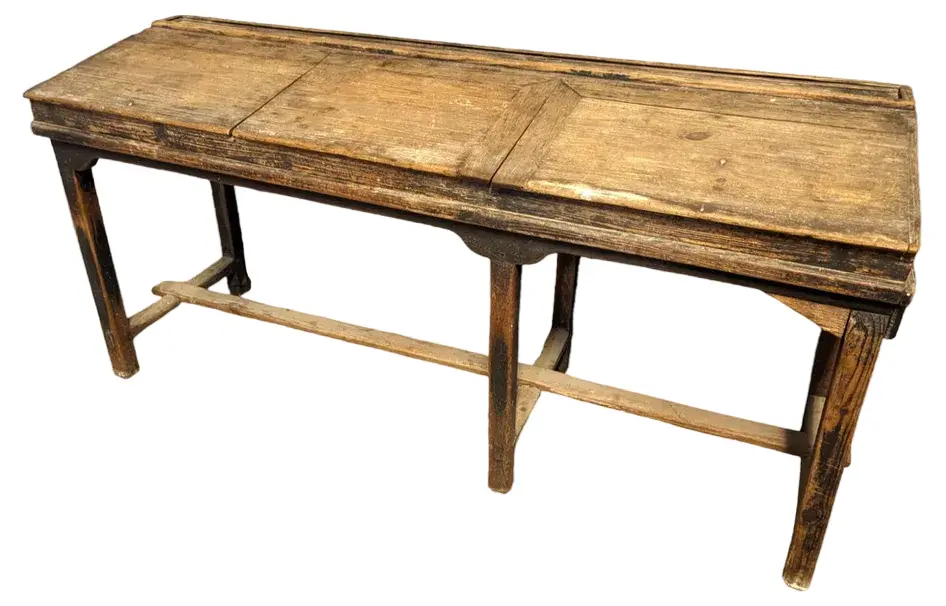
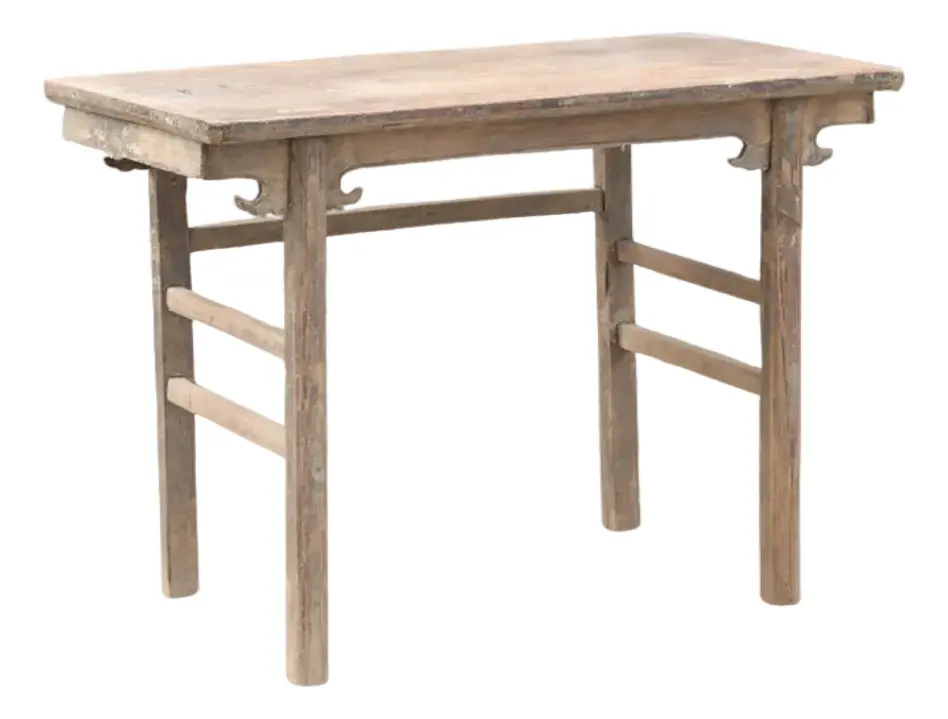
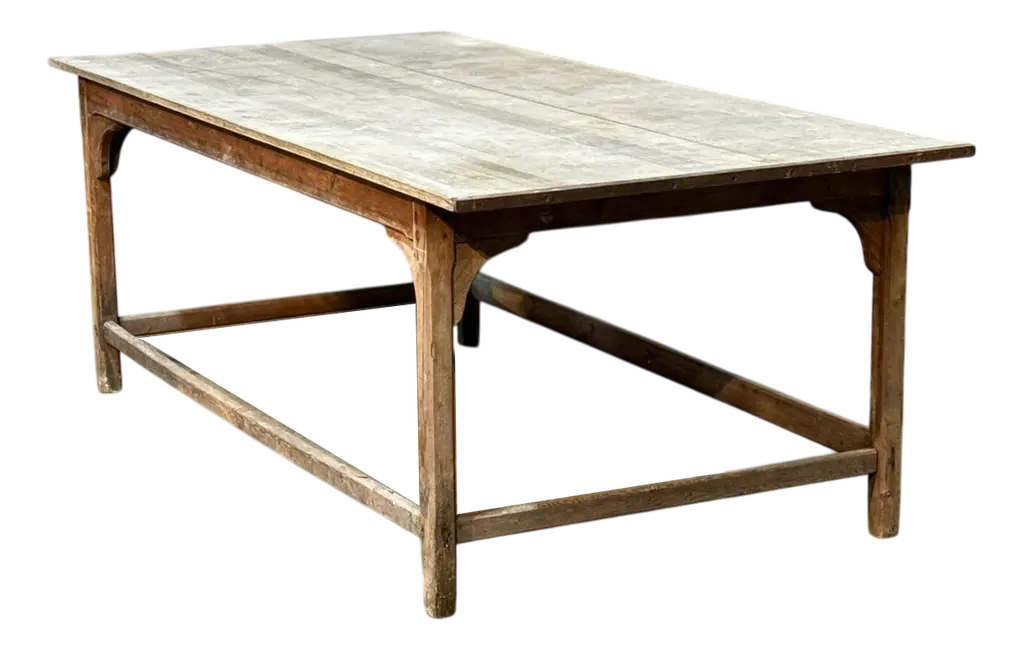
A rare and most impressive size rustic Provincial Chinese recessed-leg painting table (dining table) Early 19th century, crafted of northern elm (yumu) sourced from the forests of North China’s Shanxi province, this authentic Qing Dynasty (1636-1912) example features classical Ming (1368–1644) styling of simple recessed-leg form unmarred with decoration reflecting the pure and refined aesthetics of the period. The rustic long plank boarded top enclosed within a wide rectangular frame with molded edge and visible hand-cut mortise and tenon joinery, above plain aprons and spandrels, supported on slightly splayed rounded legs joined at the sides by pairs of stretchers. Attractive wabi-sabi appearance with beautifully aged organically distressed patina. The original finish (especially tabletop) long worn and faded away, revealing soft mellow naturally toned wood, with dark rich scars, mars, nicks and typical antique character marks adding to the sophisticated. With its cultural and historical significance, this table represents a blend of functionality and artistry, making it a captivating and valuable addition to any space. - DIMENSIONS: (approx) 32" Tall, 74.75" Long, 36.5." Wide; Clearance: (floor to apron) 28.75" High - FURTHER READING: HISTORY / RELEVANT INFORMATION: The recessed-leg table is among the most well-known and immediately recognizable forms found in classical Chinese furniture construction. Tables of this elegant and restrained form, with the graceful splay of the legs, trace their origins to furniture design of the Song dynasty, and several variations on this type are known. Originally in the form of religous altar tables, over the centuries the basic proportions were adapted to make other furniture, including smaller tables and larger tables. Tables of the size of the present table are generally referred to as painting tables, although such tables were made for practical uses and in various different contexts. This rare large-form created during the Ming dynasty is now referred to as "painting" tables because they were at least 30" wide and able to fit massive painting canvas and all supplies. A stark contrast to the more common narrow altar table meant to be placed against a wall as a console. Displaying a unique blend of simplicity and complexity, with a simplistic sculptural form and minimalist design, contrasting with high quality craftsmanship, hand carved chamfered wood, and complex bridle and mortise tenoned joinery visible. Finely handmade using only high quality joinery, understanding how these joints hold a piece together will add to your overall appreciation of Chinese furniture. With great technical skill, master carpenters and cabinetmakers designed furniture with striking silhouettes and refined lines. The marriage of engineering and aesthetics created an artform still admired in the present day.
Similar products