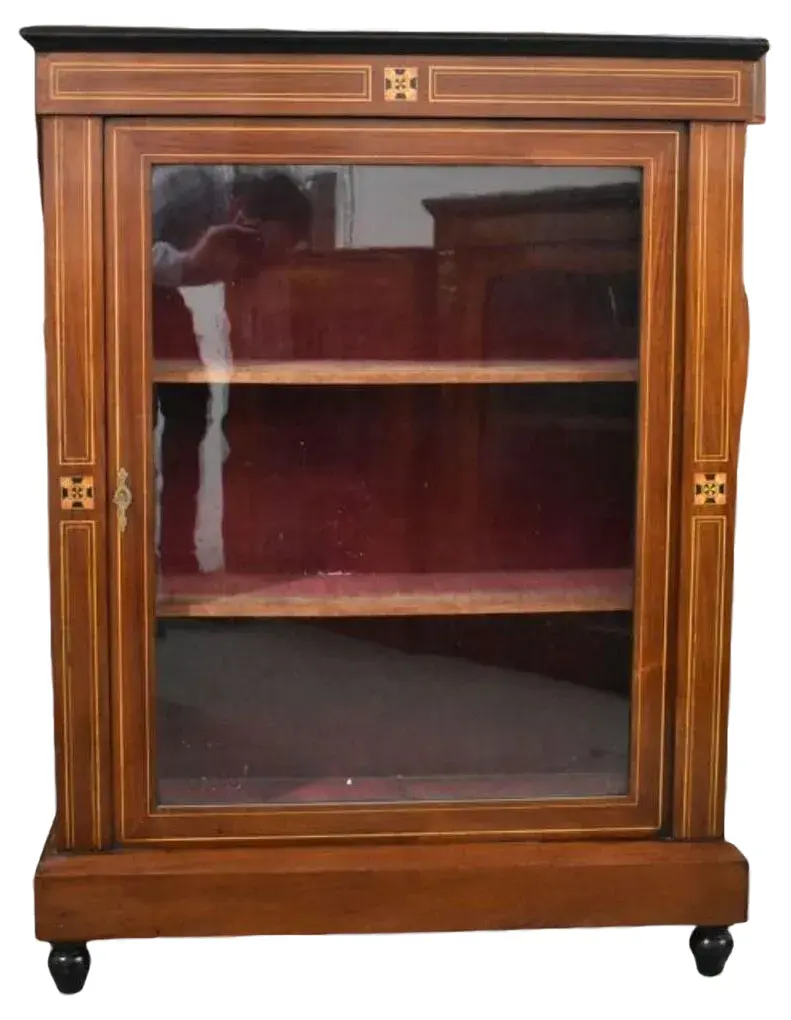
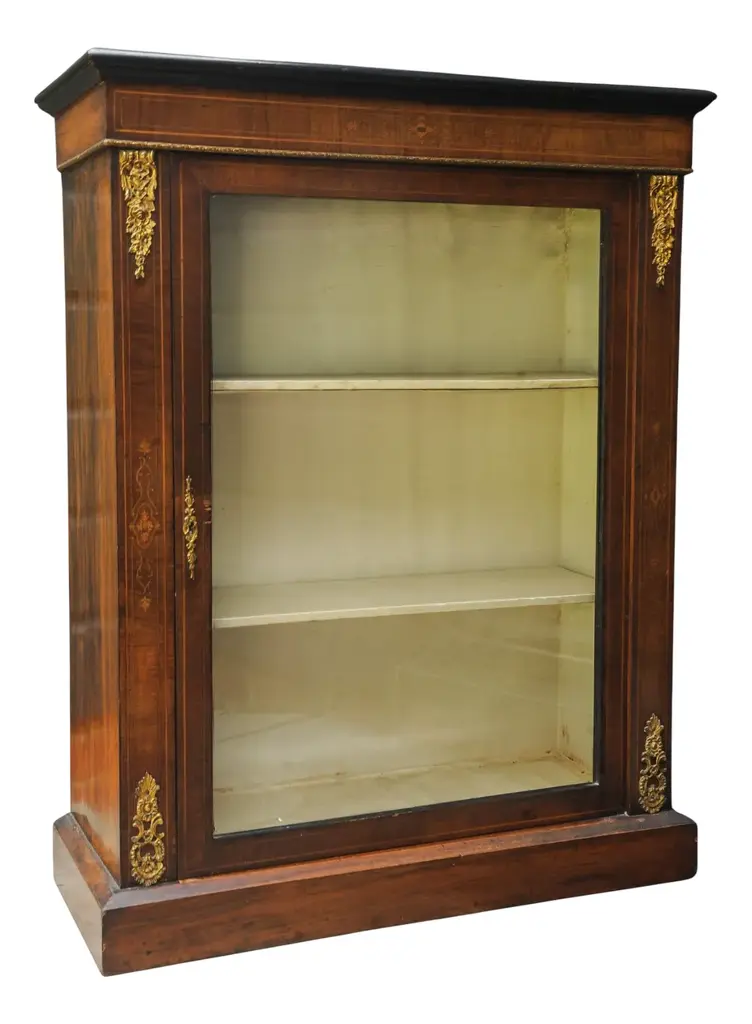
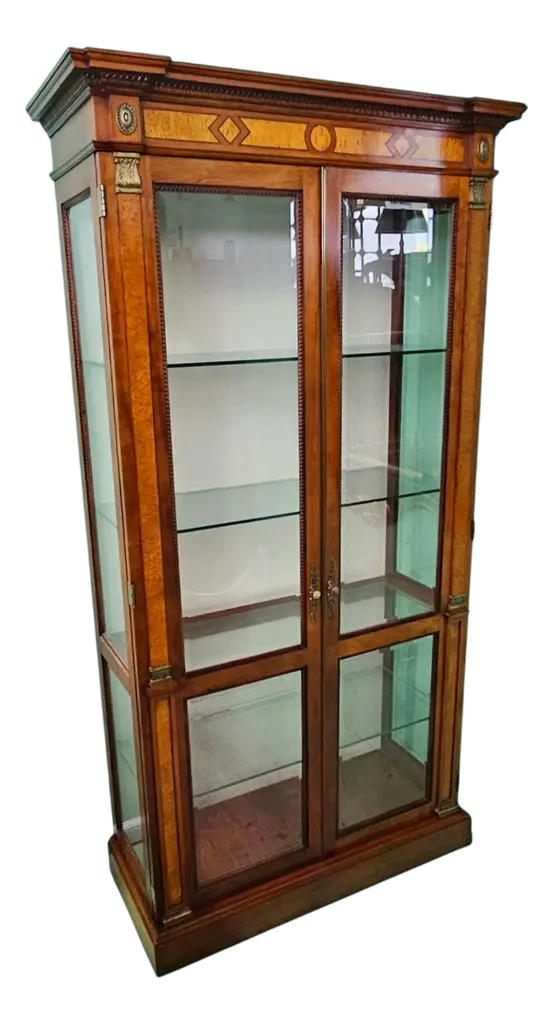
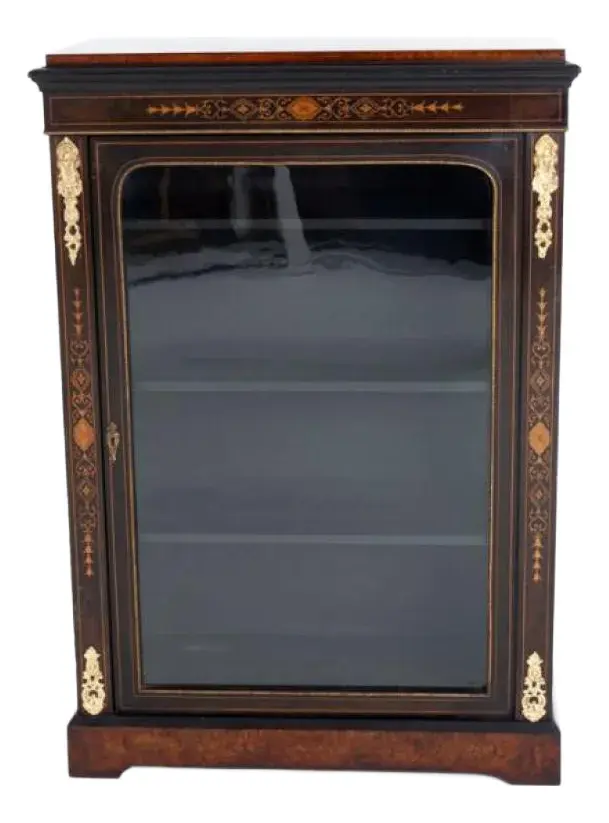
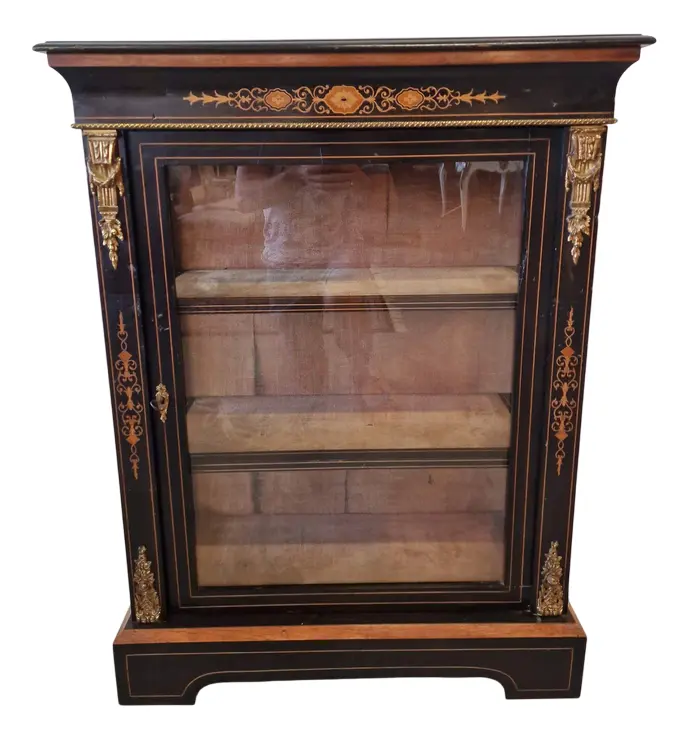
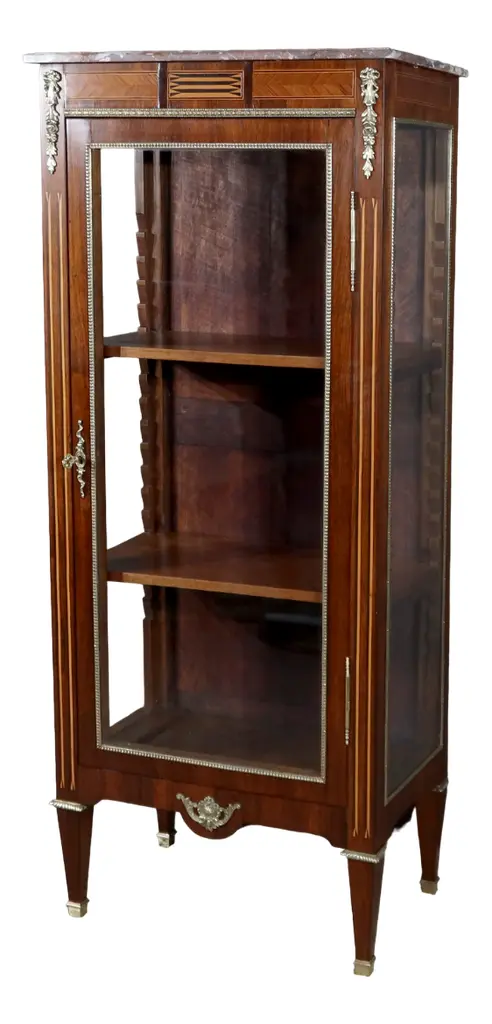
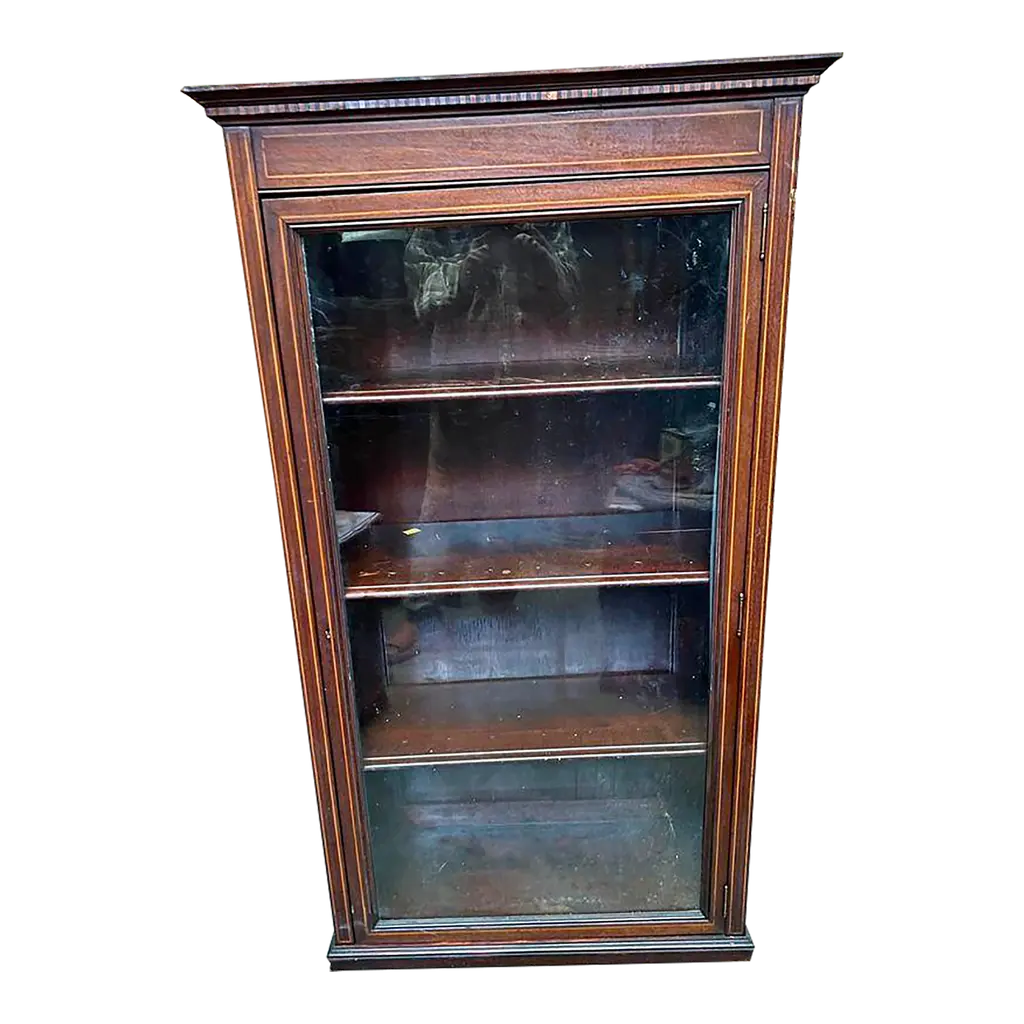
This handsome piece dates to the 19th century. It is most probably a Biedermeier display cabinet, characterized by its structured simple geometry, black wood, burled wood inlays, and antique gold ornamental highlights. The cabinet has three shelves fully clad in a beige linen. They are sturdy and sound to hold books or heavier objects. The black wood has a matt finish that shows some wear on the top and bottom right-hand side that add character to the piece but can be freshened up with a good wood polish. See detail images pictured here. The narrow profile makes this piece especially versatile in smaller spaces. It's strong and balanced lines without much ornament makes this piece compatible with a modern or more traditional interior. In part a rejection of the Empire and Directoire styles of the late 18th and early 19th century, Biedermeier started as an un-aristocratic style. The Biedermeier style originated in Germany but, historically, was associated equally with Austria and the Czech Republic. The Biedermeier style represents a subdued period between Neoclassicism and Romanticism and was designed for the growing middle class in Europe. Though it is not uncommon to find highly polished and refined examples today, the vast majority of Biedermeier embodied a rustic simplicity, as is characteristic of this piece.
Similar products