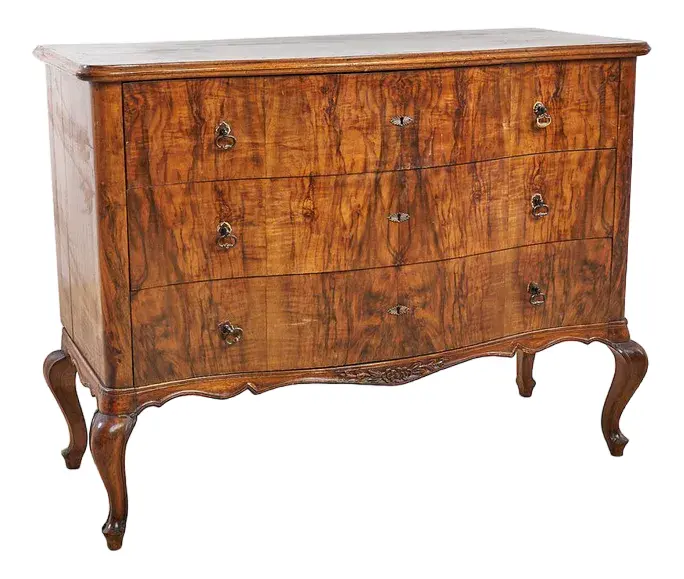
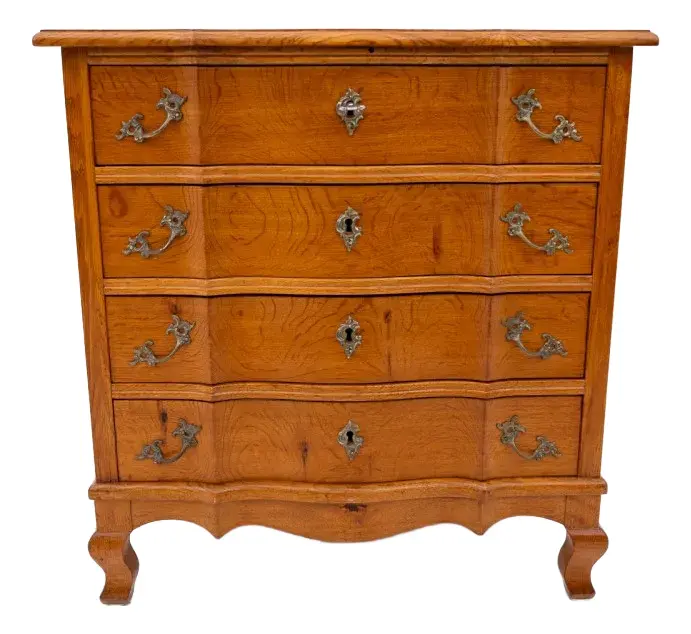
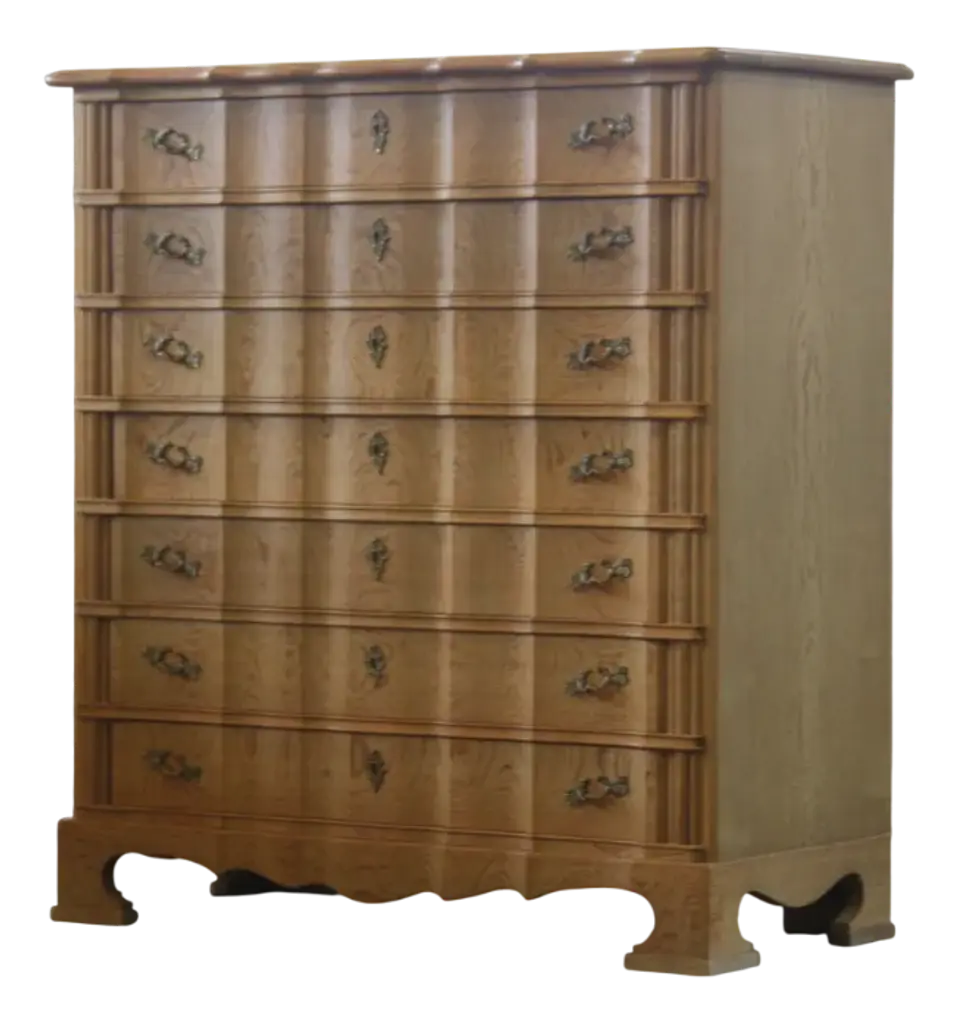
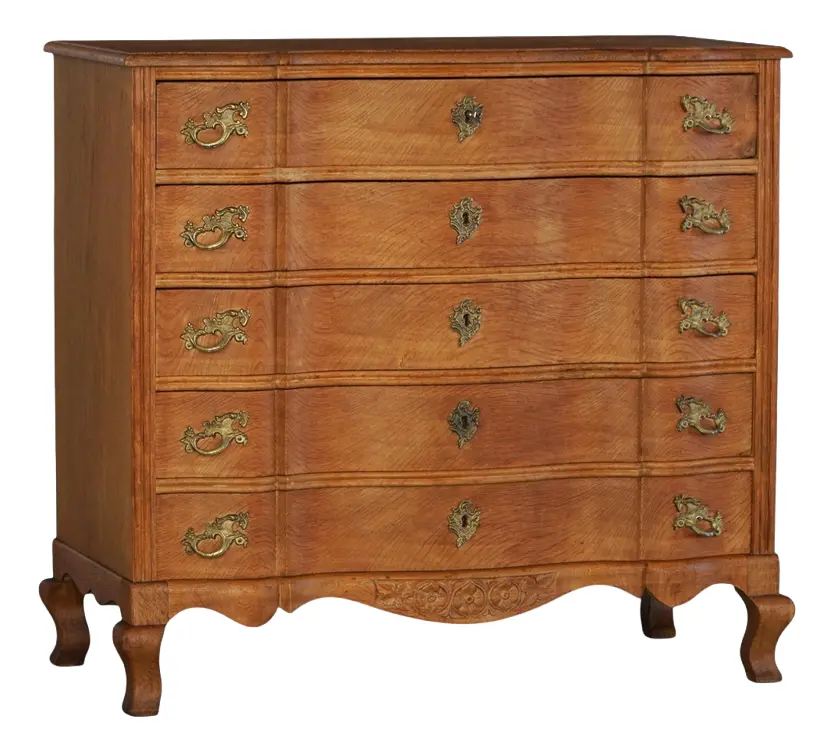
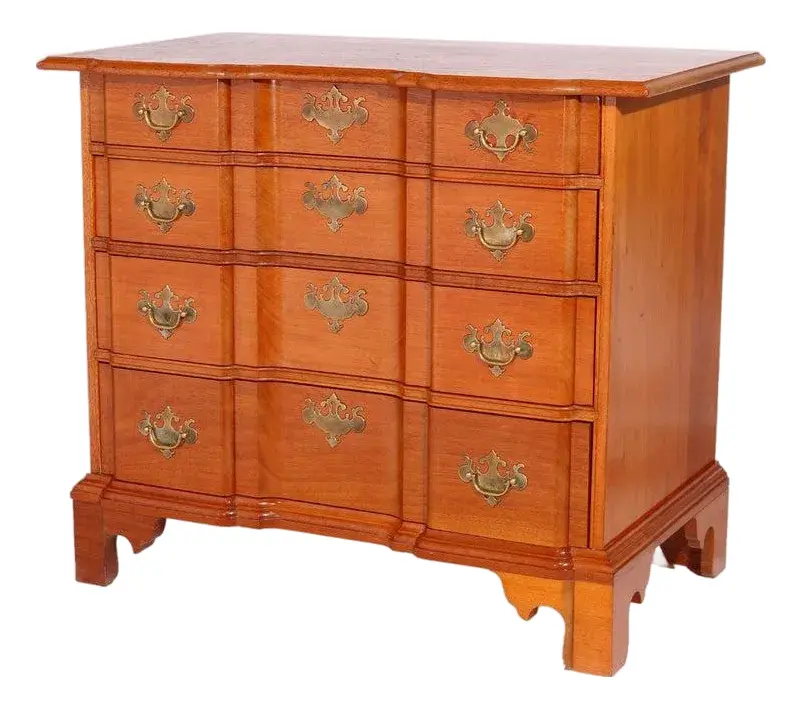
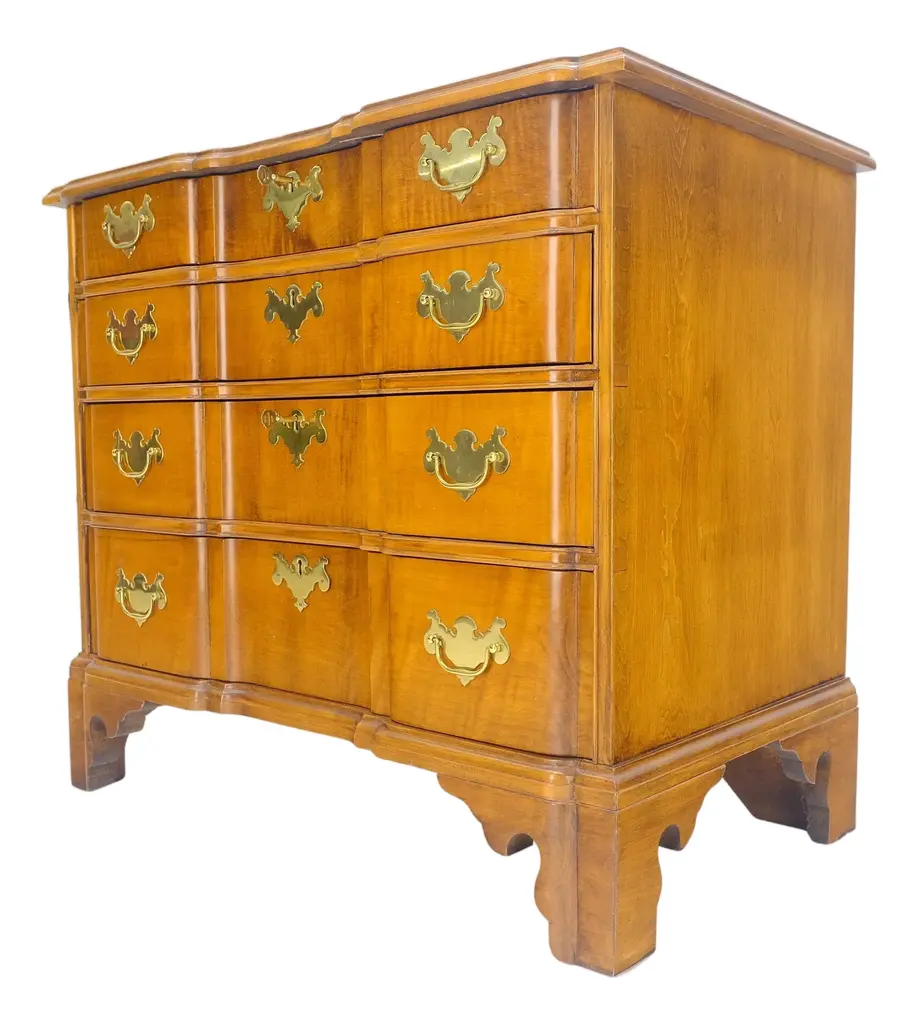
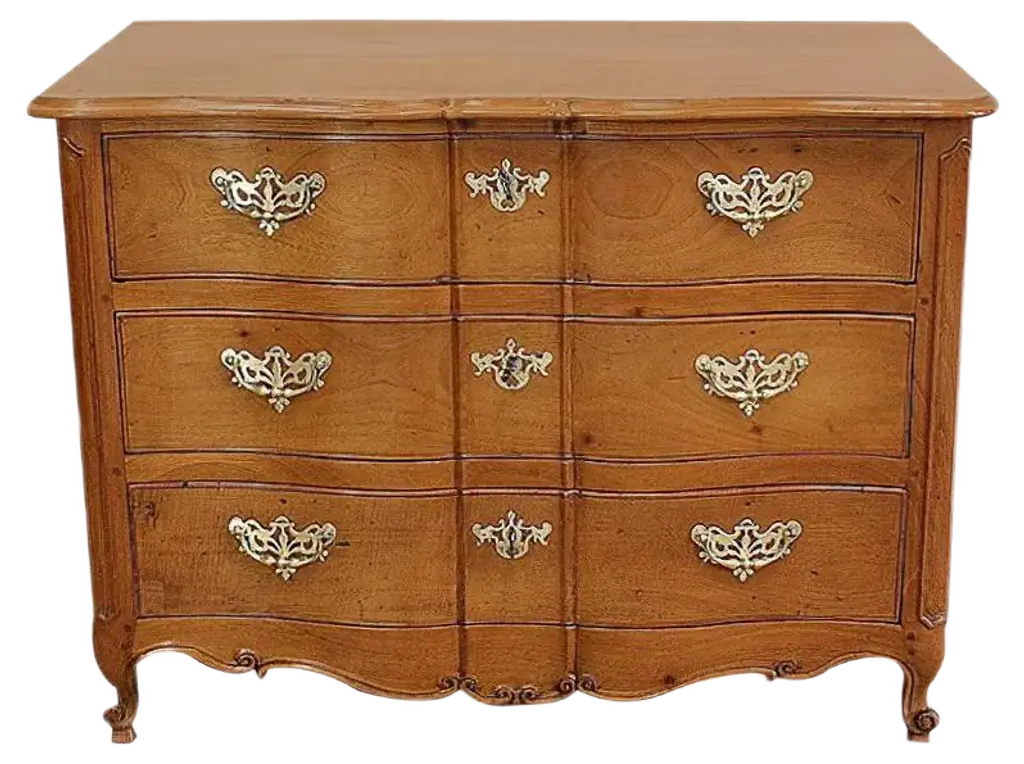
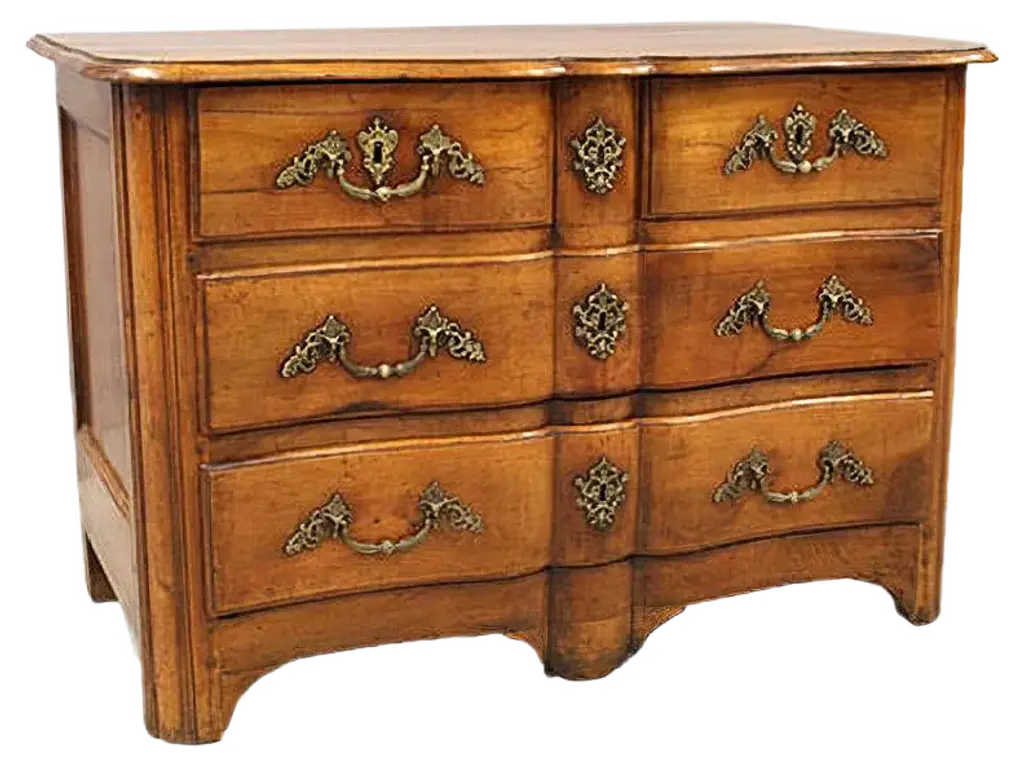
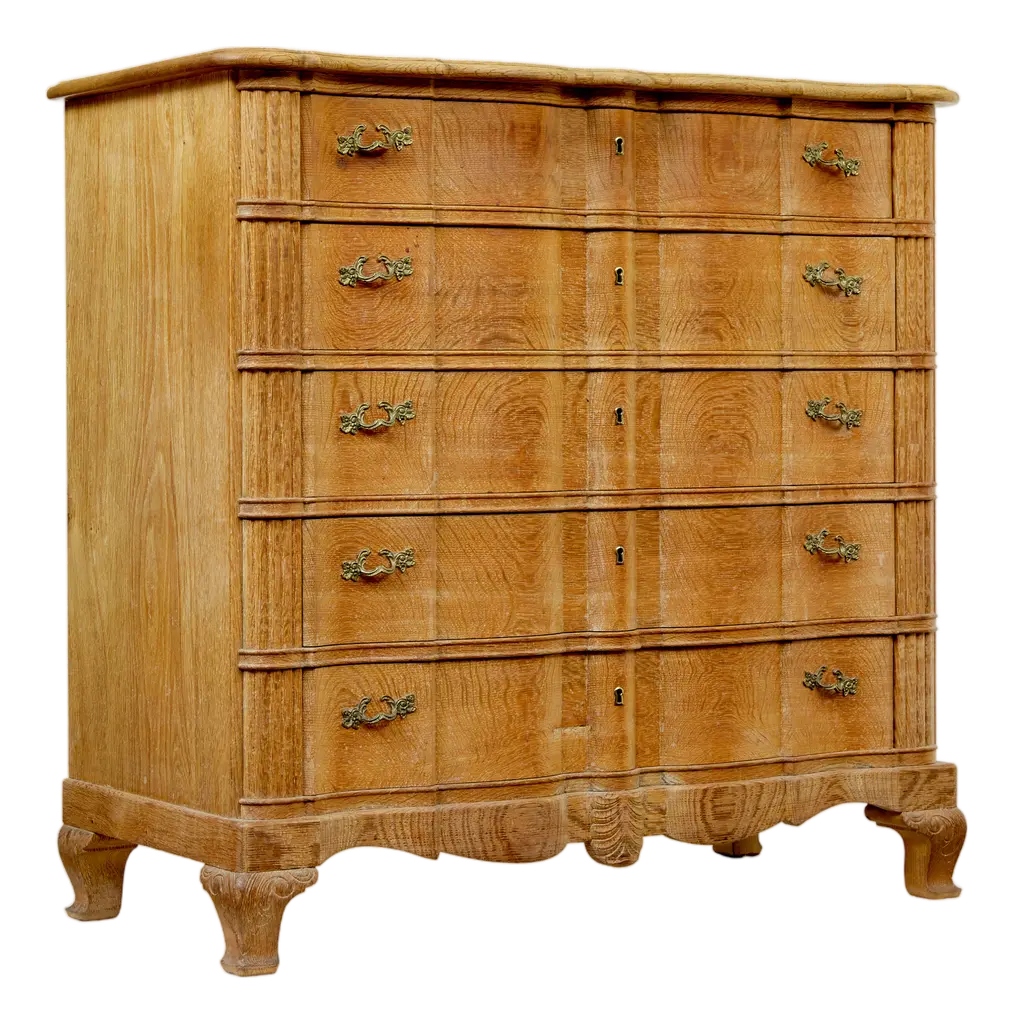
A solid quarter-sawn oak serpentine chest of drawers in the Danish Rococo tradition — the work of an unknown Danish cabinetmaker, 1940s — with six graduated drawers displaying exceptional ray figuring and an warm, honey-toned patination that speaks directly to the quality of timber selection. The drawer fronts carry a pronounced serpentine form — each surface bowing outward in a fluid, continuous wave that shifts subtly in tone as light moves across the open-grained oak. The vertical divisions between drawers are articulated with fine planted mouldings, lending the facade a rhythmic, almost architectural quality without recourse to applied ornament. Hardware throughout is original: cast Rococo brass bail handles with acanthus-leaf mounts and matching cartouche escutcheons, the latter retaining a pleasing aged verdigris consistent with period production. The key is present. The contrast between the warm brass and the honeyed oak is one of the finest qualities of this piece — calibrated, not accidental. The carcass construction confirms workshop confidence: solid oak throughout, with exposed hand-cut dovetail joinery at every drawer corner. The drawer sides are quarter-sawn oak — not the beech secondary timber typical of the period — a mark of a maker unwilling to compromise on material honesty even where it would not be seen. The piece stands on boldly proportioned cabriole feet issuing from a shaped scalloped apron, the foot profile exhibiting the strong, muscular curve characteristic of the best Danish Rococo Revival workshop production. A clean, unadorned top surface allows the natural ray figuring of the oak to read without interruption.
Similar products