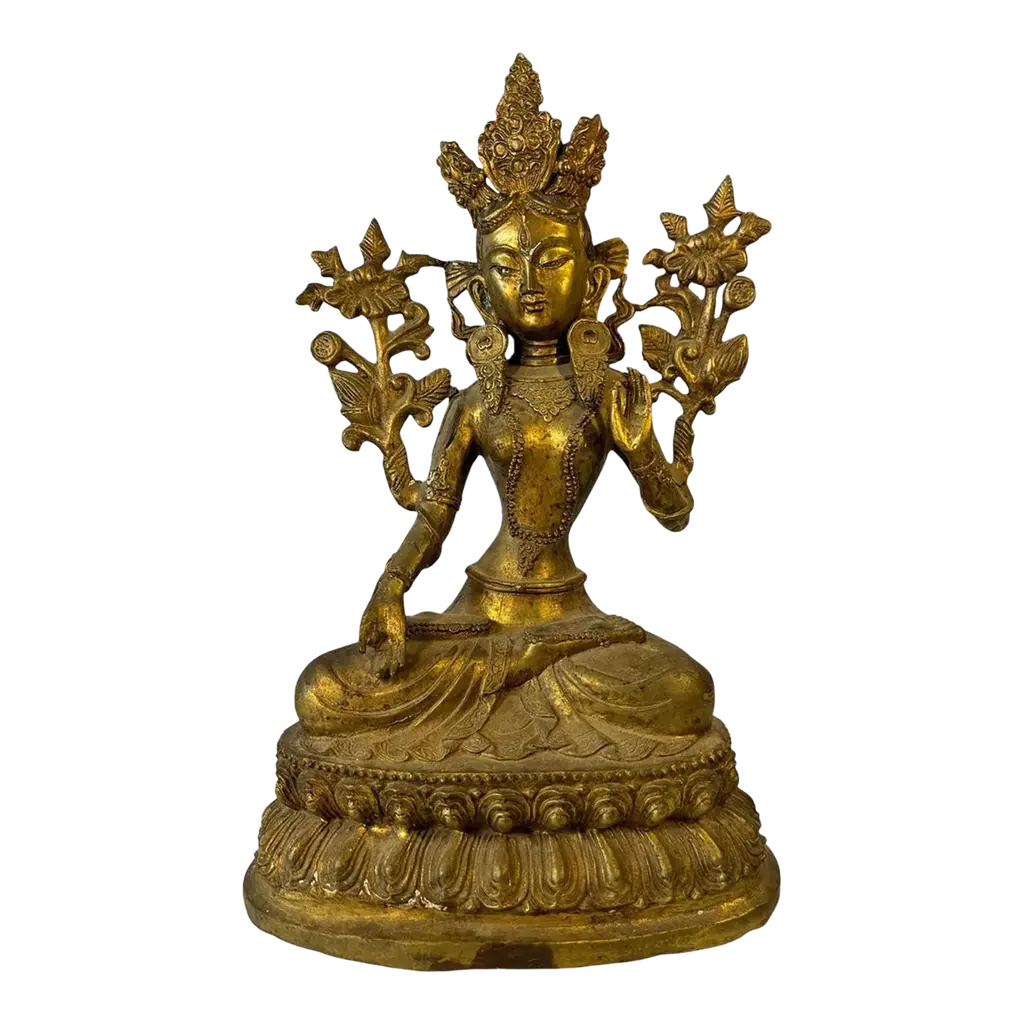
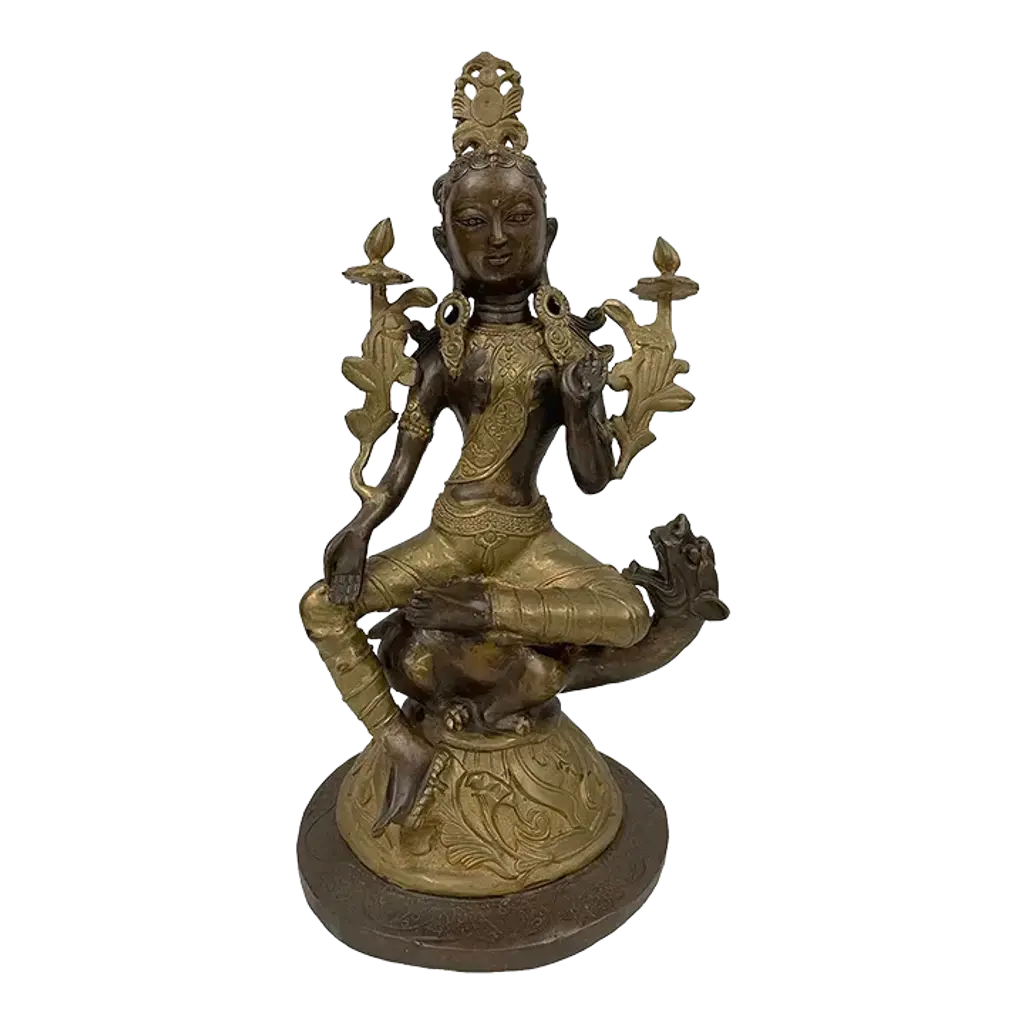
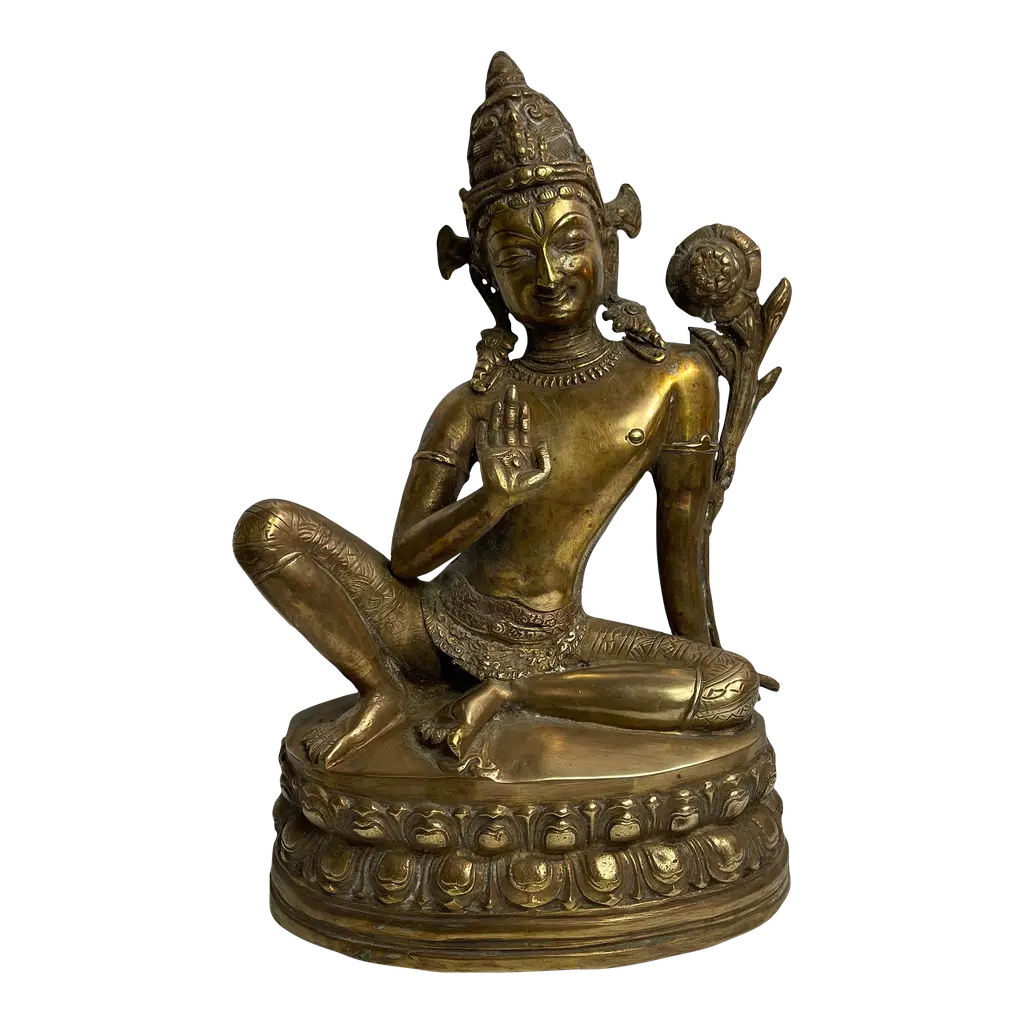
Type: Buddhist statue, Bodhisattva Tara Material: brass/bronze Color: gold Decoration: the bodhisattva is depicted in a relaxed seated posture with the right leg loose and resting on a lotus stem; hands are held in vitarka mudra with the left hand held in front of the chest and the right hand resting on the knee; the hair is tied in a topknot; the graceful figure is also adorned with various jewels like necklace and earrings Craftsmanship: overall cast with detail engraving Age: early to mid 20th century Condition: overall good condition with wear, scuffs, stains, light errosion, unevenness, discoloration, minor loss and other degradation commensurate with the age and use, some casting imperfections Origin: Nepal/Tibet Provenance: Private Connecticut collection Size: 11 in. wide, 9 in. deep, 16 3/4 in. high Other notes: The vitarka (teaching or discussion) mudra is used with Buddhist iconography to symbolize the transmission of the dharma, or the truth teachings of the Buddha. Tara is an important figure in Buddhism, especially revered in Tibetan Buddhism. She appears as a female bodhisattva in Mahayana Buddhism, and as a female Buddha in Vajrayana Buddhism. She is known as the "mother of liberation", and represents the virtues of success in work and achievements. She is known as Duōluó Púsà (多羅菩薩) in Chinese Buddhism, and as Tara Bosatsu (多羅菩薩) in Japan.
Similar products