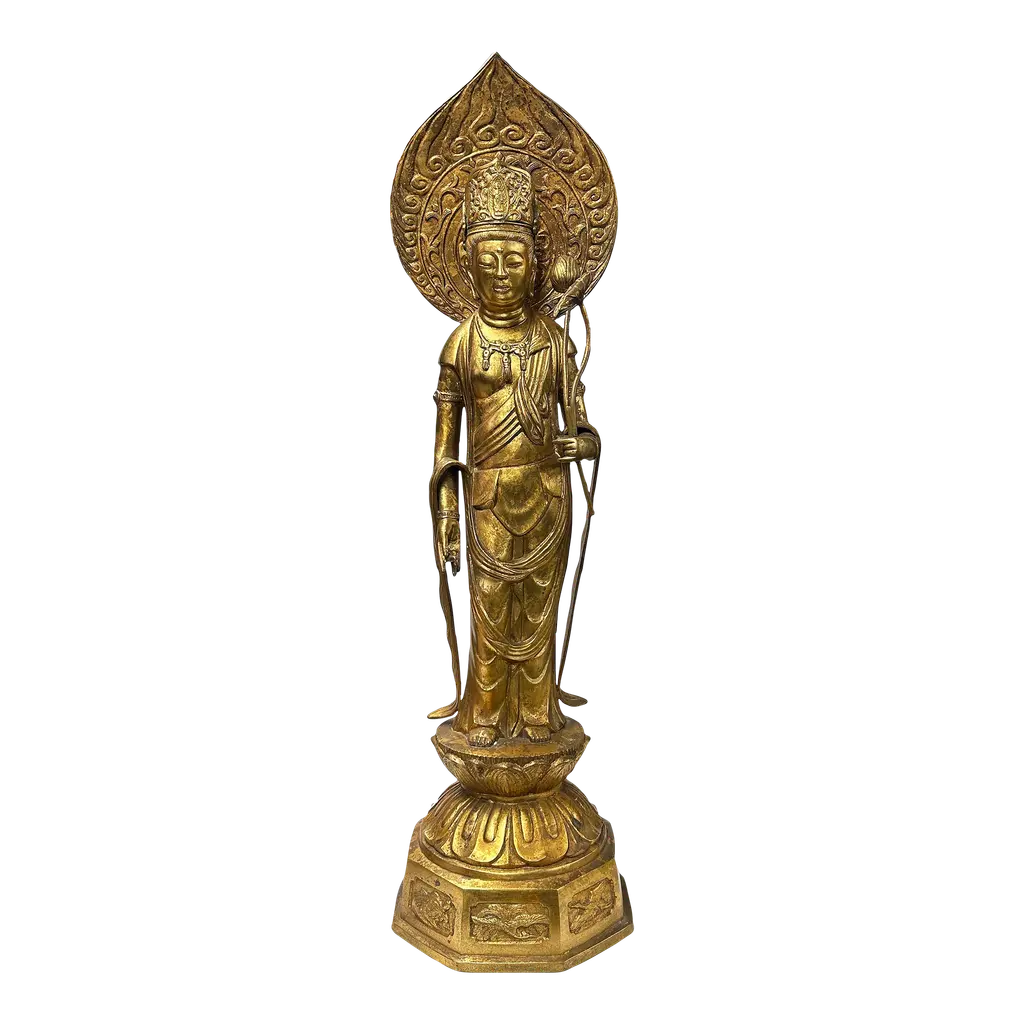
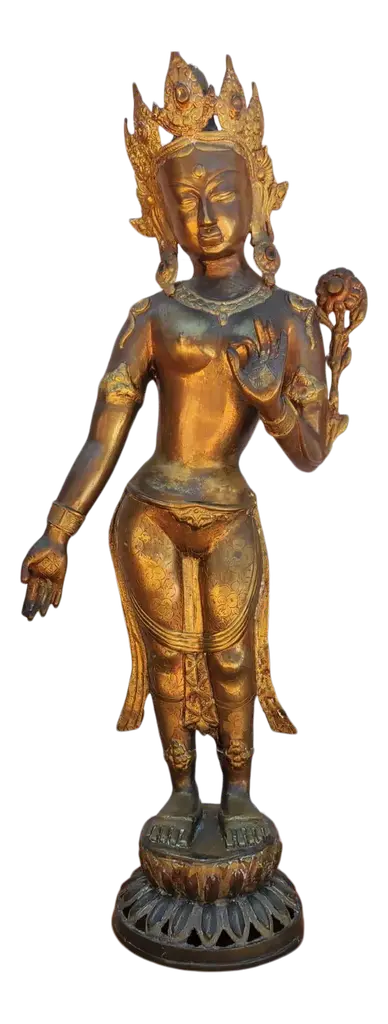
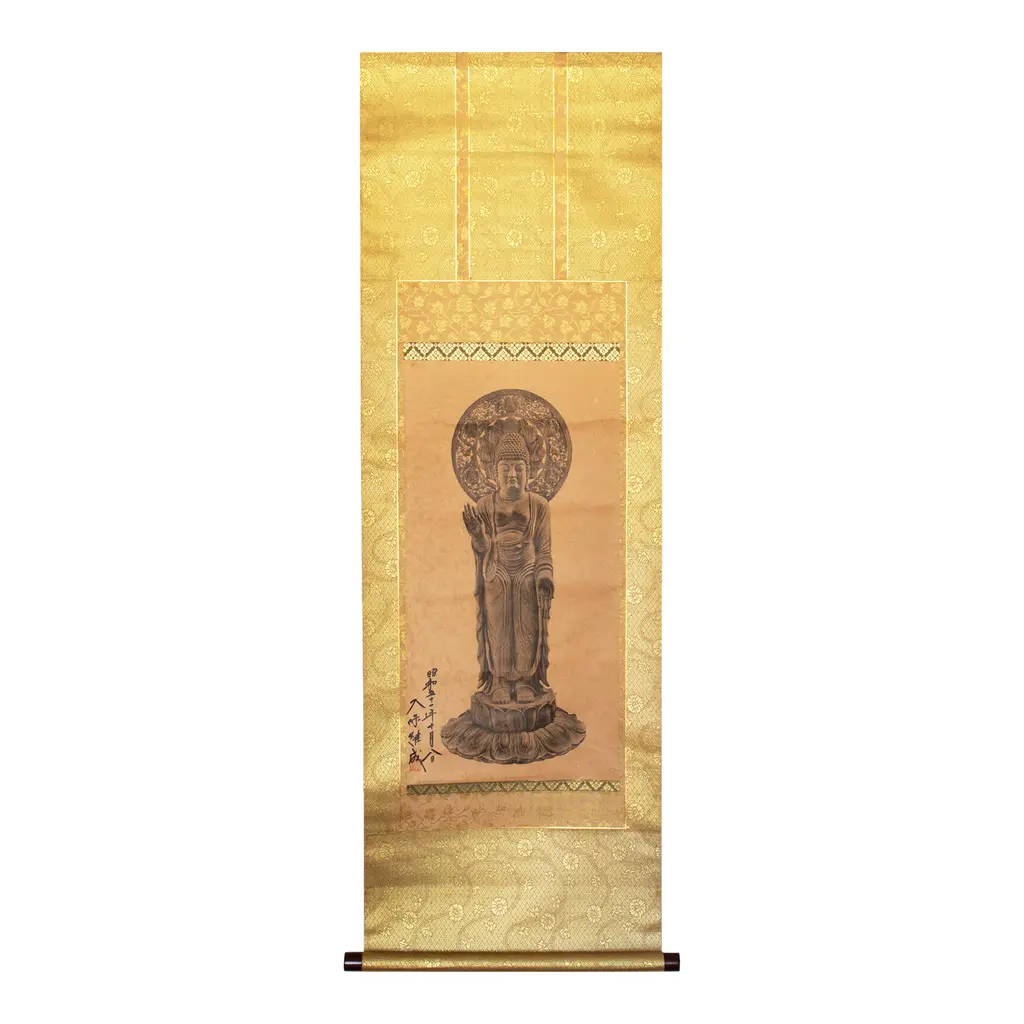
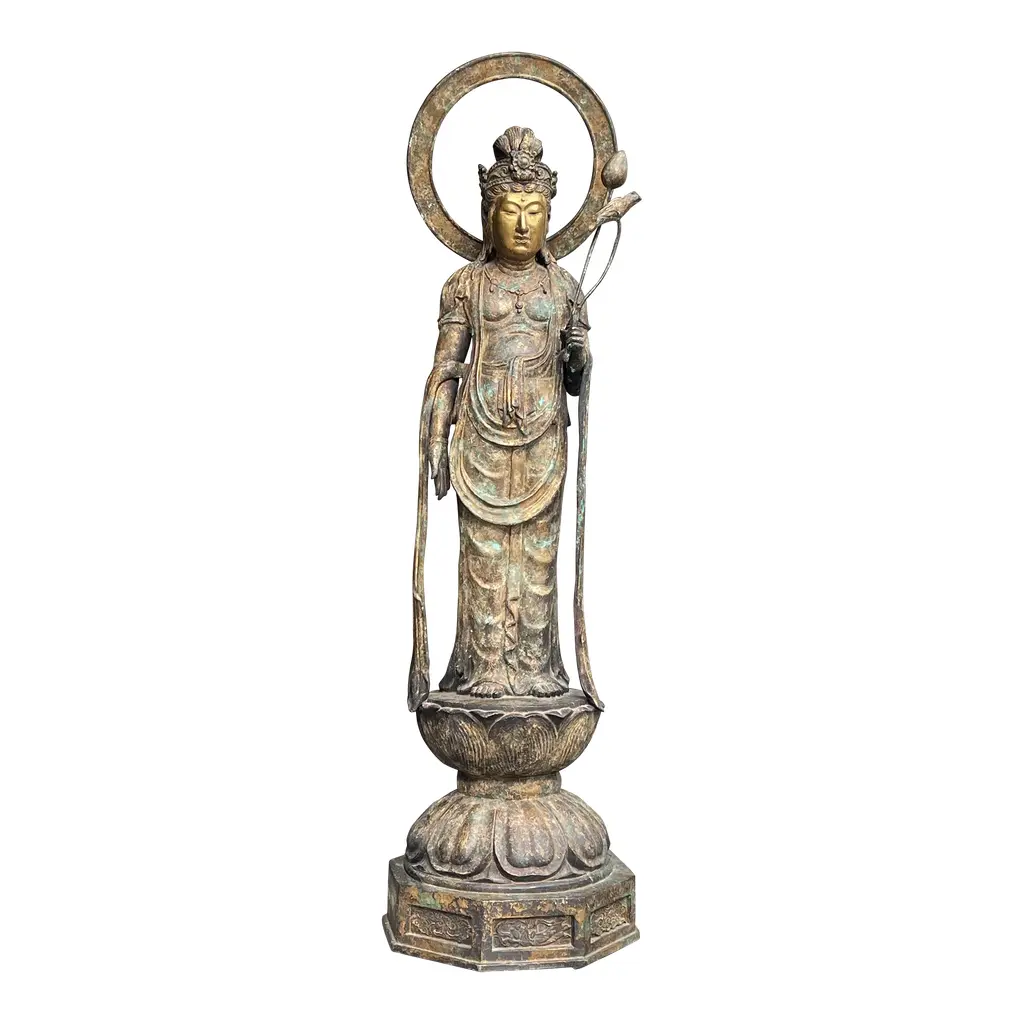
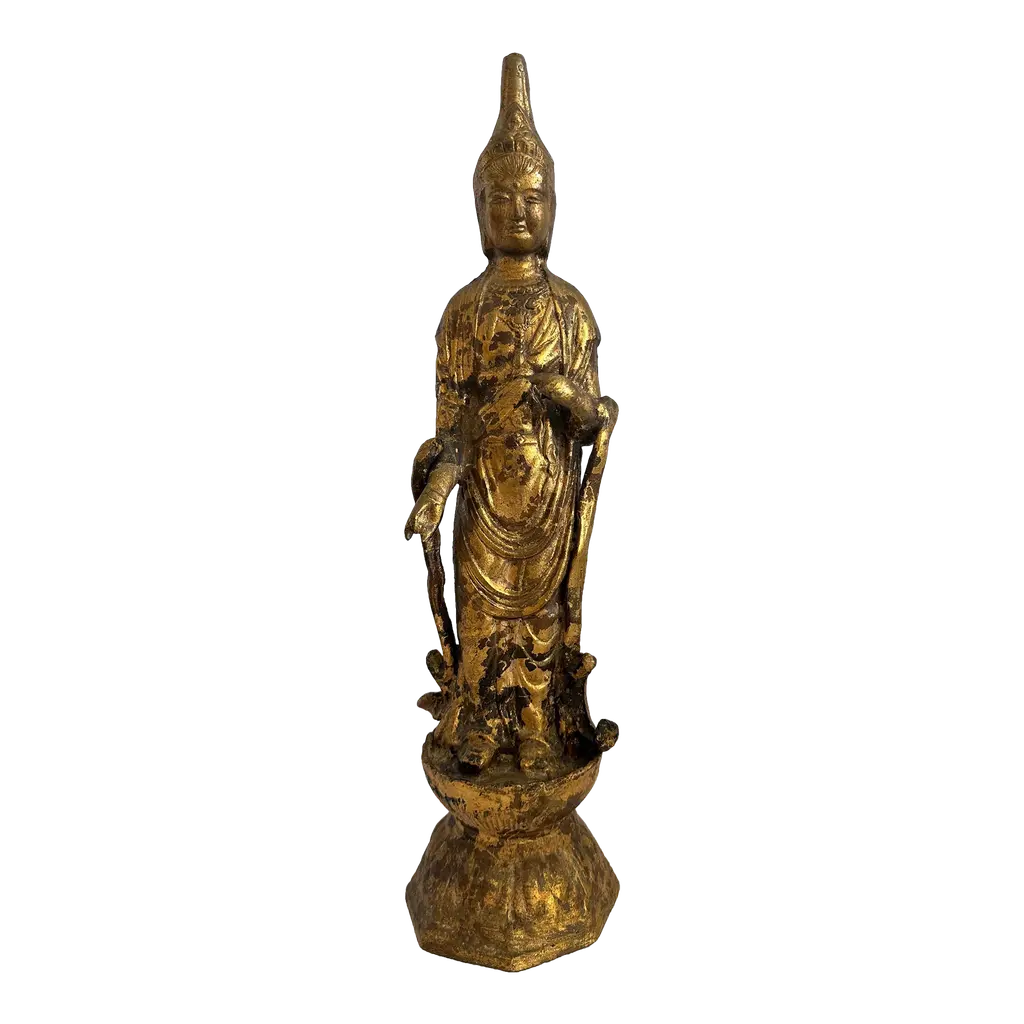
This 23-inch statue is a Japanese representation of Kannon Bosatsu (the Bodhisattva Avalokiteshvara), specifically in the Sho Kannon form, the most common and standard depiction of this deity of compassion. While traditional Japanese Buddhist statues were often made of wood or bronze, cast iron statuary became increasingly popular during the Taisho and Showa periods (early-to-mid 20th century). The elongated form and classic attire reflect an earlier Tang-style influence. The surface is typically finished with lacquer and gold highlights, often showing "wabi-sabi" characteristics—natural aging and oxidation that add to its historical character. The statue is framed by an ornate, often detachable flaming halo (mandorla) that represents divine radiance and spiritual protection. Typically, the right hand is lowered in the Varada Mudra (wish-granting gesture), while the left hand was originally designed to hold a lotus flower or a vase of nectar—attributes that are frequently missing on vintage iron casts. It stands on a double-lotus pedestal atop a hexagonal base, symbols of purity and enlightenment. Kannon Bosatsu is the "one who hears the cries of the world," a Bodhisattva who has attained enlightenment but chooses to remain on earth to alleviate the suffering of others. The small figure often seen in the crown is the Buddha Amitabha, who is said to be the spiritual father of Kannon.
Similar products