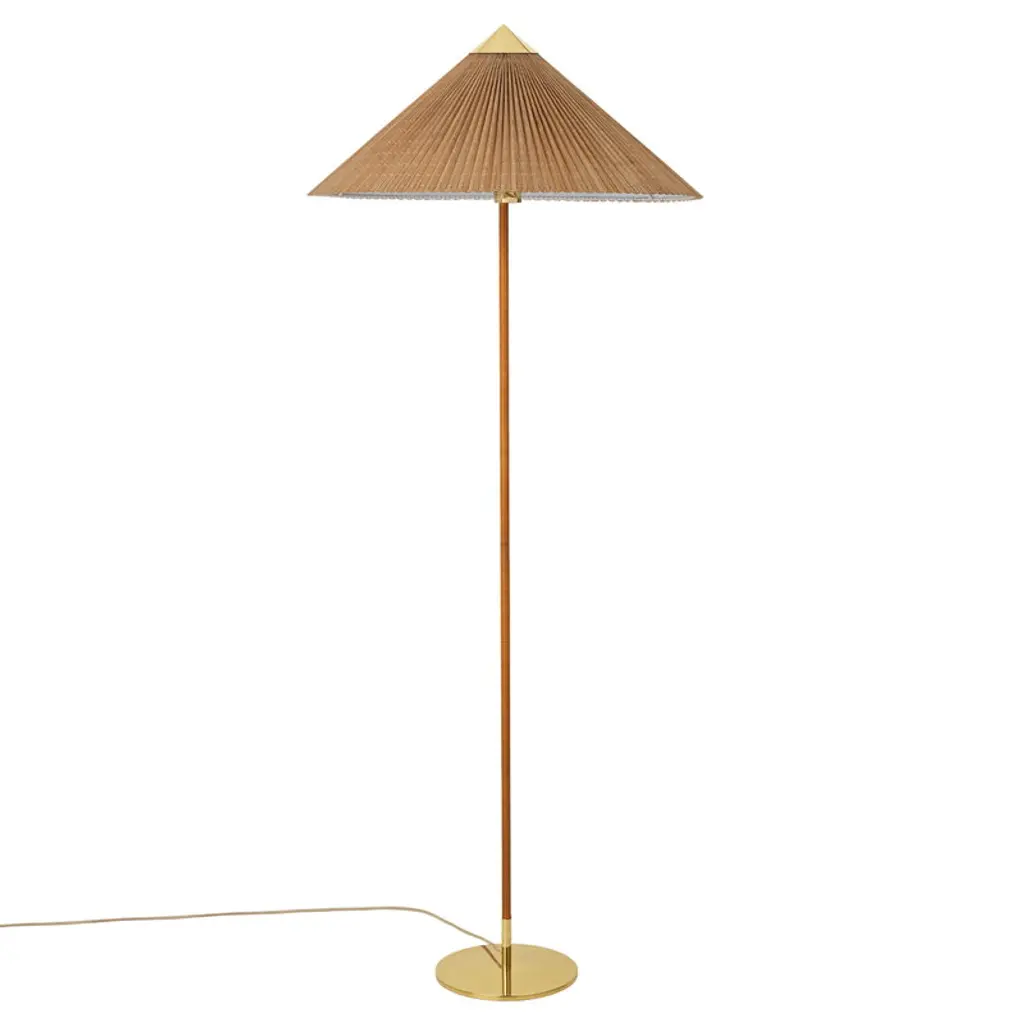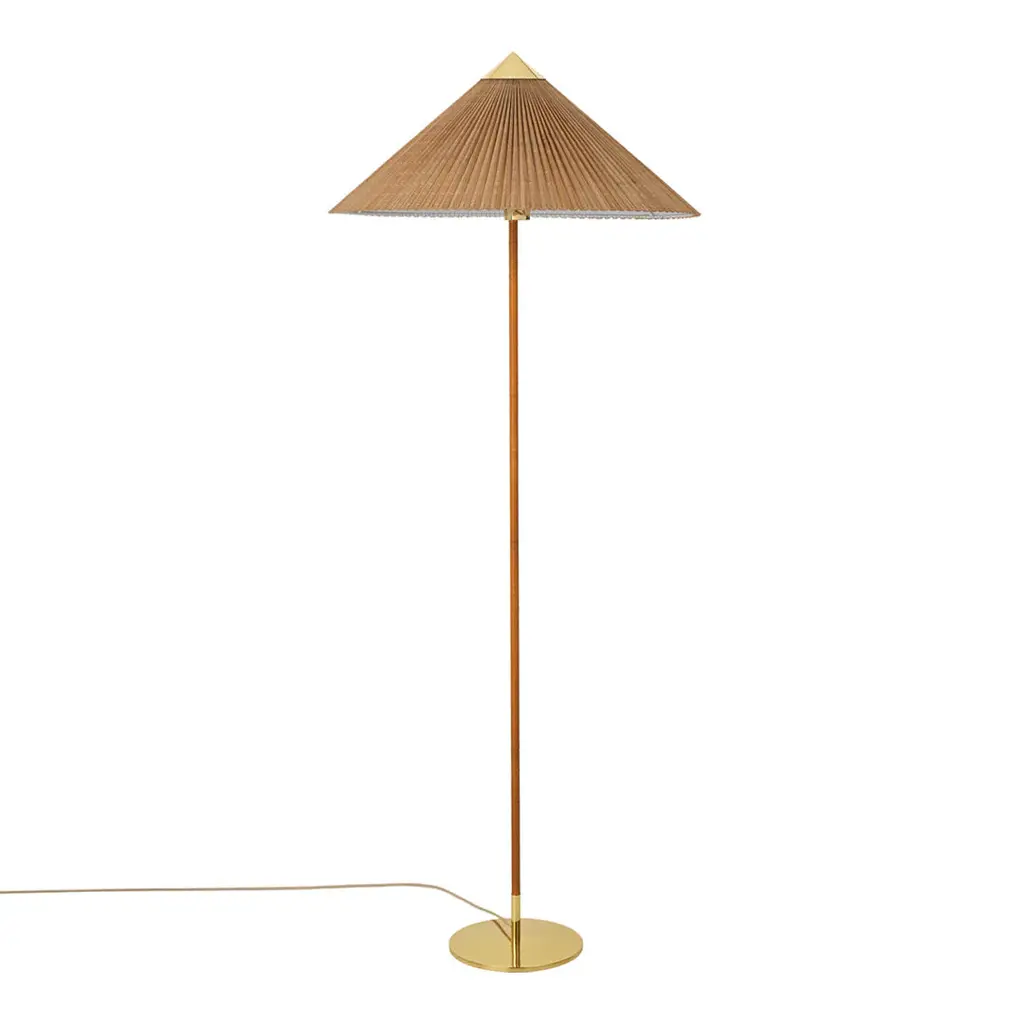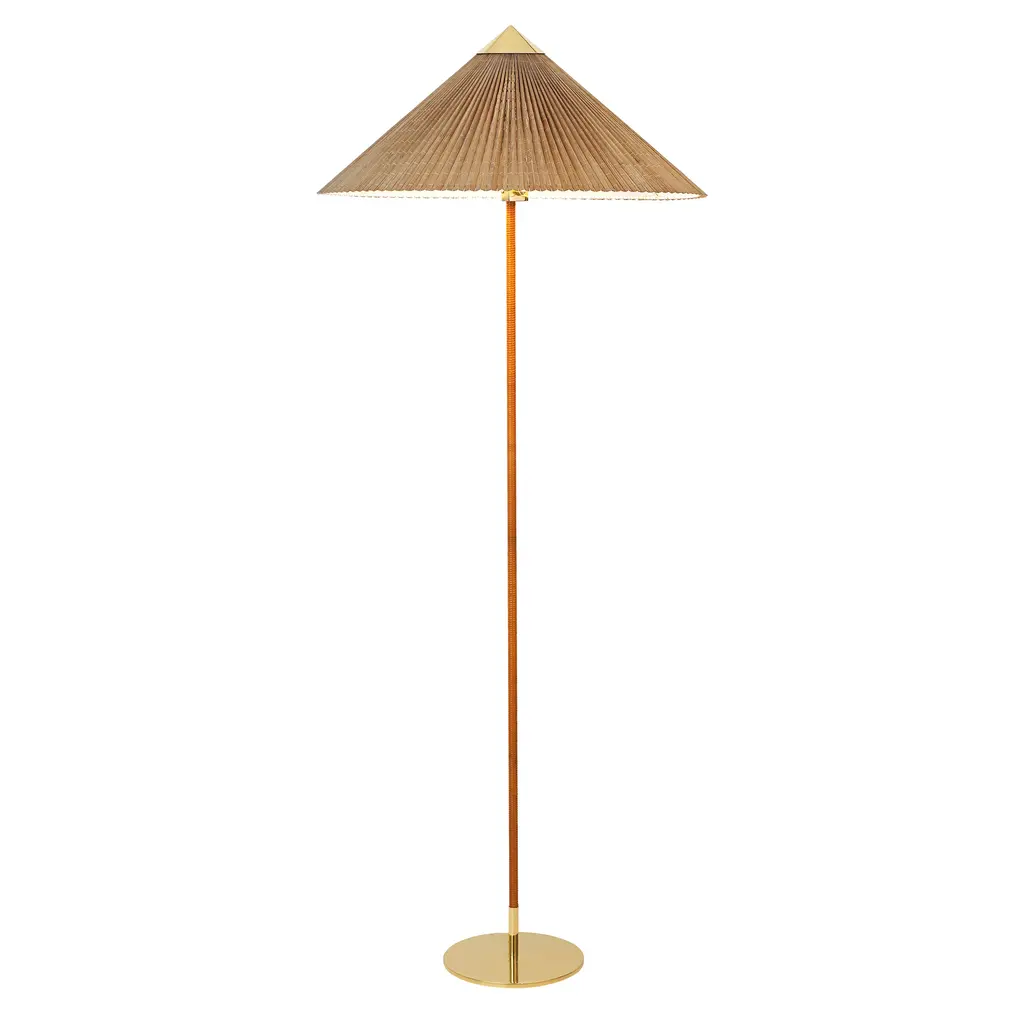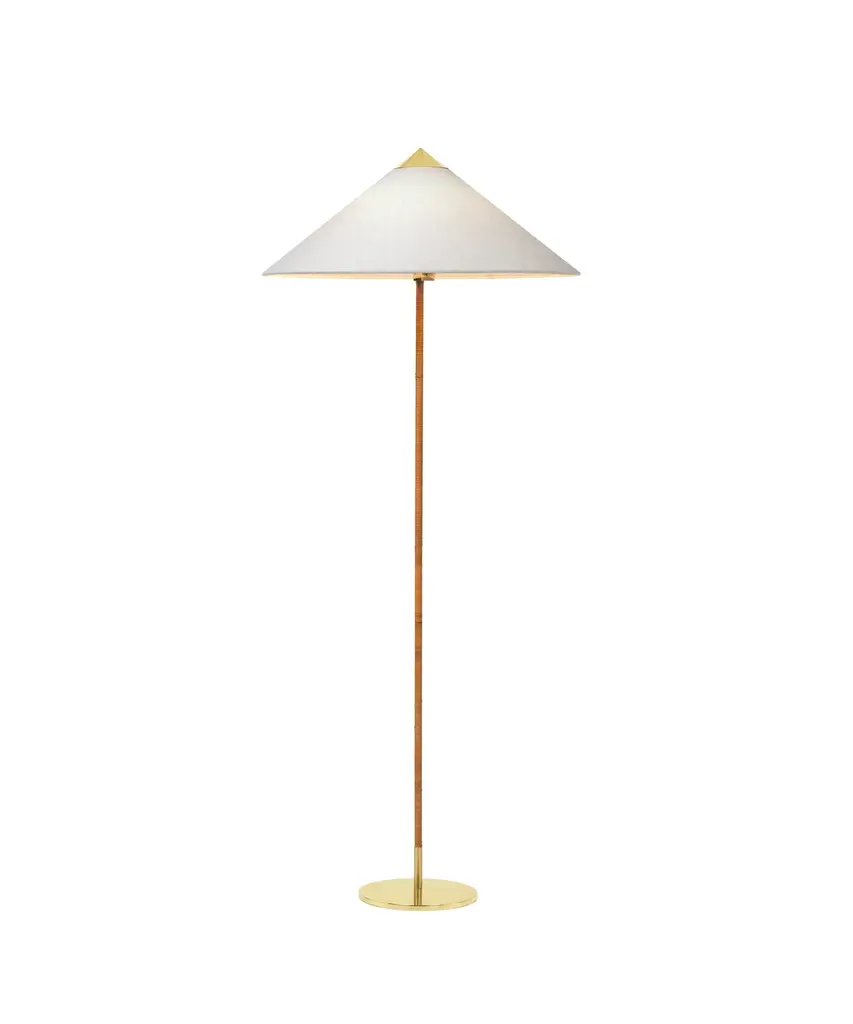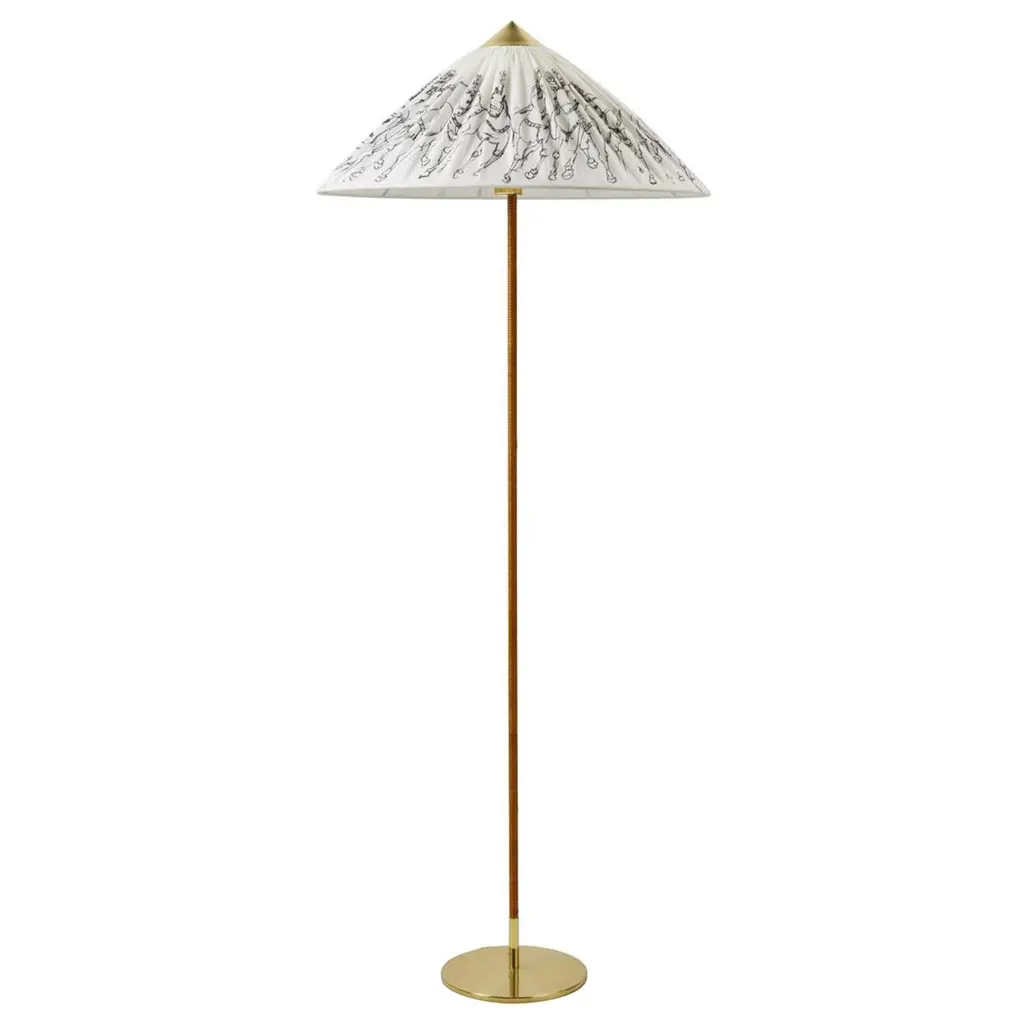
Gubi 9602 Henry Moore Special Edition Floor Lamp By Paavo Tynell
$2,099
1st Dibs
By Paavo TynellGUBI X GARRO ÉDITIONS 9602Special EditionThe 9602 Floor Lamp, also known as “Chinese Hat” was designed by Paavo Tynell in 1938 for the hotel Aulanko. Characterised by its elegant and airy lampshade and rattan-covered stem, the 9602 Floor Lamp shows the designer’s limitless imagination and unparalleled ability to create designs of enduring beauty. Adding a playful, exuberant quality to the top, balanced by the more static form of the base, the 9602 Floor Lamp is perfectly suited for creating a gentle ambient light in the domestic living room.In a new collaboration, GUBI and the boutique Parisian textile house GARRO ÉDITIONS bring together Paavo Tynell and another pioneering figure of the 20th-century: Revered English sculptor and artist Henry Moore. This special edition combines the classically Scandinavian elegance of Tynell's 9602 Floor Lamp with the dynamic energy of Moore’s black-line drawings.Moore’s bold, fluid lines bring a striking dynamism to the lamp. The interplay of his expressive strokes and the shade’s pleats adds an almost three-dimensional depth, capturing the tension and movement within the artwork. The horses seem poised to leap from the linen surface and into the room, giving a kinetic freshness to Tynell’s refined design. ‘Just as art reflects society, so does great design. Like Henry Moore, Paavo Tynell was drawn to nature, organic forms, and classic materials. Almost a century after its creation, the lamp remains as relevant as ever.’ – Héloïse Garro, founder, GARRO ÉDITIONSHARINGEY CIRCUS HORSES BY HENRY MOORE Henry Moore was fascinated by horses and other livestock, and returned to them as inspiration for studies, sketches, and other artworks throughout his career. Personally selected by GARRO ÉDITIONS founder Héloïse Garro on a visit to the Henry Moore Foundation’s archive, The 9602 special edition is adorned with ‘Haringey Circus Horses’, a spontaneous pen-and-ink drawing created by Henry Moore in 1956 during a trip to the circus with his daughter. The drawing portrays the electric moment when the horses first step out into the ring, full of anticipation.
Similar Items