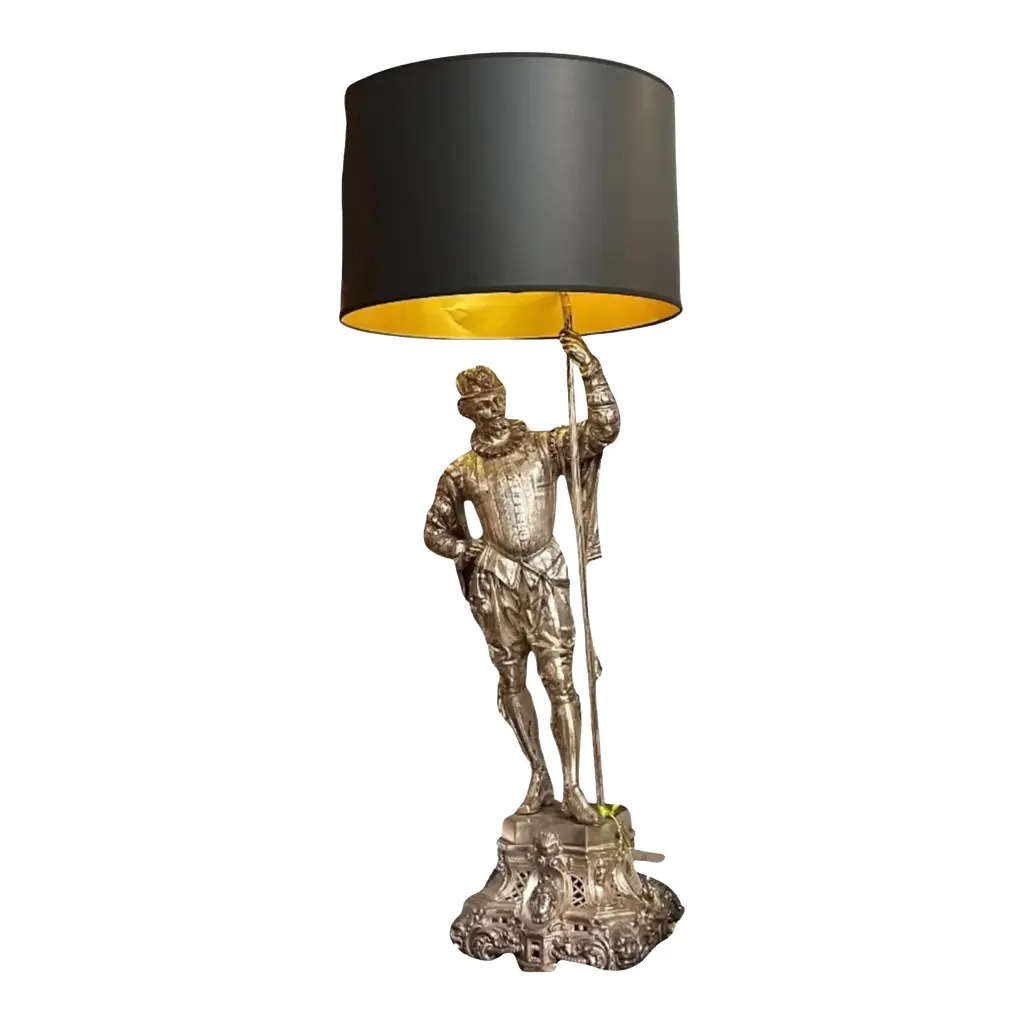
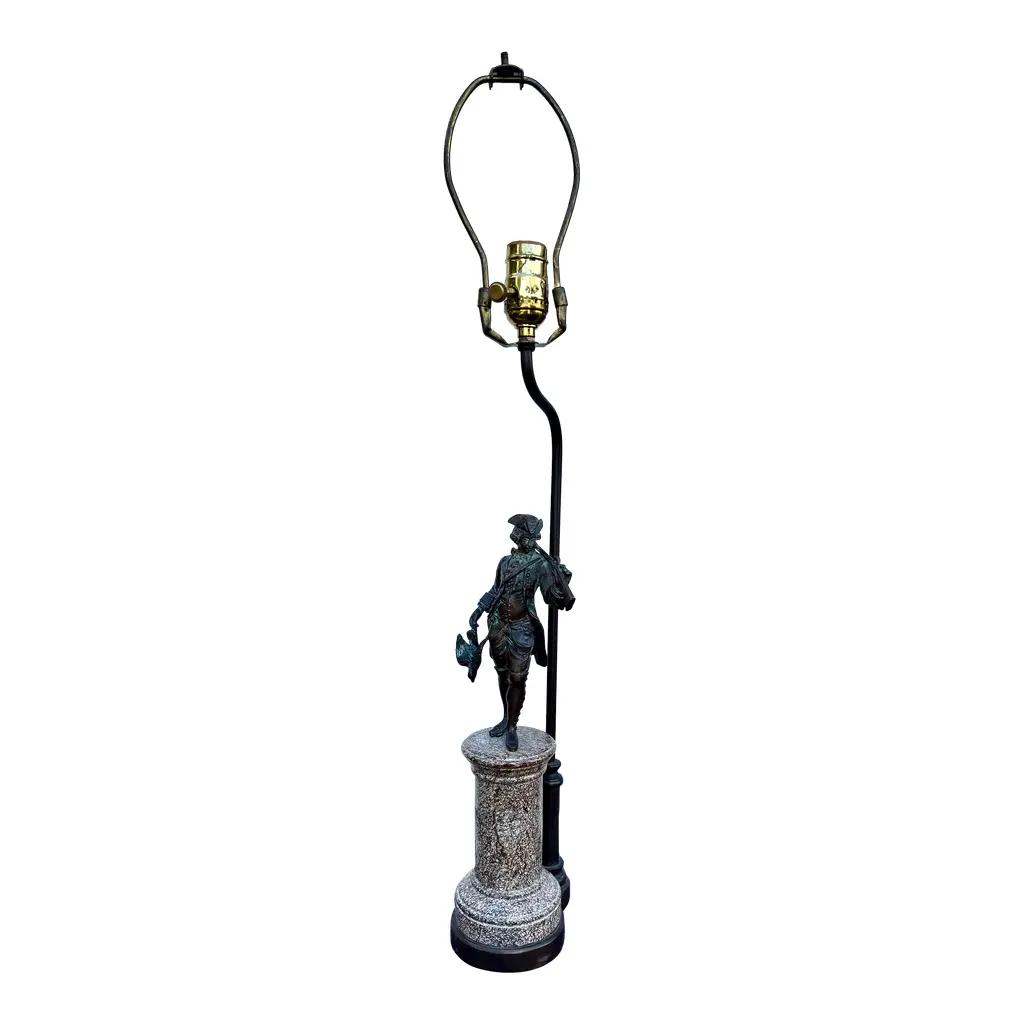
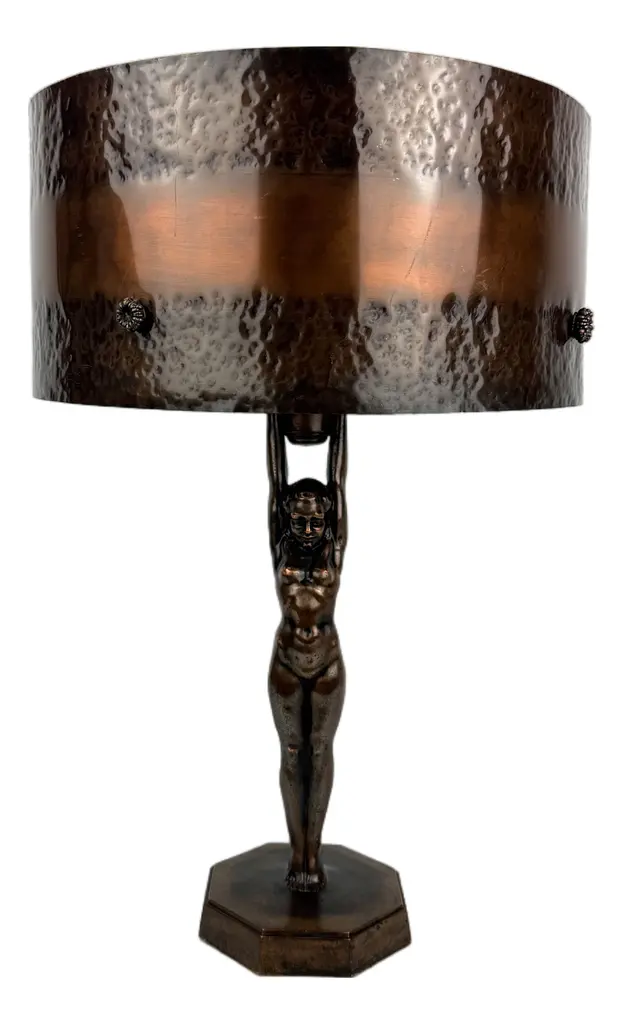
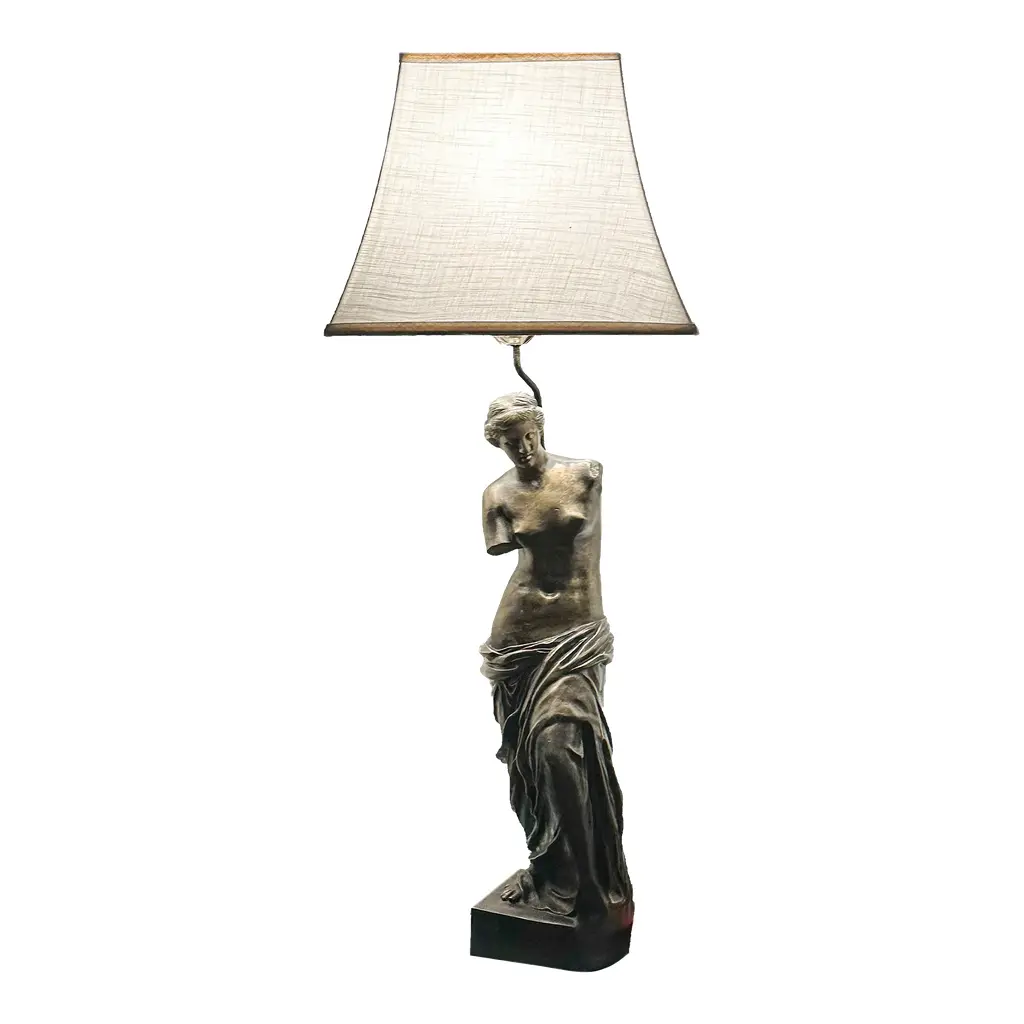
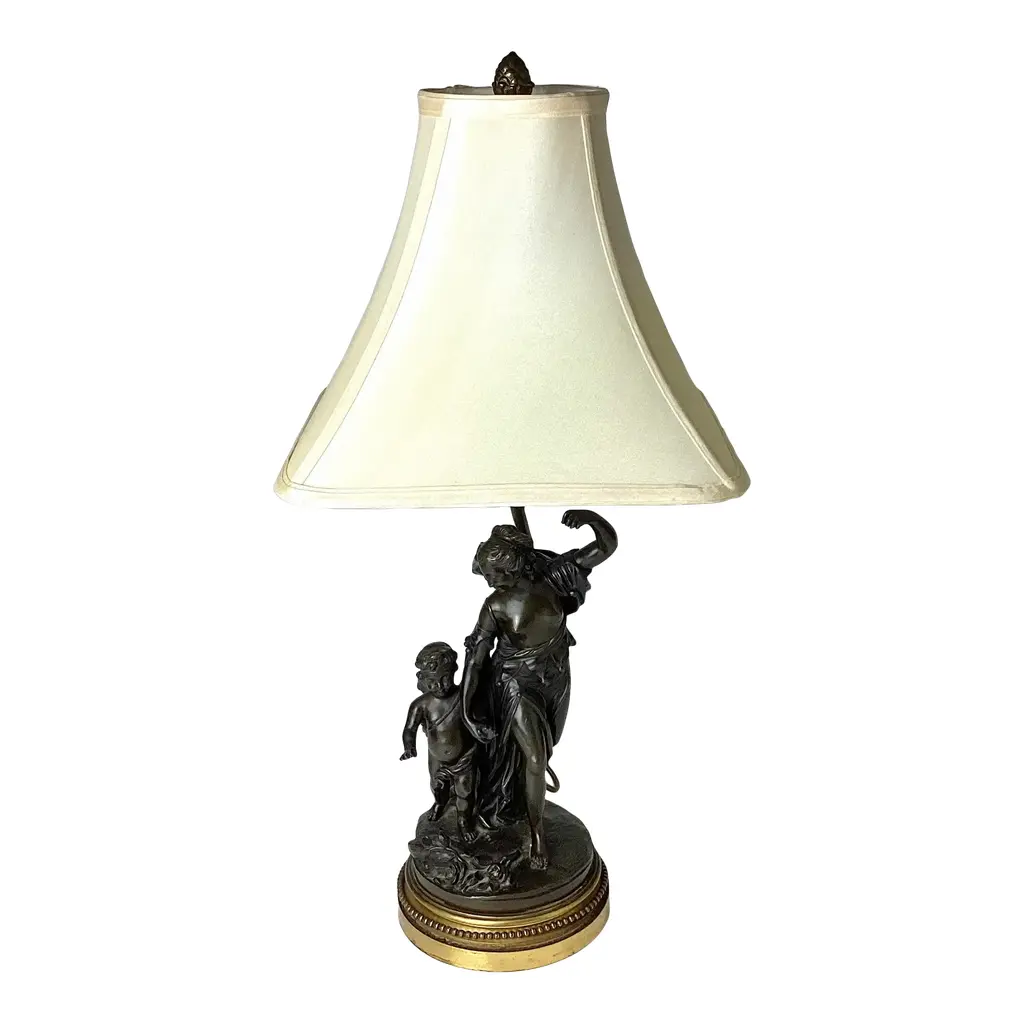
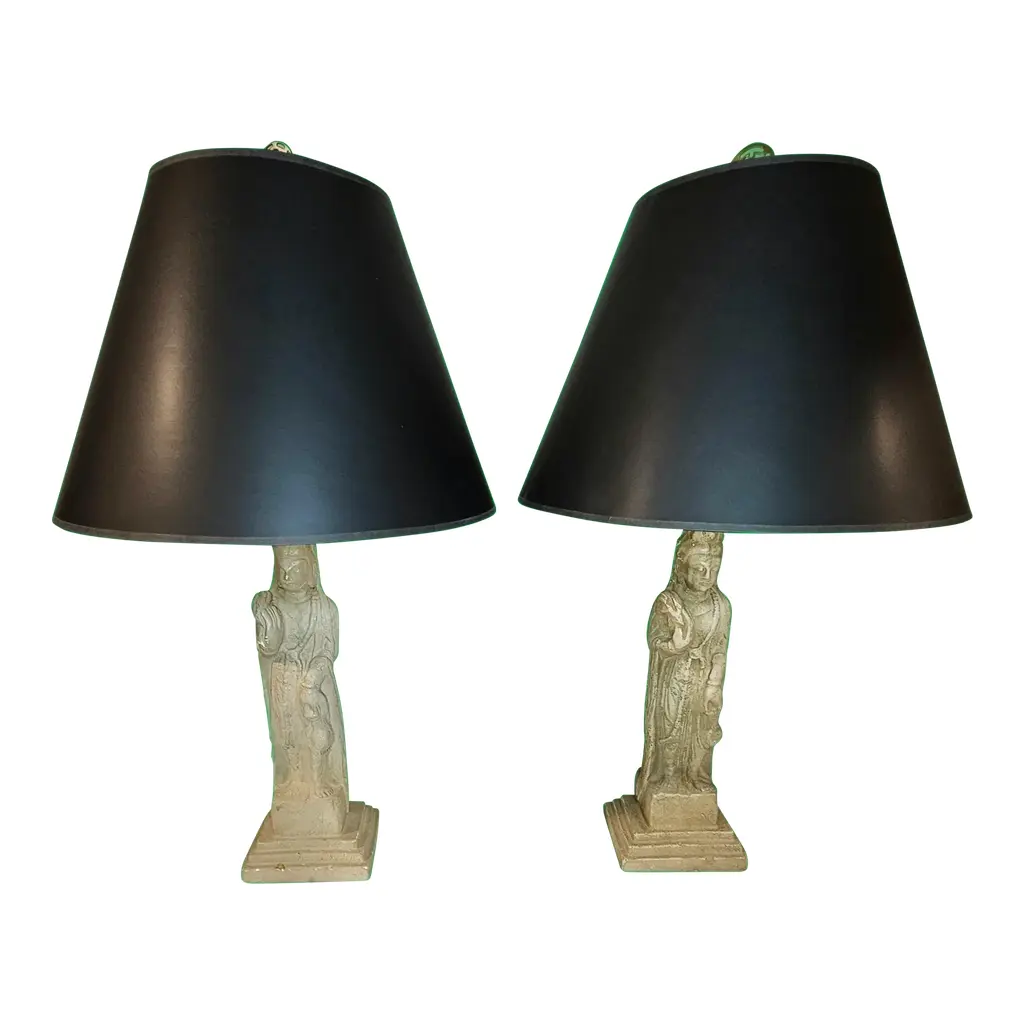
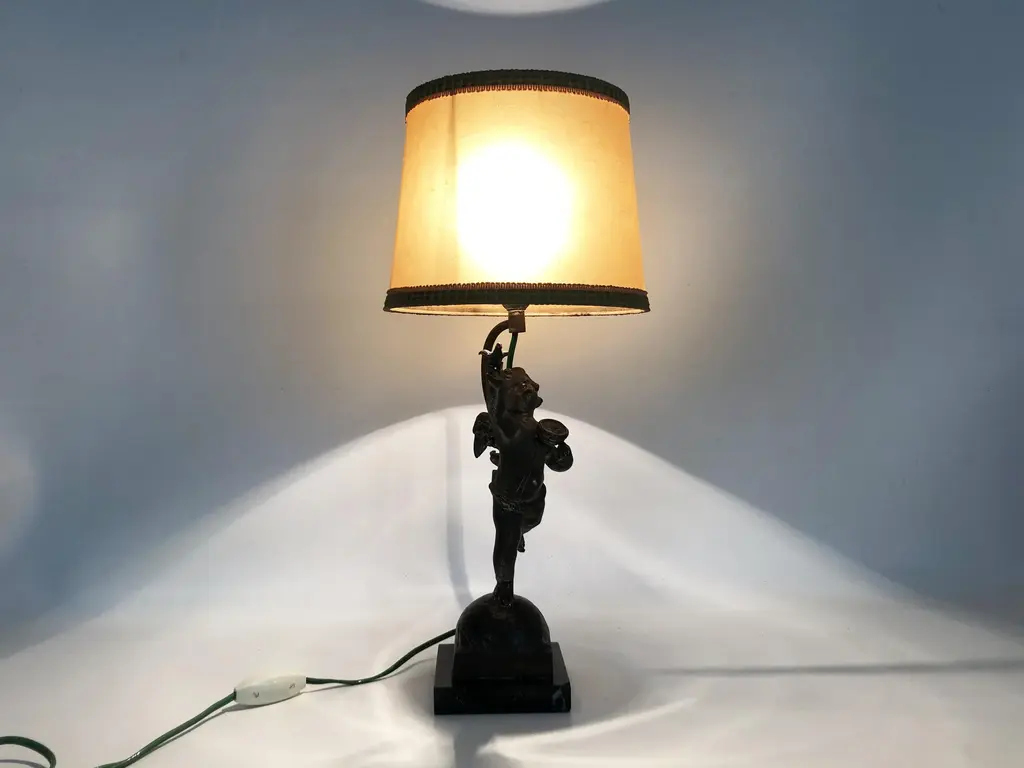
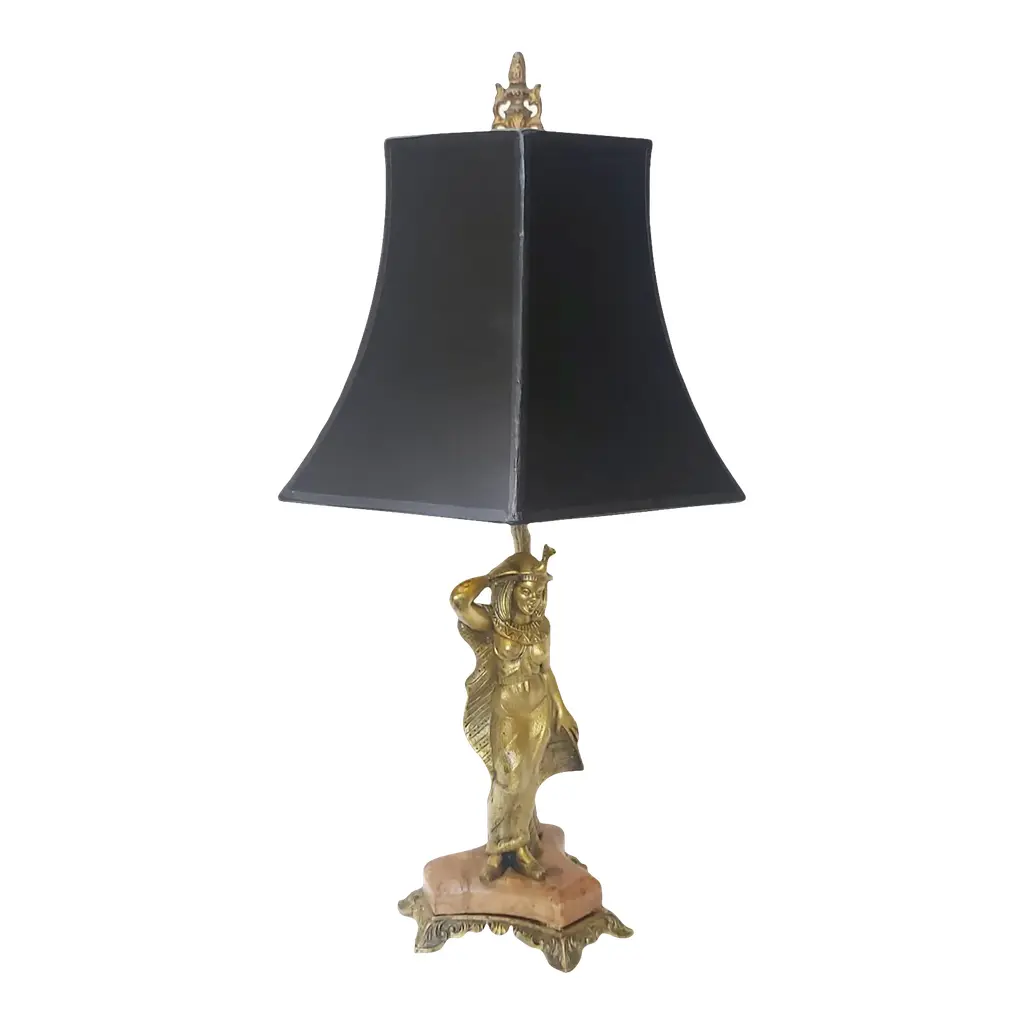
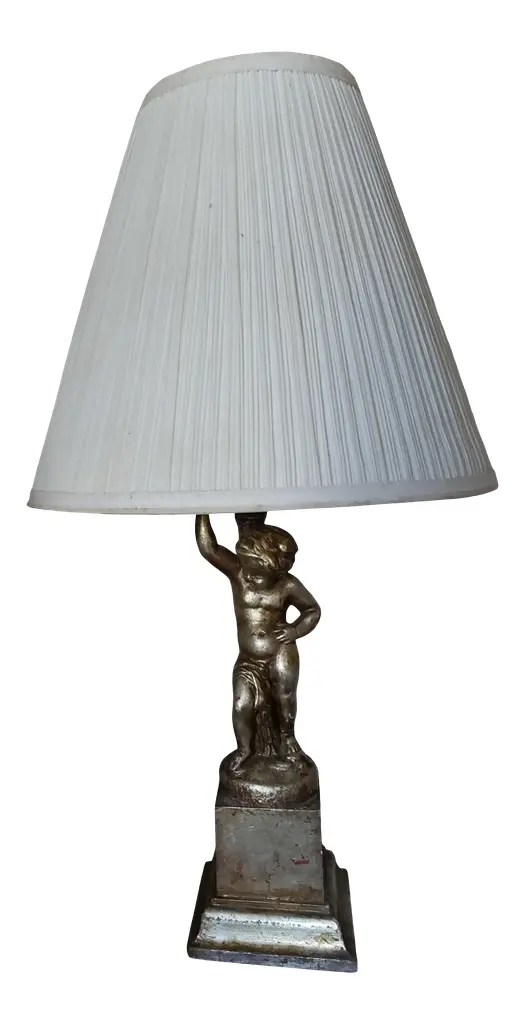
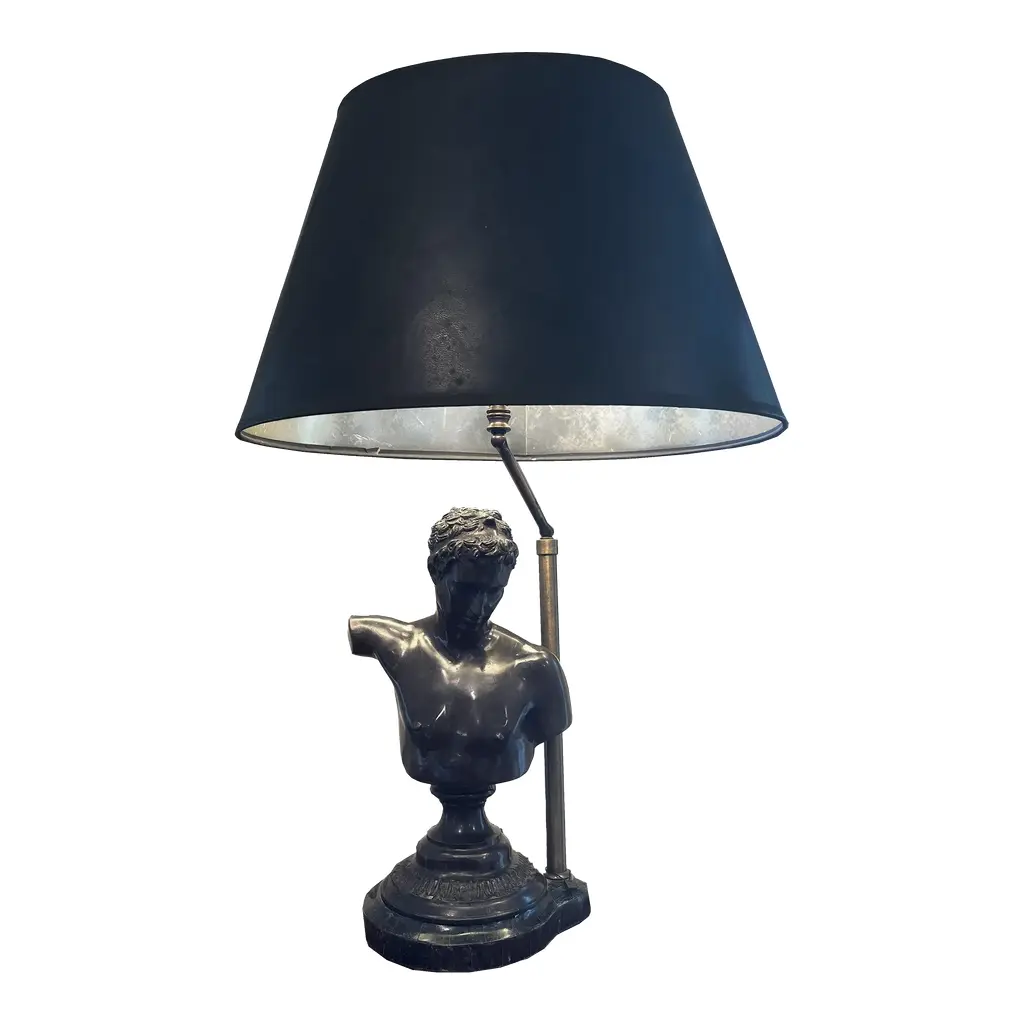
Spelter, a zinc alloy, became a popular material for decorative casting in the 19th century due to its affordability and ability to mimic bronze. This allowed for the mass production of intricate sculptures and decorative objects, including lamp bases, that were accessible to a wider market. Figures often depicted historical characters, mythological scenes, or allegorical representations, reflecting the era's fascination with history and art. Lamps from this period often incorporated figurative bases to add artistic and thematic elements to functional household items. The 'De Guise' reference likely points to a figure from the prominent French House of Guise, known for its influence during the Renaissance and Wars of Religion. Such lamps served not only as sources of light but also as decorative statements, showcasing the owner's taste and interest in historical or artistic themes.
Similar products