Art Nouveau Table By Adolf Loos And Armchairs By Otto Wagner, Vienna, Austria, 1902-1905, Set Of 3
Chairish$19,243
Art Nouveau Table By Adolf Loos And Armchairs By Otto Wagner, Vienna, Austria, 1902-1905, Set Of 3
Chairish$19,243
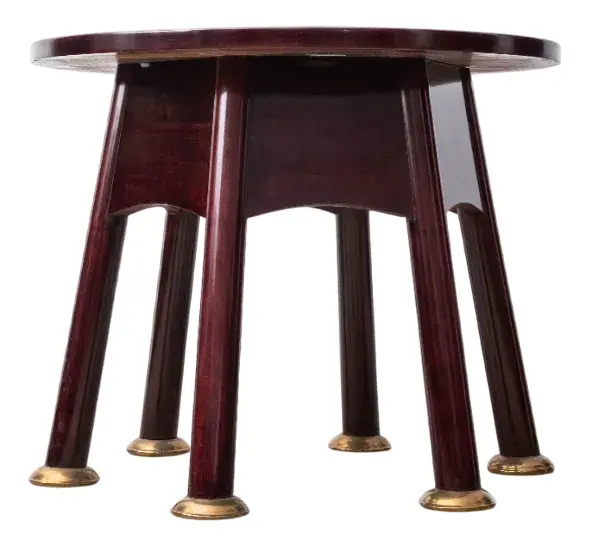
Object: table design: adolf loos (vienna, around 1902) model number: - execution: friedrich otto schmidt (vienna, from 1902) dimensions in cm (h x dm): 72 x 88 material: solid mahogany (rosewood stained and finished with shellac), brass shoes, glass, fabric ("aristide", design: otto prutscher, vienna around 1905) condition: professionally restored provenance: viennese private collection literature: the interior, iv, vienna 1903, p. 16 / paths of modernity - josef hoffmann, adolf loos and the consequences, mak, p. 127 object: armchair “postsparkasse” (2 copies available) design: otto wagner (vienna, around 1905) model number: 6516 execution: gebrüder thonet (from 1907) - thonet testvérek marked dimensions in cm (h x w x d x sh x sb x st): 75 x 55 x 60 x 47 x 44 x 50 materials: bentwood (rosewood-stained & shellac hand-polished), brass, fabric ("aristide", design: otto prutscher, vienna around 1905) condition: professionally restored provenance: budapest literature: thonet central anzeiger, 1905, volume 17, p. 3 / thonet central anzeiger, 1911, volume 31, p. 4 / the interior viii, 1907, p. 48 / il mobile moderno, gebrüder thonet vienna, jacob & josef kohn, giovanni renzi, 2008, pp. 130-131 / wagner, hoffmann, loos and viennese modernism, eva b. Ottilinger, 2018, p. 37 additional information: the ensemble, consisting of two armchairs from model no. 6516 by otto wagner and a representative of the so-called “à la loos” tables, was not originally designed to fit together. We only merged the two design positions for “art historical reasons”, as wagner's work was one of the few viennese designs that adolf loos did not criticize. in 1902, adolf loos designed a table for the living room of the art historian hugo haberfeld, which he later modified in a modified form for other customers such as dr. Otto and auguste stoessl implemented. The renowned art furniture carpenter friedrich otto schmidt recognized the demand for this reduced, functional design language and began producing similar tables - often with six legs - as “à la loos” tables. Loos, an influential architectural theorist and critic of vienna's fin de siècle, advocated objective, unadorned design in his famous essay “ornament and crime.” the armchair no. 6516, which wagner designed for the austrian postal savings bank and which was produced by the thonet brothers from 1905, is an exemplary work of viennese modernism. In his “utility style,” wagner combined clear lines with functional, industrial elements, such as the characteristic aluminum decorations. At the same time, he used different materials to structure social hierarchies within the bank. The chair was later included in the regular thonet range and remained on sale in various versions. today's combination of wagner and loos not only reflects two outstanding design positions of viennese modernism, but also illustrates the tensions and overlaps in the design debate of the early 20th century. I have official proof of authenticity such as vintage catalogs, designer records, or other literature sources and take full responsibility for any authenticity issues arising from misattribution
Similar products