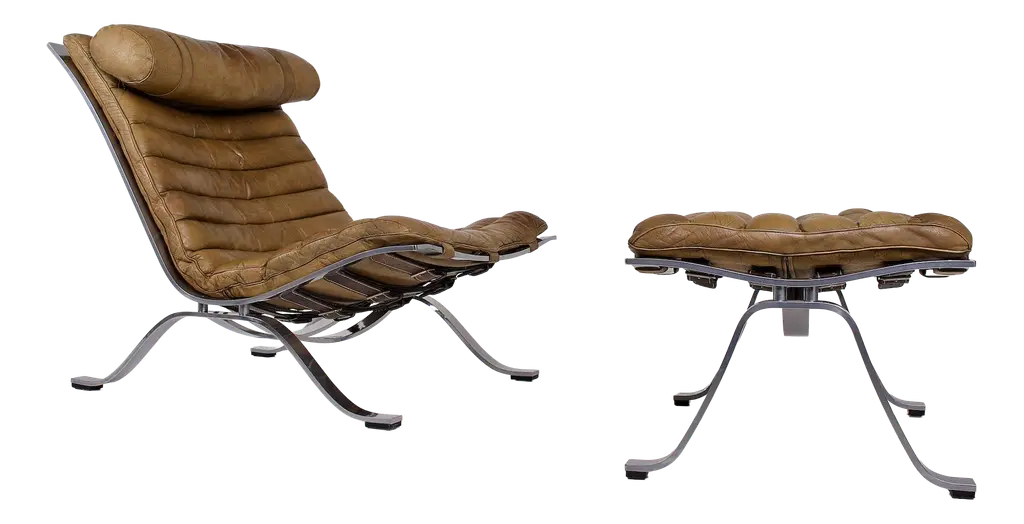
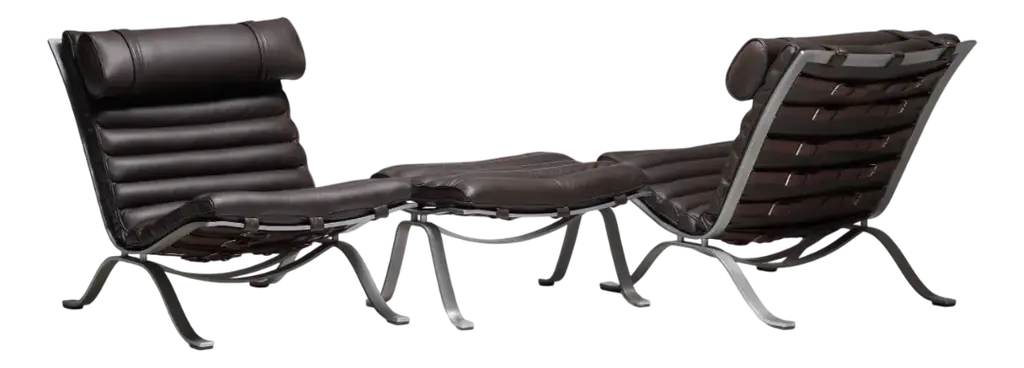
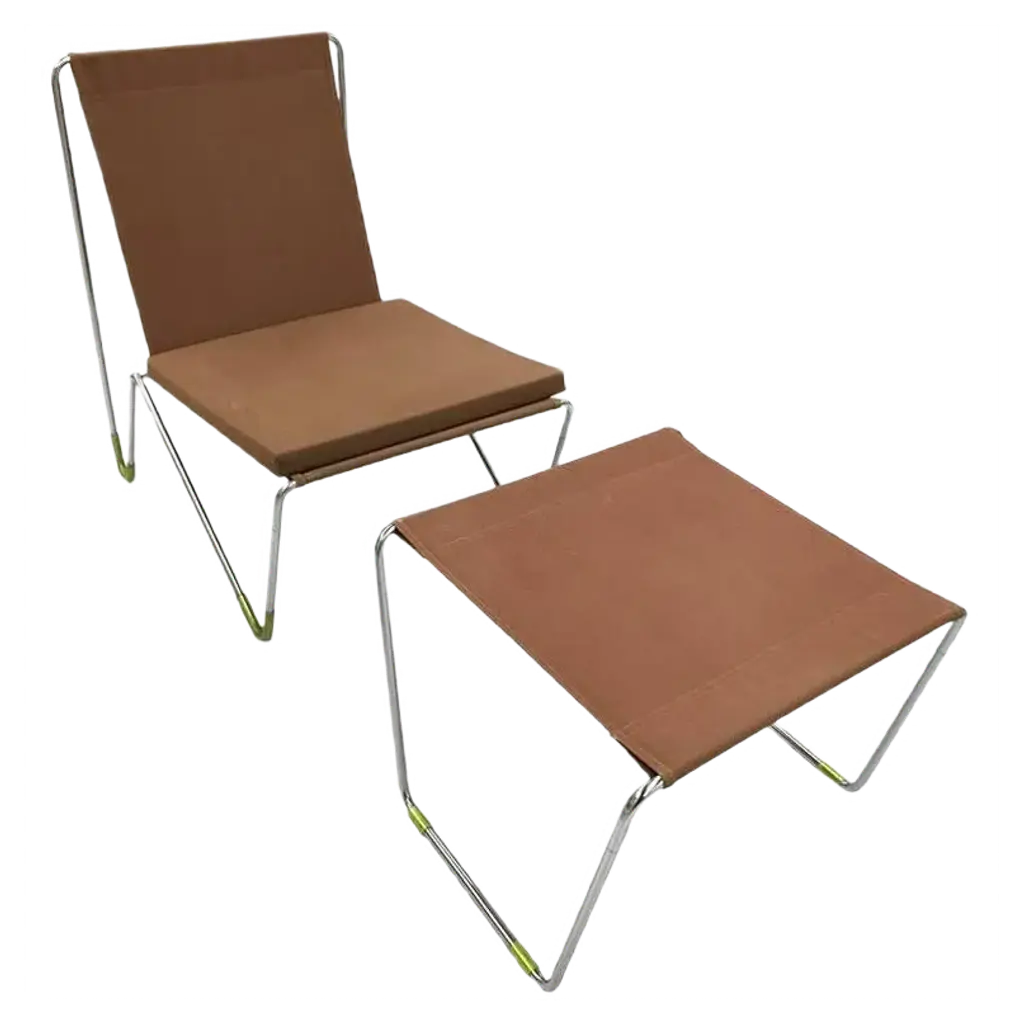
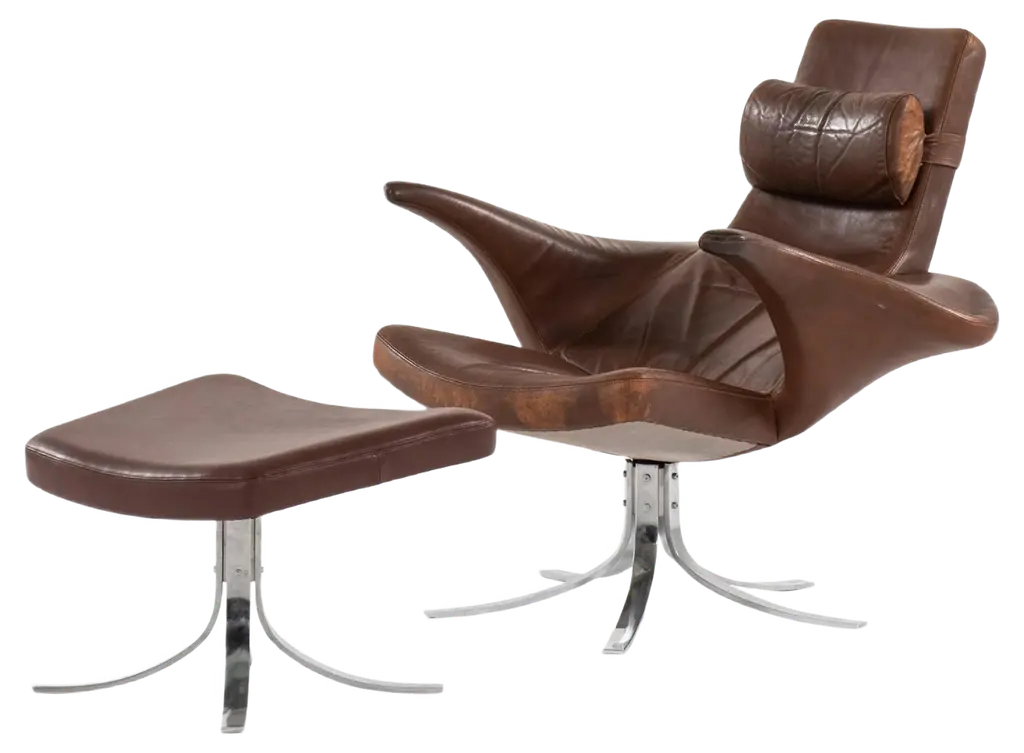
This rare easy chair with matching stool, model ari, designed by arne norell and produced by arne norell ab in aneby, sweden during the 1970s, stands as one of norell’s most iconic and celebrated designs. Known for its blend of modernist elegance and superb craftsmanship, the ari chair was honored posthumously in 1973 as “furniture of the year” by the british furniture manufacturers association. Both the chair and stool feature a highly sculptural frame made of polished steel, creating a floating, weightless appearance while ensuring strong durability. The seat and backrest are upholstered in thick, high-quality leather that retains its original green-brown patina, enriched with depth and character developed over time. Horizontal channel stitching across the cushions not only adds to the visual structure but also enhances comfort with a luxurious padded surface. The cushions are detachable and held in place by leather straps and buckles, a distinctive detail in norell’s design language that marries functionality with artisanal finesse. The integrated cylindrical headrest, covered in matching leather, offers ergonomic support for the neck. The accompanying stool complements the chair perfectly, sharing the same suspended, floating steel frame and featuring a leather seat designed to provide comfortable leg support. Together, these pieces create a harmonious sculptural and functional duo. The ari chair and stool epitomize mid-century scandinavian modern style, skillfully combining natural materials like leather with sleek, industrial elements such as polished steel. The chair measures 65 cm wide, 95 cm deep, and 77 cm high (25.6 × 37.4 × 30.3 inches), with a seat height of 33 cm (13 inches). The stool measures 65 cm wide, 50 cm deep, and 36 cm high (25.6 × 19.7 × 14.2 inches). Additional information: material: leather, steel style: industrial, mid century, scandinavian modern producer: arne norell ab period: 1970s country: sweden dimensions: chair: w: 65 / d: 95 / h: 77 / seat h: 33 stool: w: 65 / d: 50 / h: 36 this piece is attributed to the mentioned designer/maker. It has no attribution mark and no official proof of authenticity, however it is well documented in design history. I take full responsibility for any authenticity issues arising from misattribution
Similar products