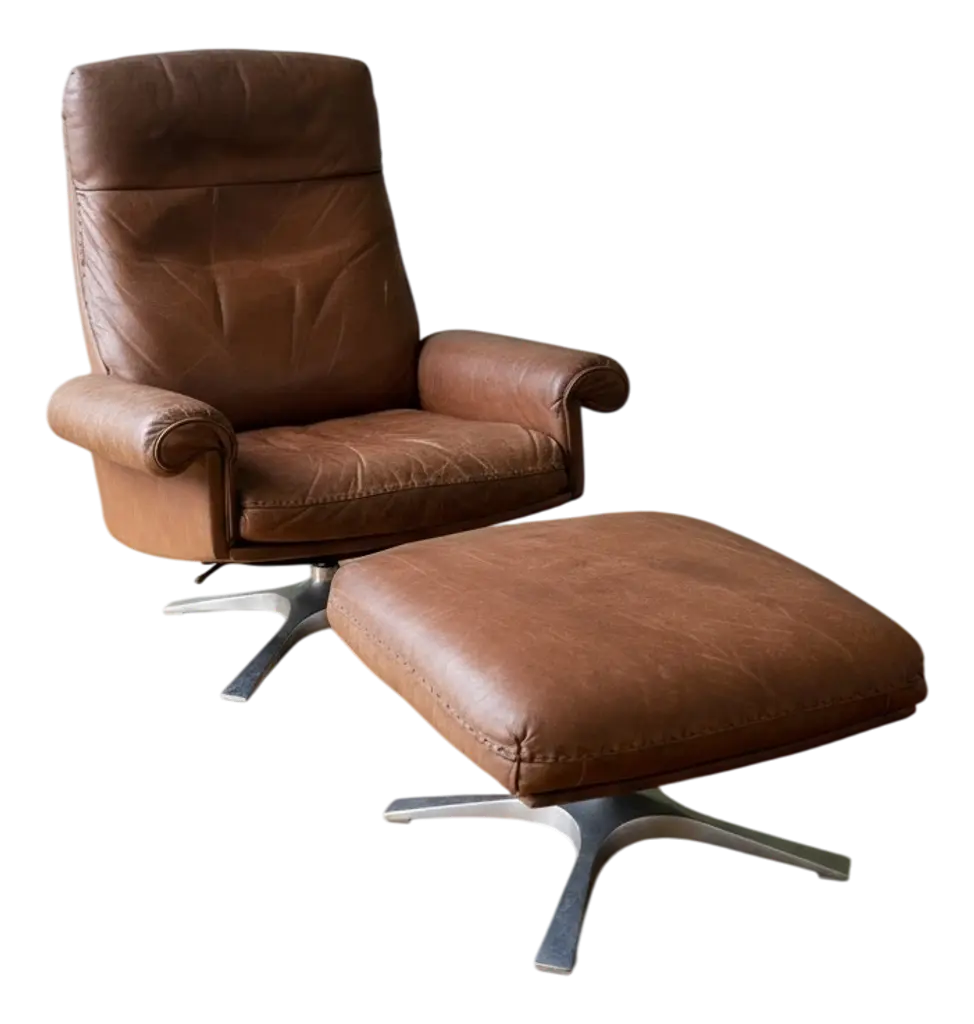
Set Of Swivel Lounge Chair And Ottoman In Cognac Leather Attributed To Eugen Schmidt, Germany, 1970s, Set Of 2
Chairish$4,595
Set Of Swivel Lounge Chair And Ottoman In Cognac Leather Attributed To Eugen Schmidt, Germany, 1970s, Set Of 2
Chairish$4,595
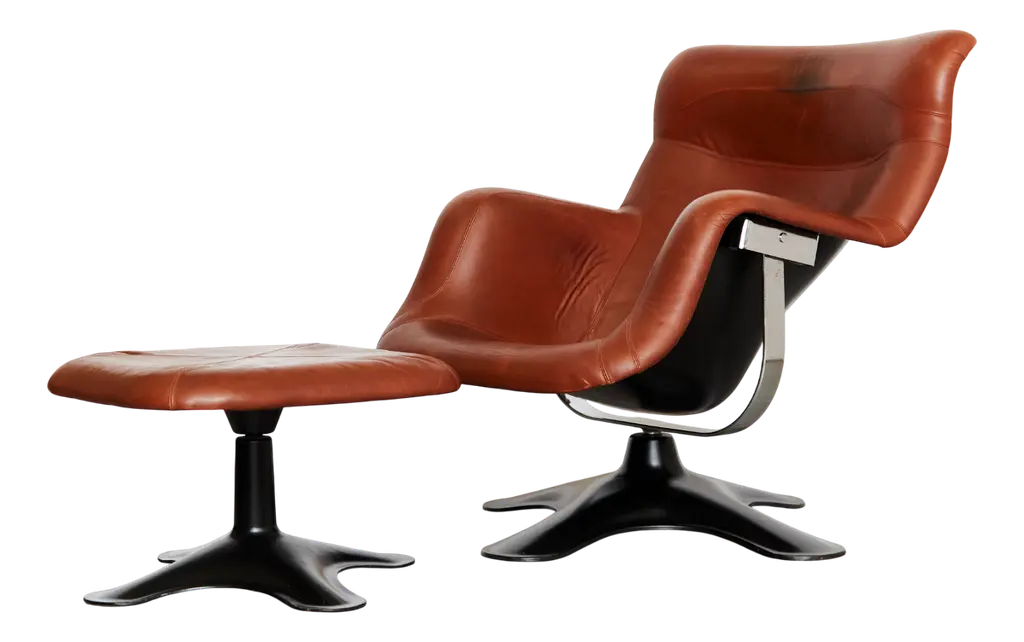
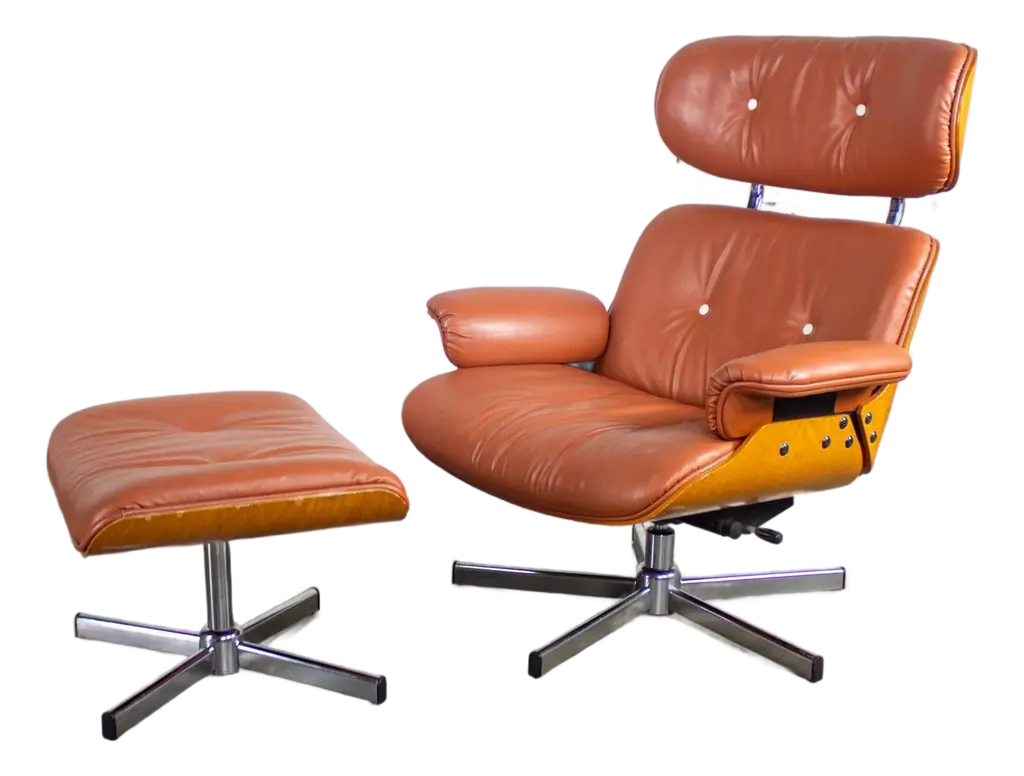
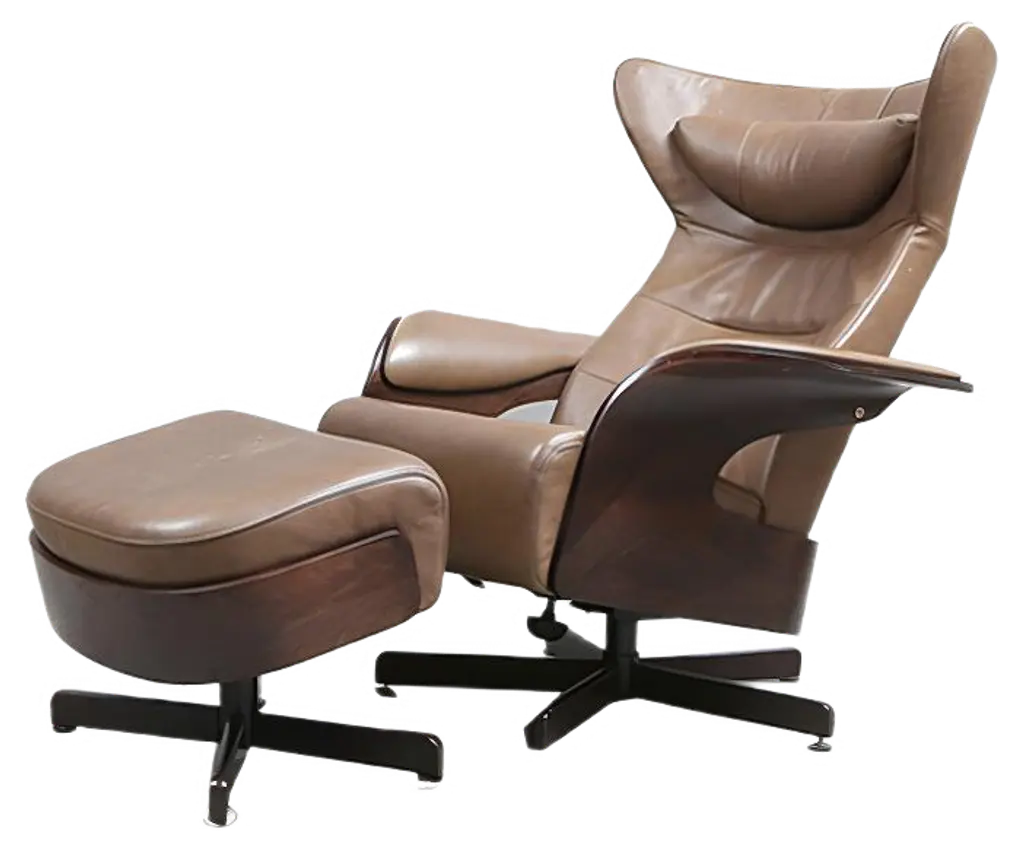
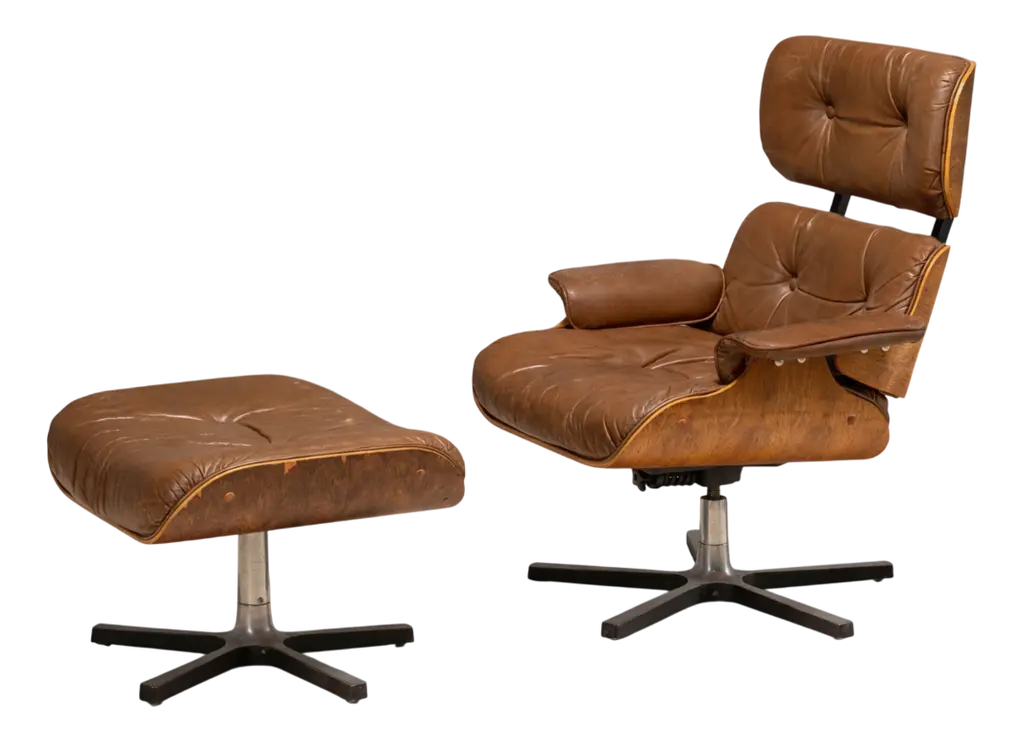
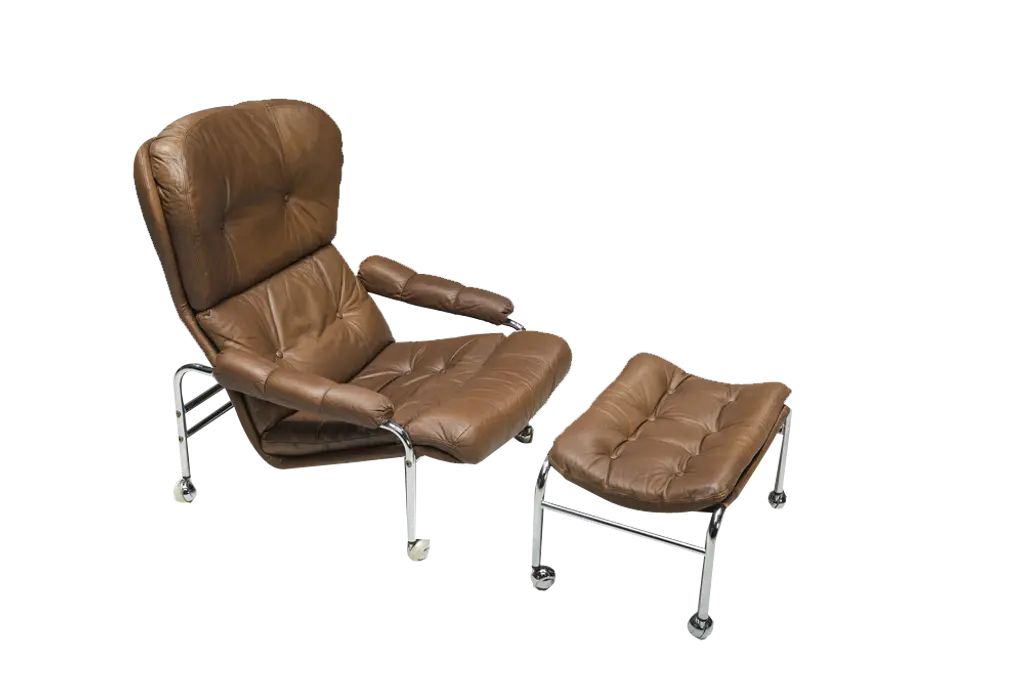
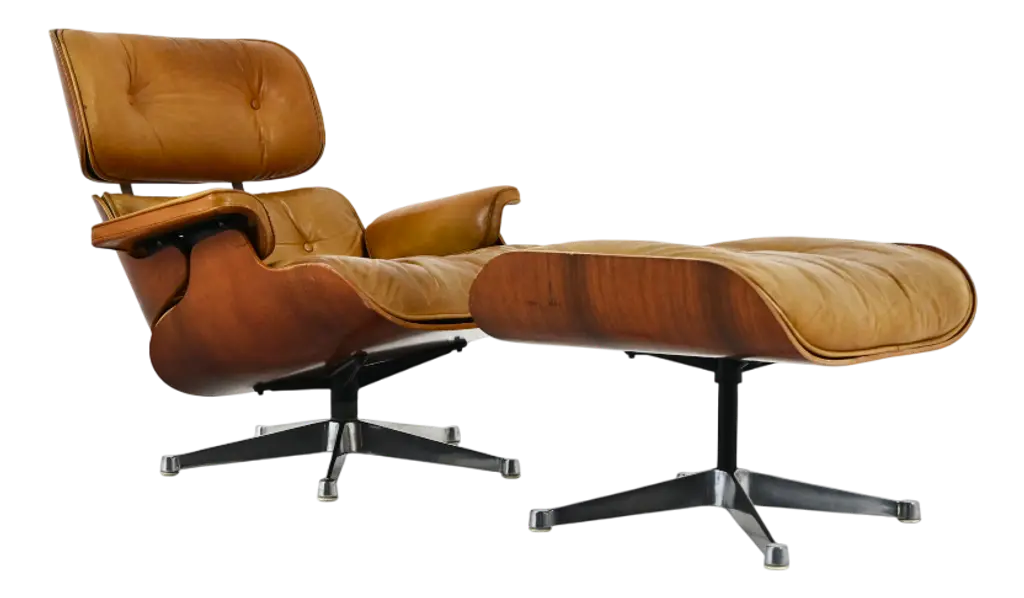
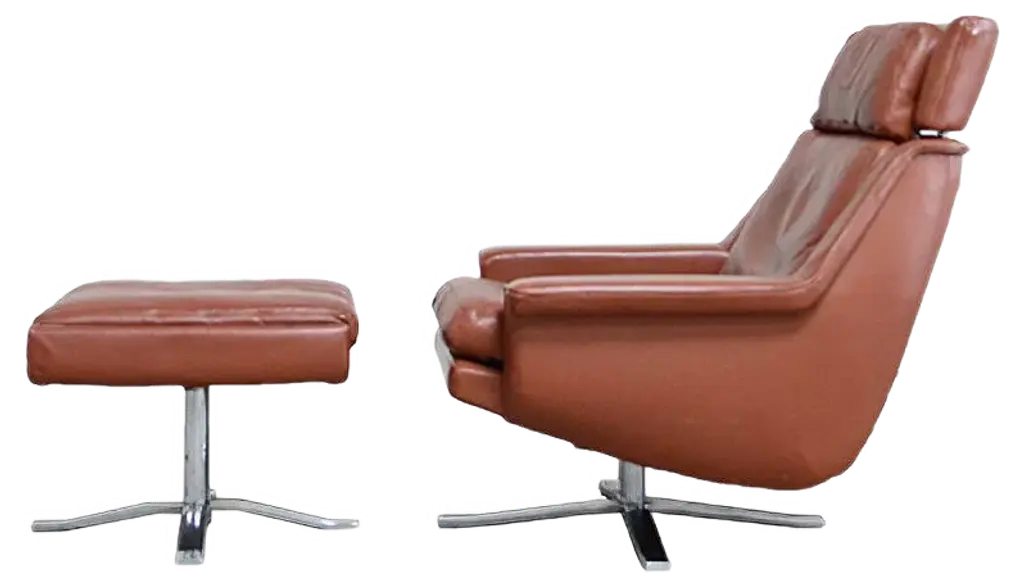
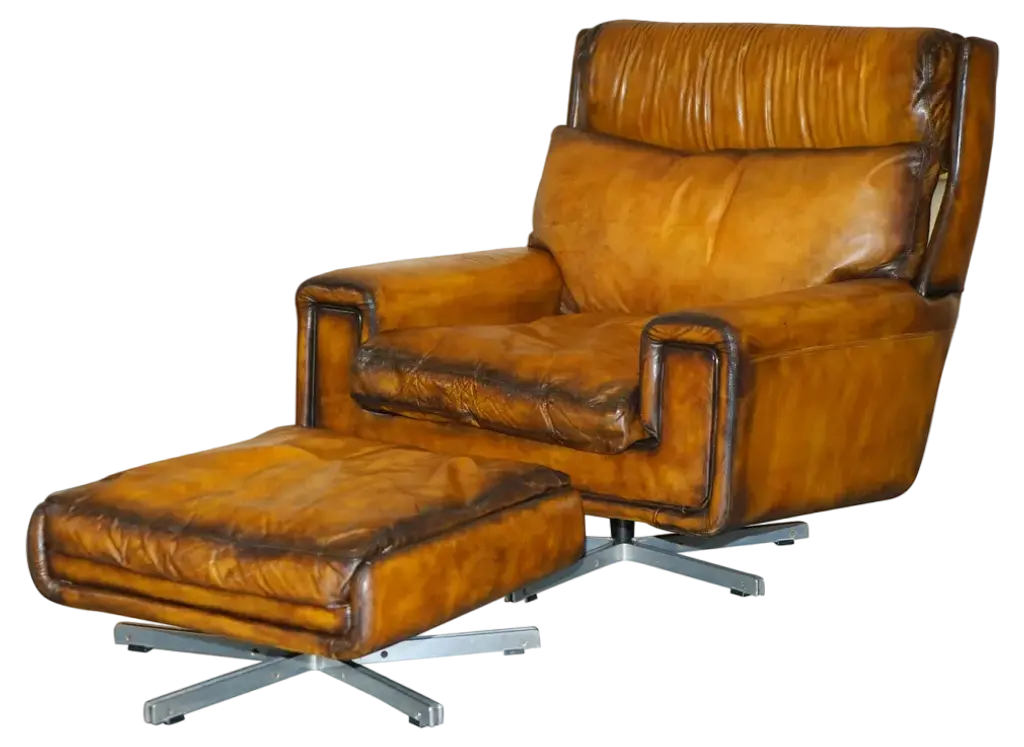
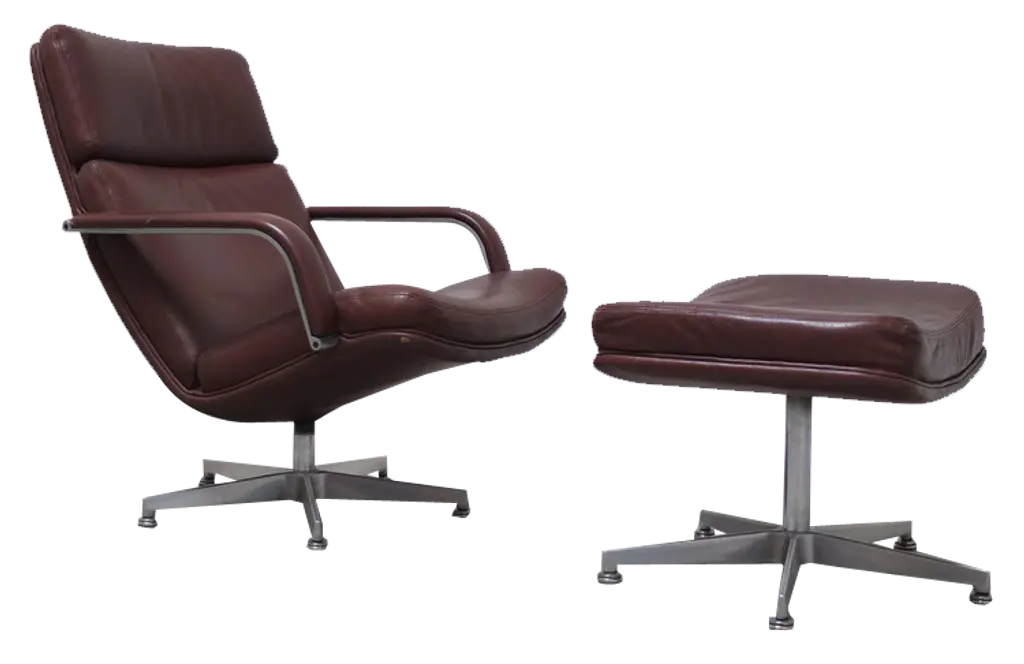
Eugen Schmidt Swivel Lounge Chair and Ottoman in Cognac Leather, Germany, 1970s Designed by Eugen Schmidt in the 1970s, this iconic lounge chair and ottoman set is a masterclass in modern German craftsmanship. Combining sculptural elegance with ergonomic comfort, it remains a timeless addition to both vintage and contemporary interiors. The frame is crafted from solid beechwood, shaped with soft organic curves that cradle the seat and armrests in one continuous gesture. The wood has a rich, warm tone, contrasting beautifully with the original cognac leather upholstery, which features deep button tufting and generous padding. The leather has developed a subtle patina over time, showcasing its natural aging and quality. The chair swivels smoothly on a five-star chromed metal base, engineered for strength and stability. The matching ottoman is supported by a distinctive four-star chrome base, echoing the same design language in a more compact form. Together, the duo invites long hours of relaxed lounging, reading, or conversation. This set reflects the influence of both Scandinavian and Bauhaus design, while maintaining a distinctly German sense of precision and structure. The proportions are generous yet well-balanced, offering visual lightness and physical comfort. In very good vintage condition, with signs of age and wear that enhance the authenticity and warmth of the materials. The combination of solid wood, quality leather, and clean geometry makes this an ideal collector’s piece or a standout in any interior. Dimensions – Chair Width: 70 cm (27.6 in) Depth: 93 cm (36.6 in) Height: 90 cm (35.4 in) Seat Height: 45 cm (17.7 in) Dimensions – Ottoman Width: 60 cm (23.6 in) Depth: 65 cm (25.6 in) Height: 45 cm (17.7 in) This piece is attributed to the mentioned designer/maker. It has no attribution mark and no official proof of authenticity, however it is well documented in design history. I take full responsibility for any authenticity issues arising from misattribution
Similar products