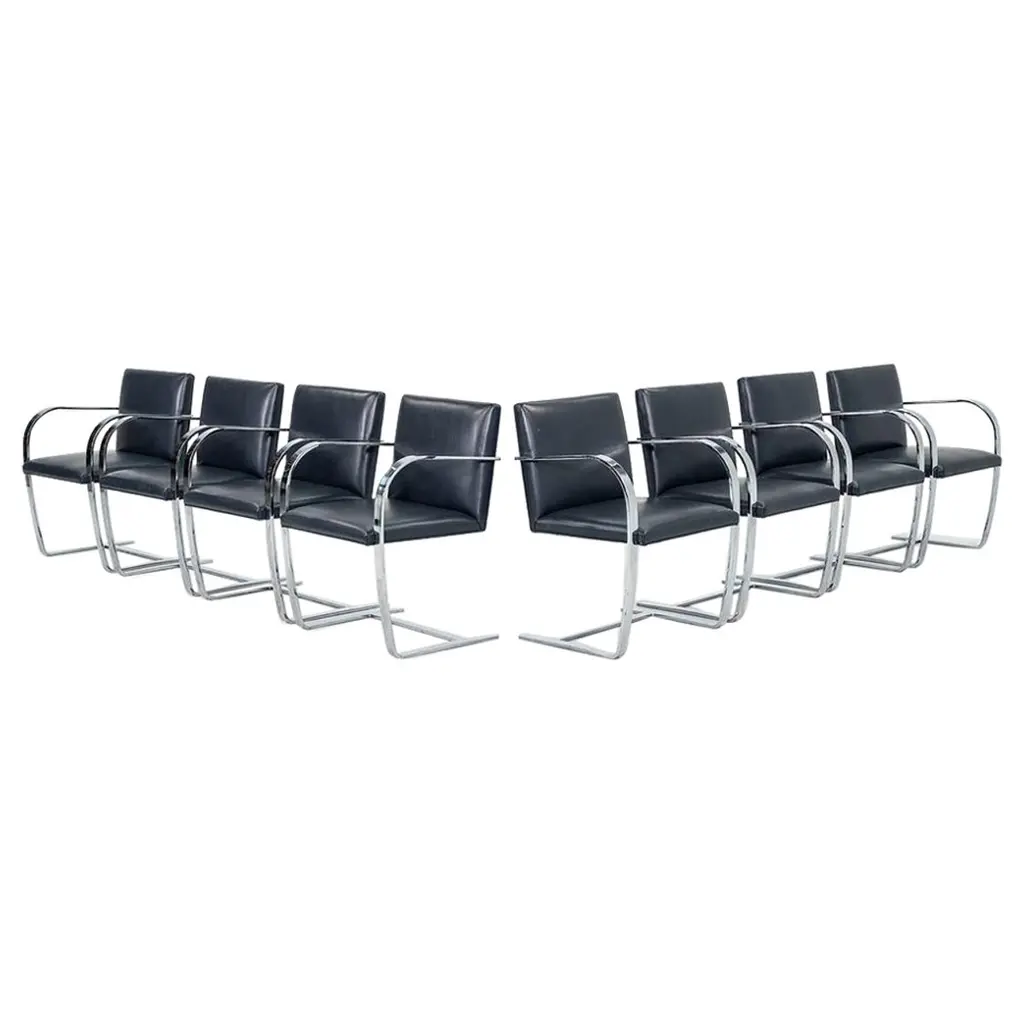
Eight Black Hammered Leather Chairs In Charles Eames Style 1980s
$3,063
1st Dibs
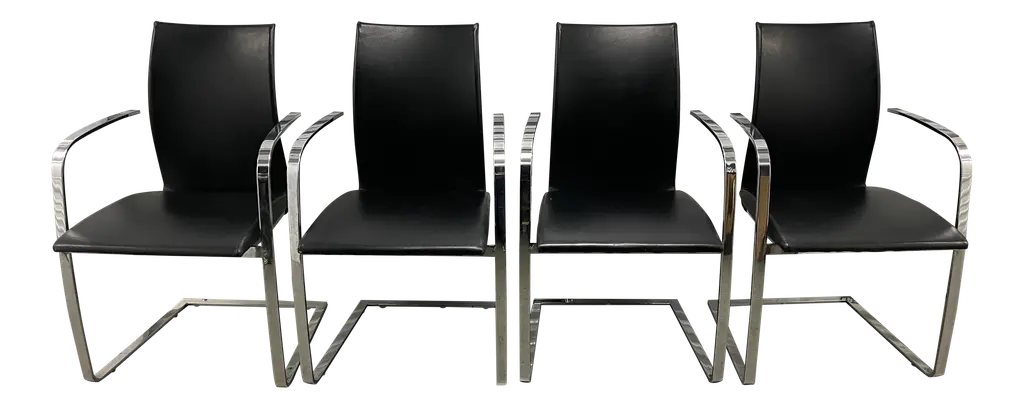
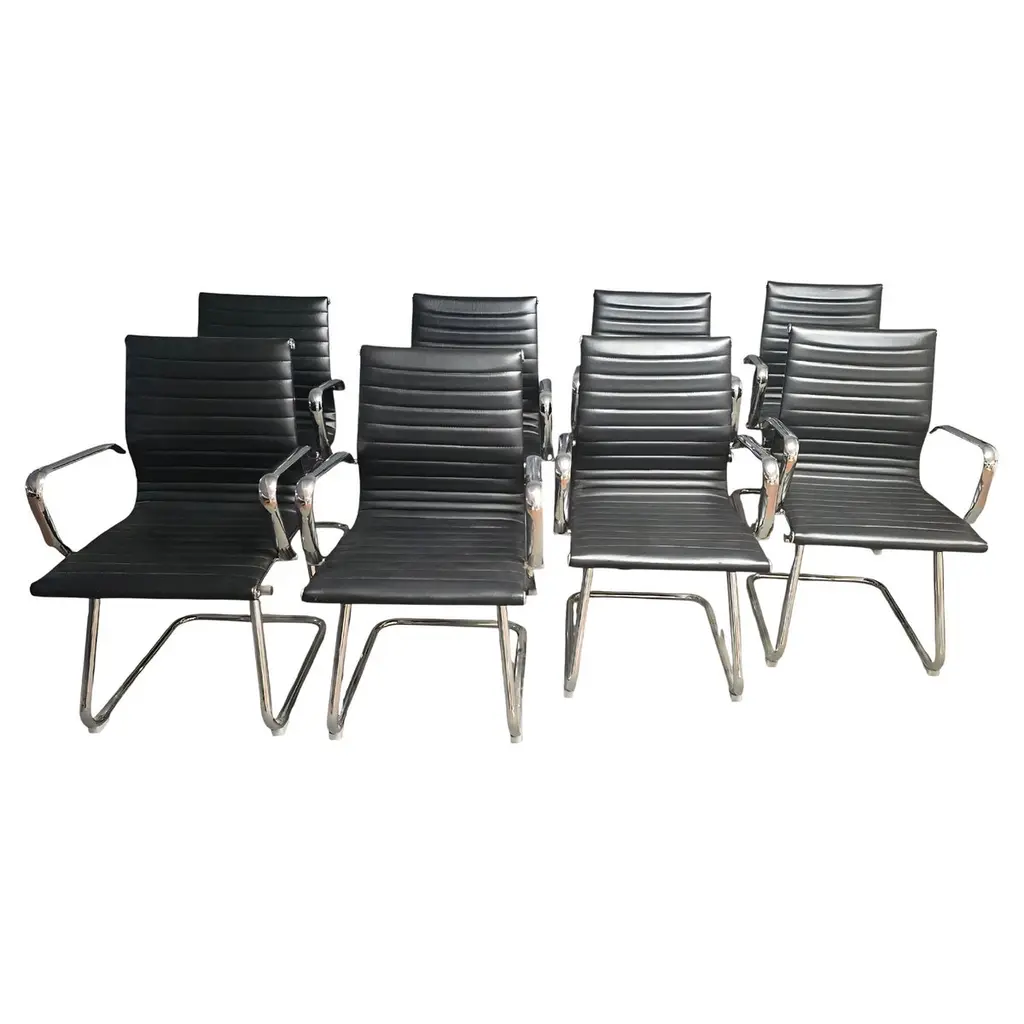
Eight contemporary chairs, dating back to 1980 and attributable to the style of Charles Eames, are a convincing example of the synthesis between aesthetics and functionality that characterized the design of the late Modern. Their black hammered leather upholstery gives a rich and sophisticated texture: the leather, worked to highlight a slight graining, gives the eye and touch a feeling of solidity and value that goes well with intensive daily use. The choice of hammered leather is not only an aesthetic issue, but also a practical one: the treatment increases the resistance to small signs of wear, reduces the visibility of any scratches and facilitates maintenance while maintaining a uniform and professional appearance over time.The steel load-bearing structure, accompanied by chrome armrests, underlines the functional imprint and construction robustness of the piece. Steel provides stability, load capacity and durability, while the chrome finish of the armrests adds a luminous contrast to the dark surface of the skin, enhancing the lines and joining details. The connections are designed to balance visual lightness and mechanical solidity: linear profiles and essential geometries reduce perceived footprint, making the chairs suitable for different contexts without weighing down the environment.The proportions and shape immediately recall the Eamesian principles: ergonomics designed to support the posture, slightly shaped seat and backrest with an inclination that promotes comfort in prolonged sessions. It is not a mere stylistic quote, but a functional declination of those principles that made the Eames school famous: beauty comes from the honesty of the materials and the clarity of the construction solutions. This design heritage makes chairs extremely versatile; the same shape that discreetly accompanies a domestic table is perfect in a conference room, where reliability and professional appearance are priorities.The year of production, 1980, contextualizes the object in a phase of diffusion and reinterpretation of the design icons of the previous century. In those years, many industrial producers and carpenters took the lessons of the masters, adapting them to contract requirements and emerging production standards. The result is an object that carries with it a historical and collectible value, without sacrificing contemporary usability: those looking for pieces with a precise temporal connotation will find in these chairs a balance between authenticity and pragmatism.From a practical point of view, the leather/steel combination ensures durability, ease of cleaning and resistance to heavy use; from an aesthetic point of view, the sobriety of black and the reflection of metal communicate a formal language suitable for offices, meeting rooms, design restaurants and modern homes. In summary, these are eight chairs that embody a coherent and mature design proposal: elegant without ostentation, robust but refined, able to dialogue with different spaces while maintaining a strong stylistic identity that refers, with respect and lightness, to the lesson of Charles Eames. Contact for further details on conservation status, measurements and vision possibilities.
Similar Items