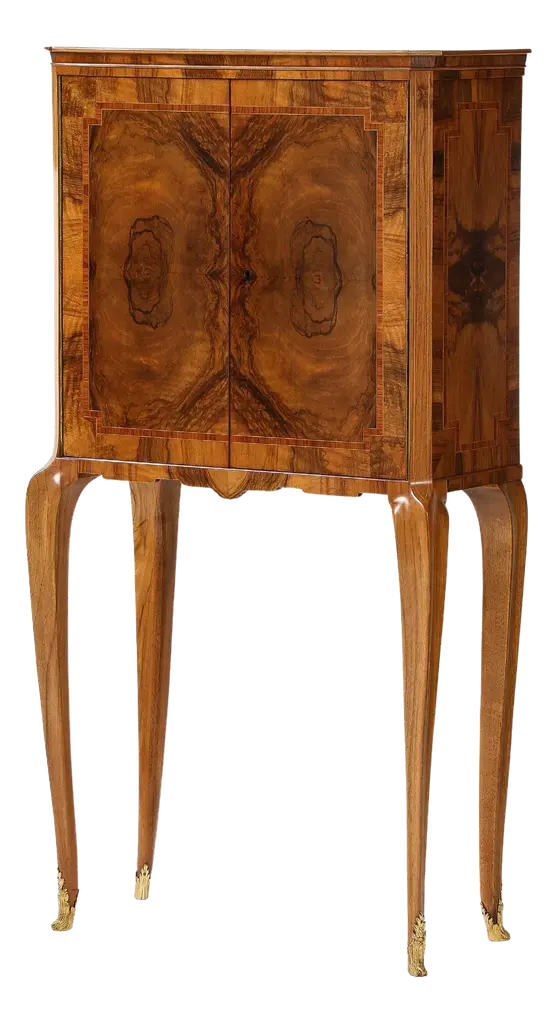
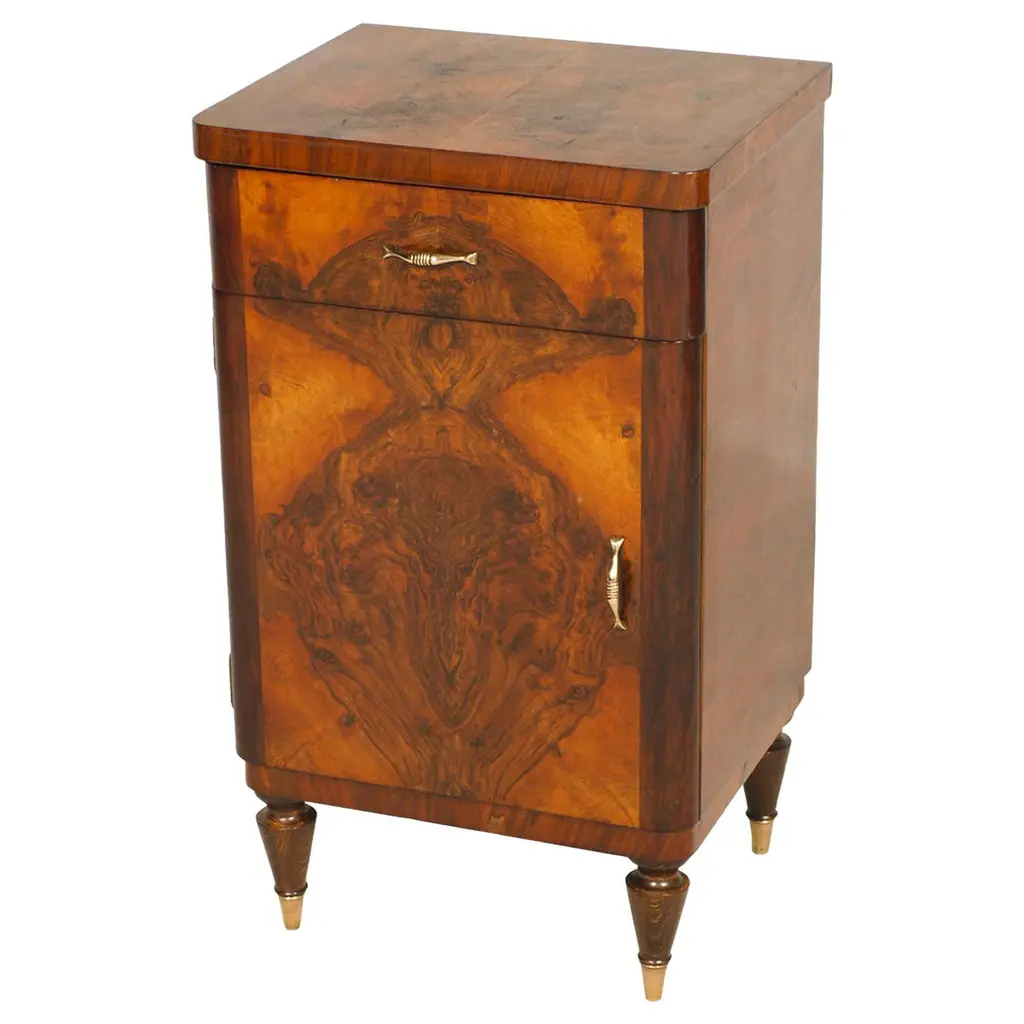
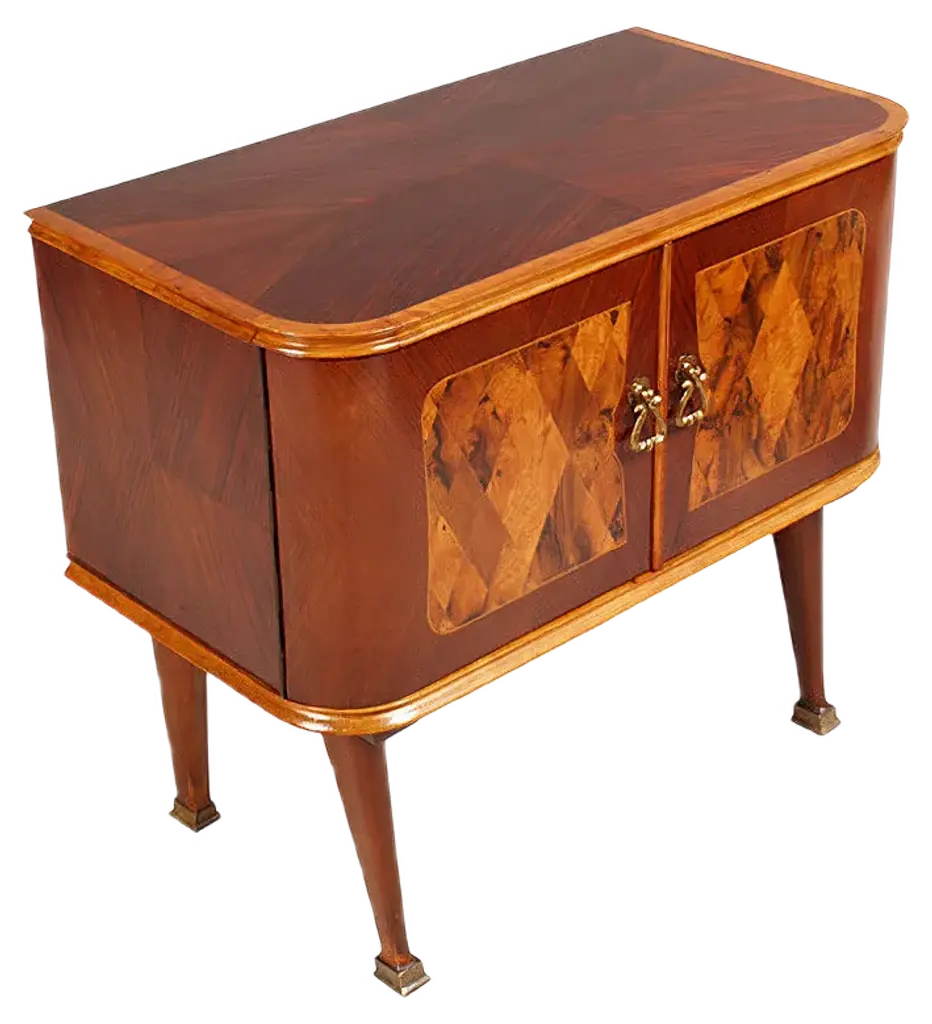
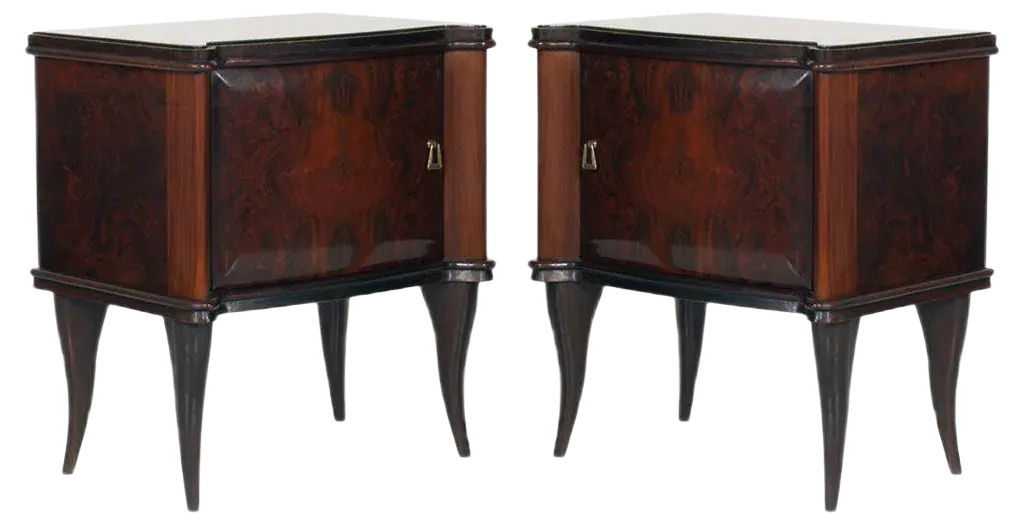
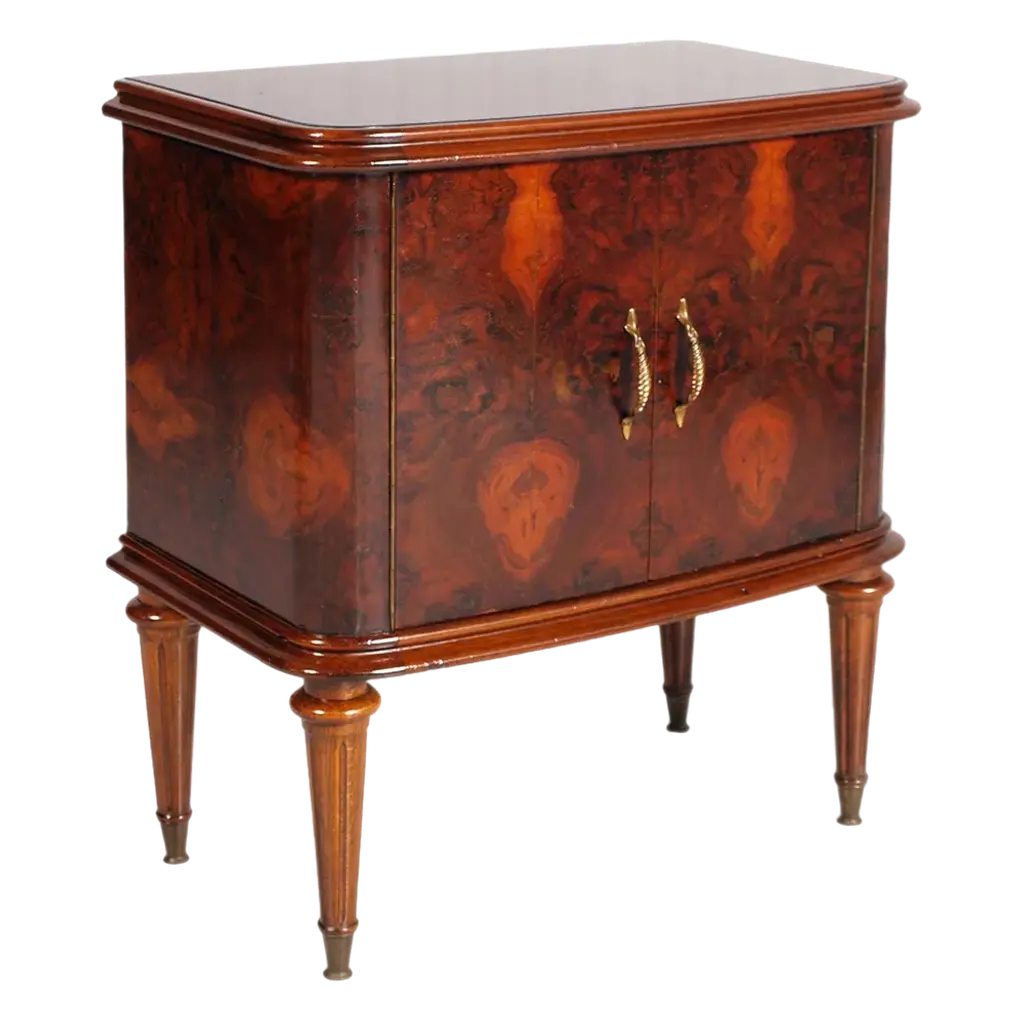
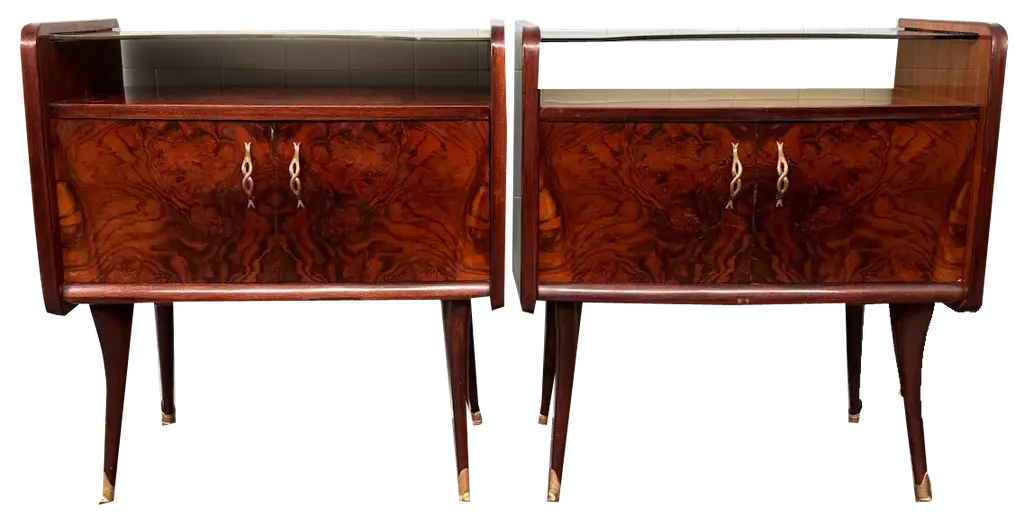
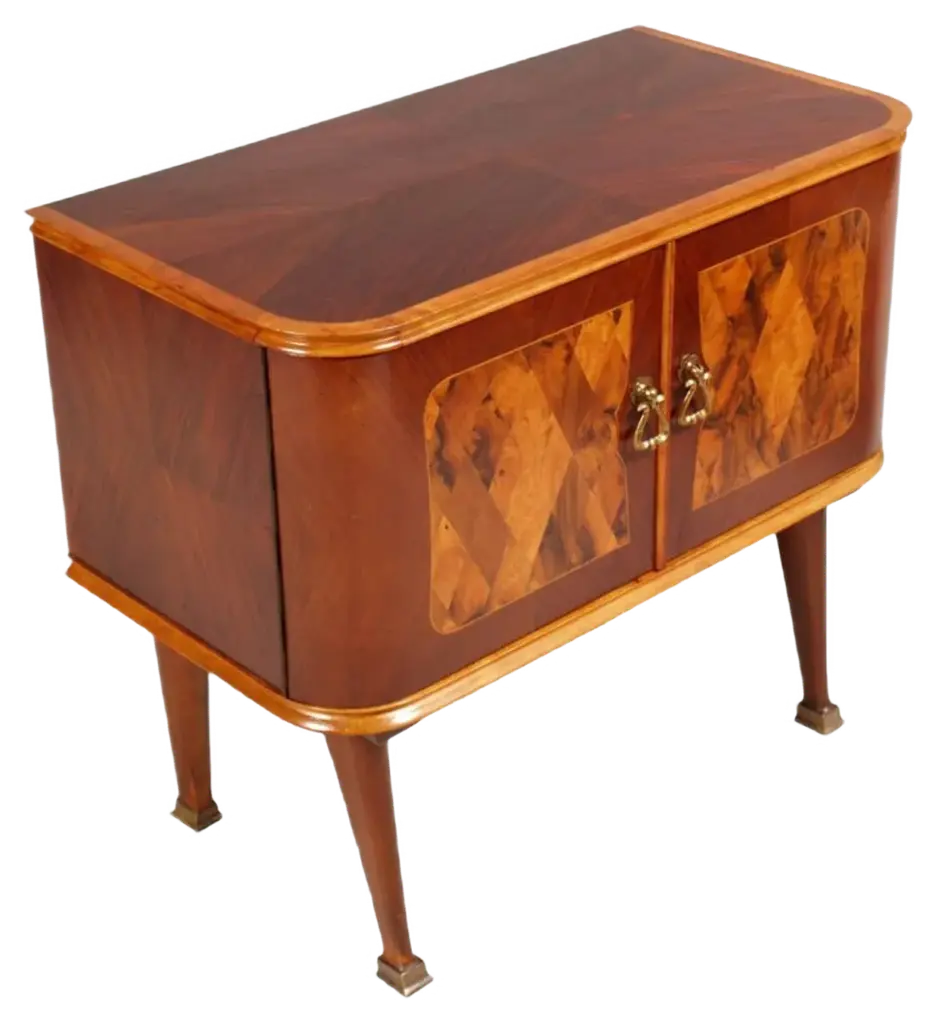
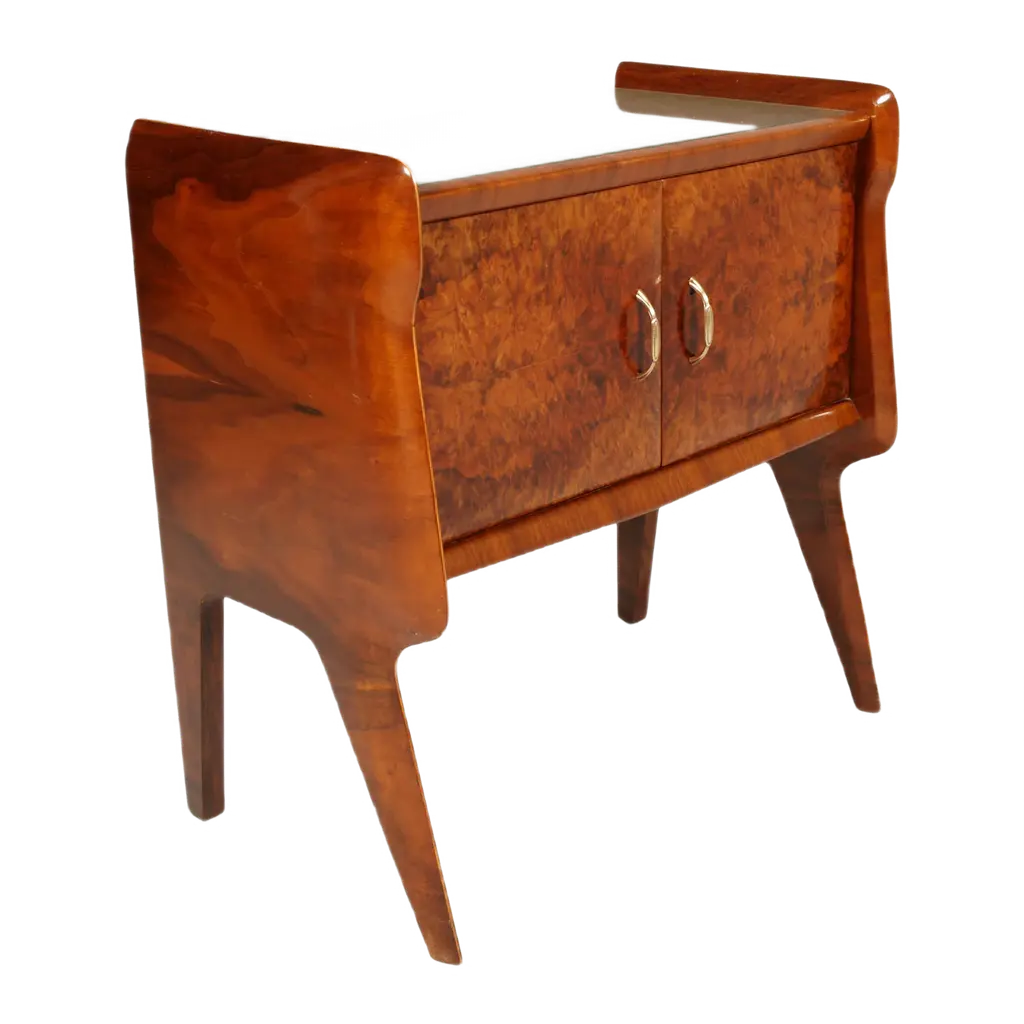
Elegant Mid-Century modern two-door nightstand la Permanente Mobili Cantù attributed to Paolo Buffa , in walnut burl. Accessories such as handles and feet made of gold-plated brass. Lacquered crystal top.PAUL BUFFAItalian architect and designer Paolo Buffa (1903-1970) was active between the 1930s and 1960s, and is known for his furniture that blends neoclassical style with Art Deco motifs and modernist principles. His pieces are often devoid of trademarks or hallmarks, thus making them difficult to authenticate.Born and raised in Milan, Buffa studied architecture at the city's famous Politecnico, where he graduated in 1927. The following year he founded a design studio with Antonio Cassi Ramelli, whom he met during a brief stint in the atelier of Gio Ponti and Emilio Lancia. The two designers' professional debut came in 1930, when the duo presented a dining room installation at that year's Triennale. Between 1933 and 1936, Buffa will establish his own studio.Designing for Milan's upper classes, Buffa's designs are handcrafted in the finest, highest quality materials, and rival Emile-Jacques Ruhlmann, a legend of French Art Deco. Working with talented cabinetmakers such as Mario Quarti, and skilled craftsmen, Buffa slowly succeeded in introducing modern techniques to the early 1940s design scene. The evolution of Buffa's progressively more modern aesthetics is very clear and straightforward; from the neoclassical furniture of the early days, with its complex and intricate decorations, Buffa came to design essential armchairs and consoles with pure lines in the 1960s. In the 1960s he would even collaborate with Cassina.In addition to furniture design, Buffa also engaged in a variety of architectural, and interior design projects over the years, ranging from tomb design (his very first commission) to yachts for Egyptian royalty, villas, hotels, offices, and more.Despite his abundant output, and his importance to the evolution of design culture in Italy in the mid-century, relatively little has been written about the designer since his death in the 1970s. Nonetheless, collectors' and enthusiasts' appetite for his items continues to grow in the vintage market, particularly because of their very high quality and successful combination of classicism and modernity.
Similar products