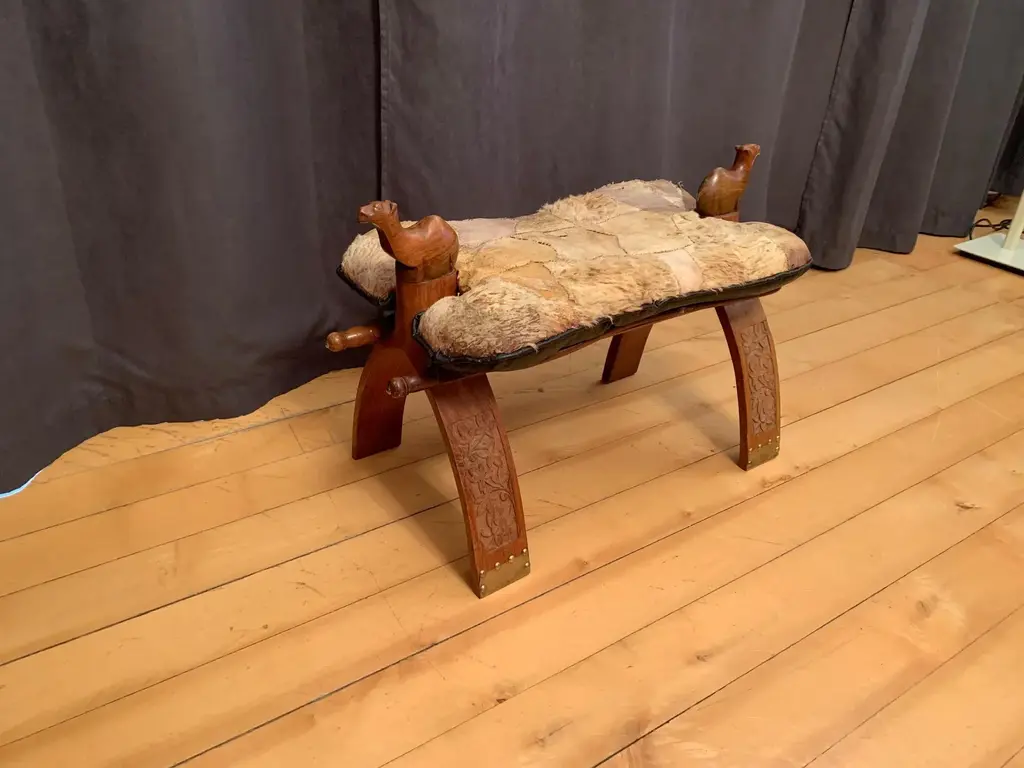
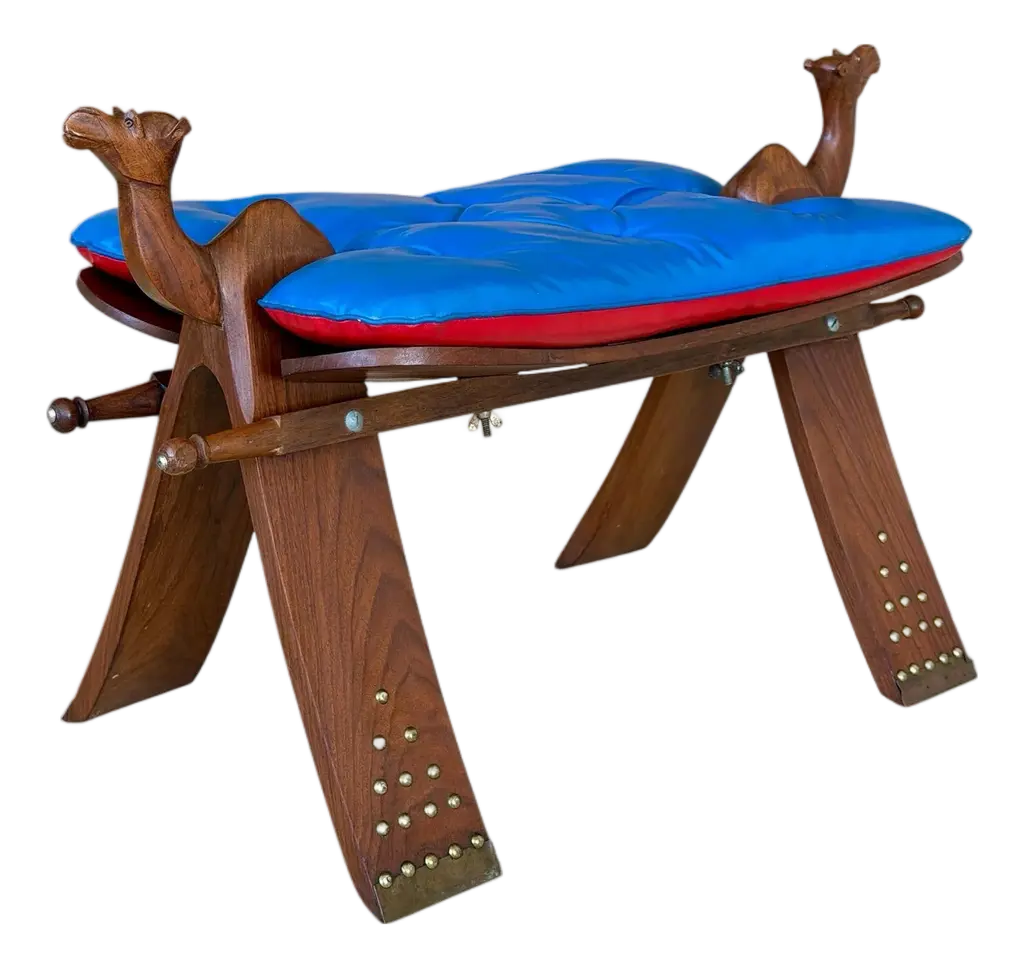
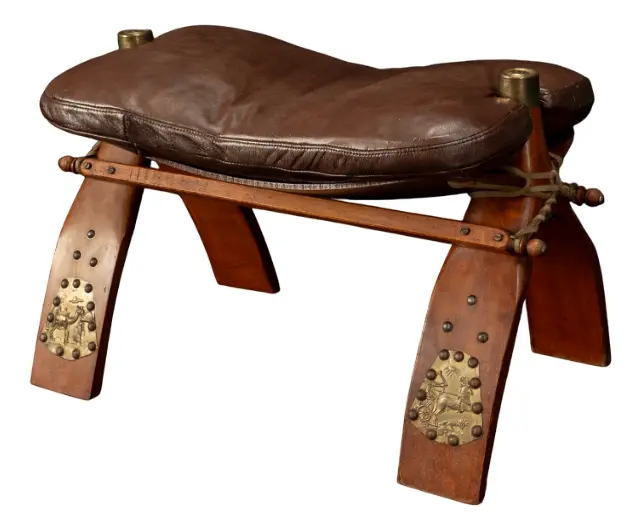
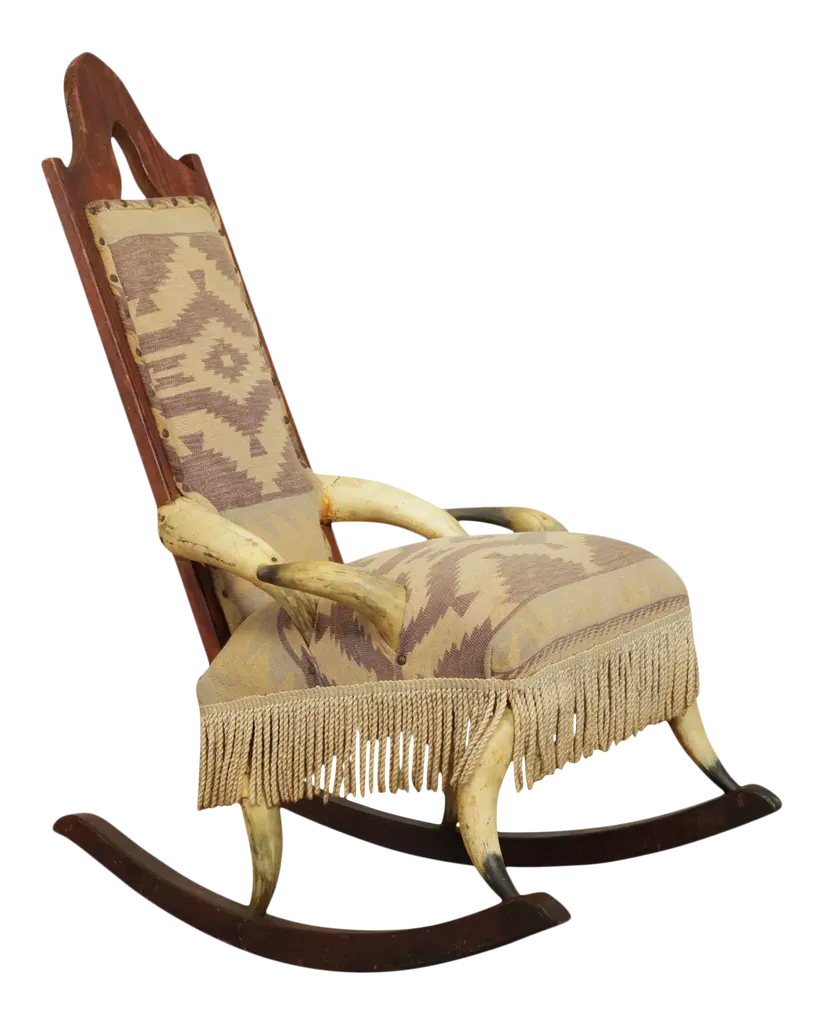
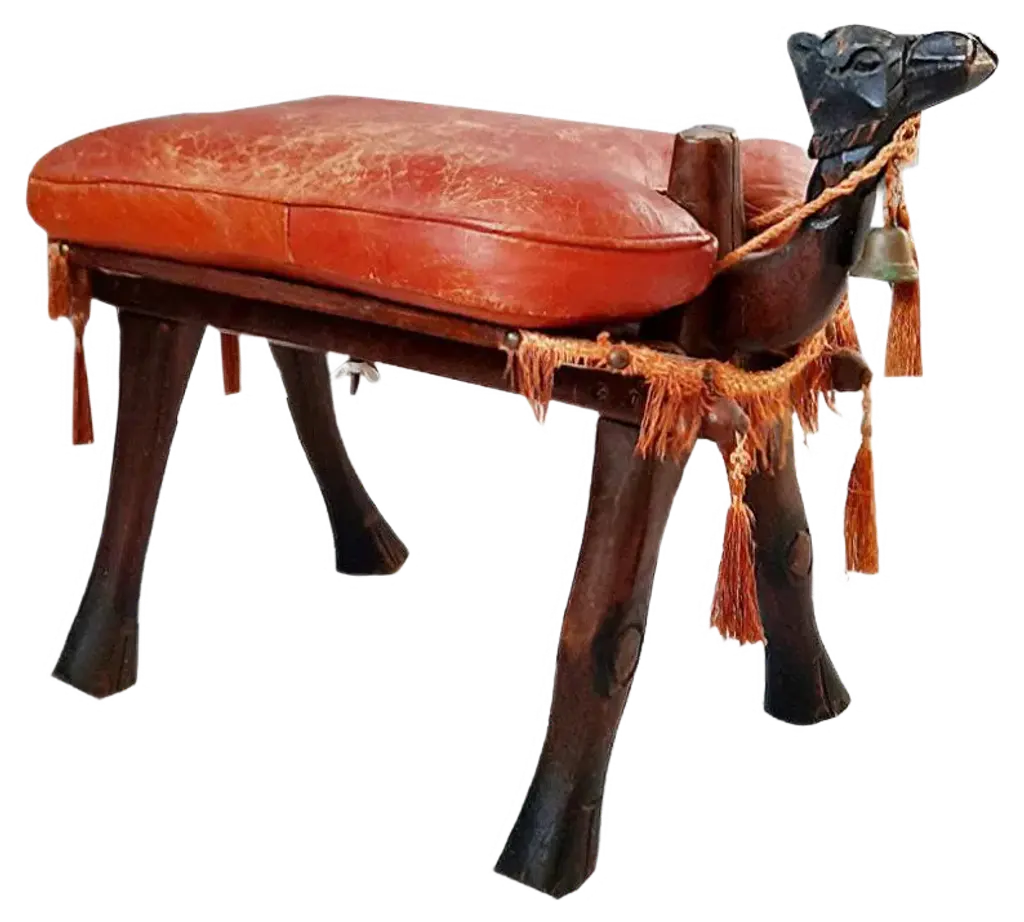
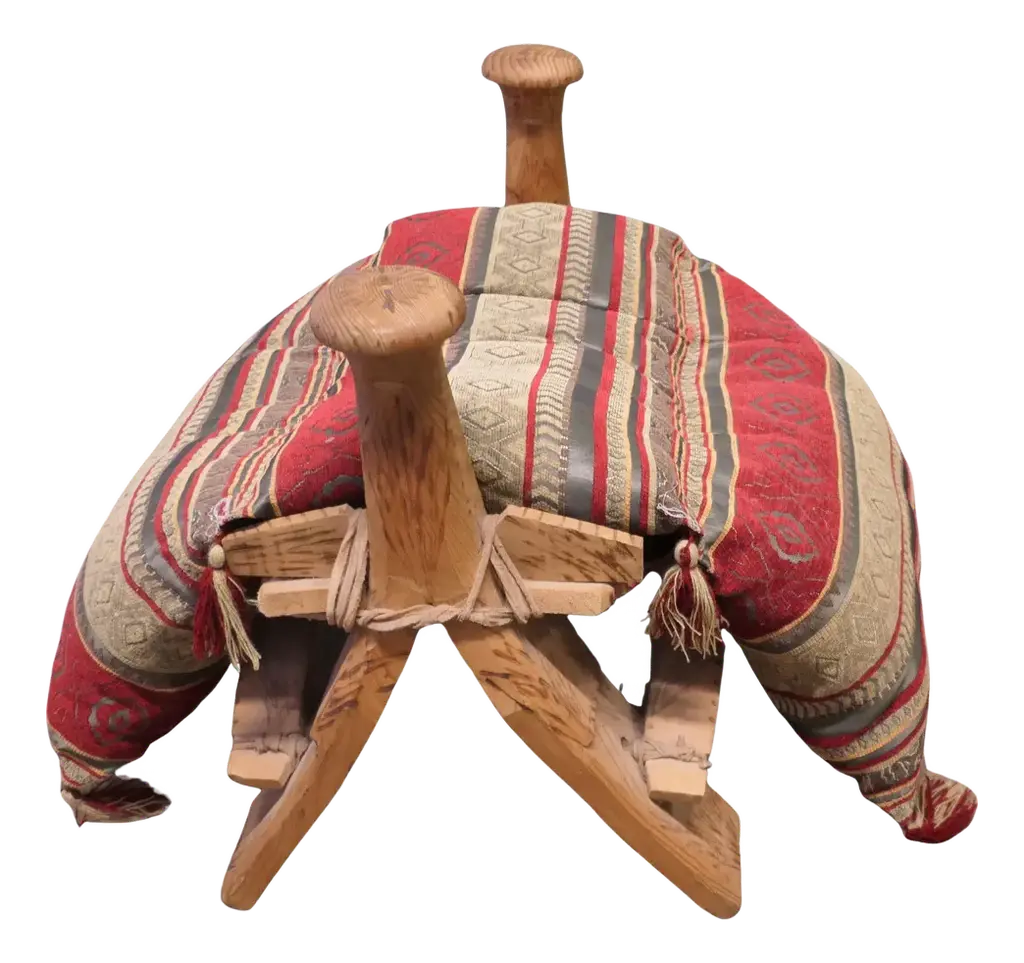
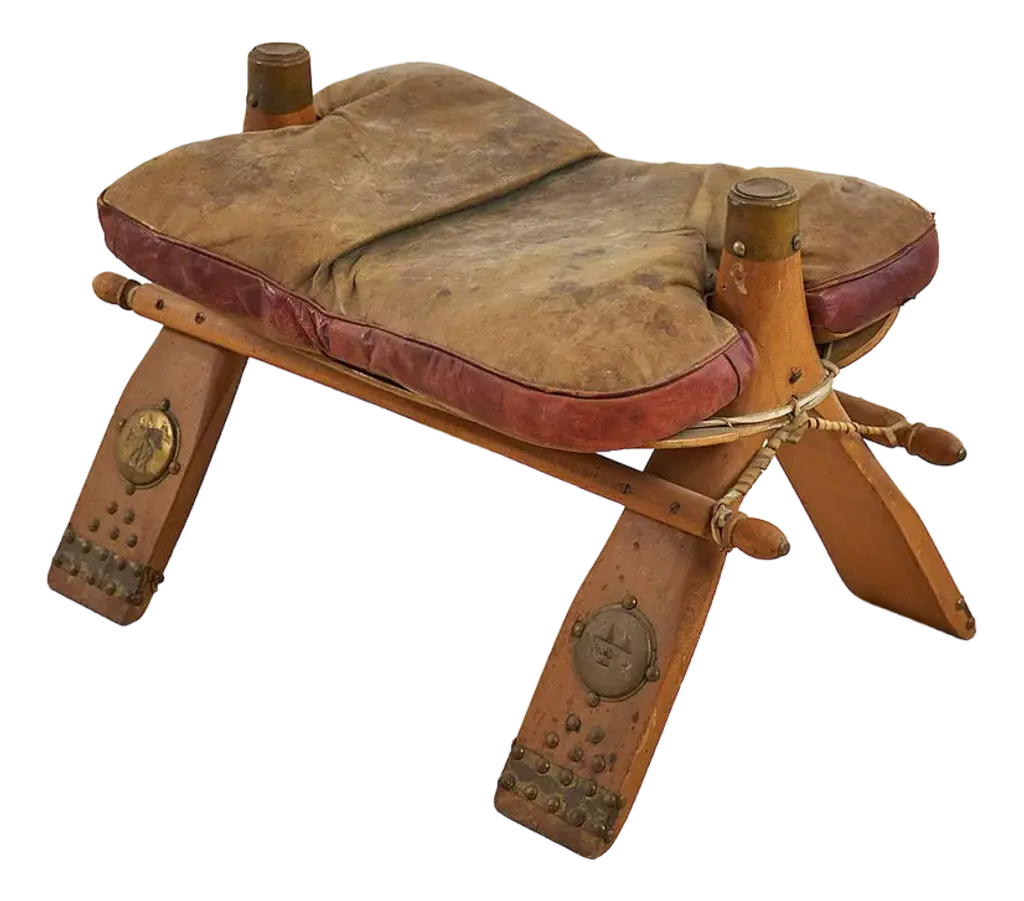
This is an exceptional example of a tribal ceremonial camel saddle, likely originating from North Africa or the Middle East, dating to the late 19th or early 20th century. The saddle exhibits masterful traditional craftsmanship with its sculptural wooden frame, hand-carved from weathered timber that has developed a rich, aged patina over decades of use. The distinctive curved form features four gracefully arched supports that distribute weight across the camel's back, while the elongated projections at front and rear provided attachment points for goods and textiles during desert crossings. The wooden structure is adorned with ornamental brass tack decoration arranged in geometric patterns, demonstrating the maker's attention to both aesthetic and functional detail. Draped across the frame is a remarkable hand-woven textile cushion in warm terracotta and golden ochre tones, featuring traditional tribal motifs. The cushion's striped pattern and symbolic designs reflect the weaving traditions of nomadic peoples. Most striking is the luxurious fringe work of leather that cascades from the sides, adding movement and texture while also serving the practical purpose of protecting the rider from desert sun and sand. This decorative element speaks to the saddle's likely ceremonial or high-status use, rather than purely utilitarian function. Today, these fascinating objects have found new life in interiors, where they are most commonly repurposed as exotic decorative footstools or ottomans. The saddle's low profile and cushioned seat make it perfectly suited for this adaptation, while its dramatic sculptural presence and rich textural elements bring global sophistication and conversation-worthy intrigue to contemporary living spaces. The piece shows authentic wear consistent with age and use, including surface patina, minor losses to the fringe, and textile fading that only enhance its weathered appeal. This saddle represents an important artifact of nomadic culture and traditional desert travel, offering both historical significance and practical modern functionality. Condition: Good antique condition with age-appropriate wear, losses to fringe, oxidation to metal elements, and natural weathering to wood consistent with authentic use.
Similar products