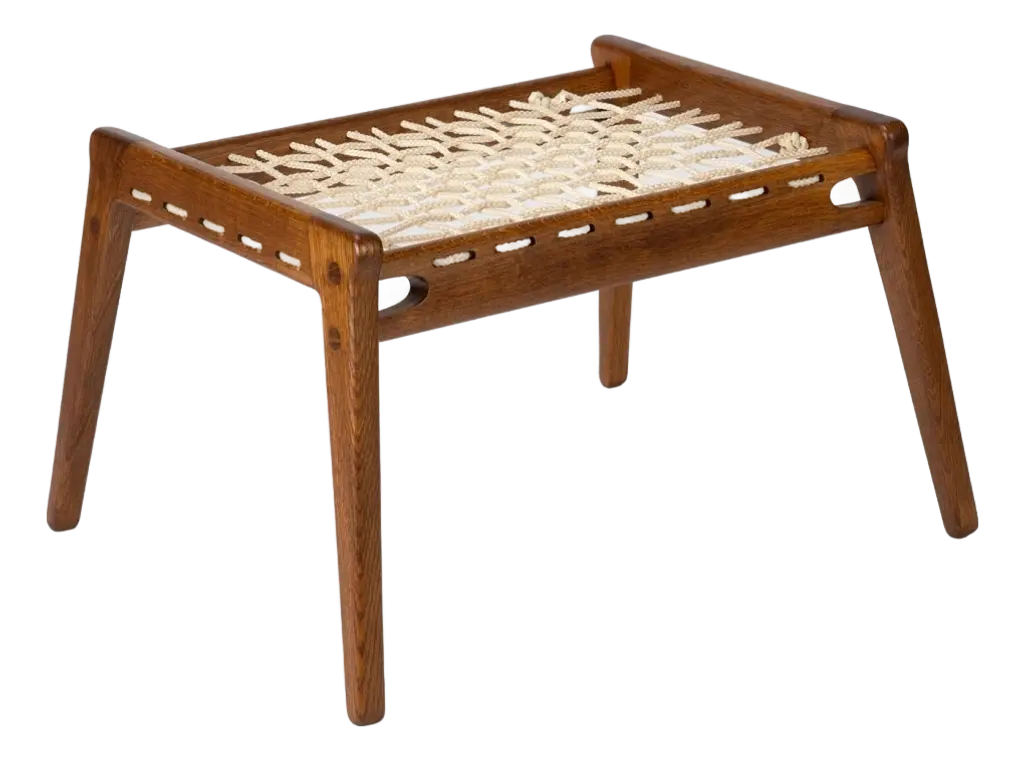
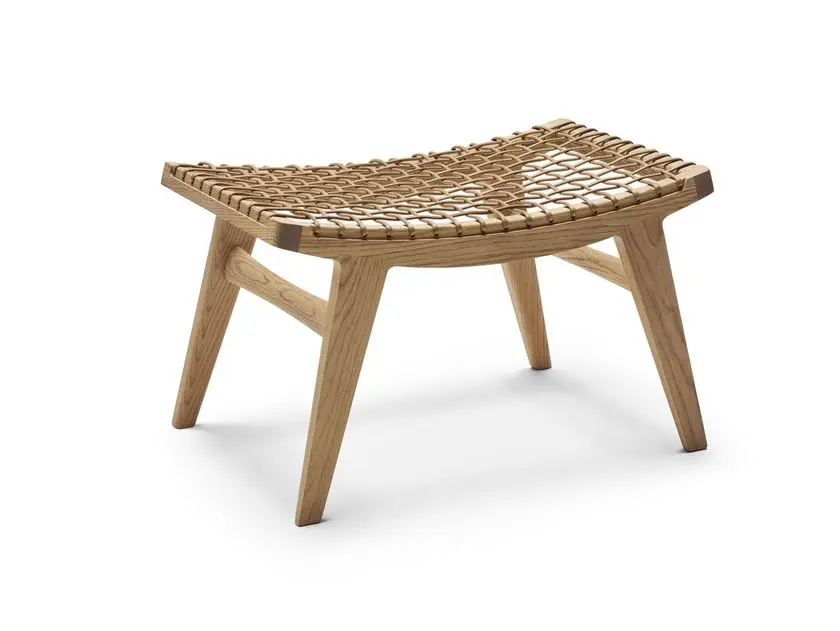
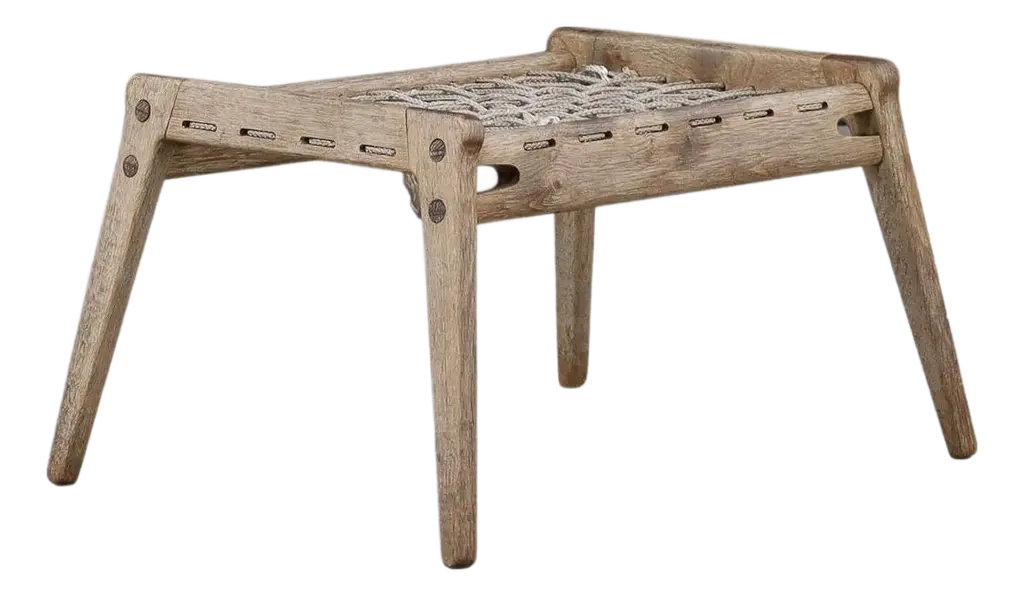
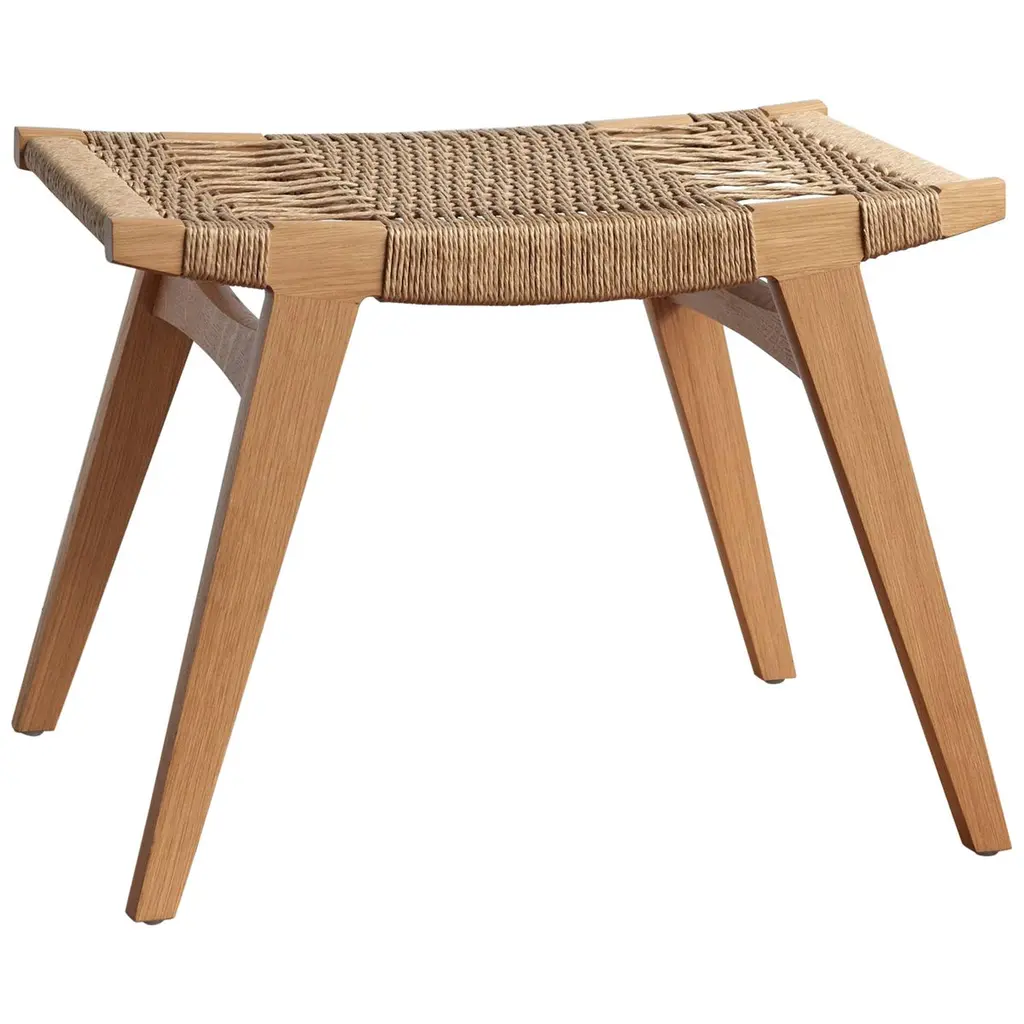
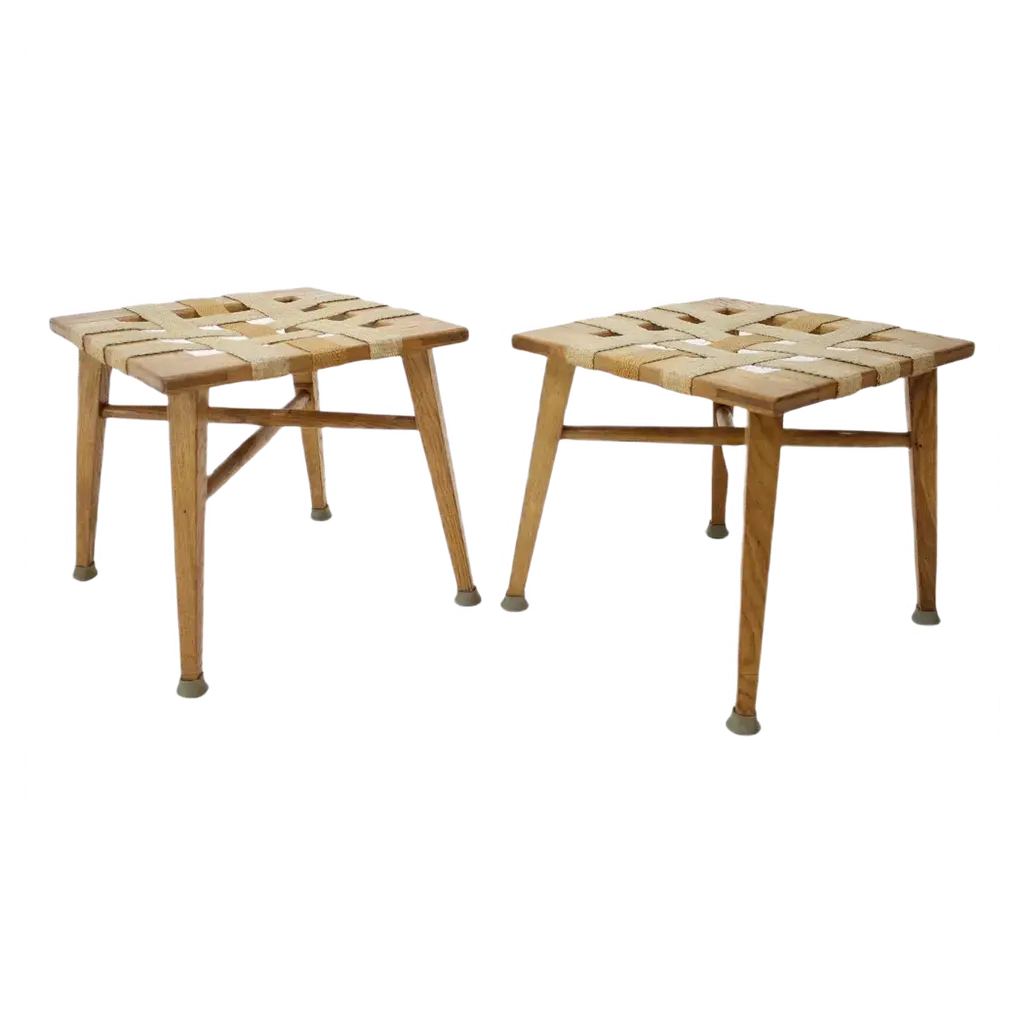
A scarce hand-crafted oak footstool designed by heinz heger for pgh erzgebirge arts and crafts in annaberg-buchholz, east germany, dating from the 1960s. The piece reflects the region’s strong tradition of artisanal woodworking combined with the simple, functional clarity characteristic of east german mid-century design. The frame is executed in solid oak and shows a warm natural patina with attractive grain structures throughout. The gently splayed legs, rounded edges, and exposed joinery give the stool a sculptural profile while maintaining a sense of lightness and utility. all construction details highlight the careful craftsmanship for which pgh erzgebirge was known. The seat features hand-woven rope webbing arranged in a classic grid pattern. The natural cord provides a flexible yet strong seating surface and forms a pleasing contrast with the solid oak frame. Its softly aged off-white tone adds charm and authenticity, emphasising the handmade character of the piece. This footstool is highly versatile: ideal as a companion to an easy chair, as a low occasional seat, or simply as a decorative object that brings warm natural materials into an interior. It pairs easily with scandinavian modern, rustic, chalet, wabi-sabi and natural-material design schemes. The stool remains in good vintage condition with age-appropriate wear, patina and minor variations in the rope — all consistent with its age and artisanal production. dimensions centimeters: • depth: 40 cm • width: 51 cm • height: 35 cm • seat height: 33 cm inches: • depth: 15.75 in • width: 20.08 in • height: 13.78 in • seat height: 12.99 in materials: solid oak, woven rope period: 1960s place of origin: east germany designer: heinz heger manufacturer: pgh erzgebirge arts and crafts, annaberg-buchholz condition: good vintage condition with patina consistent with age
Similar products