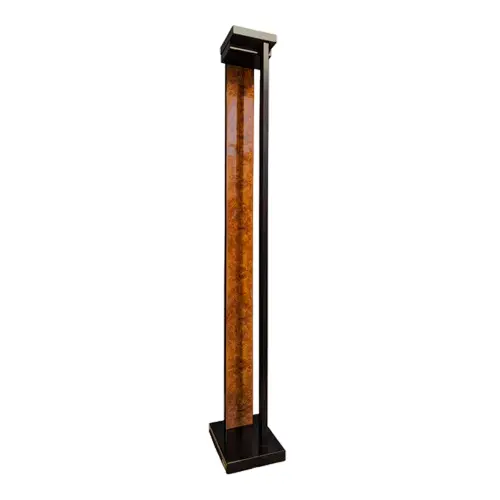
A figured wood and ebonised display pedestal in the Art Deco manner, European, 1930s. Each face is panelled in a single broad field of prominently figured wood — the medullary ray pattern shifting with light across its full surface — set within a sharply rectilinear ebonised surround that delivers the graphic two-tone contrast central to the Art Deco interior vocabulary. The column shaft rises from a tiered, moulded plinth base with bullnose profiling — a detail executed with the measured precision of a workshop cabinetmaker working within the period's architectural sensibility. The cornice cap at the crown mirrors this moulding language exactly, resolving the form into a self-contained architectural pillar with clear vertical emphasis. The material opposition is deliberate and controlled: the warm, silk-like luminosity of the figured panels reads as tactile and animate against the flat visual weight of the ebonised frame. There is no applied ornament, no gilding, no superfluous decoration — the object derives its authority entirely from proportion, contrast, and the honesty of its construction. A resolved survivor of the period's appetite for architectural interior objects, this pedestal integrates with equal authority into Japandi, Dark Academia, and Hollywood Regency schemes.
Similar products