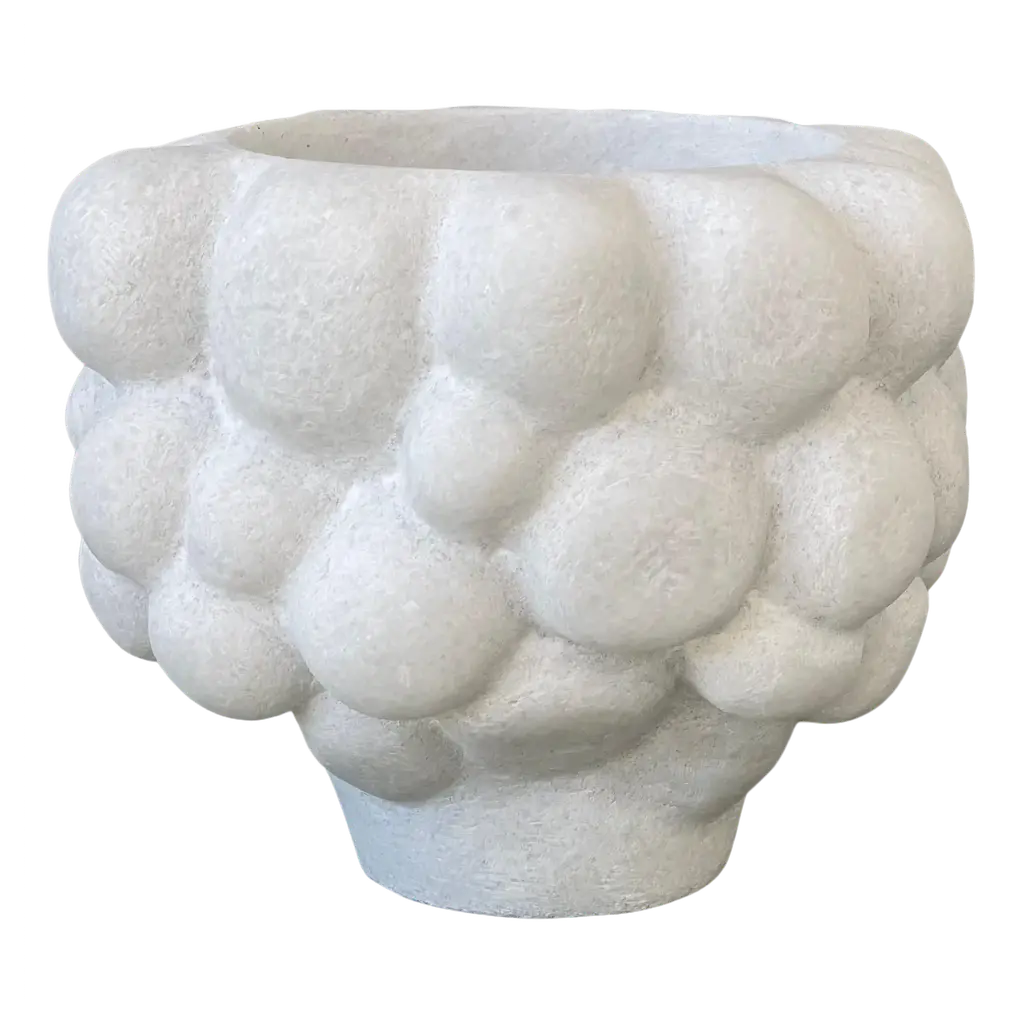
Rare, unusual, and almost extraterrestrial in their presence, this pair of early 20th-century American folk art planters turns the humble garden vessel into a geological fantasia. Hand-formed in concrete and then entirely encrusted with natural geodes gathered from southern Indiana’s rivers, they bristle with crystalline texture—glittering pockets, mineral blooms, and rough-hewn contours that catch the light in unexpected ways. Each planter feels like it was pulled from the earth mid-transformation, a collision of human imagination and raw natural wonder. They sit comfortably within the lineage of American folk art, a tradition defined not by academic training but by instinct, resourcefulness, and a deep connection to place. Just as whirligigs, bottle trees, and tramp art reframed everyday materials into something lyrical, these planters elevate river-worn stones into sculptural objects with genuine soul. In a garden, on a terrace, or flanking a modern entryway, they read as artifacts of pure, unfiltered creativity—quietly magical and entirely one-of-a-kind.
Similar products