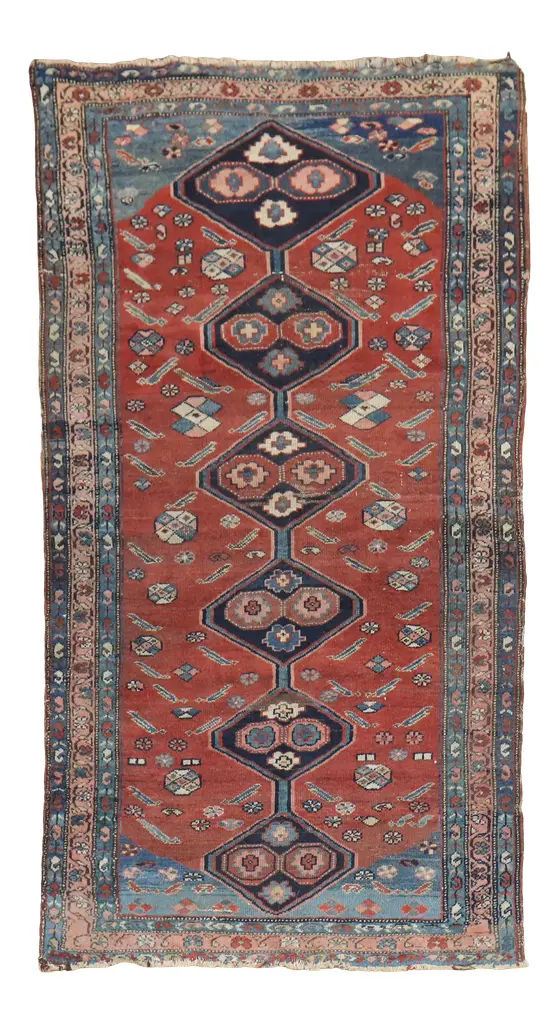
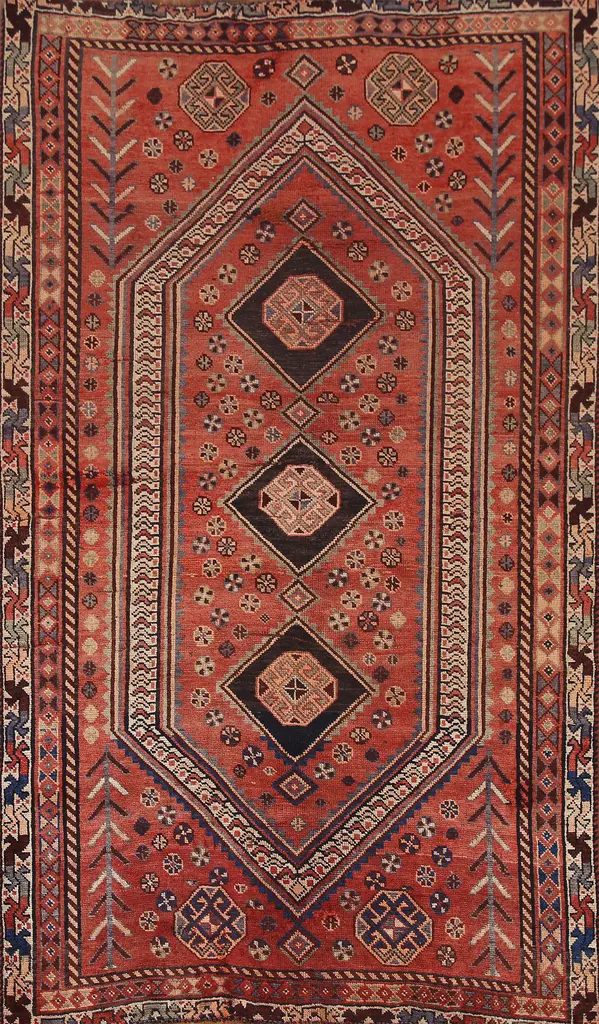
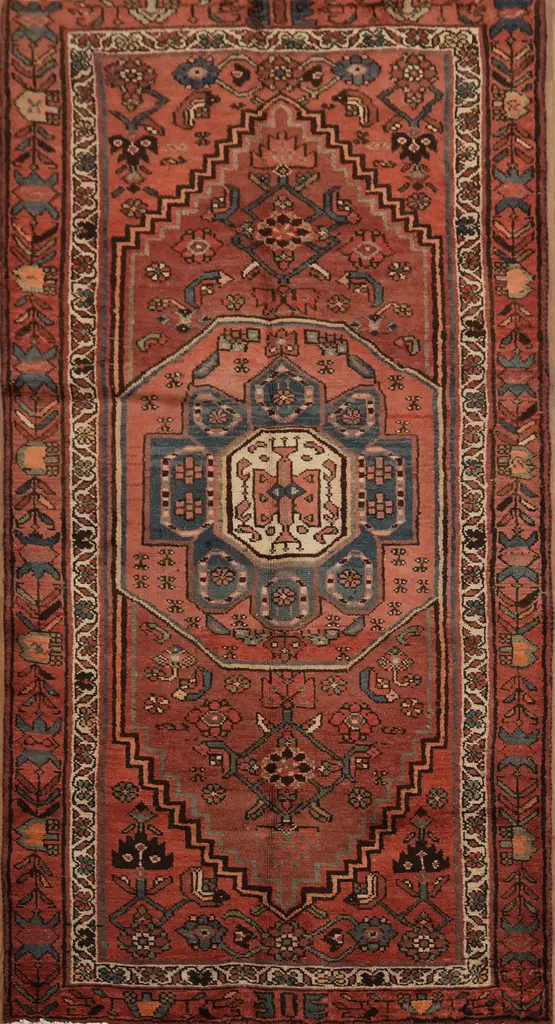
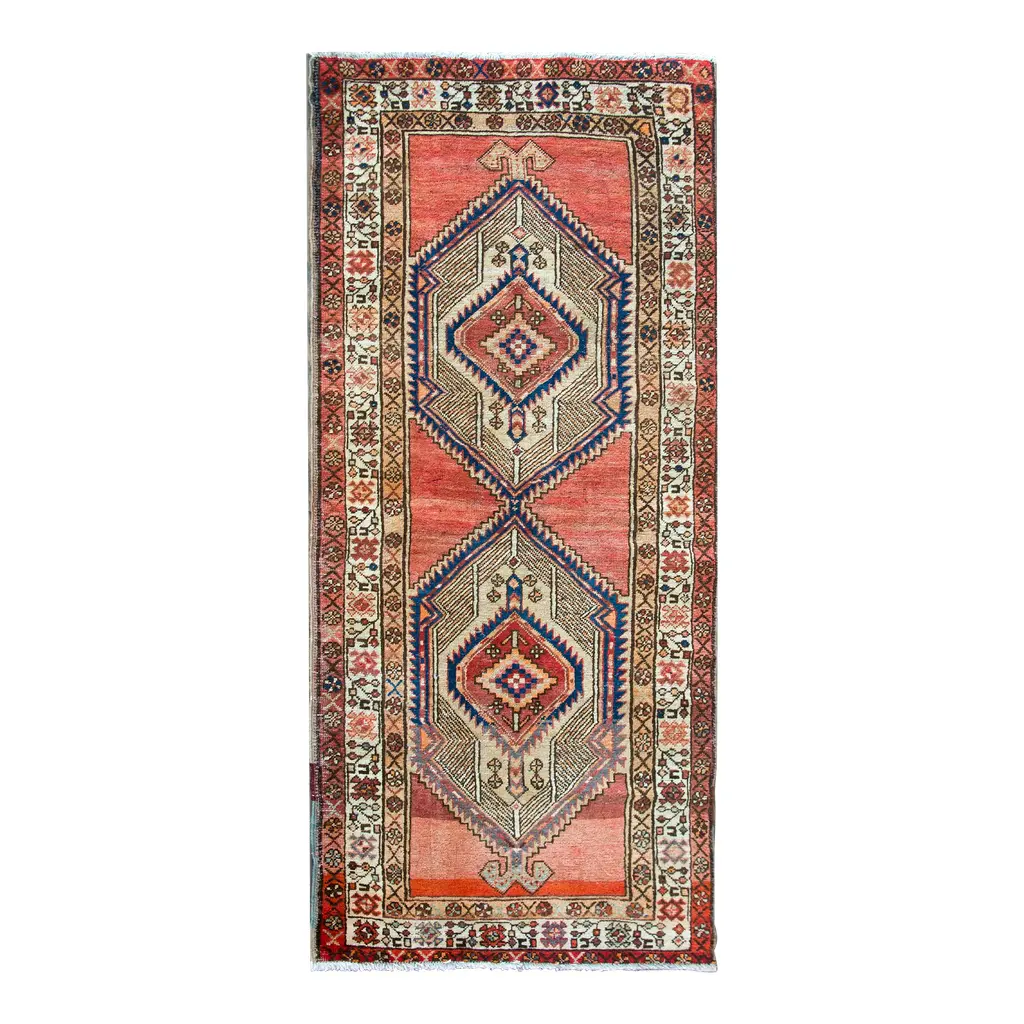
Antique Persian Bakshaish Rug Northwest Persia, Circa 1850–1875 Dimensions: 4'9" × 9'1" (145 × 277 cm) Material: Hand-knotted wool pile on wool foundation Condition: Good, with wear consistent with age and use. This rare and exceptional antique Persian Bakshaish rug is a striking example of mid-19th-century tribal weaving from Northwest Persia. Woven in a highly desirable gallery-size format, this piece showcases the spontaneous creativity and symbolic expression characteristic of the Bakshaish tradition, while also reflecting a sophistication more commonly found in classical Persian carpets. Set against a beautifully aged red-peach field, the rug features a geometric central medallion rendered in a harmonious palette of blue, blue-green, yellow-brown, and ivory tones. Most notably, the rug displays a rare “rug within a rug” motif, a deeply symbolic design element sometimes interpreted as representing spiritual or architectural portals, or even protection. This visual layering evokes a profound sense of depth and narrative. Framed by an unusually wide tomato-red plain border, the rug is accented with charming depictions of animals and birds—stylized and abstracted, as is typical of tribal art—adding further cultural and artistic significance. These motifs, likely inspired by local folklore and natural surroundings, elevate the rug to a level of storytelling textile. Woven entirely of handspun wool on a wool foundation, the rug bears the hallmarks of village craftsmanship: a robust, organic texture, irregular yet deeply balanced geometry, and subtle abrash (color variation) resulting from small-batch natural dyeing. The soft sheen and patina acquired over more than 150 years enhance its authenticity and visual warmth. Highlights: Rare gallery size with exceptional balance and proportion “Rug within a rug” motif – symbolically and visually rare Wide plain tomato-red border – highly uncommon and architecturally dramatic Tribal animal and bird imagery – deeply collectible Rich, naturally aged colors from vegetable dyes Wool-on-wool construction – village woven, deeply authentic Excellent decorative potential for both contemporary and traditional interiors Museum-quality example of tribal Persian weaving Provenance: Private collection. Estimated date of weaving: Mid to third quarter of the 19th century (ca. 1850–1875). Origin: Bakshaish region, Northwest Persia.
Similar products