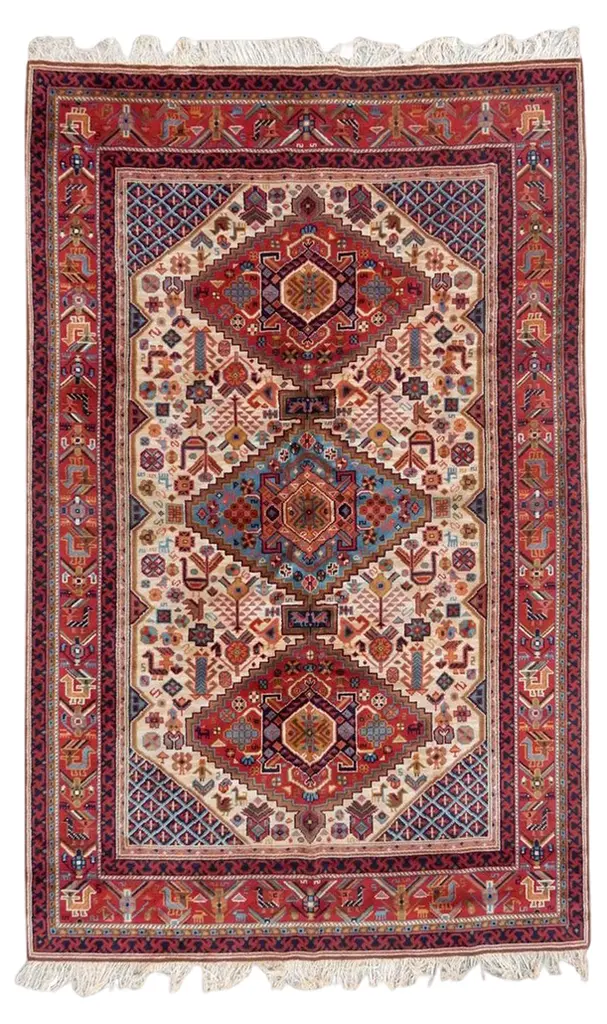
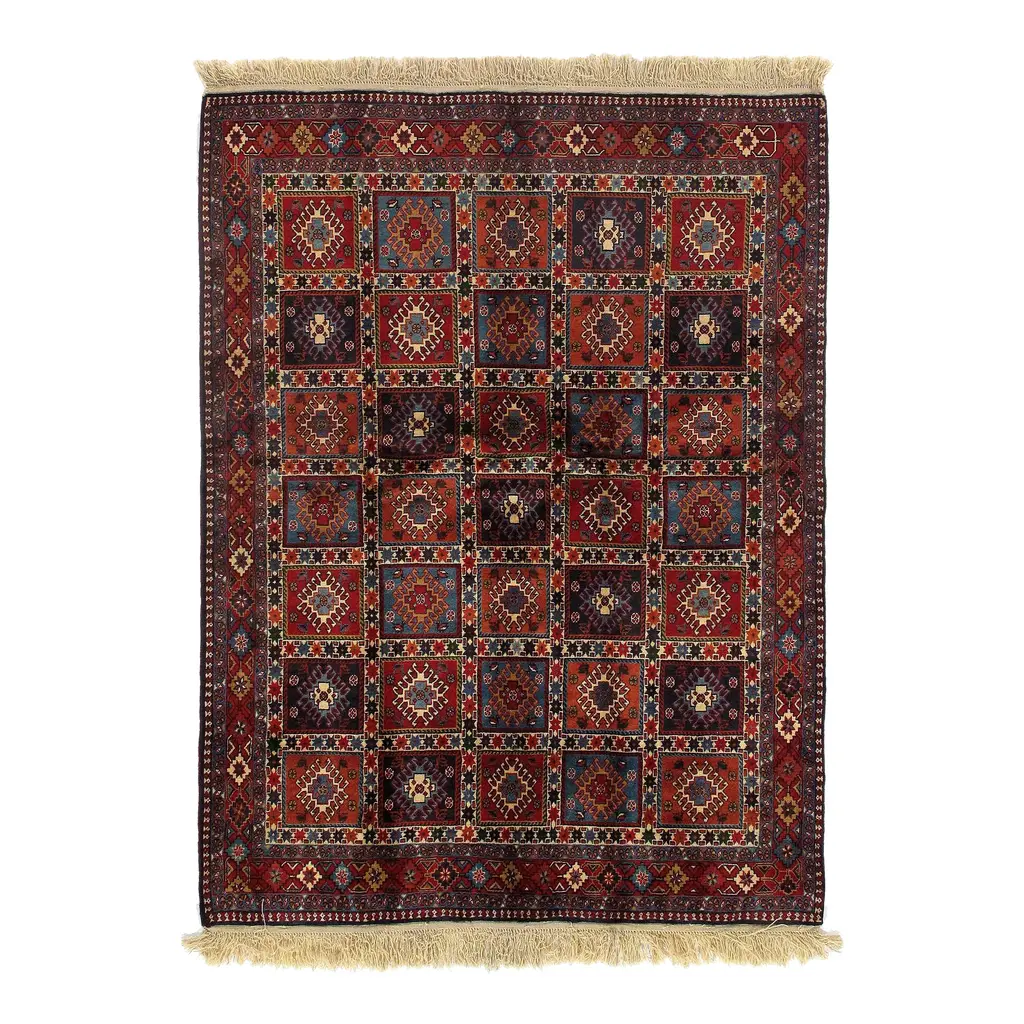
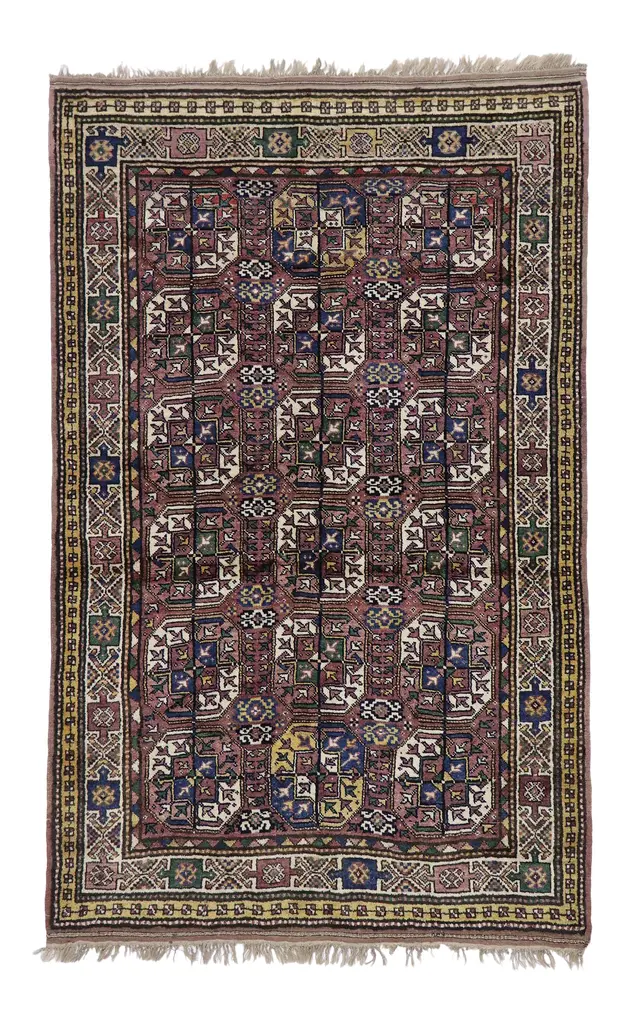
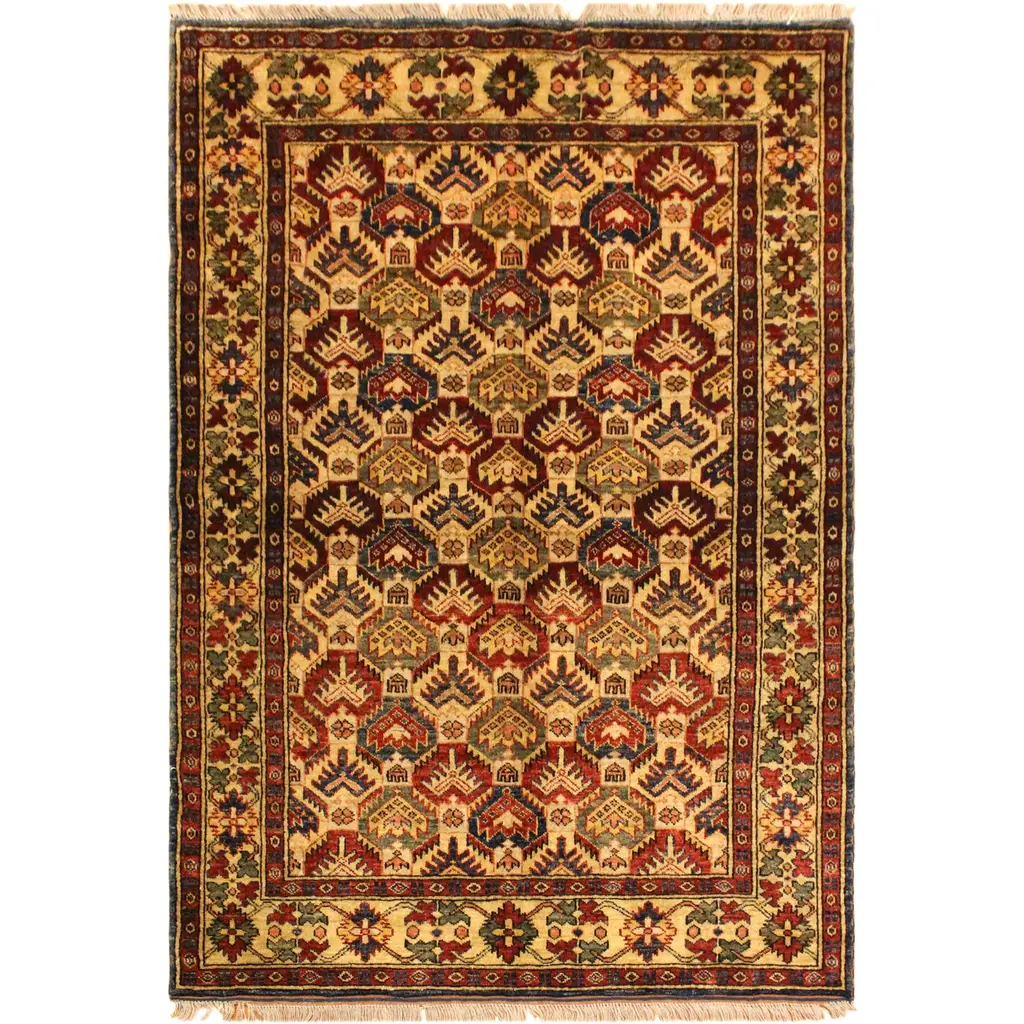
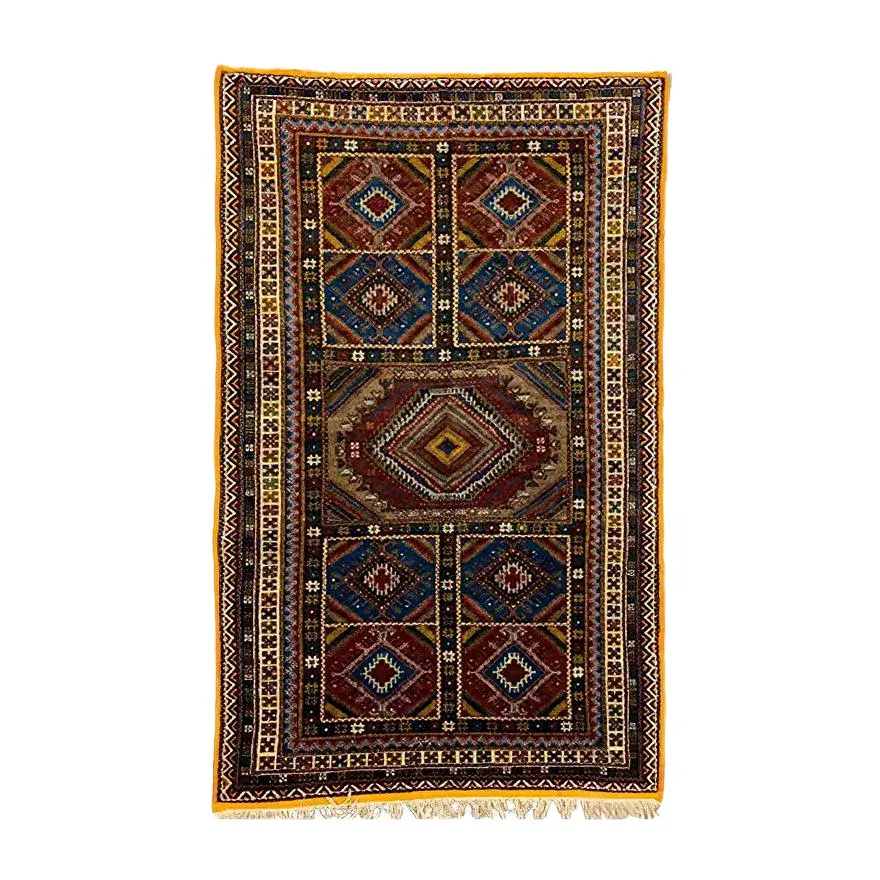
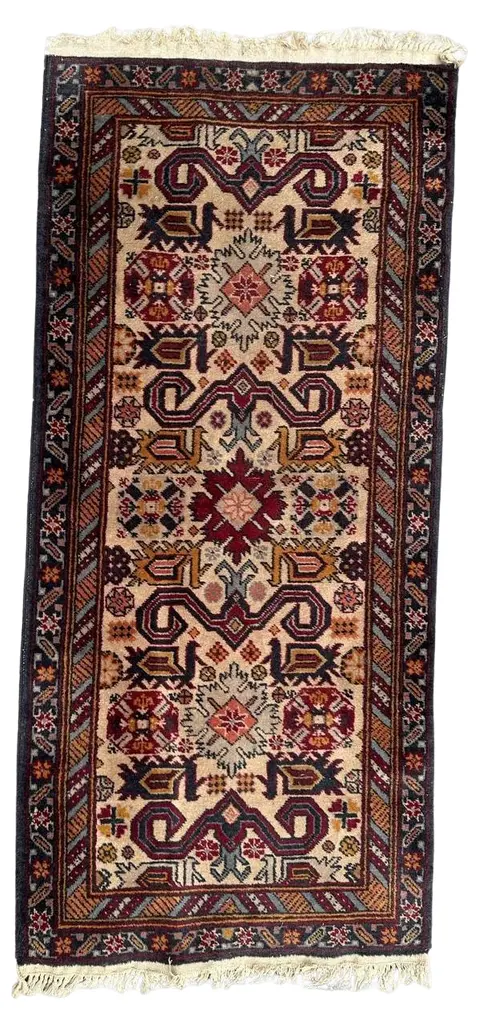
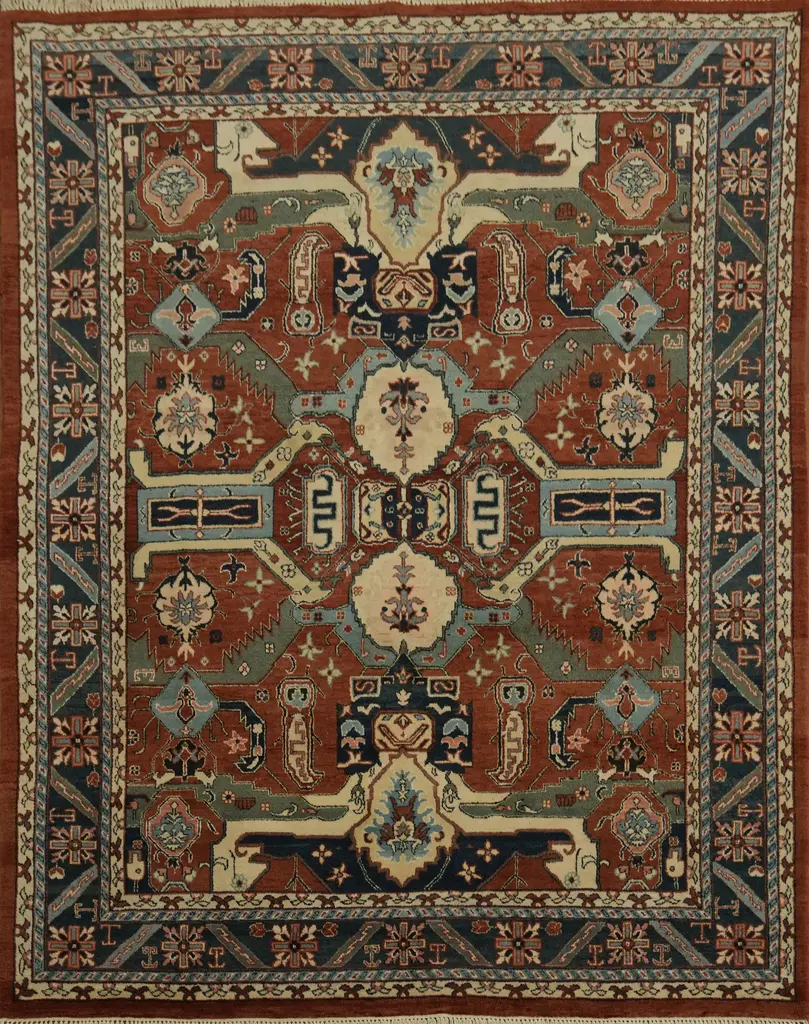
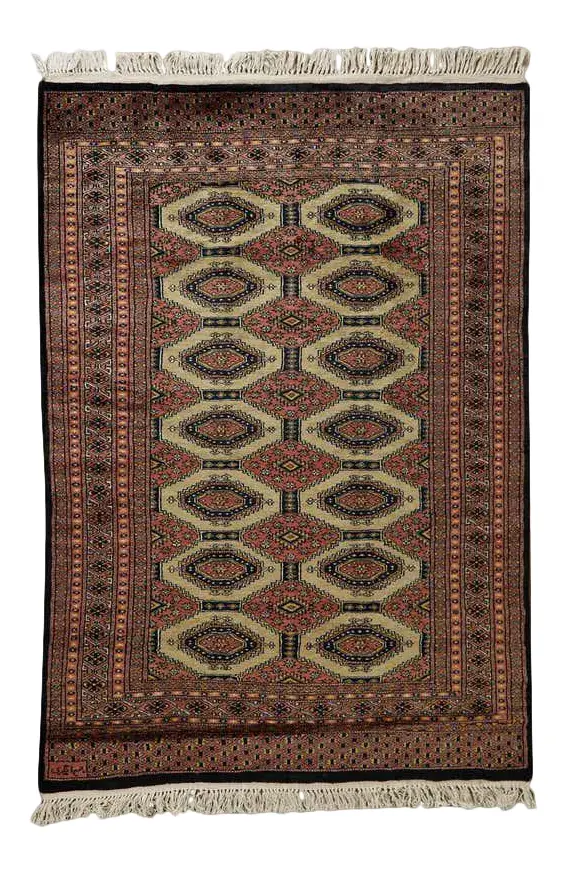
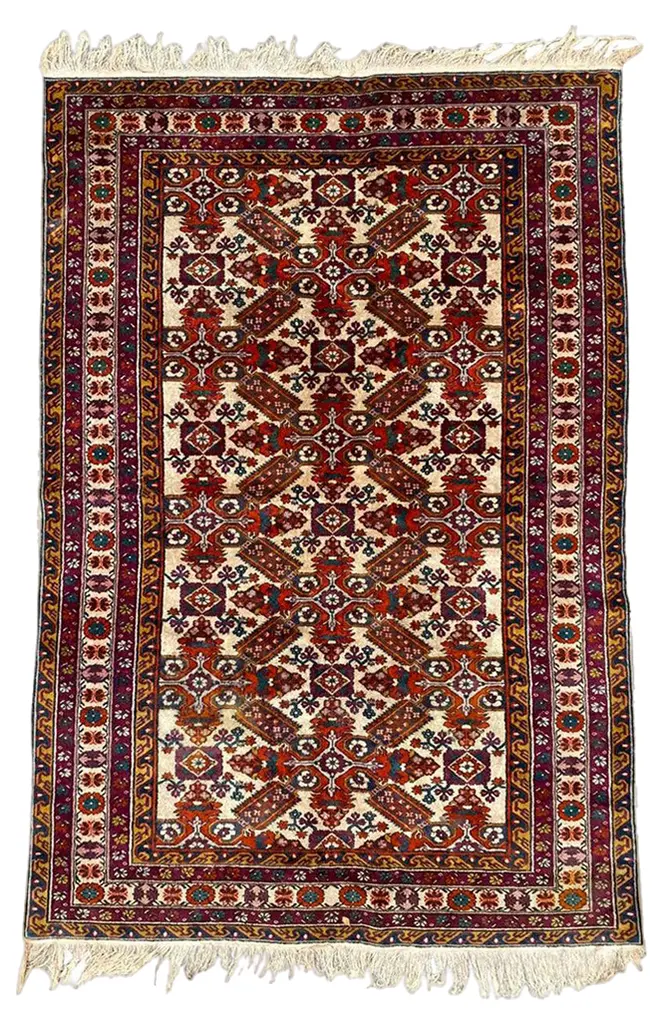
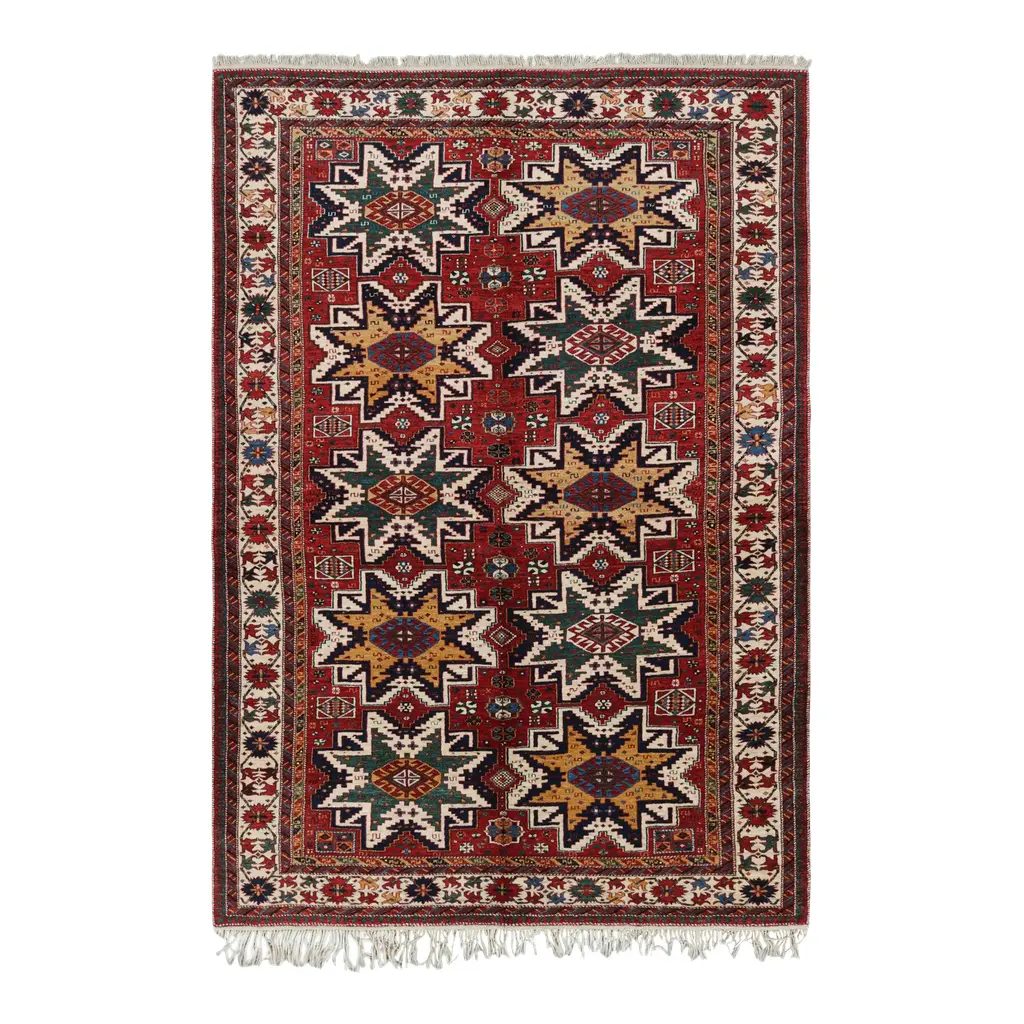
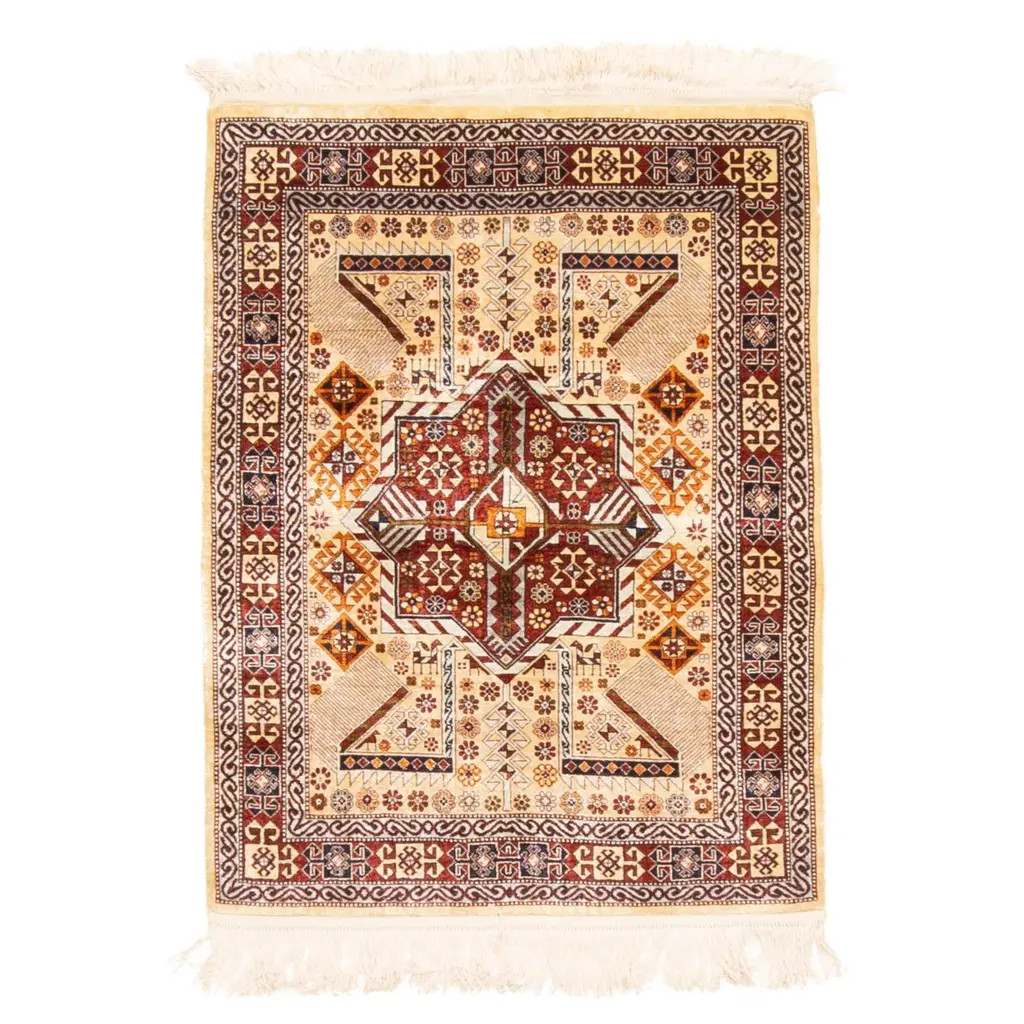
This hand-knotted Caucasian rug woven in Azerbaijan in the late Soviet period by the Azerkhalcha state cooperative. Executed in the traditional Shirvan/Kuba geometric style, featuring a structured grid of medallions with classic Caucasian motifs including ram’s horns, latch-hooks, eight-pointed stars, and protective geometric elements. The rug displays strong color retention and excellent structural integrity. Workshop: Azerkhalcha State Cooperative Date: Circa 1978 Dimensions: 64 × 95 in (163 × 241 cm) Foundation: Cotton (warp & weft) Pile: Hand-spun wool Knot Type: Symmetrical Turkish/Ghiordes Knot Density: Approx. 110–140 KPSI (medium-fine) Dyes: Natural and early synthetic dyestuffs Color Palette: Indigo, madder red, light blue, olive, ivory, yellow The central field displays an alternating grid of compartmental medallions in red, light blue, and olive tones—an intentional design referencing 19th-century Shirvan and Kuba region weaving traditions. Motifs include ram’s horns, latch-hook figures, eight-pointed stars, diamond fillers, and stepped medallions. The border is executed in the classical Caucasian star-and-cross pattern with reciprocal guard stripes, maintaining visual harmony and authenticity typical of Azerkhalcha production. During the 1970s, Azerkhalcha maintained strong adherence to classical Caucasian weaving traditions while standardizing dimensions and improving wool preparation for export markets. Rugs from this period are recognized for clean geometry, durable construction, and reliable colorfastness. Well-preserved examples from the late Soviet period have become increasingly collectible as the Azerkhalcha brand itself has gained renewed international
Similar products