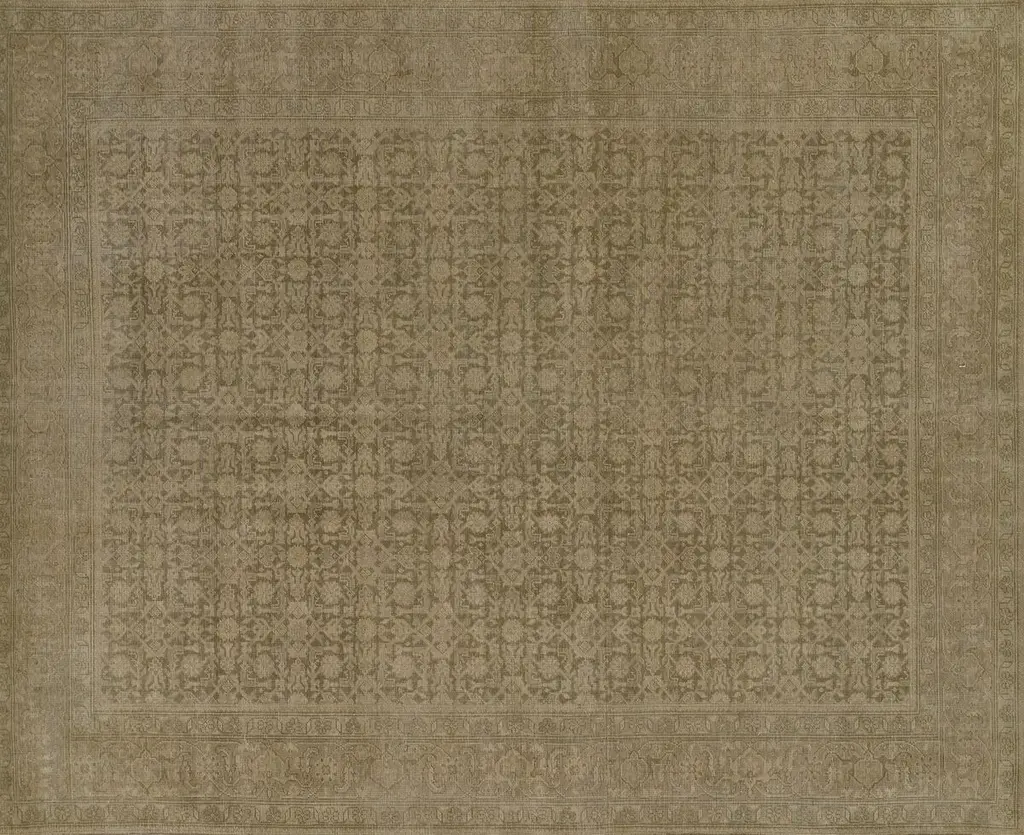
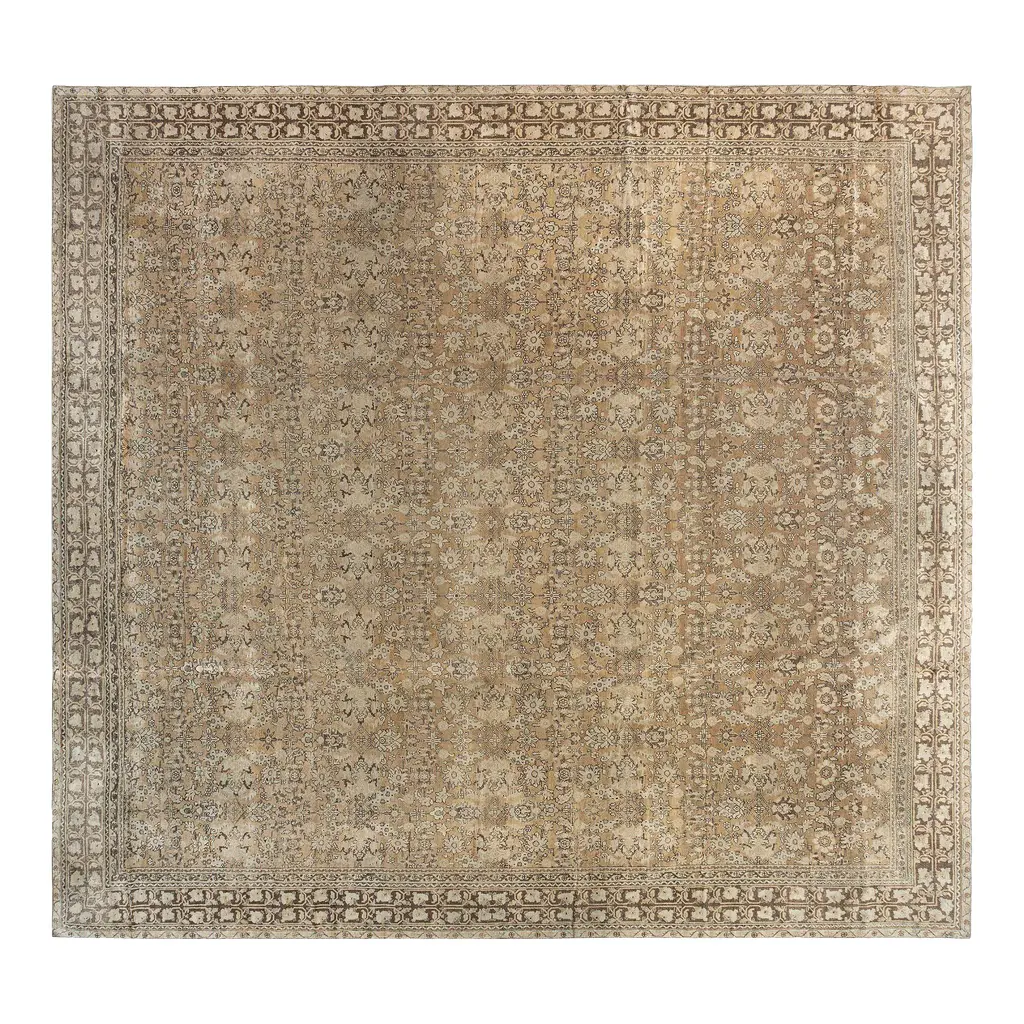
Rare large square size early 20th century authentic Persian Tabriz featuring Classic Herati pattern in different shades of Brown Please note we took images from both the light and dark side of the rug, circa 1920, measures: 15'1" x 15'5". A Tabriz rug or carpet is a type in the general category of Persian carpets from the city of Tabriz, the capital city of East Azarbaijan Province in North West of Iran. It is one of the oldest rug weaving centers and makes a huge diversity of types of carpets. The range starts at Bazaar quality of 24 raj (Number of knots per length of 7 cm of the widths of the rug) and on up to the incredibly fine 110 raj. Raj are the units of knot density (it shows the fitness of the rug which based on the number of strings used for the foundation of the rug. Strings materials are usually made of cotton or silk which is used for very fine rugs). Tabriz has one of the most diverse displays of designs from medallion, Herati/Mahi, to figural, pictorial, and even 3D shaped rugs. The major producers in Tabriz today include: Alabaf of Tabriz, Galibafi Nassadji Tabriz, and Miri Brothers. Tabriz has been a large and worldwide famous carpet making center in the Iran and the world. It played a significant role in development the rich traditions of the decorative and applied arts. The art of Tabriz carpet was in its zenith in the 12th-16th centuries. About 200 Tabriz school masterpieces of the classical or "golden" period of the 14th century are characterized by a harmonic merge of the arts of miniature paintings and weaving, by a high level of craftsmanship demonstrated by artists and carpet weavers.
Similar products