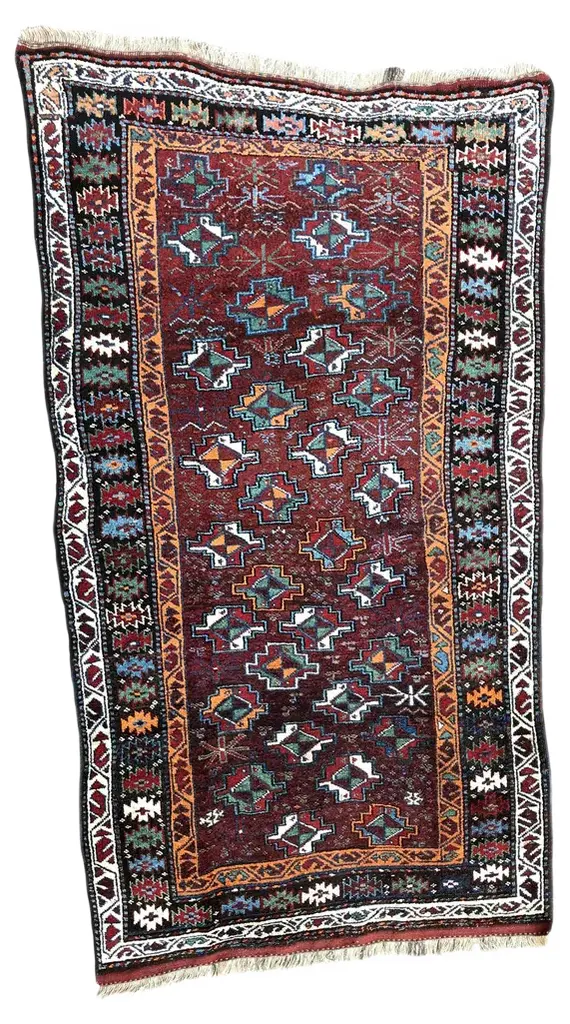
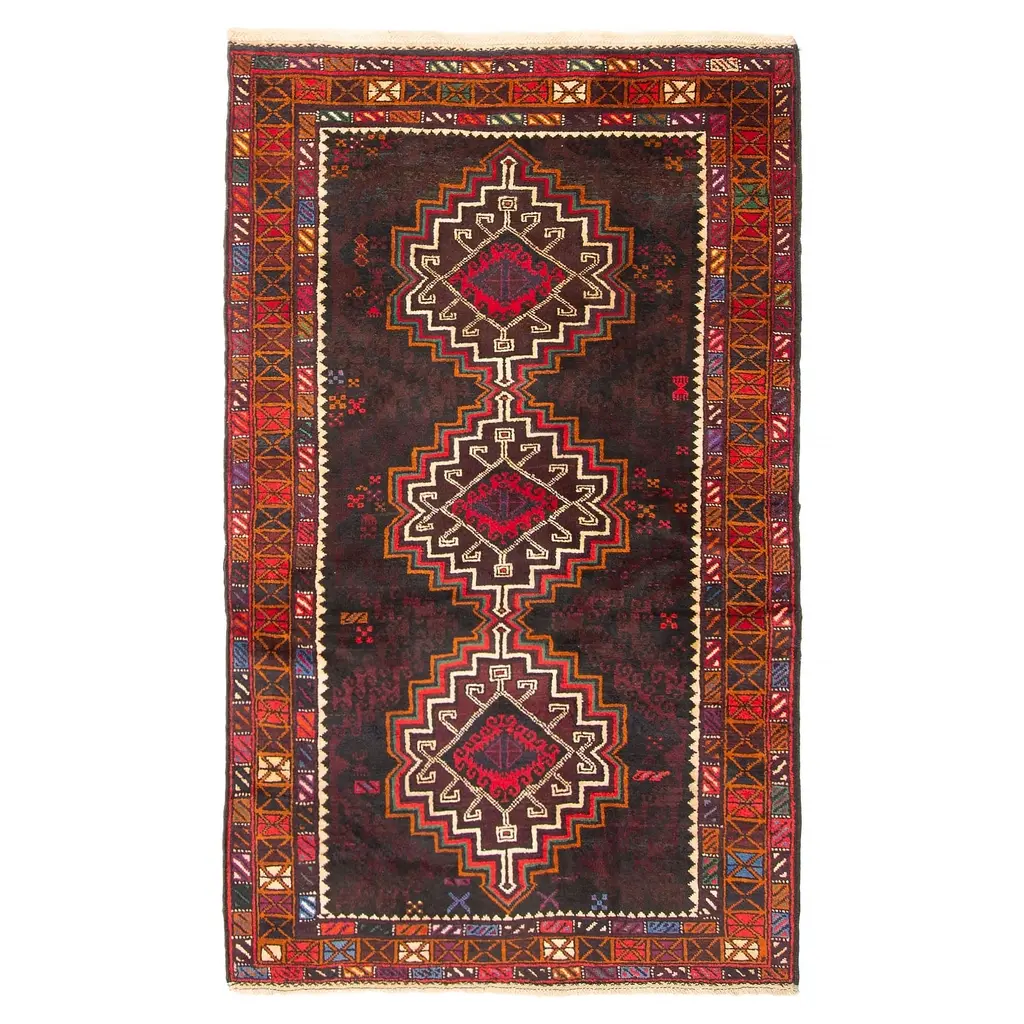
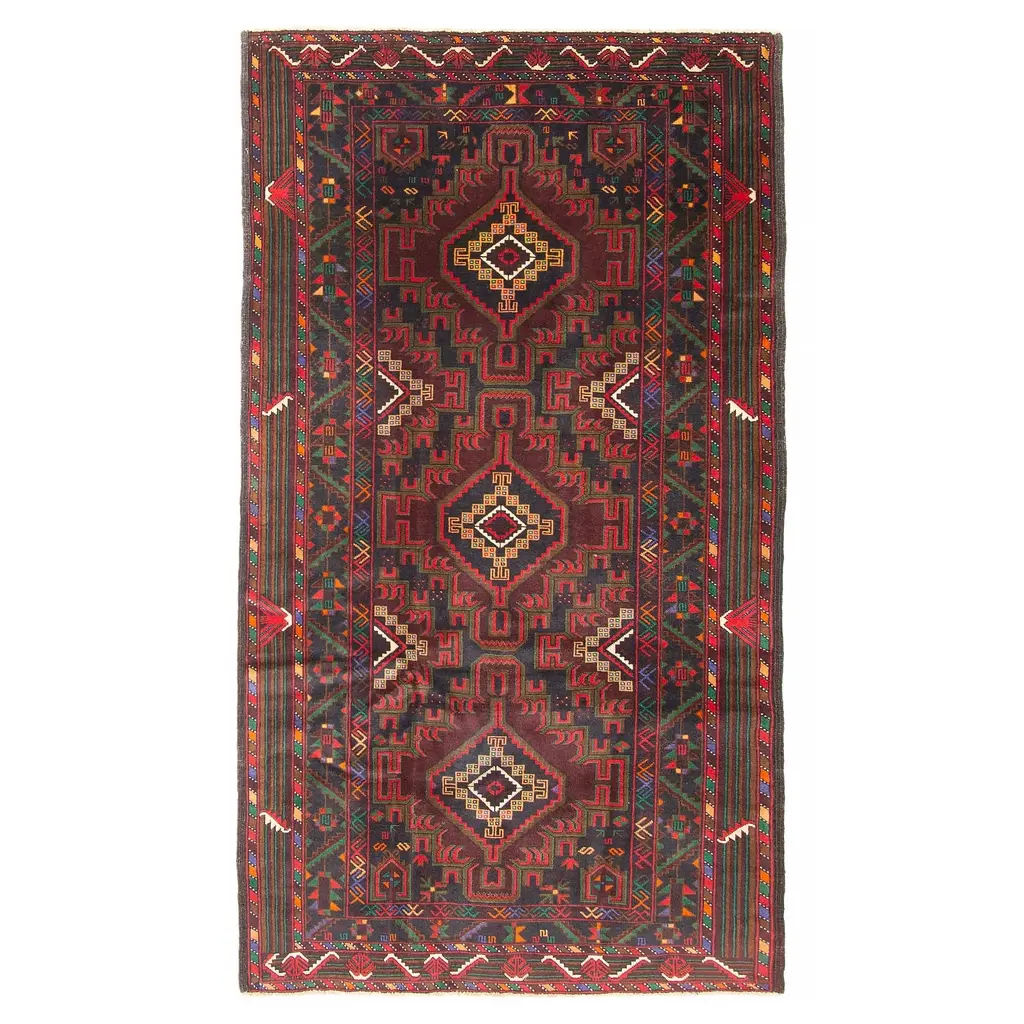
79569 Antique Persian Kurd Rug, 04'02 x 05'08. The Guardian of the Highlands: A Late 19th Century Persian Kurd Masterpiece Woven during the Late 19th Century, this hand knotted wool antique Persian Kurd rug captures the raw nobility and tribal sophistication that define the great Kurdish weaving traditions of western Persia. Kurdish rugs are revered among collectors for their spirited drawing, robust wool, and powerful symbolism—qualities that transform these village textiles into enduring works of cultural artistry. The surface radiates a commanding presence, where bold geometry and vibrant natural dyes converge to create an atmosphere of both strength and mystique. More than a decorative object, this extraordinary masterpiece evokes the rugged mountain landscapes and proud tribal heritage from which it emerged, offering a rare glimpse into a world where weaving served as both artistic expression and symbolic storytelling. At the heart of the exceptional composition rise three stacked concentric lozenges, each outlined with animated hooked edges that pulse with tribal energy. These multicolored diamond medallions appear almost like protective shields arranged along the vertical axis, creating a dramatic architectural rhythm that anchors the entire design. Within each lozenge rests a small scorpion motif, a powerful symbol found in Kurdish and Caucasian textiles that represents vigilance, survival, and spiritual guardianship. The scorpion, both feared and revered, served as a talisman within tribal culture—its presence woven into the rug as a protective emblem meant to guard the household and those who walked upon it. Where the hooked lozenges meet along the central axis, an iconic secondary motif emerges: the formation of a Ram’s Horn emblem, subtly created through the stacking of the medallions themselves. This ingenious visual transformation speaks to the intuitive brilliance of Kurdish tribal design. The ram’s horn has long symbolized fertility, heroism, power, and masculine vitality, honoring the strength of pastoral life and the courage of tribal warriors. Dotted within these forms are delicate Goz eye motifs, ancient protective symbols believed to ward off the malevolent gaze of the “evil eye.” Together, these layered motifs create a woven narrative of resilience, protection, and life force—an esoteric language expressed through geometry and color. Encasing the dramatic field is a series of vibrant borders that reinforce the ceremonial presence in this Late 19th Century Persian Kurd rug. A striking diagonal stripe border composed of multicolored tribal motifs frames the composition with rhythmic movement and dynamic energy. This lively band is flanked by a refined running water guard border, symbolizing purification and the eternal flow of life, and an outer “bird on a pole” guard border, a charming yet meaningful tribal motif often interpreted as a messenger between earthly and spiritual realms. The entire arrangement reflects the poetic balance of Kurdish weaving—where boldness and delicacy coexist. Rich with symbolism, tribal elegance, and nomadic charm, this exquisite work of art stands as a rare and captivating heirloom, destined to elevate interiors with both cultural gravitas and timeless prestige. Abrash. Hand knotted wool. Made in Iran. Measures: 04'02 x 05'08. Pile Height: 0.15 of an inch. Date: 1880's. Late 19th Century.
Similar products