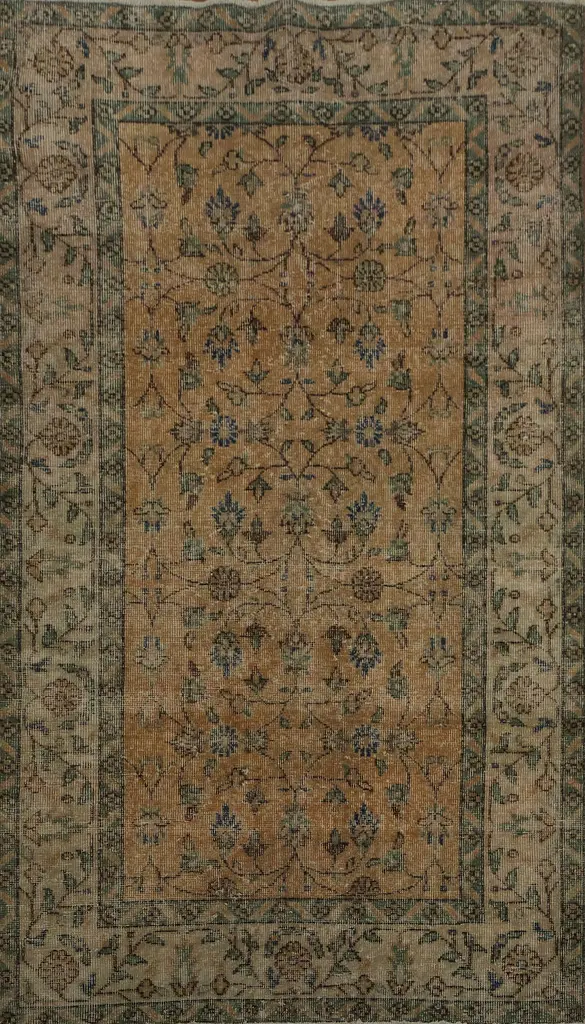
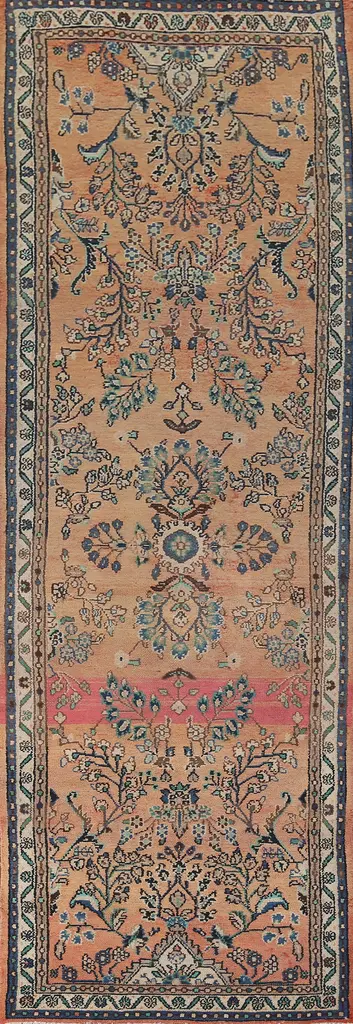
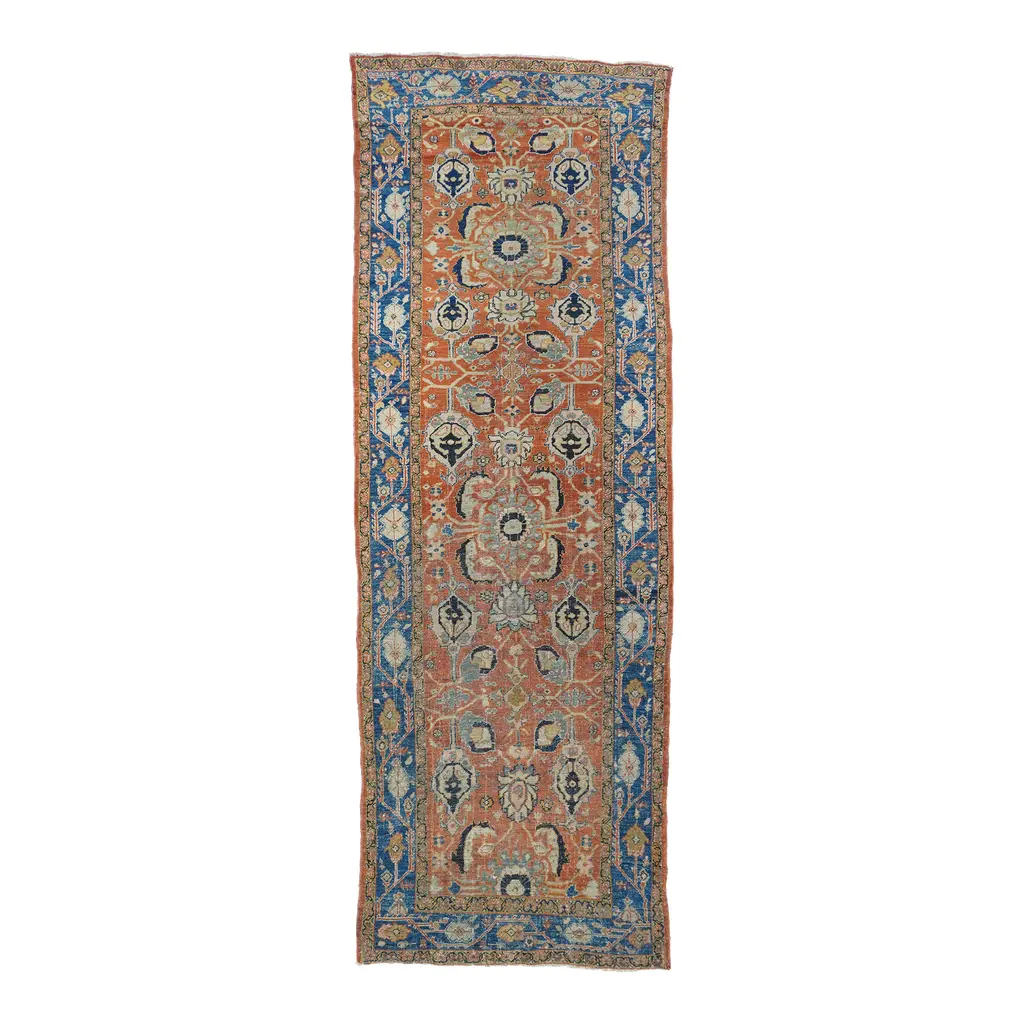
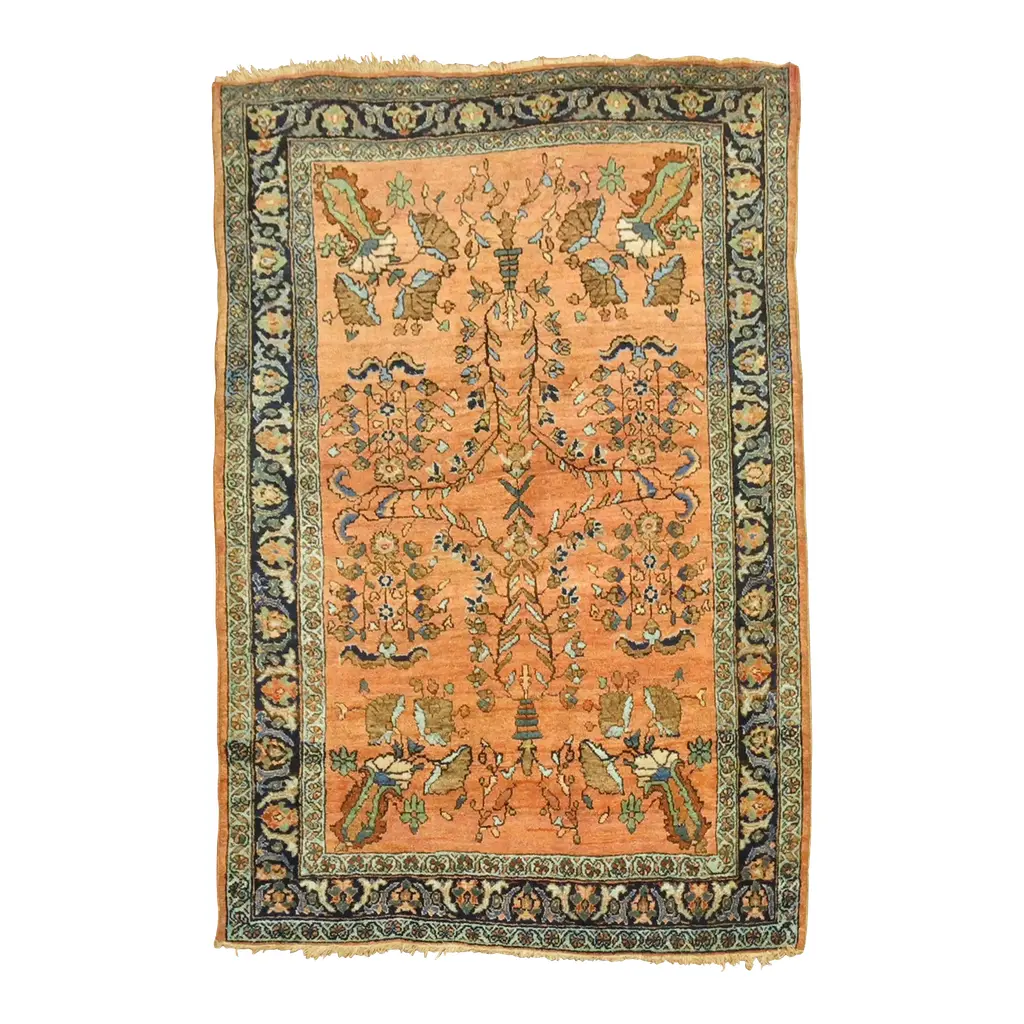
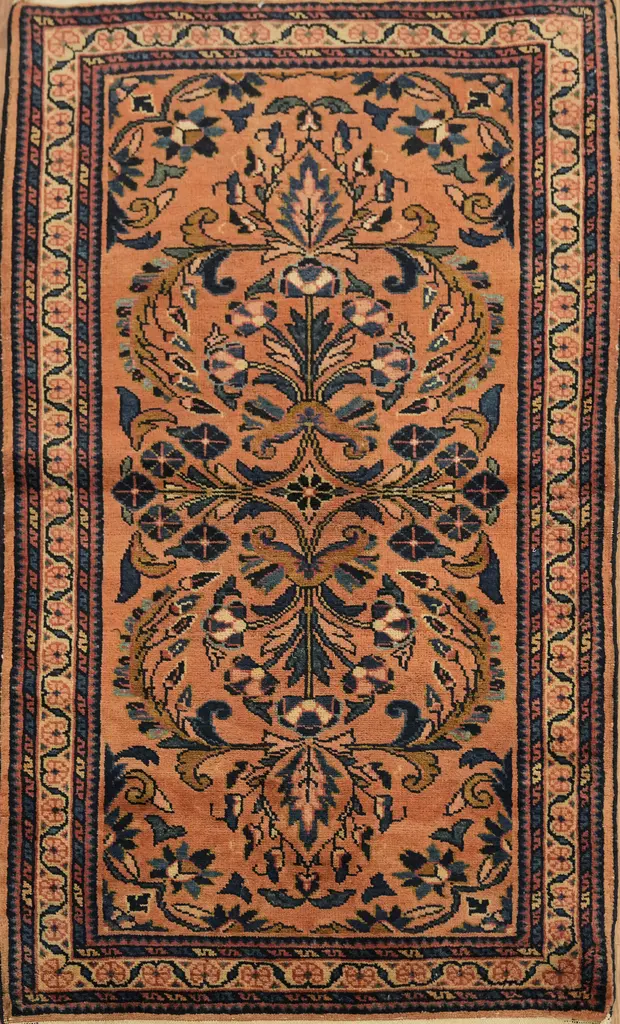
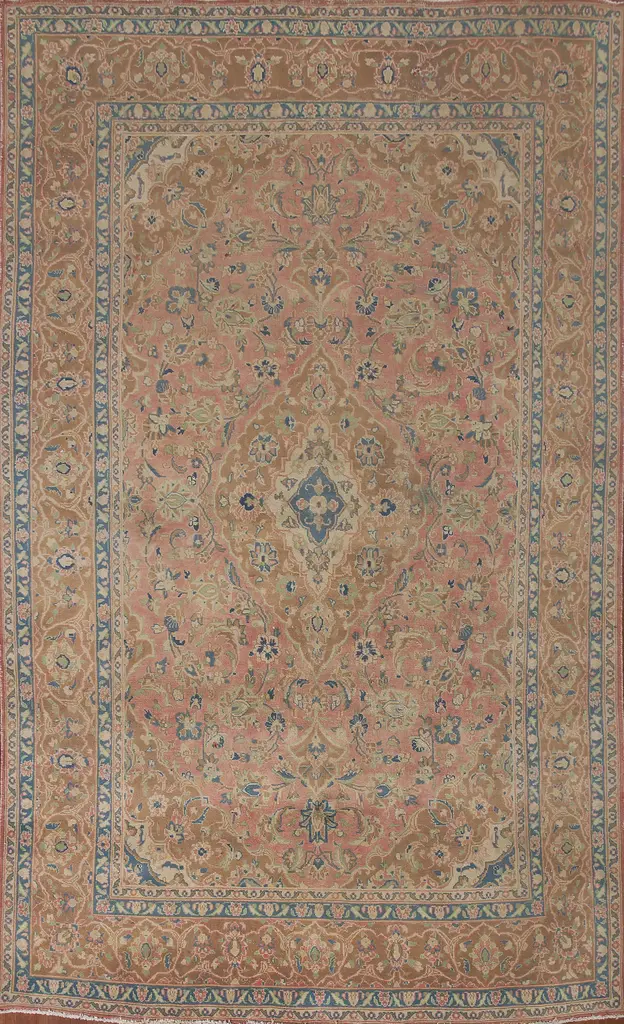
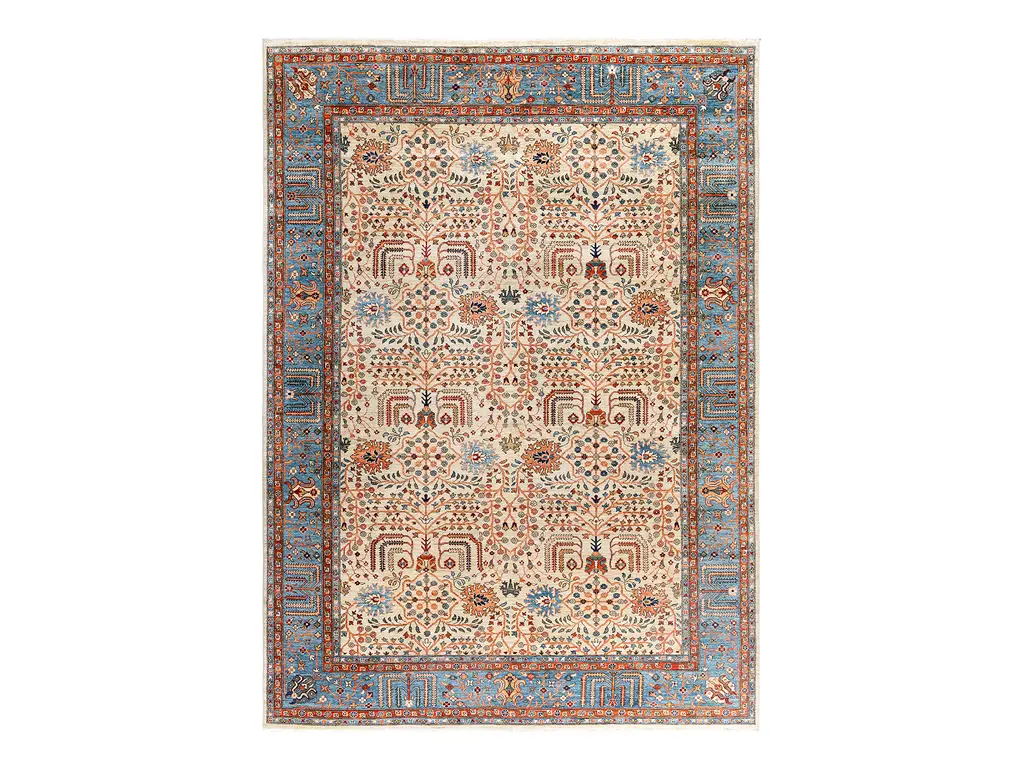
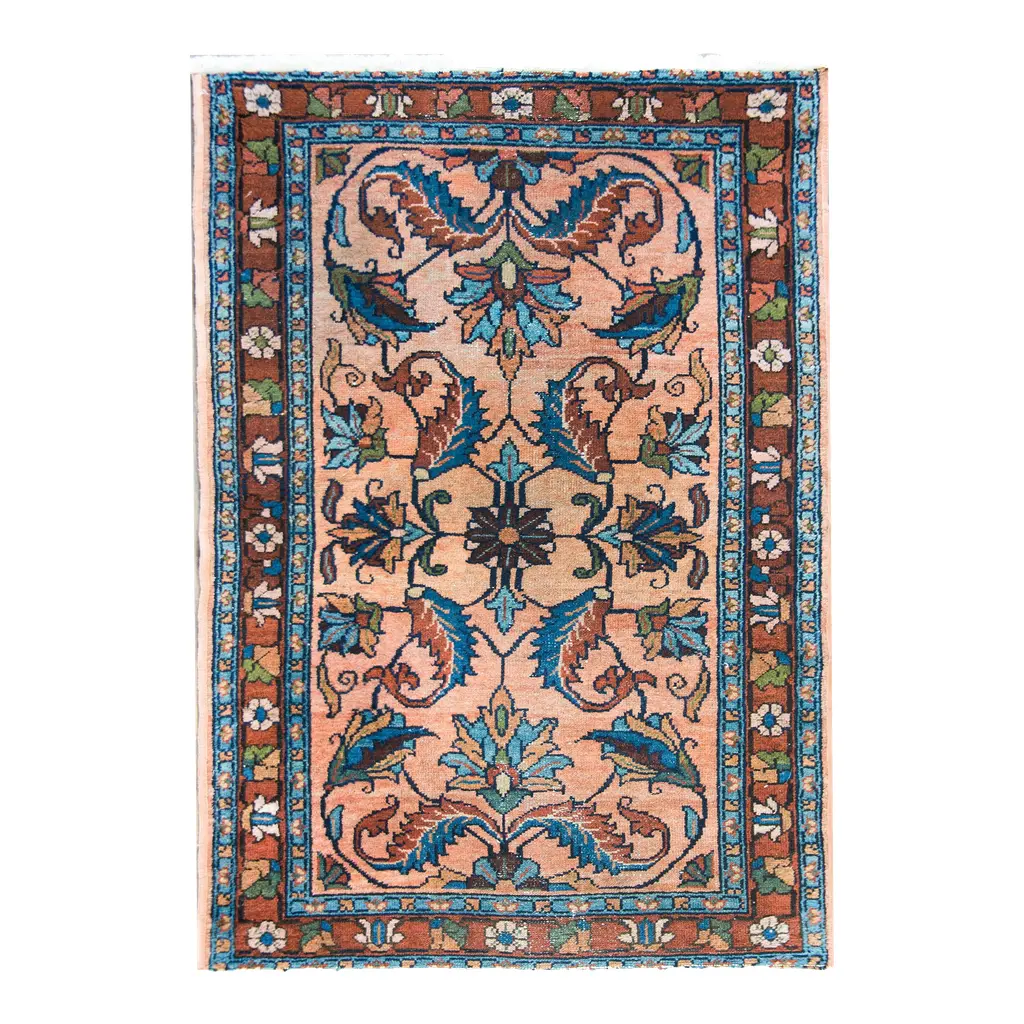
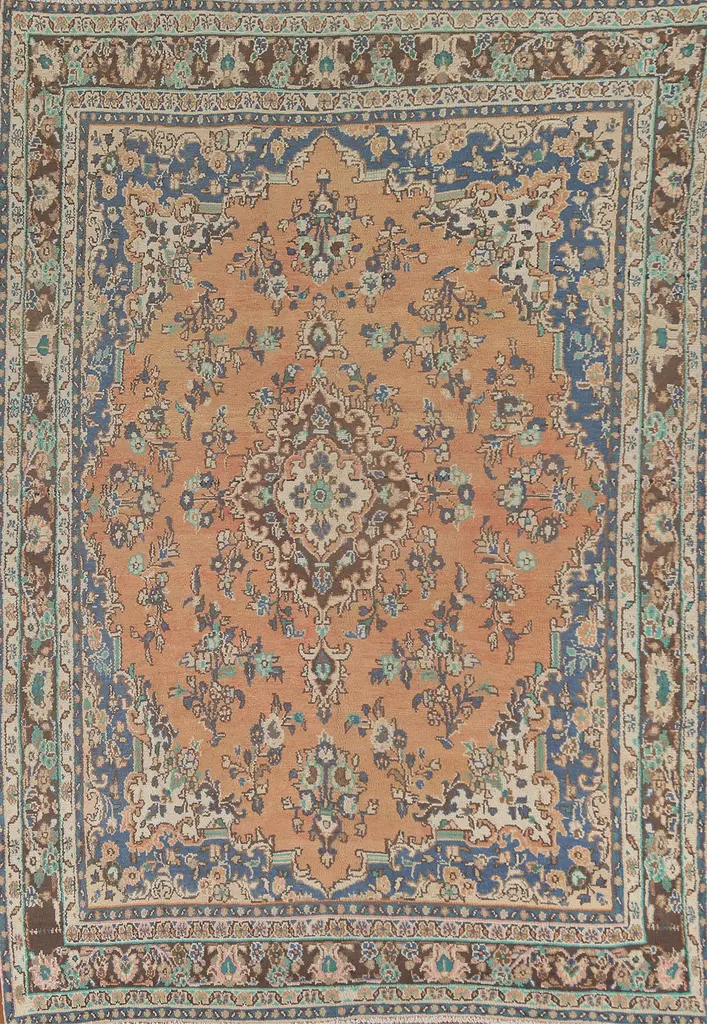
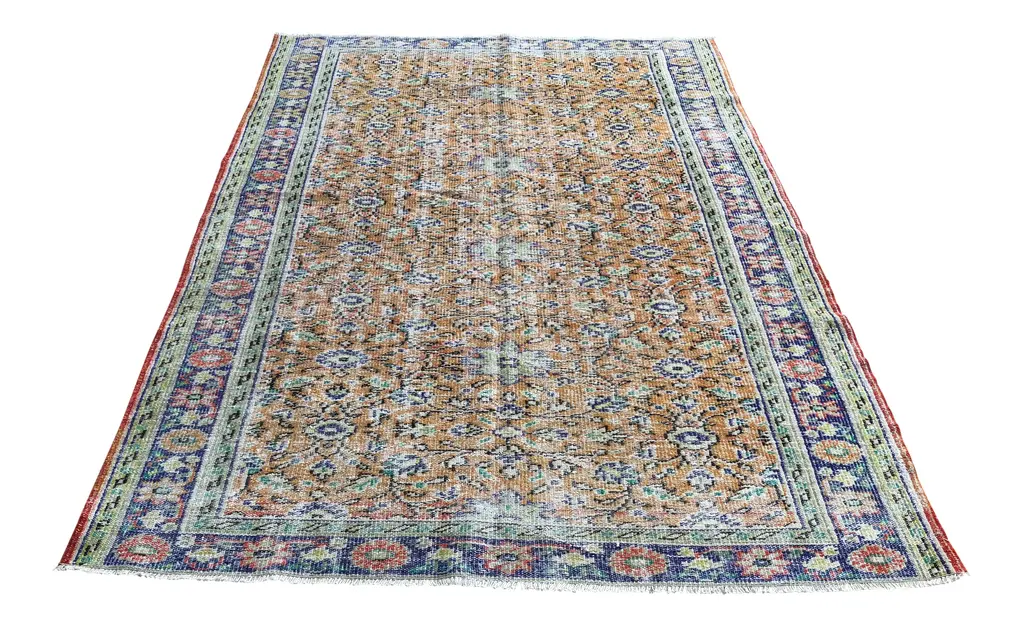
A vintage Persian malayer rug from the mid-20th century. Malayer town and the surrounding weaving area of about 120 villages in northwest persia constitutes its own district distinct from both hamadan to the north and sarouk/arak to the south. Malayer is a prosperous market town and administrative center in one of the most fertile agricultural areas in northwest Iran. Carpet weaving has been carried on since at least the early 19th century; a carpet dated 1816 and inscribed to a local mosque is in the toronto museum. This and several other kellegi format pieces (gallery rugs) are in indo-isfahan palmette patterns on red grounds. Antique rugs from the town of malayer adheres to this basic convention, but the weave is a little finer and the carpets less folky. The knot count runs seven horizontally by eight vertically. Gallery rugs were a malayer specialty and the six feet by fifteen feet size is frequently encountered in antique rugs from malayer.
Similar products