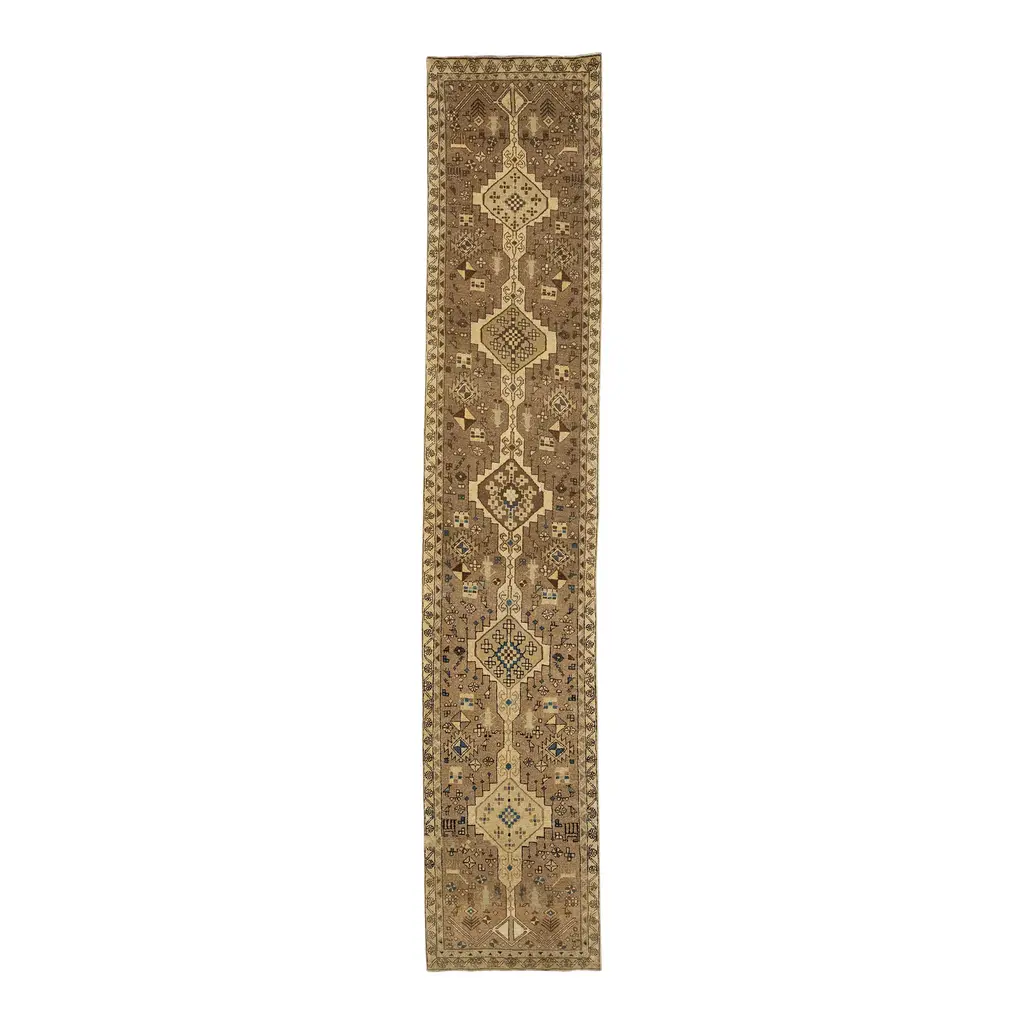
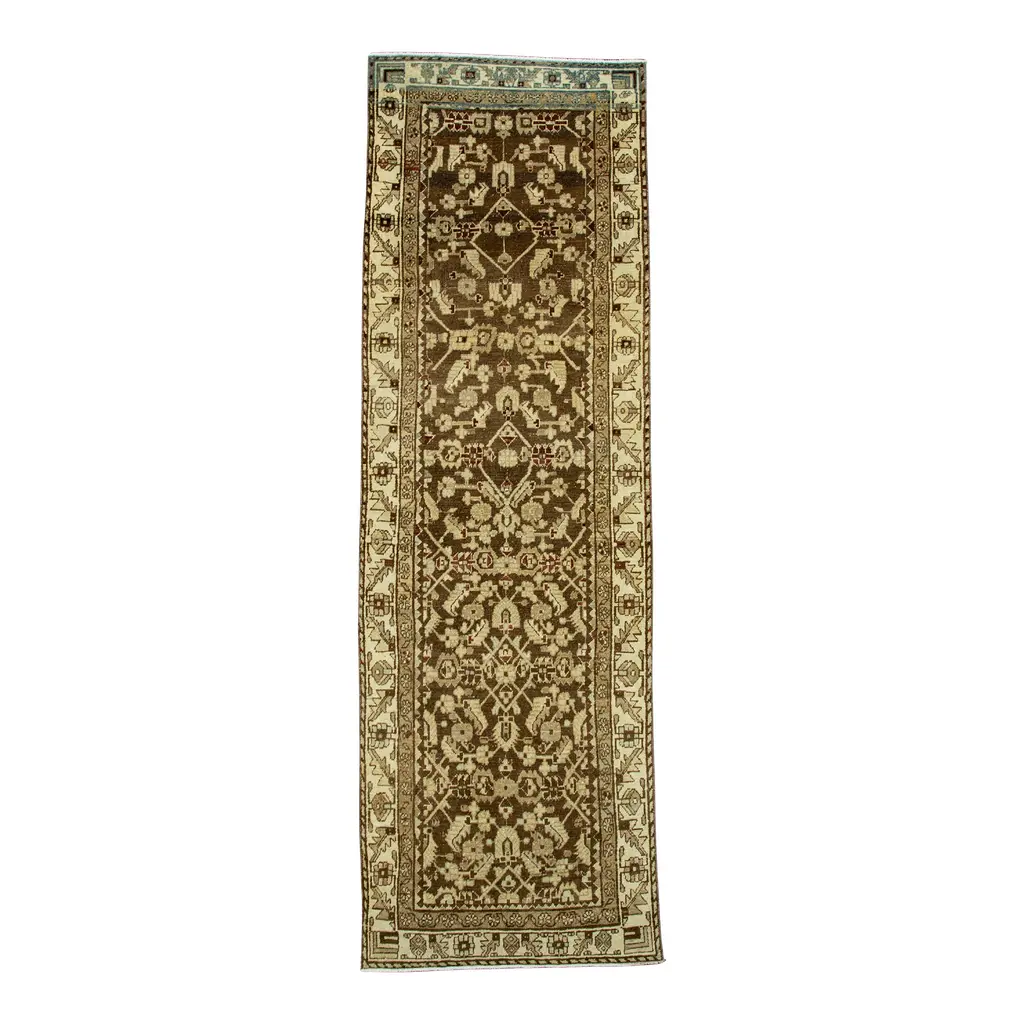
This vintage, circa 1920, Malayer runner has a buff-brown field scattered with a variety of flowerheads and stellar flowerhead lozenges around a pair of large tobacco-brown serrated lozenges linked by a sandy-yellow stepped lozenge, the large lozenges with a similar central stepped lozenge surrounded by buff-brown stellar flowerheads, smaller lozenges and square panels at each end, the tobacco-brown serrated spandrel, linked at the sides by a zig-zag stripe, each with large buff-brown square panels with hooked motifs together with floral stems and flowerheads, in a narrow tobacco-brown border with meandering buff-brown floral vine stripes between narrow buff-brown and tobacco-brown zig-zag stripes. Malayer rugs originate from the Malayer region in northwest Iran, known for producing finely crafted, durable rugs with a distinct village aesthetic. These rugs are typically hand-knotted by skilled artisans using high-quality wool and feature intricate, small-scale geometric patterns, including Herati designs, floral motifs, and boteh (paisley). Their color palettes are often muted, with soft blues, reds, and earthy tones, lending them a vintage appeal. Malayer rugs are appreciated for their unique charm, blending traditional Persian artistry with a rustic, folk-like character, making them popular in both classic and modern interiors.
Similar products