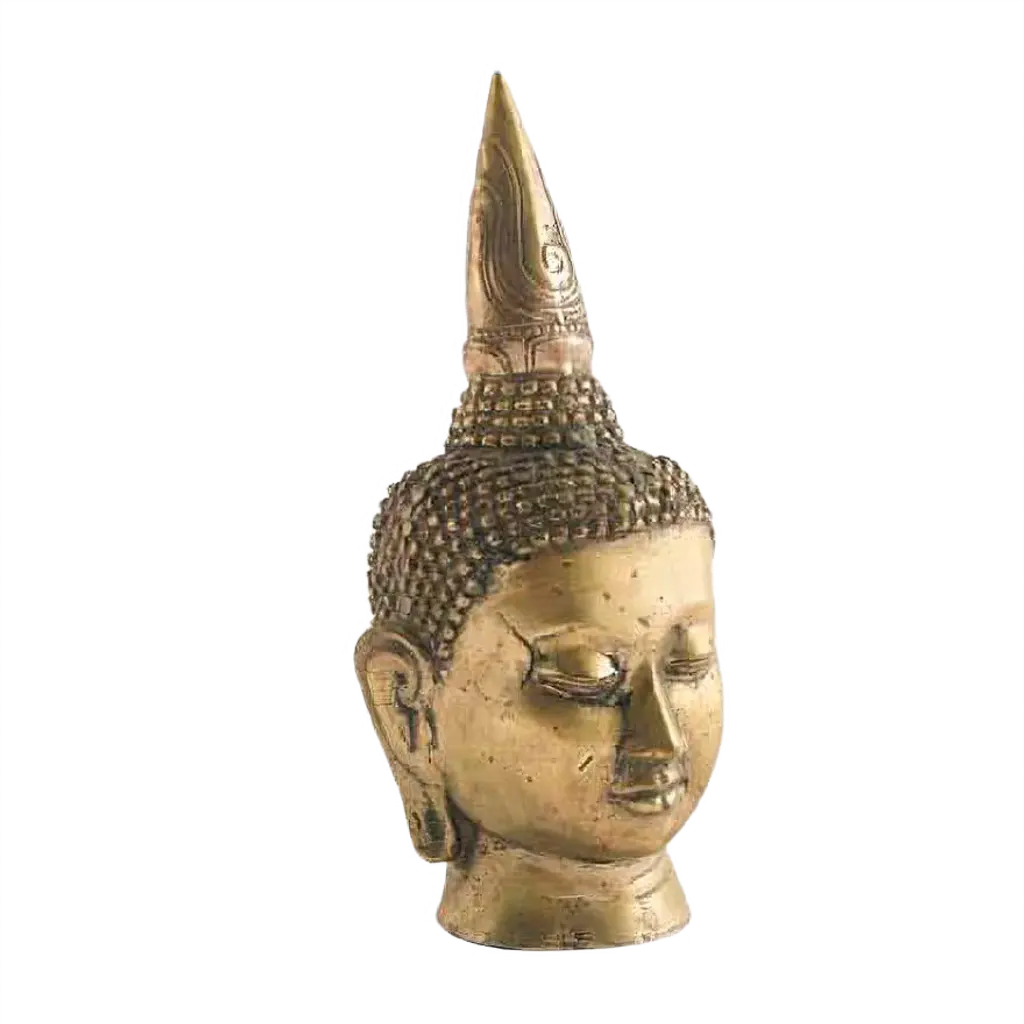
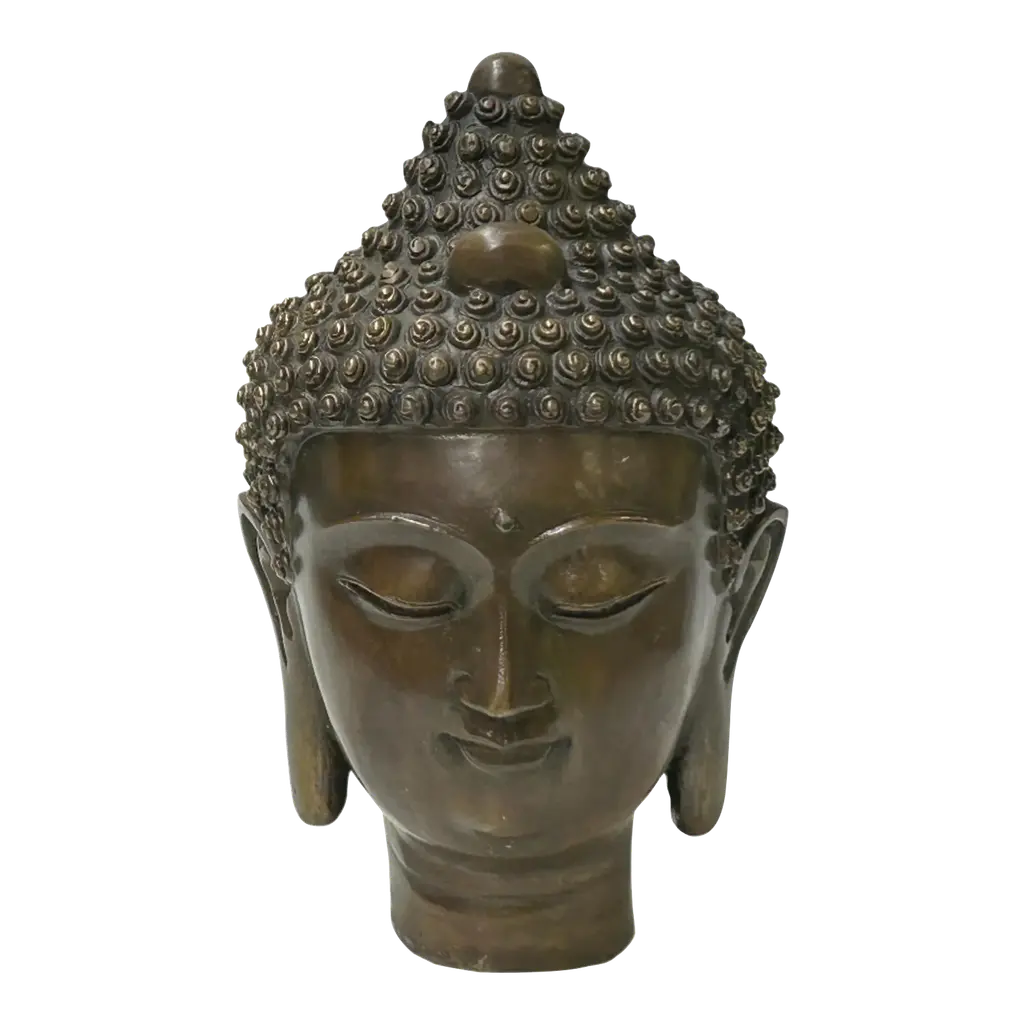
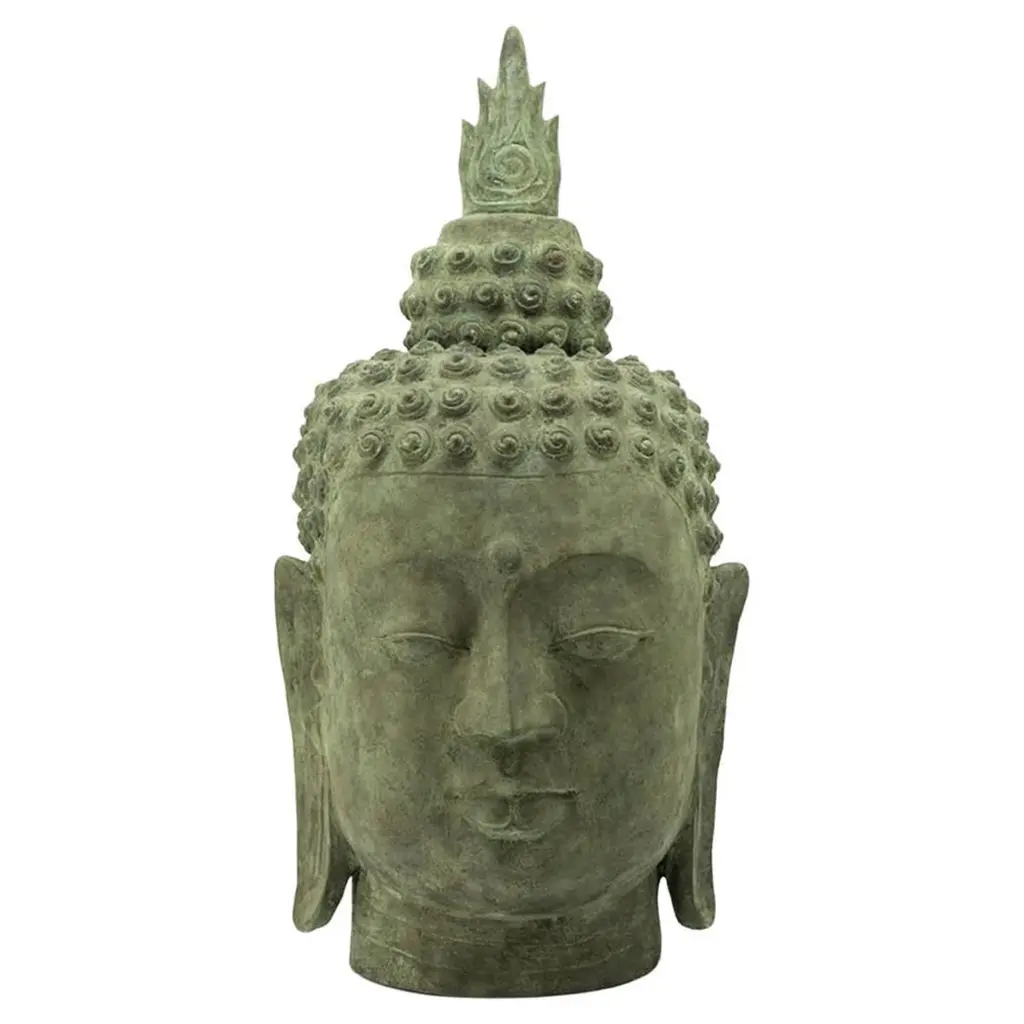
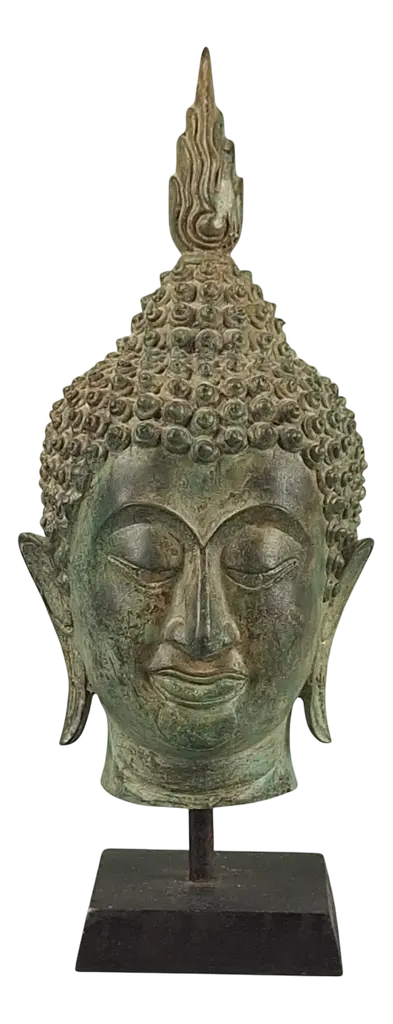
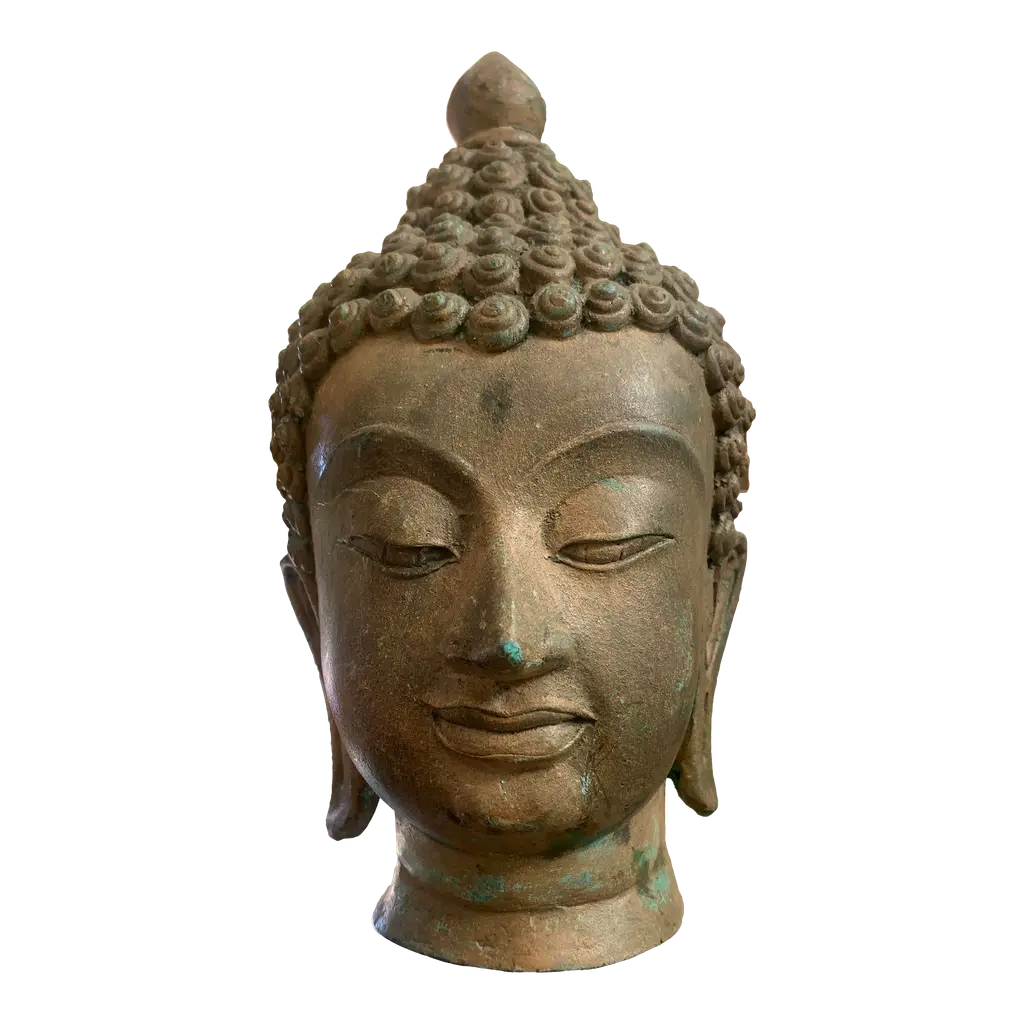
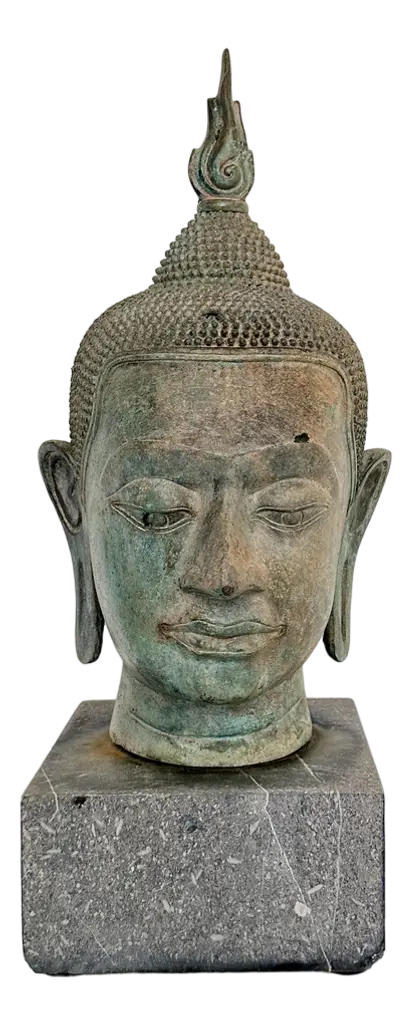
Antique Thai Bronze Head of the Walking Buddha, Sukhothai Tradition An exceptional antique Thai bronze head from a near life-size Walking Buddha, executed in the elegant Sukhothai tradition. Beautifully cast with refined modeling and a rich, naturally aged bronze patina, the sculpture exemplifies the graceful proportions and serene expression that distinguish one of the most celebrated traditions in Thai Buddhist art. The head measures approximately 11 inches in height. Based on its stylistic characteristics, this work is attributed to the Sukhothai tradition and is believed to date to the Sukhothai period (13th–15th century) or an early later period inspired by the enduring artistic legacy of the kingdom. A professional appraisal has been requested from the curatorial staff at the Denver Art Museum, and any additional findings will be made available upon request. The sculpture was acquired through Buddha Gallery Auction in California. According to the previous owner, it was purchased nearly fifty years ago while serving as a diplomat in Southeast Asia and subsequently remained in a distinguished private collection in a grand San Francisco residence. About the Sukhothai Tradition The Sukhothai Kingdom (1238–1438), centered in present-day north-central Thailand, is widely regarded as Thailand’s first independent kingdom and produced some of the most refined Buddhist sculpture in Southeast Asia. Although the kingdom was eventually absorbed into the Ayutthaya Kingdom, its artistic innovations profoundly influenced later Thai sculpture, with the Sukhothai style continuing to be admired and emulated for centuries. This bronze head displays many of the hallmarks of the classical Sukhothai aesthetic, including a harmonious oval face, gently downcast eyes, delicately arched eyebrows, a slender aquiline nose, elongated earlobes, finely rendered snail-shell curls, and the distinctive flame-like ushnisha, symbolizing the Buddha’s enlightened wisdom and spiritual radiance. The subtle smile and tranquil expression embody the spiritual serenity and graceful naturalism for which Sukhothai sculpture is renowned. The refined facial modeling compares favorably with published examples of Sukhothai bronze sculpture, including the fifteenth-century Seated Buddha in Māravijaya illustrated by Hiram Woodward Jr. in The Sacred Sculpture of Thailand (London, 1997), p. 144, fig. 145, cat. no. 55. An elegant and historically important work of Thai Buddhist art, this bronze Buddha head represents the enduring influence of the Sukhothai tradition and would make a distinguished addition to a collection of Southeast Asian art, Buddhist sculpture, or museum-quality Asian antiquities.
Similar products