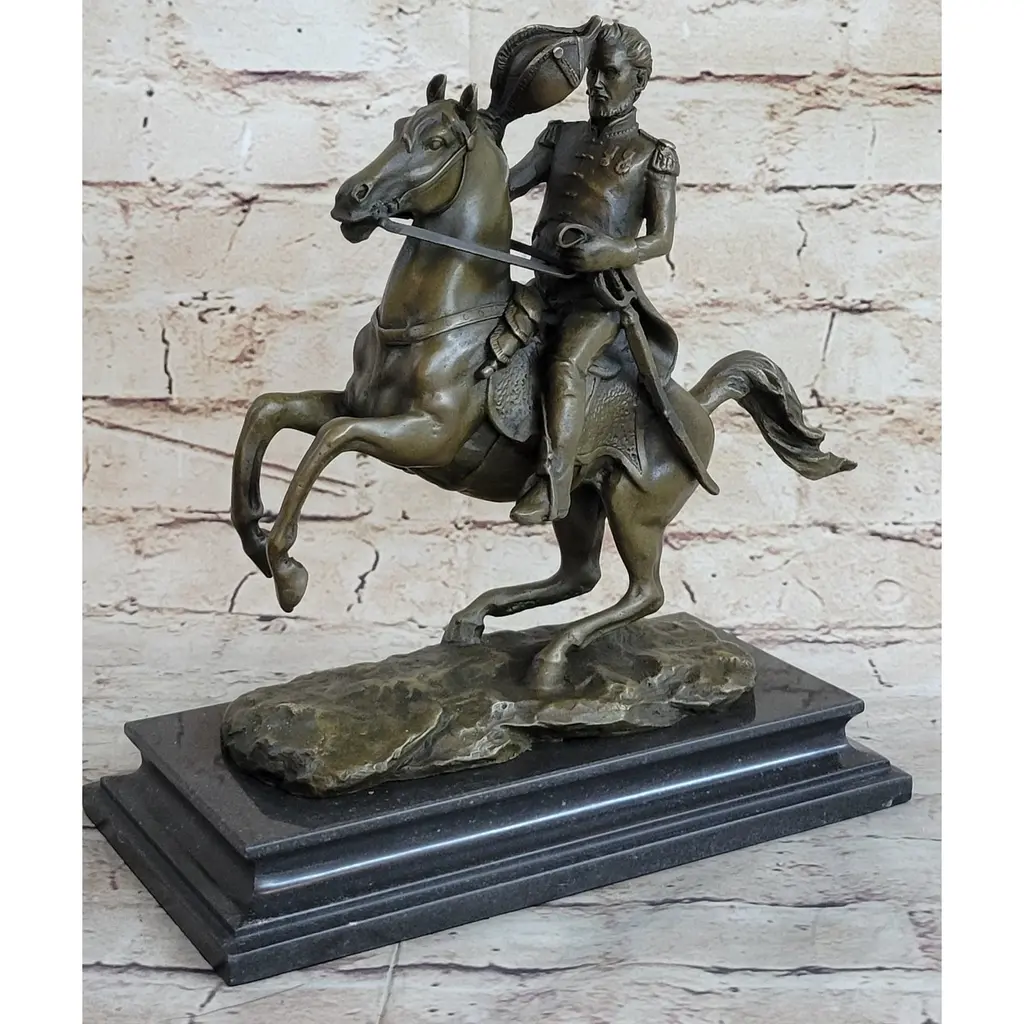
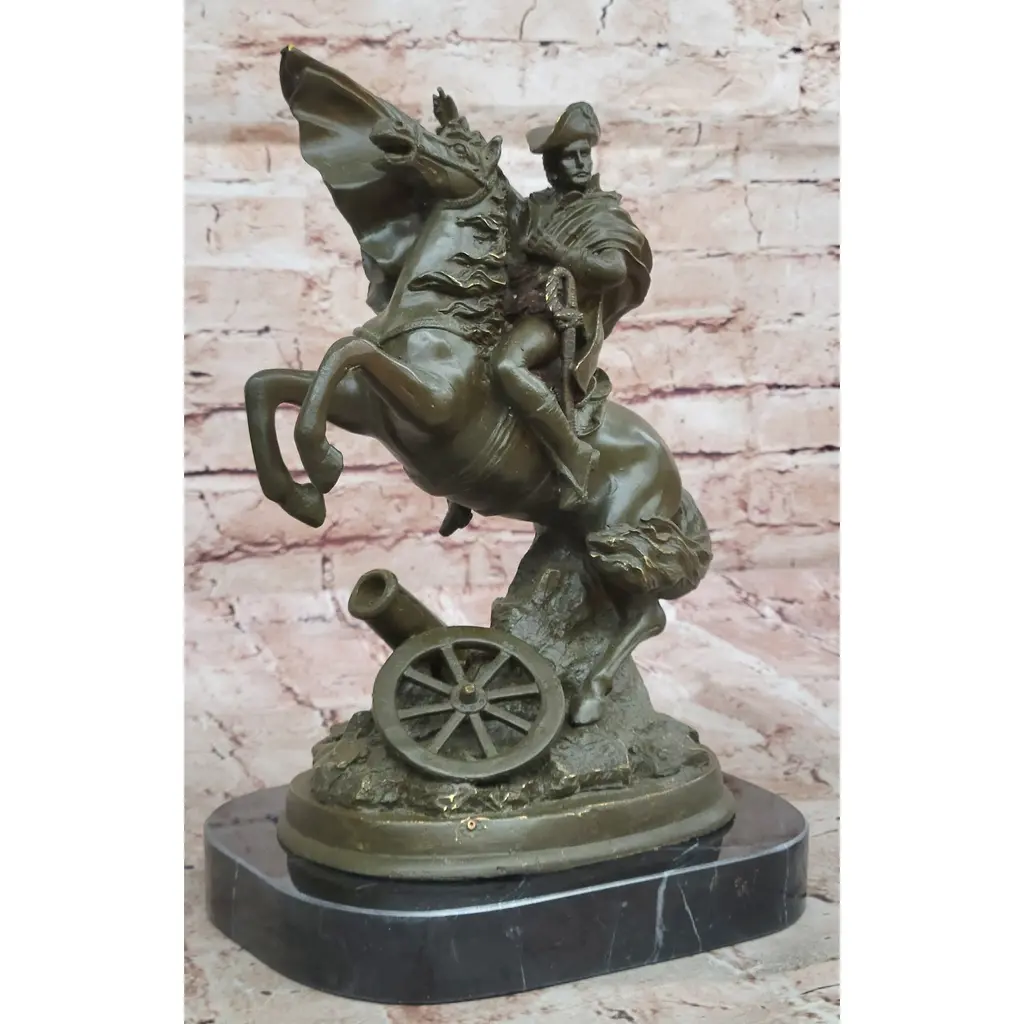
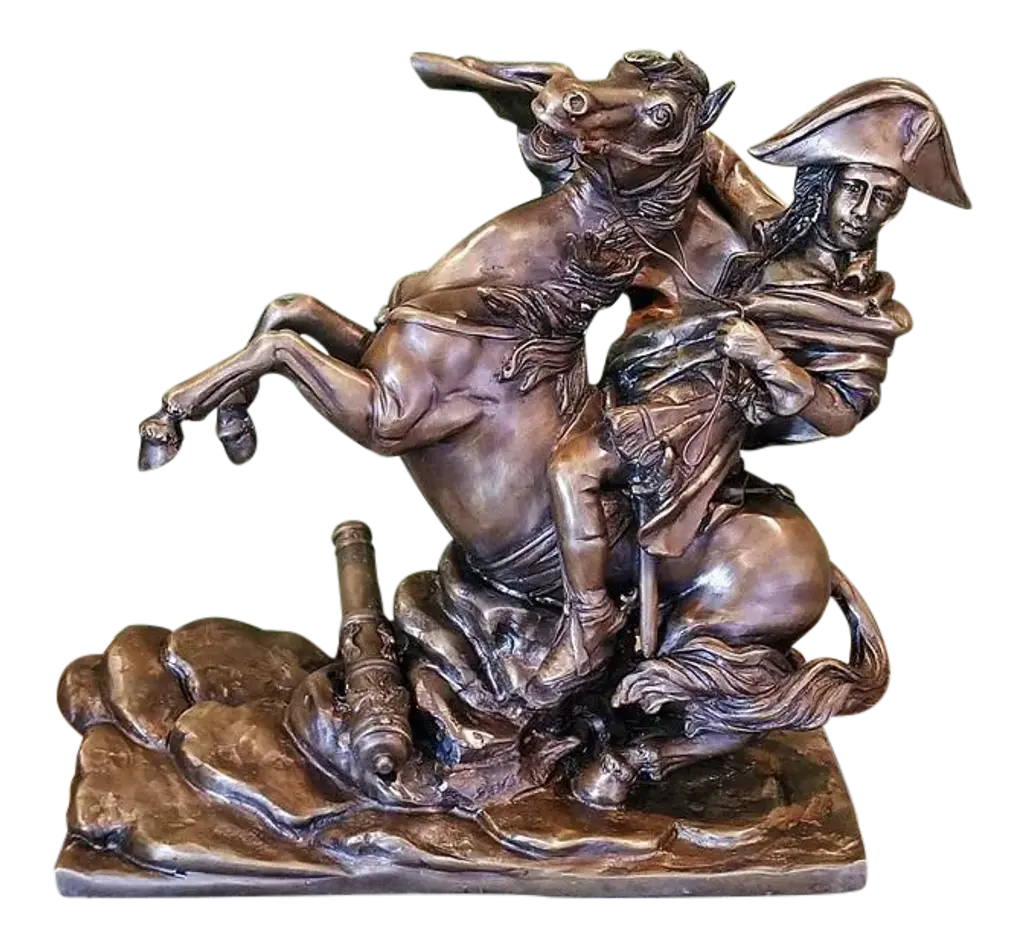
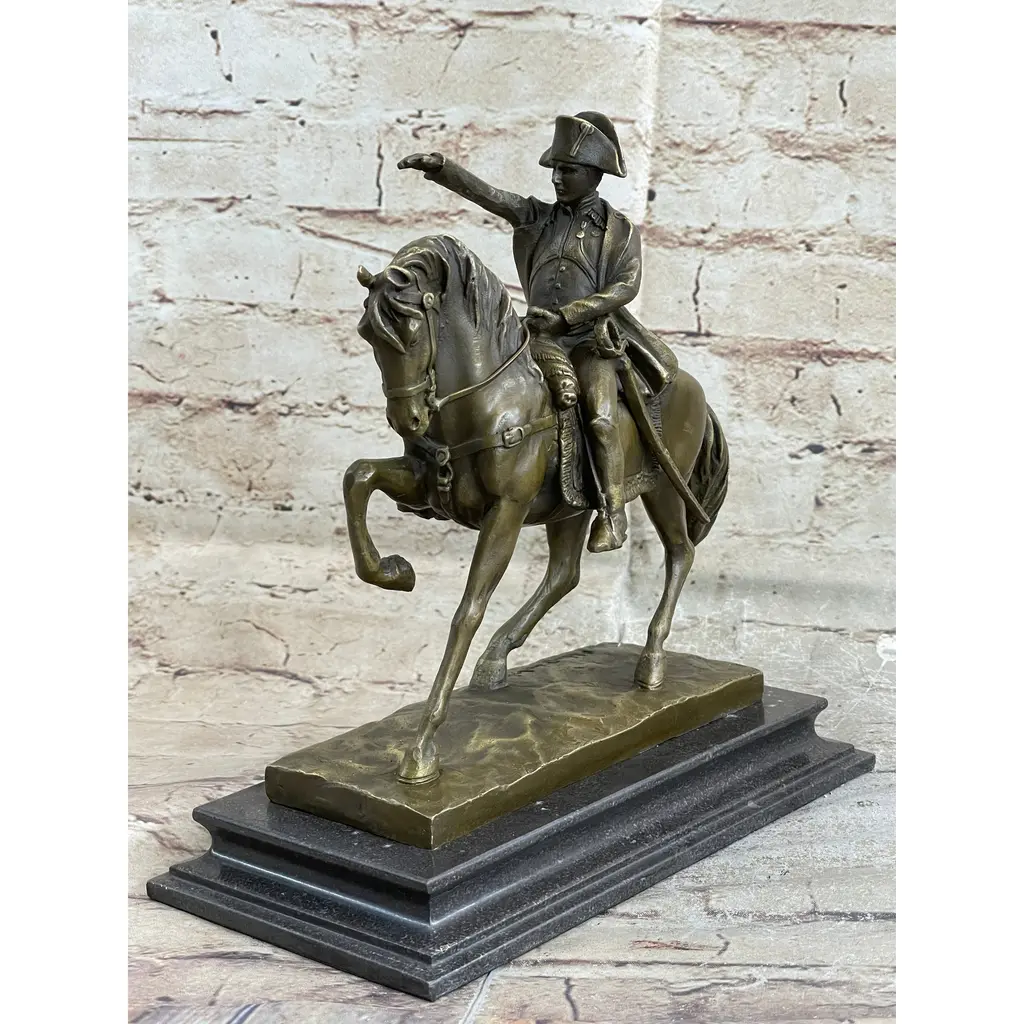
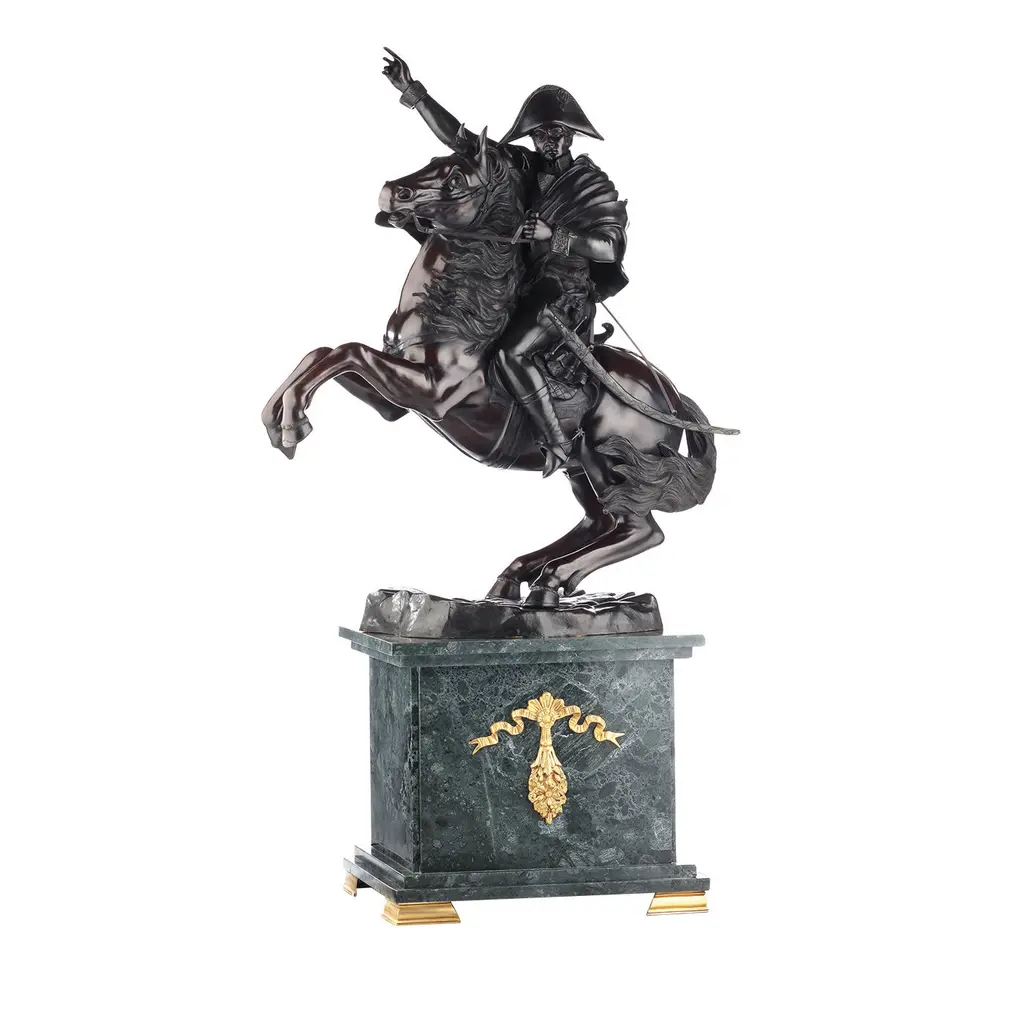
Comte de Nieuwerkerke (Alfred Emilein O'Hara, French, 1811-1892) "Napoleon I" Patinated Equestrian Bronze, cast by Susse Freres, Paris, late 19th century, the emperor on horseback with raised right arm pointing into the distance, on a rectangular base, stamped "Susse Fres" and "1303". 15.75" H x 15" W x 9" D. Emilien de Nieuwerkerke (1811–1892), known as the Comte de Nieuwerkerke, was a French aristocrat, art collector, and key cultural figure of the Second French Empire. Born in Paris to a Dutch noble family, he became a prominent member of Napoleon III's court, celebrated for his refinement and dedication to the arts. Nieuwerkerke was appointed Superintendent of Fine Arts (1849-1870). During his tenure, he was instrumental in modernizing French cultural institutions, most notably the Louvre Museum. He oversaw significant renovations and reorganizations of the Louvre, transforming it into a more accessible and prestigious institution. He championed the creation of the "Salle des États," a grand exhibition space, and worked to expand the museum's collections through acquisitions and loans. Nieuwerkerke was a staunch advocate of academic art and used his position to promote established styles, often clashing with emerging movements like Realism and Impressionism. His influence extended beyond the Louvre to other artistic and cultural policies of the empire. Keywords: Count Alfred Emilien O'Hara van Nieuwerkerke, Statue, Sculpture, Continental School European, French Art, Bronzier, French Empire, Napoleon Bonaparte, First Consul, Consulate, Marengo, Animalier, Horses, Cavalry, Fin de Siecle, Antique, Decorative Arts, Equestrian
Similar products