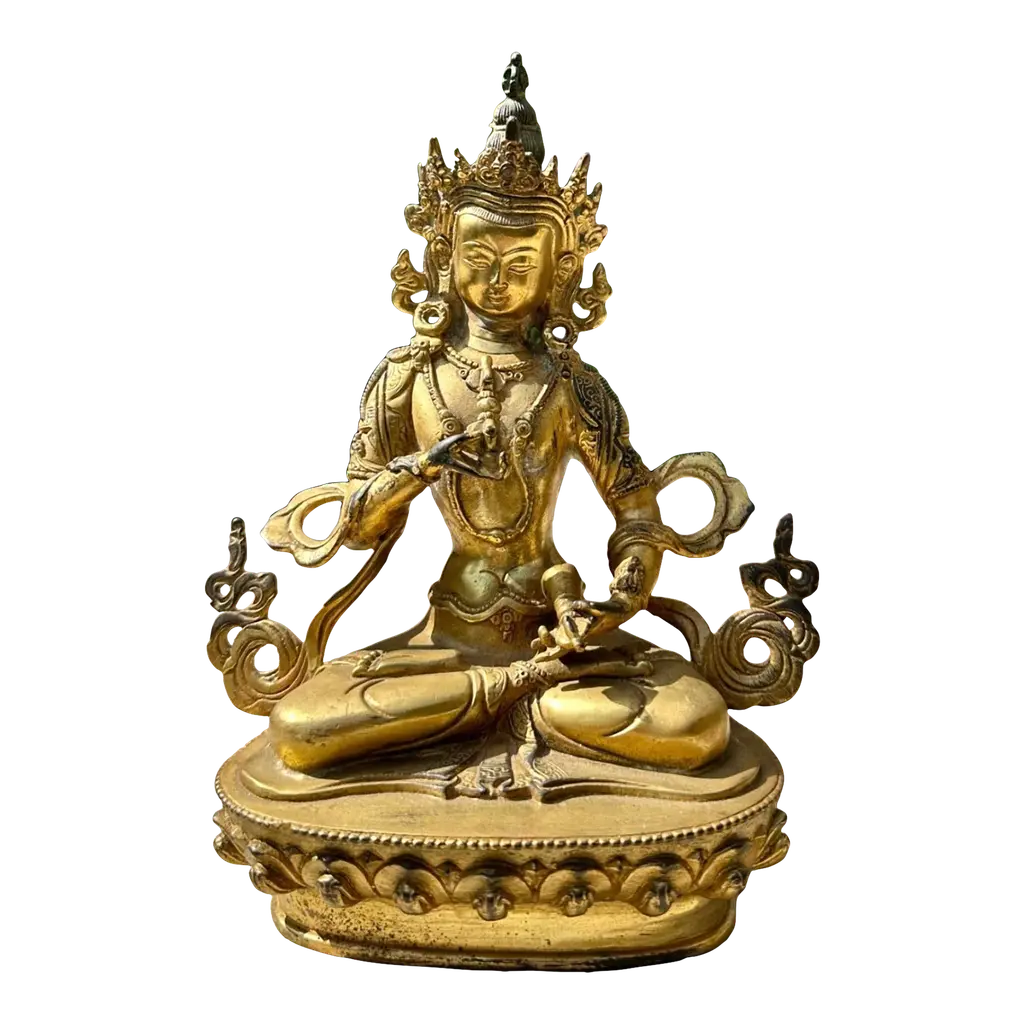
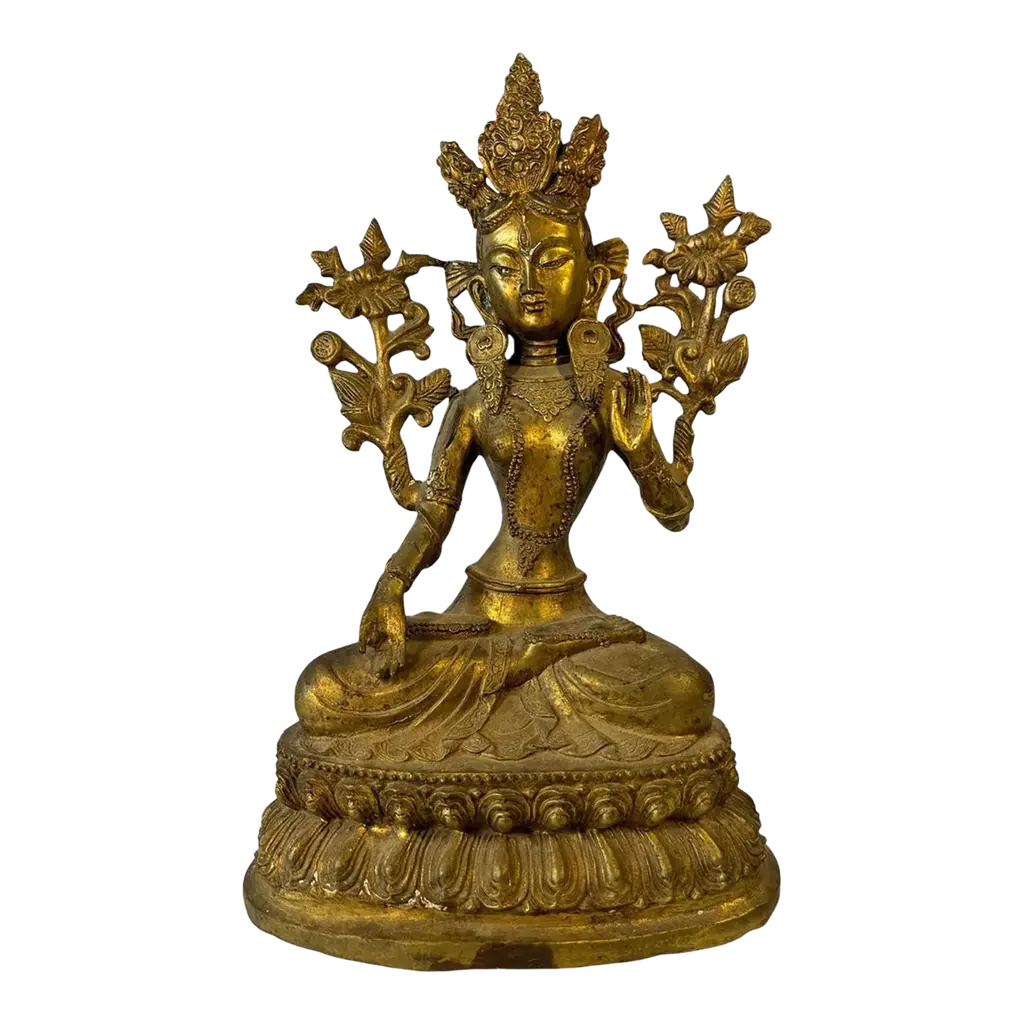
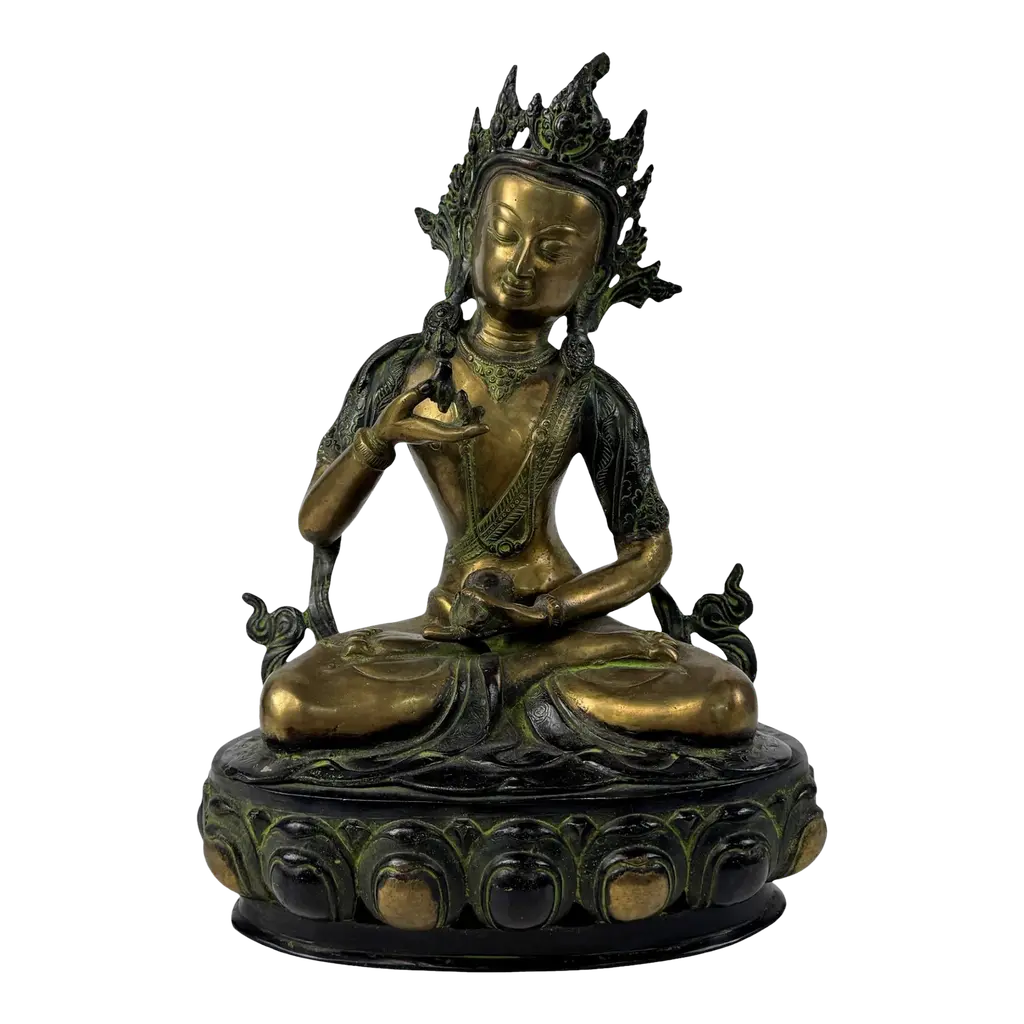
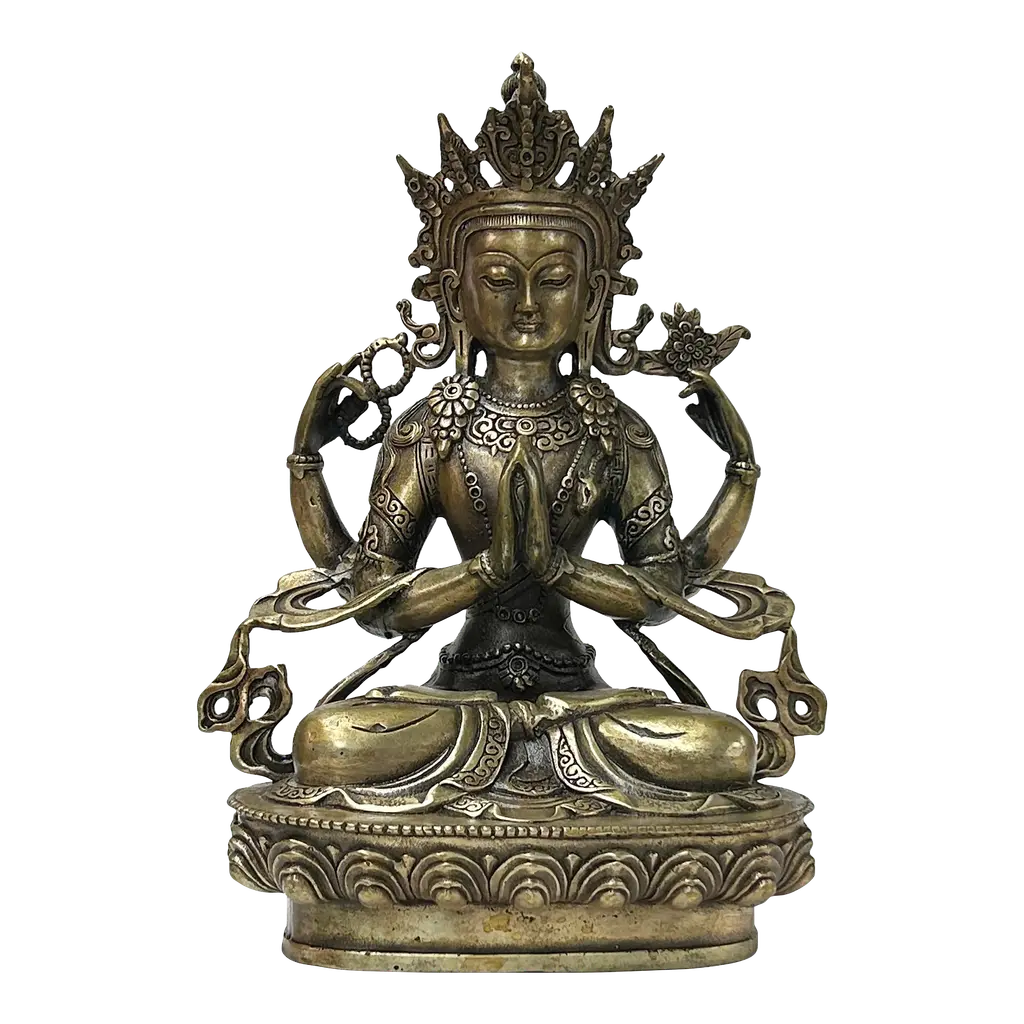
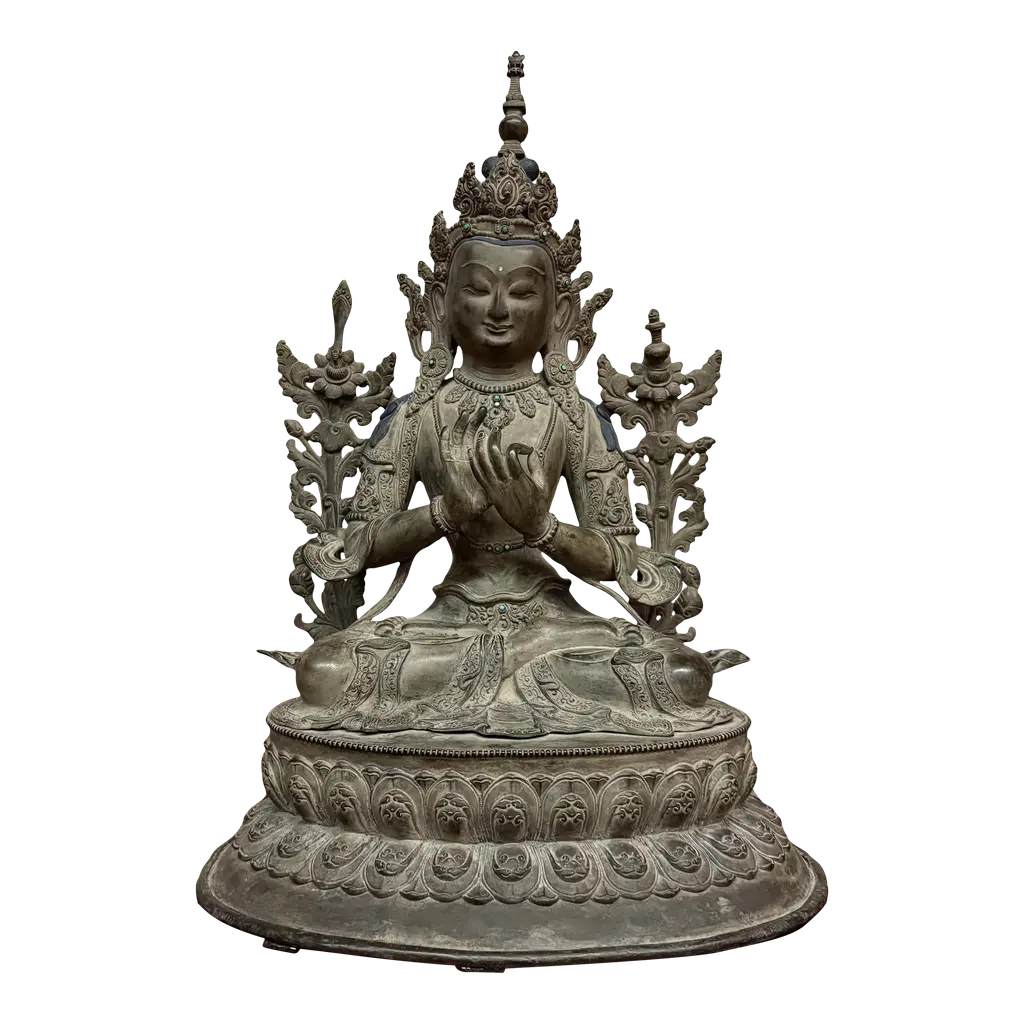
A finely cast bronze statue of Avalokiteshvara in his four-arm form with gilt and polychrome surface. The Bodhisattva of Infinite Compassion is worshiped in all Buddhism sect as one of the most beloved deities across many Asian cultures. The Chinese (possible Sino-Tibetan) statue is easily dated to 17-18th century of early part of Qing Dynasty. It was masterfully cast in superb details and retains a deep attractive patina inquired though the centuries. The Four-arm form of Avalokiteshvara is depicted seated on a double-lotus throne with the middle two hands in praying Namaskara Mudra and the other two holding Vitarka Mudra. This particular form is also known as Chaturbhuja with his all-seeing and all-hearing nature and his merciful compassion to help the sufferers. This is a substantial piece with impressive size and extraordinary workmanship. The patina suggests that it has been worshipped and re-gilt periodically in its lifetime. The seal under the base appears original.
Similar products