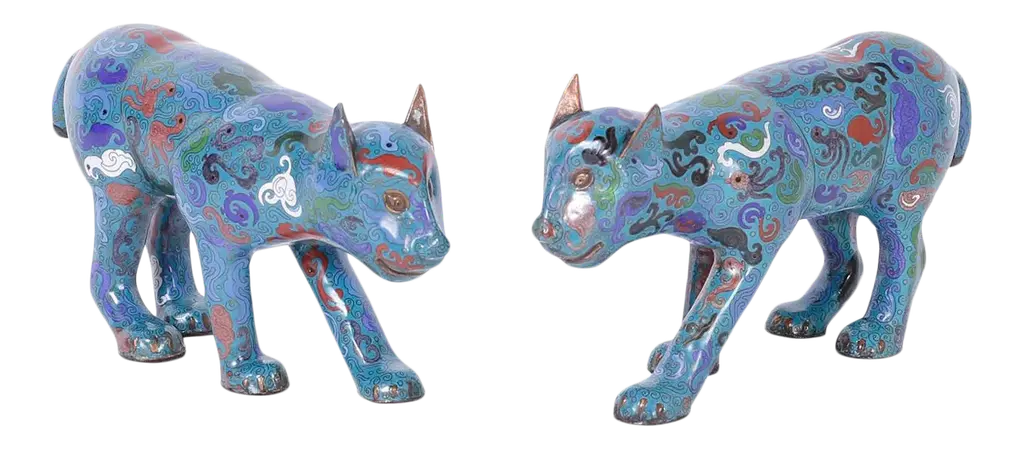
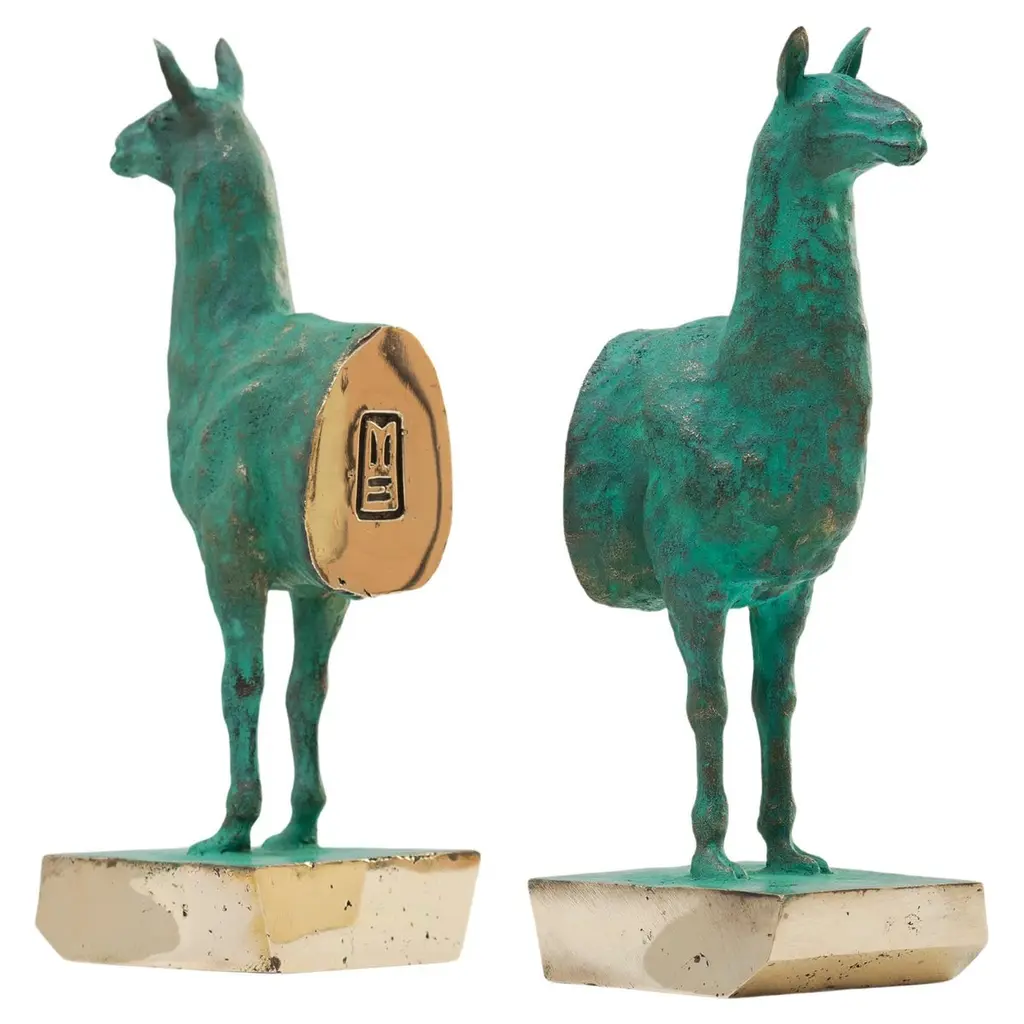
Sculpture Size: 16" L x 6" W x 15" H East Asia, China, Qing Dynasty to Republic period, ca. late 19th to mid-20th century CE. A matching pair of enamel and cloisonne copper statues depicting muntjacs, a small species of deer native to South and Southeast Asia, both standing with heads turned, their bodies decorated with a profusion of designs, dragons, and taotie masks. The dragons have 4 toes, symbolizing aristocracy - of course purely decorative and luxurious cloisonne figurines were bought and displayed by the wealthy. These are a nice larger size, perfect for a table centerpiece or bookshelves! Known as "barking deer" due to their dog-like calls, muntjacs are characterized by their petite size and short antlers. Deer in general symbolize peace, tranquility, and enlightenment due to their graceful appearance and association with Buddhist teachings. Muntjacs have been used in traditional Chinese medicine for centuries, with their antlers believed to possess medicinal properties that promote vitality and health
Similar products