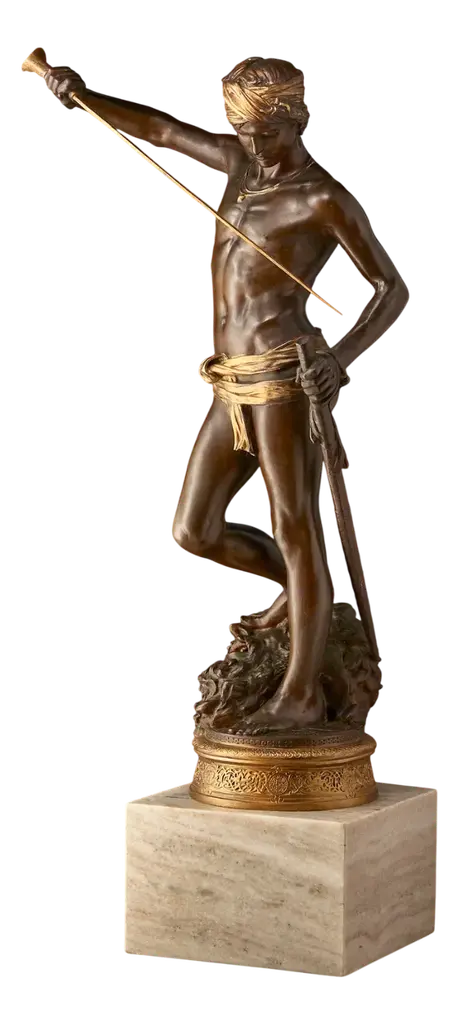
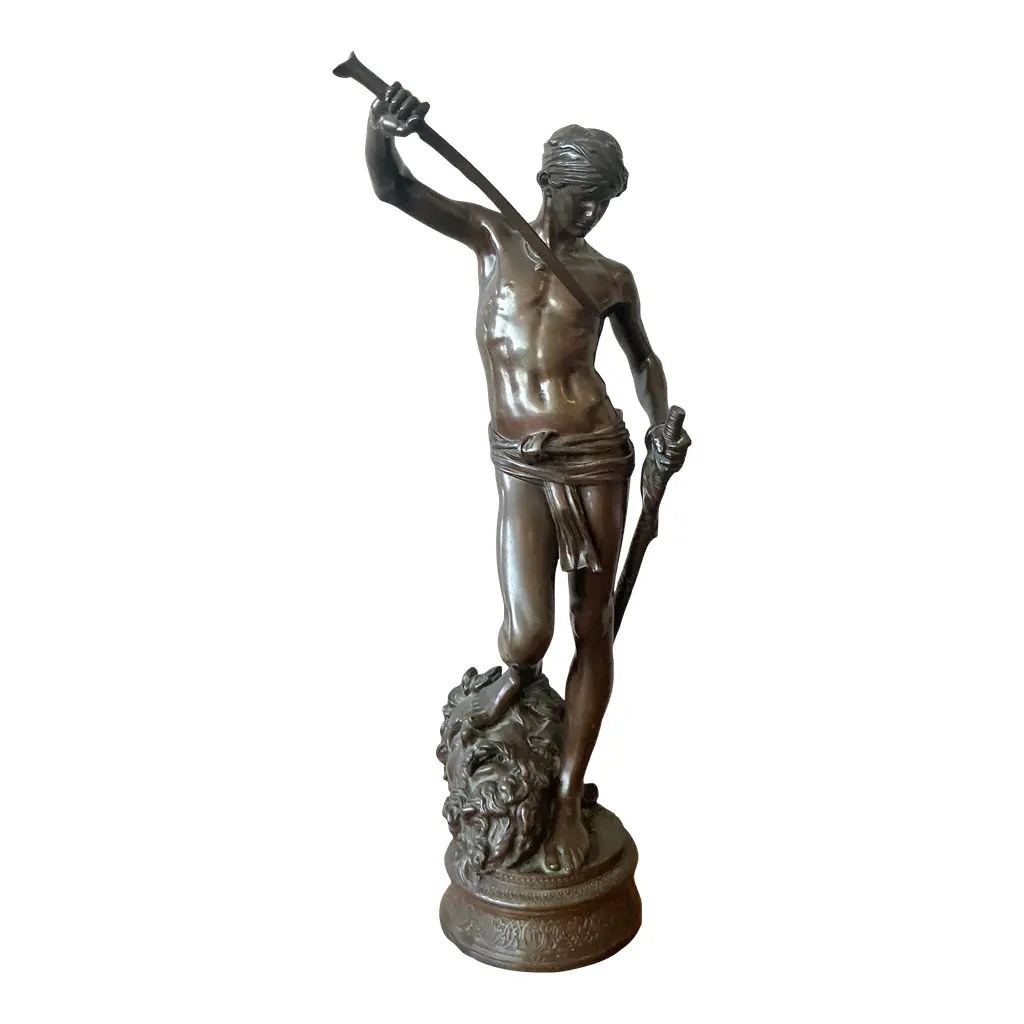
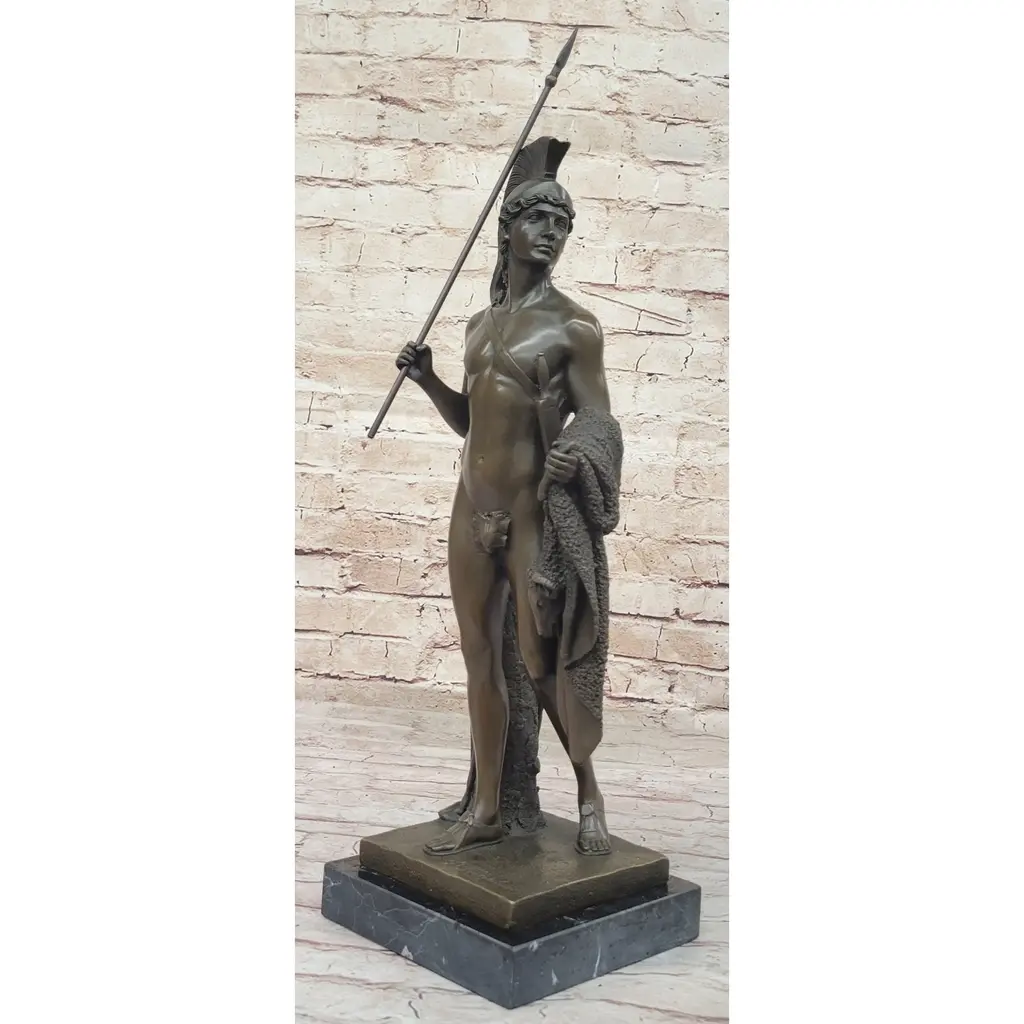
Overview An exceptional and rare 19th-century bronze sculpture titled “David Le Vainqueur” (“David the Victor”) by renowned French sculptor Marius Jean Antonin Mercié (1845–1916). This highly sought-after work presents a powerful yet refined interpretation of the biblical David, capturing the moment of quiet triumph as he sheathes his sword after slaying Goliath, whose severed head rests beneath his foot. Signed “A. Mercié” on the base, this piece exemplifies Mercié’s academic style and is widely considered one of his most iconic compositions. The sculptor’s David is celebrated for its youthful beauty and meditative expression — a contrast to the more violent, triumphant depictions commonly seen in earlier Italian Renaissance works. It conveys intelligence, spiritual resolve, and poise rather than sheer physical might. Technical Details & Provenance Medium: Bronze, cast using the cire perdue (lost-wax) technique Patina: Rich, dark brown/black patina with nuanced highlights Base: Original dark green marble plinth Signature: Incised “A. Mercié” on the bronze base Casting Period: Likely late 19th century (circa 1870–1890) Casting Origin: Paris, France – possibly cast by one of the top ateliers of the time (e.g., Barbedienne, Thiebaut Frères) though not visibly marked Measurements Overall Height: 28" Width (widest point): 14" Depth: 8.5" Marble Base Diameter: 11" Base Height: 7/8" Historical Importance Antonin Mercié first exhibited “David Le Vainqueur” at the Salon of 1872, where it received wide acclaim. The work was produced in several sizes and editions throughout the late 19th century by esteemed French foundries, most notably by Barbedienne. This sculpture represents a pivotal moment in French academic art — fusing neoclassical restraint with romantic expression. Mercié’s works are housed in major institutions including the Musée d’Orsay, Petit Palais, and the Metropolitan Museum of Art. He held numerous honors including the Prix de Rome, a professorship at the École des Beaux-Arts, and membership in the Académie des Beaux-Arts. Comparables & Market Justification A comparable Barbedienne casting of this model (similar size) recently sold at Sotheby’s for over $13,000. The present sculpture, with its larger scale and original marble base, represents a rarer version and is priced accordingly. Fine 19th-century academic bronzes by Mercié remain highly collectible, particularly original signed casts with intact marble bases. This piece’s fine condition, crisp casting, and deep patina make it an investment-grade artwork suitable for museums, galleries, or private connoisseurs. Condition Excellent overall condition. Minor age-appropriate surface wear; no losses or repairs noted. Marble base retains original integrity with subtle veining and edge wear consistent with age. Summary This is a museum-quality bronze from one of the leading figures of 19th-century French sculpture. The blend of symbolism, historical resonance, and masterful technique makes this a standout collector’s piece — and an elegant focal point for any traditional or eclectic interior.
Similar products